


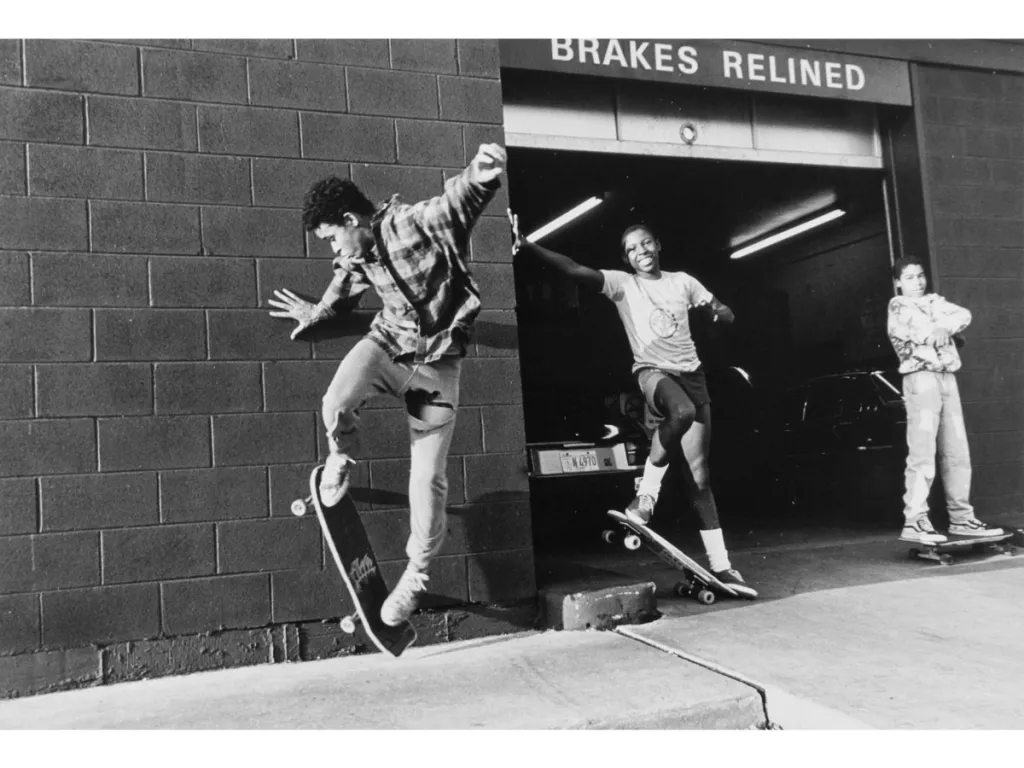
The Museum of Contemporary Photography (MoCP) at Columbia College Chicago will host an exhibition next year titled “If Emmett Till Lived: Freedom on American Ground” and guest curated by leading photography scholar and Harvard professor Sarah Lewis.
Opening September 3, “If Emmett Till Lived” will feature works from MoCP’s permanent collection as a way to “visualize the life Emmett Till might have lived had he not been murdered in an act of racial violence in 1955,” according to a release.
The exhibition will feature an intergenerational selection of 70 photographers from various backgrounds. Among those included are 20th-century giants like Gordon Parks, Henri Cartier-Bresson, Alfred Stieglitz, Dorothea Lange, Robert Frank, Lee Friedlander, Walker Evans, Danny Lyon, Robert Mapplethorpe, Aaron Siskind, and Garry Winogrand, alongside contemporary artists such as Dawoud Bey, Teju Cole, Jess T. Dugan, Kris Graves, An-My Lê, Sally Mann, Paul Mpagi Sepuya, Carrie Mae Weems, and Stephen Marc.
In 1955, Till, then a 14-year-old boy, was lynched after being accused of whistling at a white woman in the segregated South. He had traveled that summer from his home in Chicago to visit family in Mississippi. His mother, Mamie Till, made the decision to have Emmett’s mutilated body photographed by Jet magazine; the publication of those images and their circulation are widely attributed to having been a major catalyst for the Civil Rights movement.
“If Emmett Till Lived” aims to honor Till’s life and legacy, featuring images of the Chicago he lived in and images of the railways he likely traveled on from Chicago to Mississippi. But the exhibition also will present images of life events that Till, who would be 84 today, missed, including, per a release, “the Chicago Bulls as a cultural phenomenon, the love we imagine he might have known as he grew into a man, the election of Barack Obama, and the extended Civil Rights protest and movement today.”
The exhibition will open nearly a decade after the controversy over Dana Schutz’s painting Open Casket, depicting Till’s body, which was shown at the 2017 Whitney Biennial, leading to calls for its removal and protests over the work’s continued display in the exhibition.
Lewis is the founder of Vision & Justice, an initiative that “generates original research, curricula, and programs that reveal the foundational role of visual culture in America’s representational democracy,” per its website. The organization began as a course that Lewis developed at Harvard in 2016, “Vision and Justice: The Art of Race and American Citizenship,” which is now part of the university’s core curriculum, and a special issue of Aperture magazine. She is also the author and editor of more than 60 publications, including 2024’s The Unseen Truth: When Race Changed Sight in America.
“If Emmett Till Lived is an exhibition as a civic invitation,” Lewis said in a statement. “The very statement invites a range of questions, a reckoning with the past, and a probing investigation of our current state of American life. This exhibition, and the invitation it offers to viewers to contemplate the same question, creates a collective arena to consider how freedom has been secured on American ground.”
