


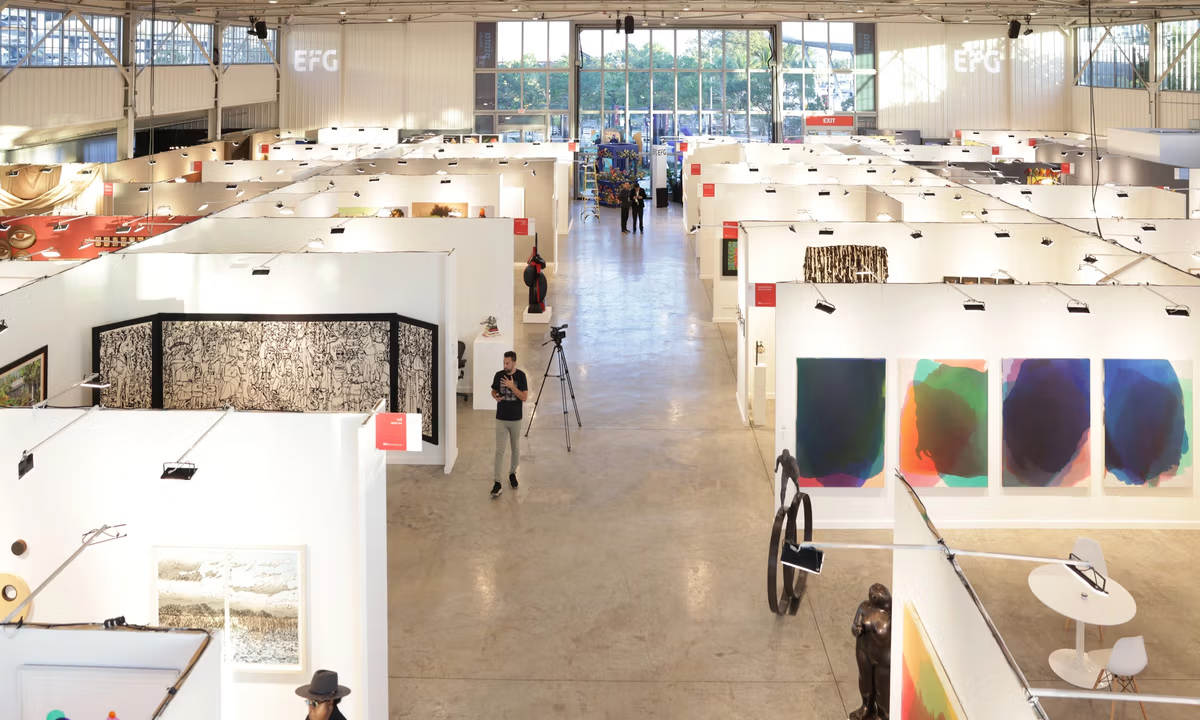
Beyond Miami Art Week’s central nodes, the Pinta Art Fair is forging a path for Latin American art. Now in its fourth year in Miami, the fair is held in a waterfront hangar in the Coconut Grove neighbourhood, a half-hour from Miami Beach by car (traffic permitting). Around 40 galleries are participating this year, from 19 cities in the Americas as well as Europe. One of the organisers’ goals is to spotlight contemporary art from across Latin America, which can be an uphill climb because of the often fraught politics of the region—which have been further complicated by the Trump administration’s policies.
“It was a challenge to bring together all the galleries, because they’re afraid to enter the US,” says the fair’s director, Irene Gelfman. Members of Pinta’s curatorial team added that a few artists had difficulties travelling to the country due to visa issues.
Still, the organisers are optimistic about the region’s sprawling art scene. In addition to fairs in Miami, Lima and Buenos Aires, Pinta also hosts art weeks in cities on the margins of the Latin American art market, including Panama City and Paraguay’s capital of Asunción, with 2026 art weeks planned in Medellín, Colombia, and Santo Domingo, Dominican Republic. The goal of these events is to support art scenes in cities and countries that are still developing their arts ecosystems, according to the organisers.
“It’s a way of working in the context and boosting what we already have there, and working together to grow,” says Juan Canela, the curator of the fair’s Next sector and chief curator of the Museo de Arte Contemporáneo de Panamá. “Of course you have galleries, you have museums, you have amazing artists, but the infrastructure is small and weak, and these kinds of initiatives make you grow. It’s a really interesting model to see what places in Latin America have the potential but maybe still don’t have the capacity.”
One of the most eye-catching stands at the fair is a beneficiary of this developmental mindset. Two galleries from Asunción, Viedma Galería de Arte and Artística Galería, collaborated on a presentation titled Entre Tierras (Between Lands) that features some of Paraguay’s most notable contemporary artists. It includes earthenware ceramics from the sisters Carolina and Elditrudis Noguera, as well as Karaguata textile art from the Indigenous people of the Gran Chaco region.
Entre Tierras features earthenware ceramics from the sisters Carolina and Elditrudis Noguera
Courtesy Carolina Noguera and Viedma Arte Galería
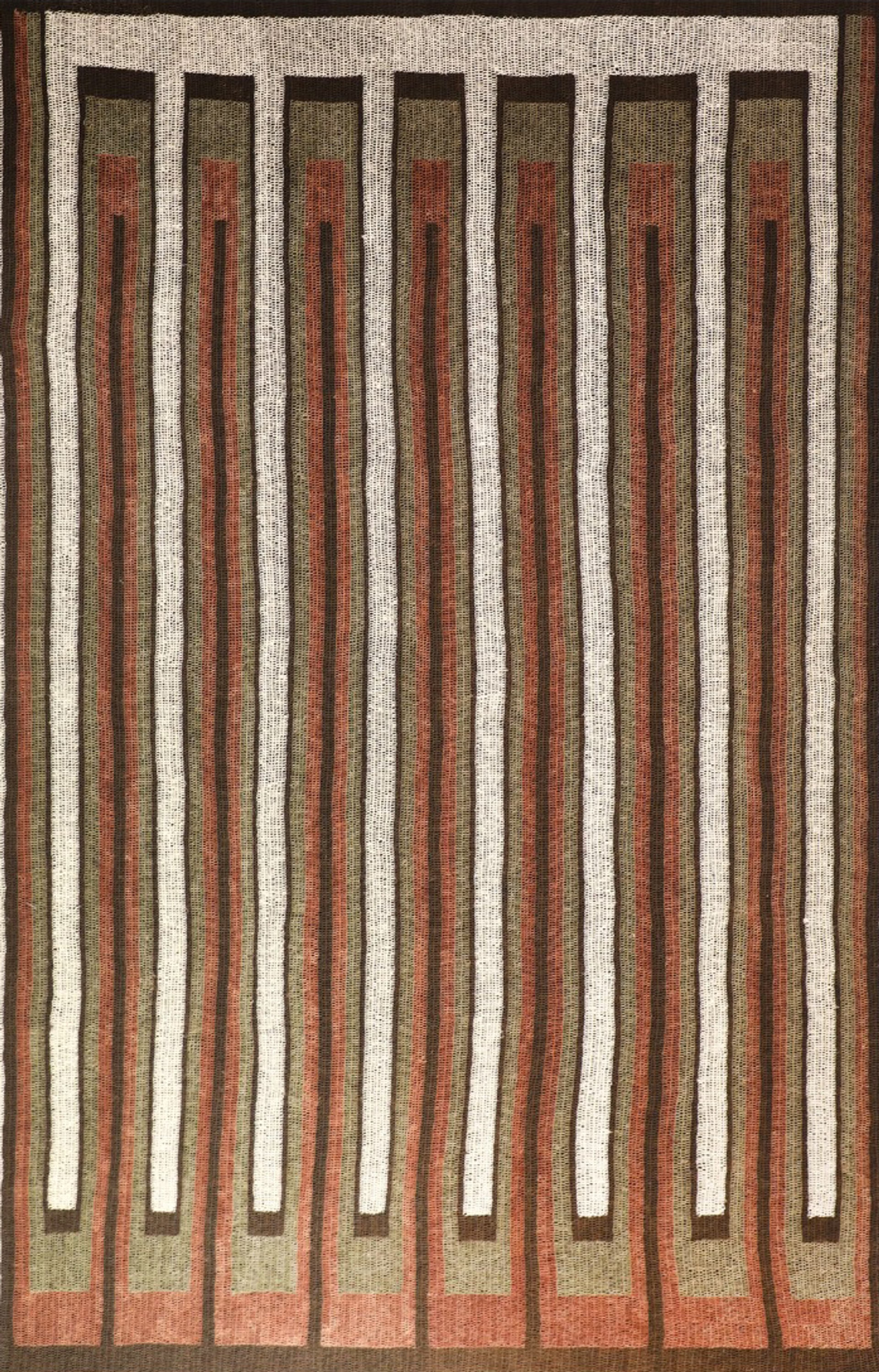
Karaguata textile art from the Indigenous people of the Gran Chaco region is also on display in Entre Tierras
Courtesy Viedma Arte Galería
The galleries have consistently participated in Pinta’s Asunción art weeks and Miami art fairs, with tangible results. A Karaguata work by Elsa Gómez was previously purchased by Jorge Pérez and exhibited at his Miami venue El Espacio 23 in 2023.
Collaborations between galleries are common features at the fair. Another stand is a pairing of Galeria Matia Borgonovo from San Salvador and Encarte from Mexico City. Borgonovo is showing text-based works by Abigail Reyes, while Encarte has brought a series of pendant paintings by Marco Aviña combining traditional Mexican iconography with pop cultural references.
Encarte’s founders describe themselves as the “punks of Polanco”, the ritzy neighbourhood home to institutions such as the Museo Jumex and Museo Soumaya. The shared stand marks the three-year-old gallery’s first time in Miami and at Pinta. Luis Alonso Sanchez, a curator with the gallery, says the time spent in the city thus far has made him reflect on Miami’s pivotal position as both a nexus for Latin culture and a means for US influence to spread into
the Americas.
“This is the capital of Latin America,” Sanchez says. “This is the third time I’ve spoken English in the city since I got here three days ago.”
