


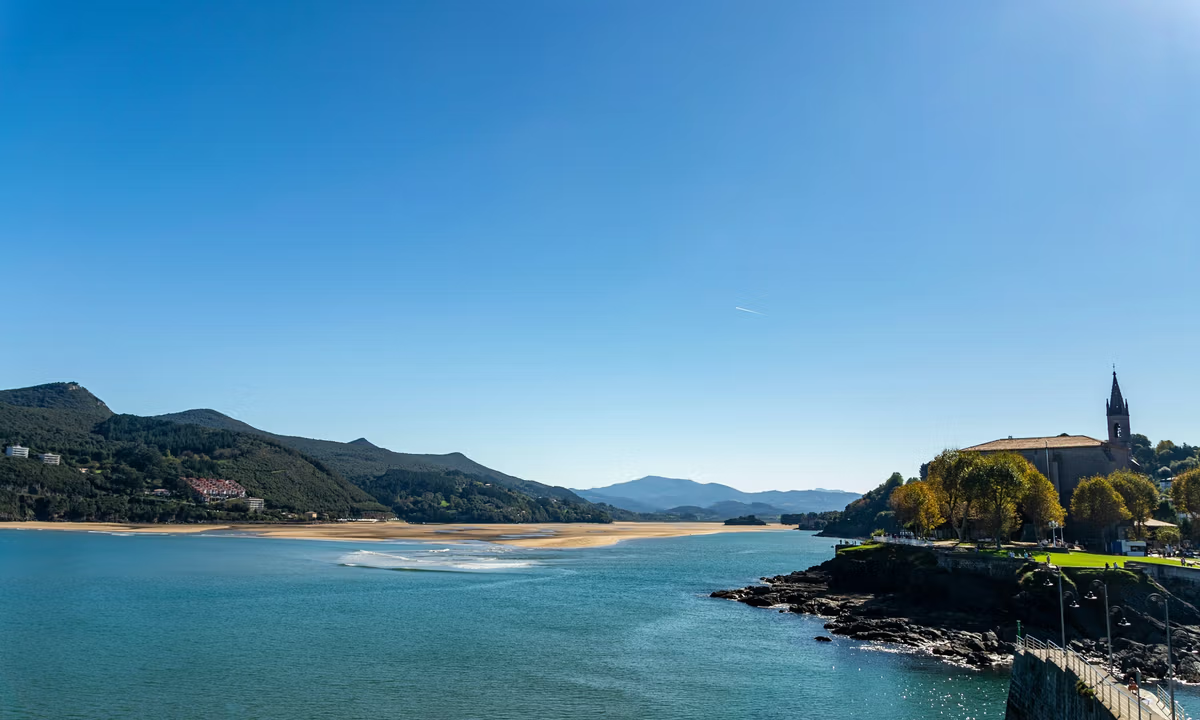
Plans for a new Guggenheim museum located at a nature reserve near the northern Spanish city of Bilbao have been scrapped after the museum’s board of trustees voted against the controversial initiative. The outpost of the famed Guggenheim Bilbao would have been located in the coastal Urdaibai biosphere reserve, 25 miles from the city, at two sites: the former Dalia cutlery factory in Guernica and the Murueta shipyards.
According to a statement seen by The Art Newspaper, the museum’s board has decided not to go ahead. The board is comprised of members from the Basque regional government, the provincial council of Biscay, and the Solomon R Guggenheim Foundation, the proposed new museum’s three founding bodies.
“After a two-year reflection period on the feasibility studies about the project, the board made a decision at their meeting [16 December] not to proceed with this initiative,” a Guggenheim spokesperson tells The Art Newspaper. The press statement cites “territorial, urban planning, and environmental constraints and limitations” as the reason for the board’s decision.
The project, steeped in controversy since it was first mooted in 2008, involved the two locations Guernica and Murueta and their connecting pathway, the Guggenheim spokesperson says.
“The expansion project of the Guggenheim Museum Bilbao in Urdaibai was conceived as an institution capable of generating interactions and experiences at multiple levels in profound harmony with the natural processes around it; where the active dialogue between the landscape and artistic creation would find a relevant, unique expression; as a place to explore the common ground between art, research and ecology,” the spokesperson tells The Art Newspaper.
But not everyone agreed with this vision, with environmental organisations such as Greenpeace, WWF, Ecologists in Action and Friends of the Earth calling for the project to be abandoned. A statement from the campaign group Guggenheim Urdaibai Stop Platform says: “This project would have caused serious ecological damage, something the scientific community has been warning about from the outset.”
In October 2024, Greenpeace filed a lawsuit, claiming that the Spanish government was “breaking the law by reducing the protection of the public maritime-terrestrial domain in the area” with the Guggenheim satellite plan. Urdaibai was designated as a Unesco biosphere reserve in 1984.
The scheme’s backers, including the Basque regional government, say however that the planned museum hub would attract investment and create jobs. “With forecasts of 148,000 visitors and the associated expenditure of €31.2m per year, the annual economic impact would stand at around €78.1m, €41.1m of which would benefit the CAPV [the Basque autonomous community],” a report published by the Guggenheim on the project benefits, and seen by The Art Newspaper, states.
The reports estimates the cost of the museum at €128m: €80m to construct the buildings and outdoor areas; €40m for fees, permits, honoraria, furnishings and equipment, installations and systems; and €8m to develop and coordinate the project.
The Guggenheim Urdaibai Stop Platform group disagrees: “A project of this nature will not revitalise the socio-economic situation of our region at all; rather, it would condemn us to precariousness and the loss of our identity.”
The Frank Gehry-designed Guggenheim Museum Bilbao, which opened in 1997, is now inseparable from the so-called “Bilbao effect”, the process by which an architecturally flashy cultural project revitalises an ailing post-industrial city. According to The Art Newspaper’s annual attendance survey, the museum drew 1.3 million visitors in 2024, a 2% drop from 2023.
