


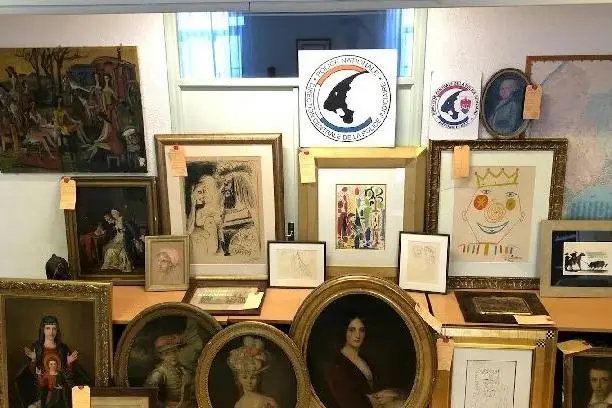
Seven years after an undercover sting led police to a house packed with stolen art in the hills above Nice, the case has returned to court, with ten defendants now on trial over a cache that included several works by Pablo Picasso.
The trial, which opened earlier this month in Nice, revisits a 2017 judicial police operation that recovered more than 20 stolen artworks, including at least seven works by Picasso, following a tip that major pieces were being quietly offered for sale on the Côte d’Azur.
According to reporting by Nice-Matin, investigators from the Police Judiciaire went undercover, posing as a Swiss buyer and his assistant, after receiving intelligence from Belgium that stolen artworks were circulating locally. The officers arranged a meeting at a hotel in Nice, where a seller allegedly proposed a multimillion-euro cash deal, before leading them to a house in the village of Peillon, north of the city.
Inside the Peillon property, police said they discovered what amounted to a private display of stolen art. Among the works identified were Picasso’s Le vieux roi and Le clown, along with other paintings, sculptures, and objects later tied to a series of thefts earlier that year.
Several of the recovered works were traced to a burglary in Saint-Paul-de-Vence in October 2017 and an armed robbery in Èze the following month, according to Nice-Matin. Investigators also seized cash, mobile phones, and documents that authorities said helped link specific works to specific crimes.
At the time of the recovery, multiple individuals connected to the Peillon property were placed under formal investigation on suspicion of handling stolen goods. Earlier reporting by Europe 1 described the case as involving a suspected resale operation aimed at discreetly moving stolen artworks through private channels rather than public markets.
The current proceedings consolidate those earlier investigations into a single trial involving ten defendants, whom prosecutors accuse of participating in or benefiting from a broader art theft and fencing network operating in the region. Local media report that the court is examining whether the Peillon house functioned as a storage and sales hub for stolen works taken from multiple locations.
A verdict is expected on January 19, which may bring greater clarity about the full scope of the thefts and the paths the recovered works took before being intercepted by police.
