







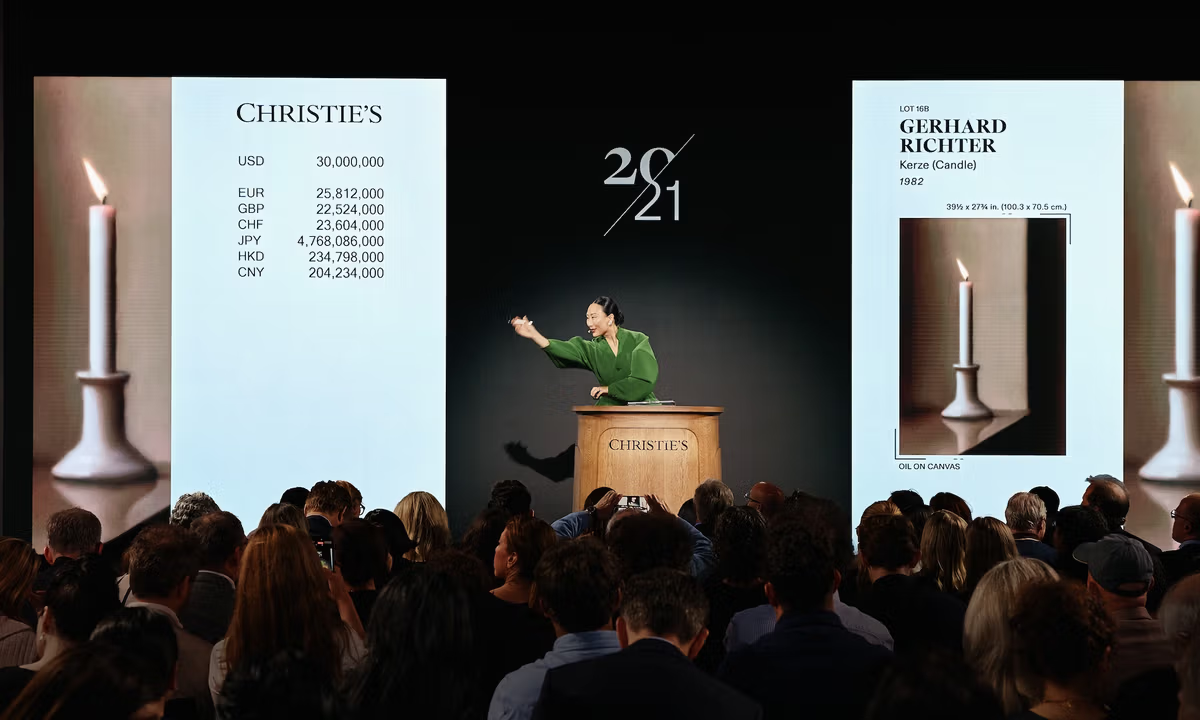
Rounding out a May marquee sale week that has combined record-breaking masterpieces with tepid bidding for more middling material, Christie’s delivered a satisfactory, if uneven, two-and-a-half-hour performance Wednesday night (20 May) in its back-to-back 21st century evening sale, featuring works from the estate of the late dealer Marian Goodman, and a single-owner auction of Henry S. McNeil’s collection.
In total, the night featured 42 lots and achieved a hammer total of $132m ($162.6m with fees), putting it just over the low end of Christie’s pre-sale estimate of $129m to $191m for the night (estimates are calculated without fees). Just one work was passed, Ed Ruscha’s 2000 canvas Career Sportswear (est $3.5m-$5.5m), and one was withdrawn, an acrylic-on-PVC work by Kerry James Marshall (est $2m-$3m), making for a healthy sell-through rate of 95%. The $136.8m (with fees) total for the 21st century evening sale portion of the night was 42% higher than last May’s equivalent sale, and marks the highest 21st century evening sale total at Christie’s New York in five years, according to a press release from the auction house.
Minimalist treasures maximised
Donald Judd, untitled, 1969 Courtesy Christie’s Images Ltd 2026
Beginning Wednesday’s proceedings were 12 Minimalist works from the Philadelphia home of Henry S. McNeil Jr, who was thought to have amassed one of the greatest private collections of the post-war style. The top lot from the single-owner sale was Donald Judd’s untitled plexiglass and copper stack sculpture, which hammered for $10.6m ($12.8m with fees) to a phone bidder via Christie’s global president Alex Rotter, after a three-way, four-minute tussle, making a new record for a Judd stack at auction.
While the Judd stack predictably commanded the sale’s top price, the surprise star of the collection was its final lot: Richard Artschwager’s Two-Part Invention (1967), an understated sculpture composed of two modular wooden pieces, one placed on the floor and the other affixed to a wall above. Estimated at $60,000 to $80,000, it attracted bids from four bidders, including two in the room, eventually hammering at $500,000 ($635,000 with fees), more than six times its high estimate.

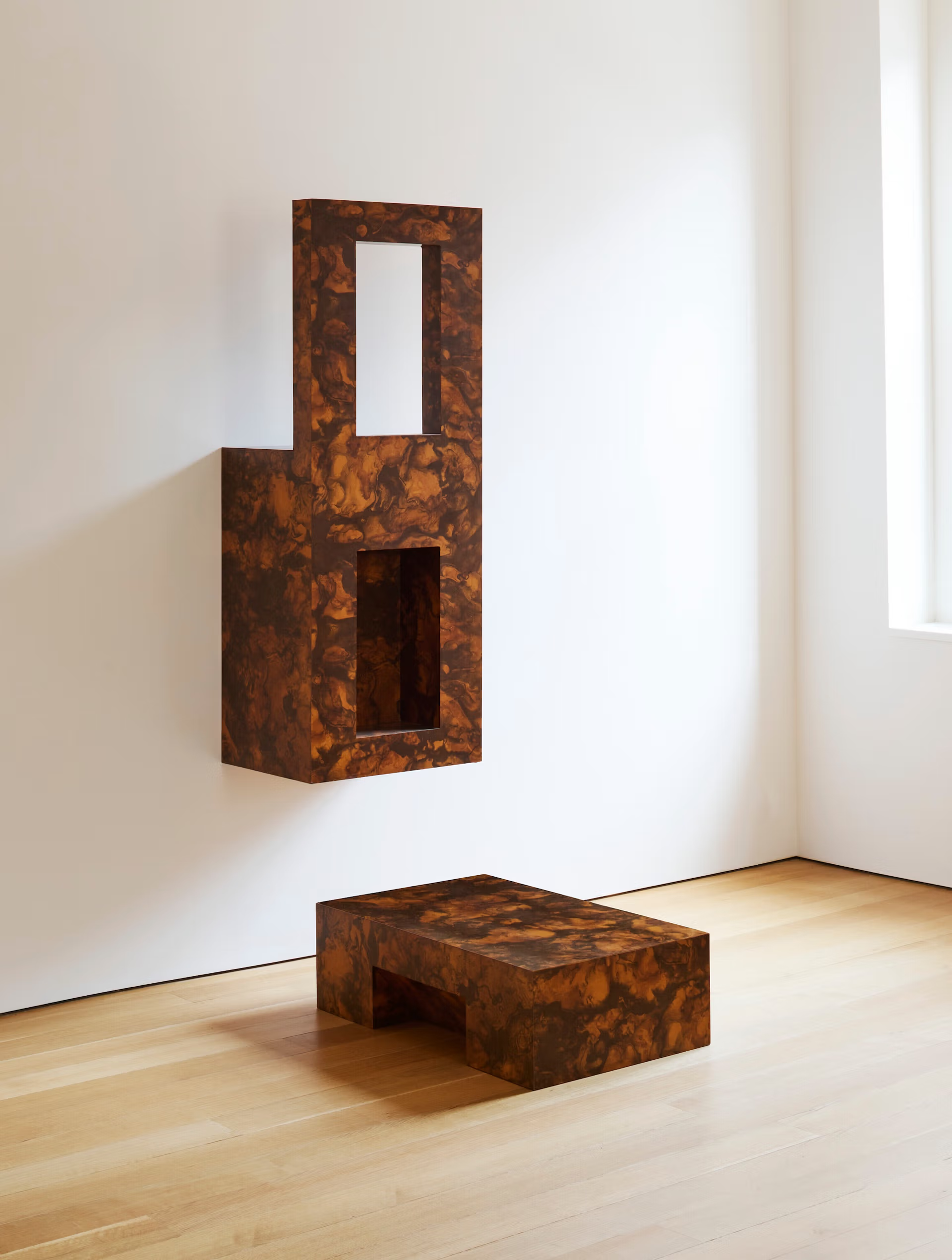
Richard Artschwager, Two-Part Invention, 1967 Courtesy Christie’s Images Ltd 2026
Carl Andre’s 66 Copper-Carbon Corner, the first cubic sculpture by the artist to ever come to auction, also outperformed its estimate, hammering at $880,000 ($1.1m with fees) against a $500,000 high estimate.
Other works by Minimalist titans failed to ignite attention. A second Judd, a brass wall sculpture, hammered at $3.6m to a single bid from its guarantor, well below its $5m low estimate. This was one of five works from the collection to be guaranteed by a third-party, alongside sculptures by Andre, Sol LeWitt, Dan Flavin and Richard Tuttle. Although they likely deterred more lively bidding, securing these pre-sale purchases proved a sensible tactic: all those five lots received little attention and hammered below their low estimate, each almost certainly to their guarantors. Consequently, all 12 lots from the McNeil collection sold, making for a white-glove sale to open the two-auction evening.
A richness of Richters
Following that Minimalist trove was another group of works with a storied provenance. When Christie’s announced it had secured the private collection of the revered New York dealer Marian Goodman, eyebrows were raised as to whether the market could absorb a deluge of works by Gerhard Richter, the famous German painter whose career Goodman was pivotal in stewarding.
The answer, it turns out, is yes, but not with the gusto these works might have stirred up a decade ago. With all but two of the octet guaranteed by third parties, Goodman’s Richters contained no great disappointments but also few fireworks.

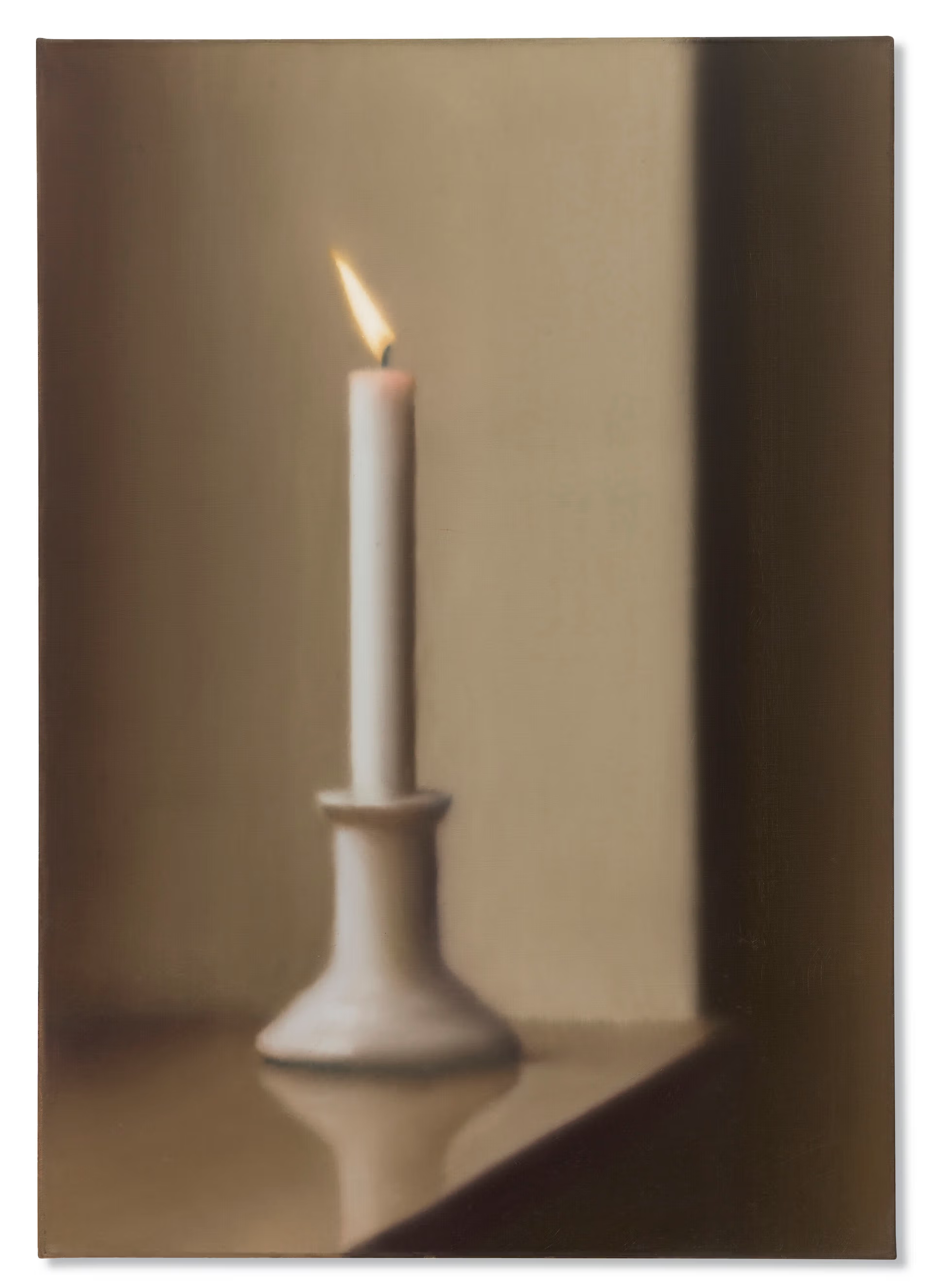
Gerhard Richter, Kerze (Candle), 1982 Courtesy Christie’s Images Ltd 2026
The star lot of the group, a painting of a candle in Richter’s signature blurred photorealistic style—and whose imagery gained extra poignancy in the context of Goodman’s death—was given a confident estimate of $35m to $50m, positioning it to compete with the artist’s current secondary-market record, set at $46.3m at Sotheby’s London in 2015. But the lot, Kerze (Candle) (1982), proved not to be a slow burn, hammering quickly below its low estimate for $30m ($35m with fees) to a phone bidder on the line with Christie’s specialist Katherine Arnold. Nonetheless, it is the fourth-highest price achieved by the artist’s work at auction.
Two of Goodman’s Richters managed to considerably exceed their high estimates, including the oil-on-photograph 10. Dez. 99 [Firenze] (1999) made $190,000 ($241,300 with fees) against a $70,000 high estimate. Most others hammered squarely within, or at the upper end of, their estimates.

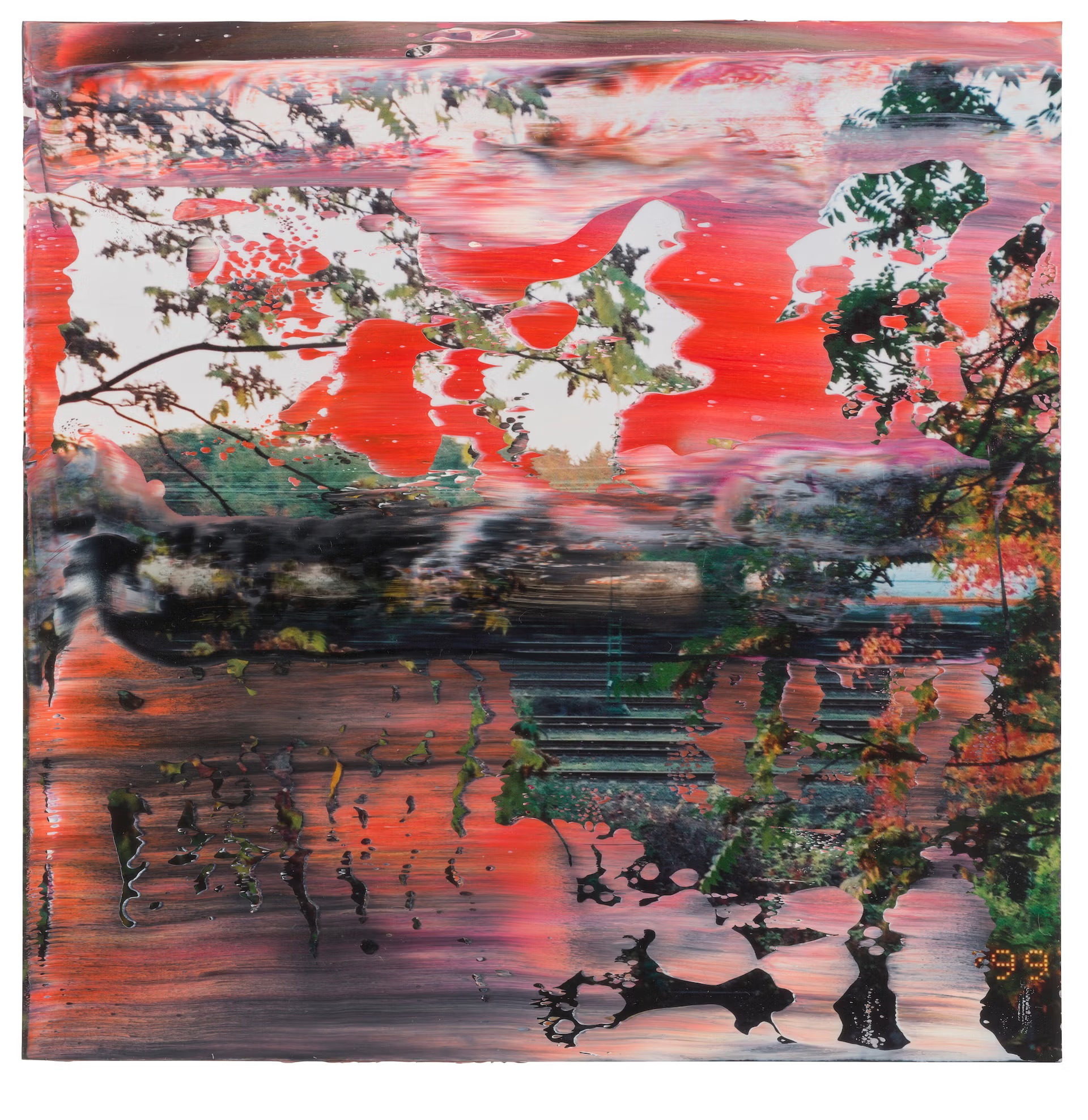
Gerhard Richter, 10. Dez. 99 [Firenze], 1999 Courtesy Christie’s Images Ltd 2026
Still, the consensus is that demand for the revered German painter’s work, especially outside trophy pieces, is relatively subdued. “I was sitting behind a dealer who not so long ago had asked me to secure a Richter abstract painting, and was willing to pay up to $5m,” the adviser Lorinda Ash said shortly after the sale concluded. “Tonight they weren’t bidding on any of it. There is no limit to how much people are willing to spend. But they are just not spending money in the middle.”
Ash added that bidding for Goodman’s Richters on Wednesday was particularly strong from China and the Middle East, the latter of which she said was surprising “considering the present political situation”.
Final push

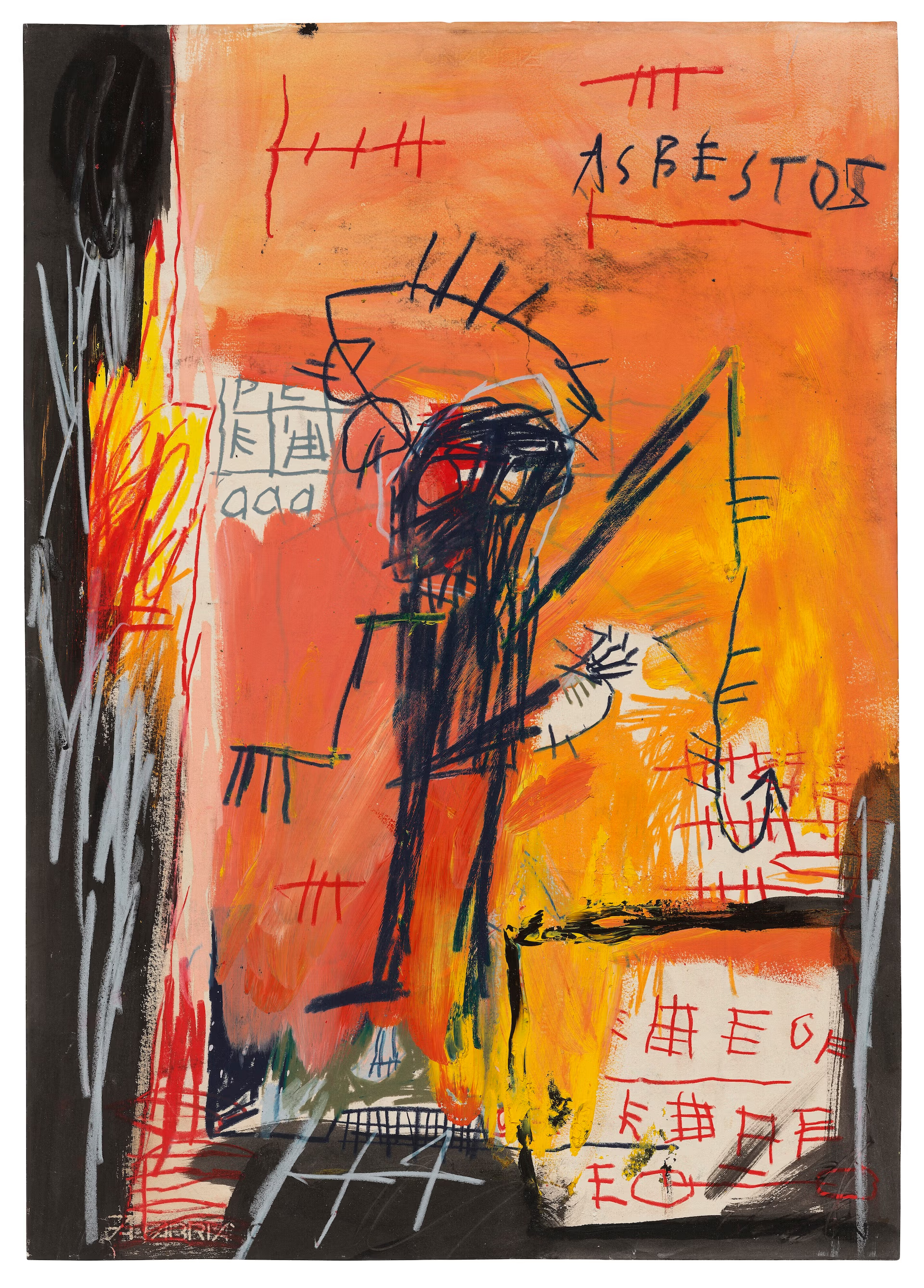
Jean-Michel Basquiat, Asbestos, around 1982 Courtesy Christie’s Images Ltd 2026
The sale then continued into its various owners portion, bringing healthy competition for a fiery painting by Jean-Michel Basquiat titled Asbestos (around 1982), which was once sold at Sotheby’s New York in 1990 by the infamous collector Ethel Scull. It eventually hammered at $5.3m ($6.5m with fees), above its 5m high estimate.
Coming at the end of an intense fortnight of fairs and auctions in New York, the energy in Christie’s Rockefeller Center headquarters on Wednesday eventually began to lag. “It was like the air was sucked out of the room,” Ash noted. What followed was essentially a string of bargain deals, as numerous works by established names hammered below their estimates, including canvases by Rudolf Stingel, Richard Prince and Mark Bradford.

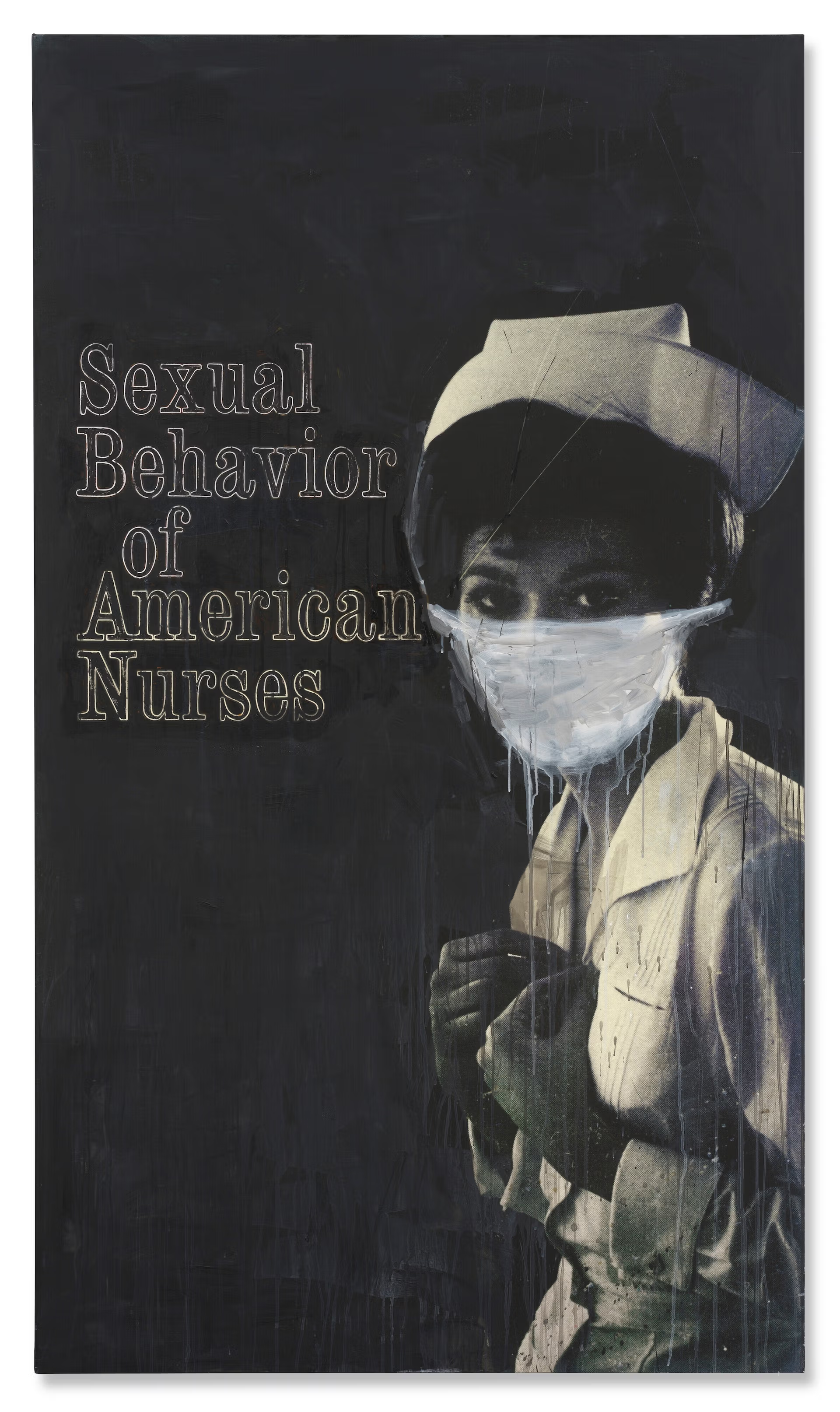
Richard Prince, Sexual Behavior of American Nurses, 2009-11 Courtesy Christie’s Images Ltd 2026
The night’s biggest discount came courtesy of Eric Fischl’s The Pizza Eater (1982), a nude beach scene that hammered at $250,000 to its third-party guarantor. With fees the price came to $300,000—half its $600,000 low estimate.
Finally, bringing up the sale’s rear was an enormous 1990 pornographic silkscreen by Jeff Koons, depicting the artist, then in his thirties, with his then-wife, the adult film star and politician Ilona Staller. The work, which was guaranteed in-house, hammered at half price, making $254,000 (with fees) against a $400,000 low estimate.
Undeterred, the evening’s auctioneer Yü-Ge Wang quipped, “now that’s a happy ending!”, eliciting a chorus of cringing laughter from the final stragglers in the salesroom. Perhaps it is too early to say the art market has fully regained its mojo—but it certainly hasn’t lost its sense of humour.


