


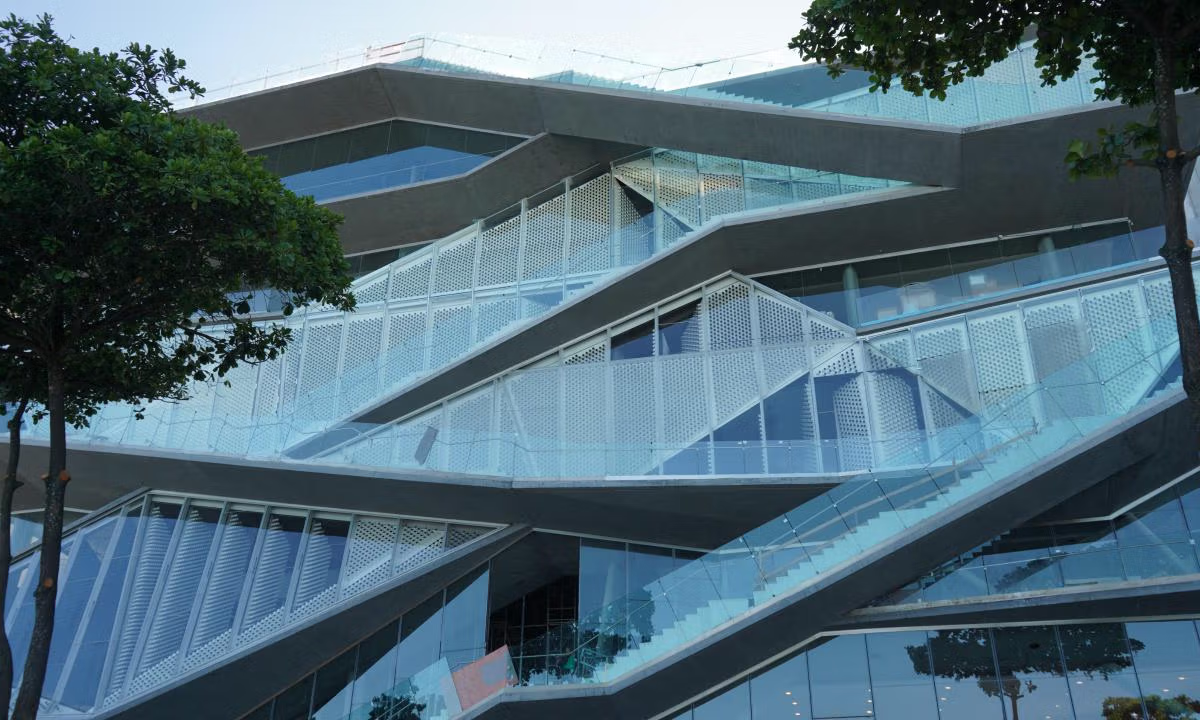
The Museum of Image and Sound (MIS-RJ) on Rio de Janeiro’s waterfront finally opens to the public tomorrow (8 May) after more than 16 years of development. The 10,000-sq.-m museum is expected to become a national landmark, featuring eight floors, including a rooftop and two basement levels. The building’s façade, made from interlocking aluminium and glass panels, provides visitors with panoramic views of Copacabana Beach.
Plans for a museum on Avenida Atlântica, one of Rio’s main thoroughfares, were first announced in 2009. The Rio de Janeiro state government contracted the architecture firm Diller Scofidio + Renfro to oversee the project. The design honours the renowned Brazilian architect and artist Roberto Burle Marx, evoking the sinuous black-and-white stone sidewalk he designed for Copacabana in the 1970s that became emblematic of the city.
The MIS-RJ project has been embroiled in controversy from the start, sparking conversations around urban redevelopment as the state government sought to sanitise Rio’s image ahead of events like the 2014 Fifa World Cup and the 2016 Olympic Games. The site previously housed a nightclub, founded in the 1980s, that was notorious for prostitution. When it was bulldozed in 2010, the move prompted backlash from people who argued that this would force sex workers onto the streets; at the time, workers spoke to Brazilian media outlets about their fears of displacement and income loss.
The museum has stalled several times since it broke ground in 2011 and cycled through the jurisdiction of several governments, causing setbacks as administrations changed hands and shifted their priorities. The government suspended funding for the project in 2016 as it encountered more complex challenges, including an ongoing economic downturn exacerbated by the aftermath of the impeachment of Brazilian president Dilma Rousseff that same year.
Work on the museum only resumed in 2021, after being virtually abandoned, with the current state government committing to completing the 329.2m reais ($62.5m) project with a mix of public and private funds. Its corporate donors include the Brazilian bank Itaú, the mining company Vale and the media company Rede Globo.
Danielle Barros, the Rio de Janeiro state secretary for culture, says the MIS-RJ’s completion marks a major milestone for her department, which has focused on bolstering cultural institutions throughout the state. “The resumption of the construction was a commitment of governor Cláudio Castro’s administration, which recognises the importance of this historic institution as a cultural legacy for Brazil,” Barros tells The Art Newspaper. “We understand this is an icon of Brazilian art. The MIS-RJ was conceived as a living museum, where contemporary cultural production will be continually incorporated into the collection, ensuring its ongoing relevance over time.”
A storied history
Inside the new Museum of Image and Sound, Rio de Janeiro Photo: Karoline Freitas, courtesy the Museum of Image and Sound
The MIS-RJ was originally founded in 1965 in a 20th-century building at the Praça XV. The structure was constructed as a makeshift pavilion for an exhibition celebrating the centenary of Brazilian independence, featuring artists like Candido Portinari and Eliseu Visconti. The building remains under the stewardship of the MIS-RJ foundation, which has shifted operations to its headquarters at a site in the downtown neighbourhood of Lapa acquired in 1990.
The foundation that oversees the MIS-RJ holds a collection spanning more than 650,000 audiovisual and other objects, including works of art, recordings, films, photographs, musical instruments and the archives of Brazilian artists and musicians—among them the groundbreakers Gilberto Gil, Tom Jobim and Chico Buarque.
There has been a major focus on making the collection digitally accessible, with the launch of a comprehensive online database that provides access to its collection. In the past, facilities to accommodate researchers were insufficient. While the Copacabana site will focus on exhibitions and public-facing programmes, the Lapa space will continue to house the MIS-RJ’s collection storage and research centre.
“Since the start of the project, every administration that has overseen the foundation has made sure to keep the collection in appropriate conditions for preservation and use,” says Cesar Miranda Ribeiro, the president of the MIS-RJ foundation. “Over this period, the institution has also advanced in terms of content, incorporating new collections into its archive and expanding curatorial possibilities.”
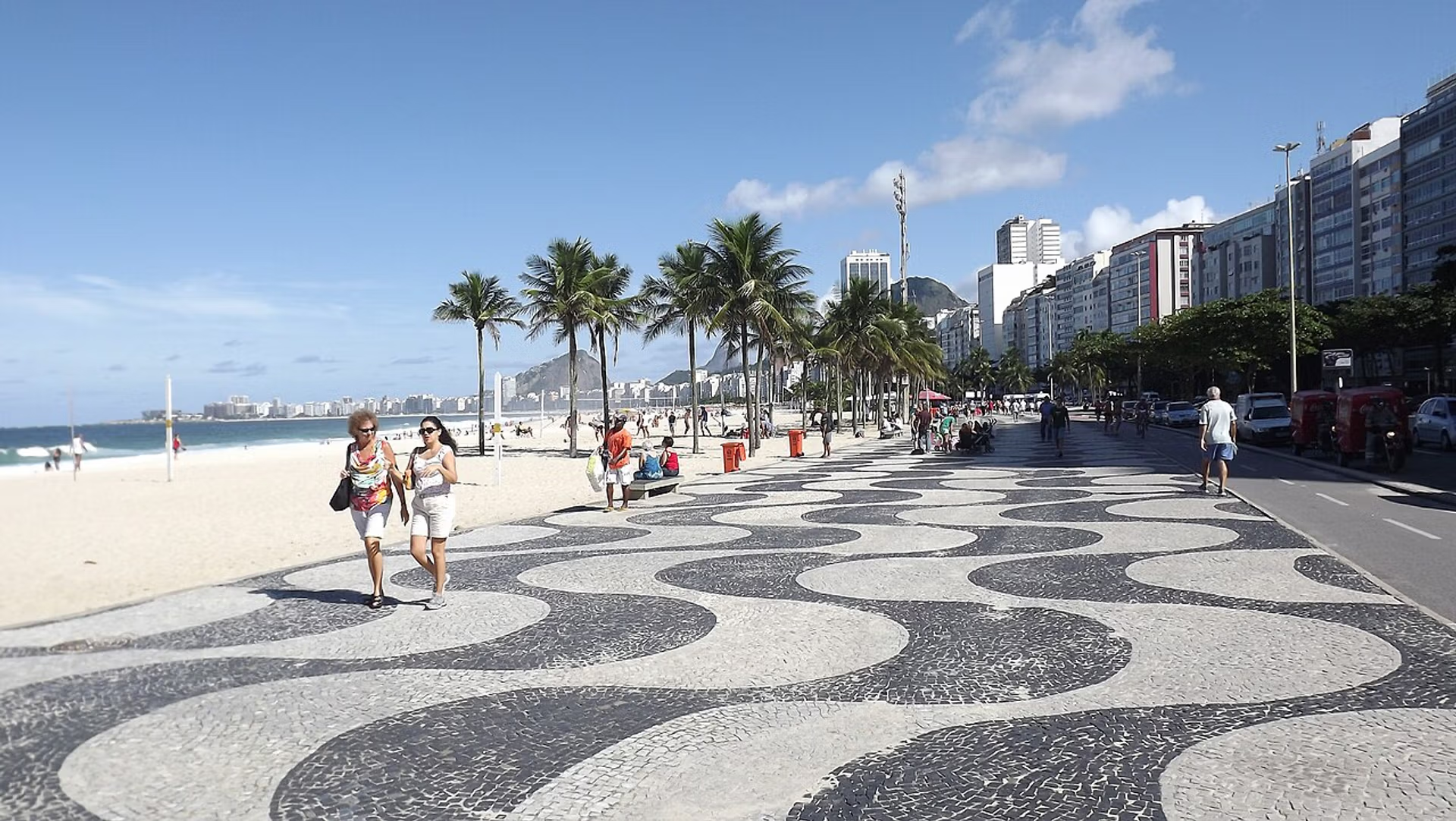
A view of Copacabana Beach with Roberto Burle Marx’s iconic sidewalk Photo: Mteixeira62, via Wikimedia Commons
The government and foundation have collectively received about 3m reais ($600,000) in corporate funding to revitalise the original MIS-RJ building and double its storage capacity. This next stage of the project will be announced once bidding for a contractor has been finalised in the coming months.
The MIS-RJ’s inaugural exhibition features a selection of works that speak to how Rio became an international destination. These include pieces by 20th-century Brazilian photographers like Augusto Malta and Guilherme Santos, which capture a nascent Copacabana and the beginnings of construction on the waterfront—such as the first iteration of its stone-lined promenade.
The museum had a soft opening on 9 April with the temporary exhibition Architecture on Stage: MIS Copa Before Image and Sound, which gave viewers a behind-the-scenes look at the complex architecture and engineering of the building. Visitation was limited and by appointment only, with priority given to students of architecture, history and museology.
A financial assessment conducted during the development of the project suggests that the museum could generate 373m reais ($71m) annually for the state, surpassing a full return on investment in its first year of operation. Admission will cost 260 reais ($50) but will be free for local residents. According to organisers, when a study asked tourists whether they might stay an extra day in the city to visit the MIS-RJ, 22% of respondents said they would.
