


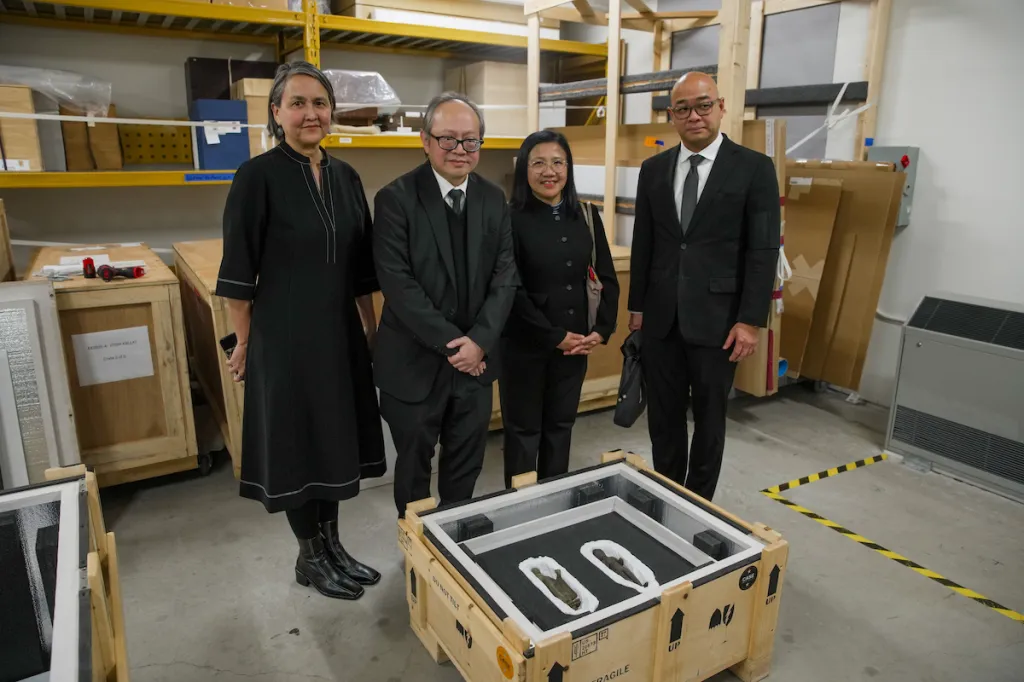
After years of research revealed they had been illegally removed in the 1960s, four ancient bronze sculptures were transferred from San Francisco’s Asian Art Museum to their original home in Thailand as a result of an investigation led by the US Department of Homeland Security.
The works, most recently featured in the 2024 exhibition “Moving Objects: Learning from Local and Global Communities,” were connected to Douglas Latchford, a dealer indicted for illegally trafficking in Southeast Asian antiquities, and were acquired on the art market by the museum’s founding collector, Avery Brundage. After confirming the problematic provenance, the museum’s governing body, known as the Asian Art Commission, unanimously approved the return through a two-stage voting process initiated in September 2024 and finalized this past April.
“This return is the result of careful research, mutual respect, and a shared commitment to doing what is right,” Soyoung Lee, the Asian Art Museum’s director, said in a statement. “These sculptures have been part of our history for nearly half a century, but their rightful place is in Thailand. It is an honor to be a part of their return home.”
As reported by ABC News in San Francisco, Suriya Chindawongse, Thailand’s ambassador to the US, said of the sculptures during a ceremony marking their repatriation, “They will be cared for, and they will be returning home. Their repatriation not only safeguards an important part of heritage, but it also allows their history to continue as an enduring part of the Thai nation.”
Natasha Reichle, an associate curator at the Asian Art Museum, said, “I would credit Thai scholars and researchers for all this work. What they did was talk to all the villagers who were alive and even the looters who remembered where the objects came and who were the dealers.”
Asked by a reporter at the ceremony why the museum had failed to investigate the sculptures’ provenance despite suspicions dating back to their acquisition decades ago, Reichle said, “I think because of attitudes about the art markets about art culture heritage have changed tremendously in the West over the past couple of decades.”
