


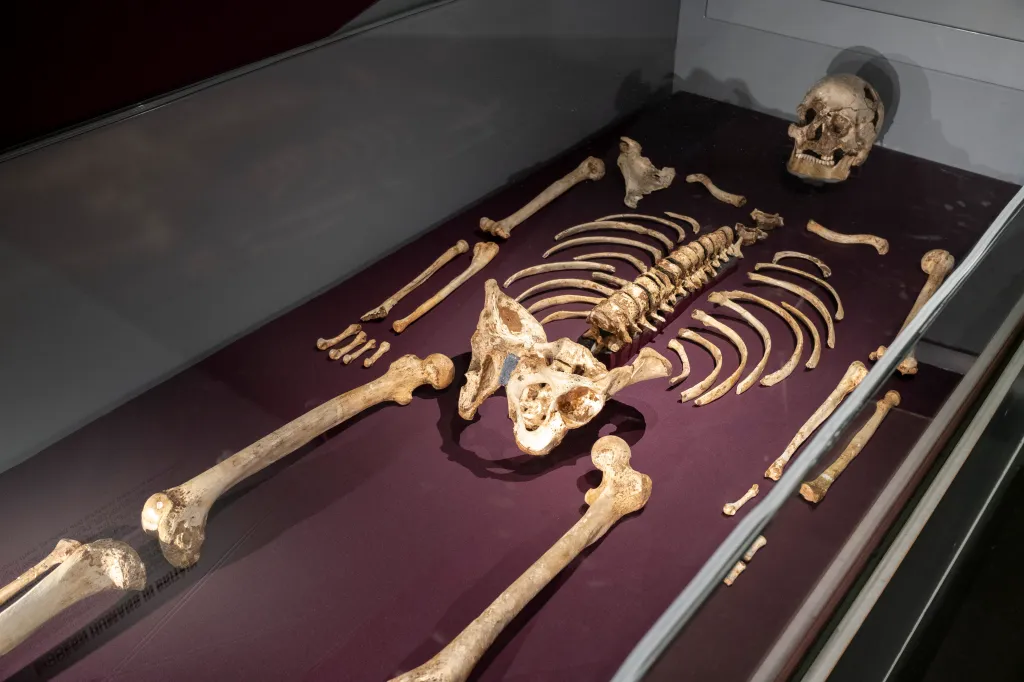
More than a quarter of a million human remains from around the world are currently held in UK museums, in what MPs and archaeologists are calling an uncomfortable legacy of the country’s colonial past. Not only this, but many of the items are reportedly being stored in ways that are disrespectful or even sacrilegious.
An investigation by the Guardian found that British museums collectively hold more than 263,000 items of human remains, ranging from complete skeletons and preserved bodies like Egyptian mummies to skulls, bones, skin, teeth, nails, scalps, and hair.
Freedom of information requests revealed that roughly 37,000 of those remains are known to have come from overseas, including thousands taken from former British colonies. For another 16,000 items, museums simply don’t know where they came from.
Among the remains with known origins outside Europe, the largest share comes from Africa, with 11,856 items, followed by 9,550 from Asia, 3,252 from Oceania, 2,276 from North America, and 1,980 from South America.
London’s Natural History Museum holds the largest collection of non-European human remains, with at least 11,215 items, including the biggest holdings from Asia and the Americas.
Cambridge University ranks second, with at least 8,740 items housed in its Duckworth Laboratory. That collection includes the largest group of African remains, standing at 6,223 items.
Across the UK, 241 museums, universities, and local councils said they hold human remains. But only 100 institutions were able to estimate how many individuals those remains represent, totalling roughly 79,000 people. The rest said they couldn’t say, often because remains from different bodies have been mixed together over time or because records are incomplete or missing altogether.
In some cases, institutions reported having cardboard boxes filled with human remains without knowing exactly what was inside or where the materials came from.
The findings have prompted sharp criticism from politicians and scholars.
Lord Paul Boateng, a former Labour cabinet minister, described UK museums and universities as “imperial charnel houses.” He argued that the bones of Indigenous people taken during the British Empire are still being kept today “with little regard to the spiritual beliefs of the communities they came from.”
Bell Ribeiro-Addy, a Labour MP who chairs the parliamentary group for Afrikan reparations, called the situation “barbaric,” pointing to the fact that many remains appear to have been looted and are now stored anonymously in museum boxes.
“The way these remains are stored and displayed shows a complete lack of respect,” she said. “They’re denied dignity, even in death.”
Researchers say the scale of the collections also contradicts a longstanding claim from the UK government. In guidance issued in 2005, the Department for Culture, Media and Sport (DCMS) said that “the vast majority” of human remains in British museums were of UK origin and had been excavated under clear legal frameworks.
But Dan Hicks, a professor of contemporary archaeology at the University of Oxford who analyzed the data, says the reality looks very different. Many museum collections, he argues, contain bodies and body parts taken from cemeteries or battlefields by British colonial officials and soldiers, sometimes kept as trophies or used in now-discredited racial science such as eugenics.
Hicks also said the responses suggest many museums are failing to follow existing government guidance, which says human remains should be stored separately, handled respectfully, and kept in controlled environments. Institutions are also encouraged to publish inventories of the human remains they hold, something many have not done.
For Hicks, the lack of documentation and transparency continues the harm that began when the remains were first taken. Treating human bodies as museum objects, he said, reflects “the colonial violence involved in the taking and warehousing of human remains.”
Boateng has called on the government to create a national register of human remains held in UK collections and to establish clear rules for returning them to their countries and communities of origin.
The DCMS and Cambridge University declined to comment to the Guardian.
The Museums Association, which represents UK museums, acknowledged that many overseas human remains entered collections during the colonial era. Its director, Sharon Heal, said updated guidance and legislation could help institutions work more closely with communities seeking the return of ancestral remains.
The Natural History Museum said it is committed to “high standards of care and stewardship” for the remains in its collection. It noted that it has not refused any requests for repatriation when a clear connection to a community of origin has been established.
Cambridge’s Duckworth Laboratory says on its website that it follows government guidance on the care and management of human remains.
