


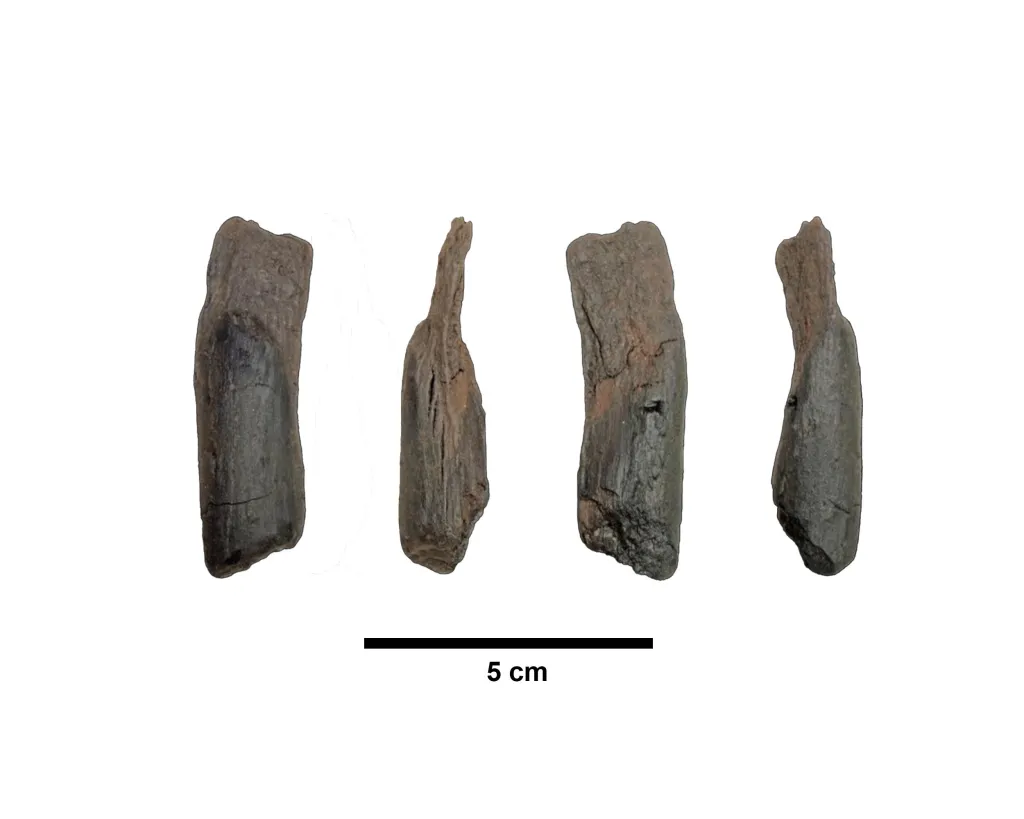
Two objects unearthed at an archeological site in southern Greece are the oldest wooden tools yet found, according to a paper published on Monday in the Proceedings of the National Academy of Sciences (PNAS).
The objects came from the site Marathousa 1, once a lakeshore during the Middle Pleistocene. Other discoveries at the site, including stone tools and animal bones, go back 430,000 years, giving a probable date for the new finds.
The artifacts include a 2.5-foot-long stick likely employed for digging and a handheld piece of poplar or maple that might have been used to shape stone implements. They offer insight into a little-known aspect of the technology of early humans, study author Katerina Harvati, a paleoanthropologist at the University of Tübingen in Germany, said in an email to phys.org.
It is thought that hominins of the Middle Pleistocene used implements made from a wide range of materials. Wood, however, is susceptible to rot unless in an airless environment, making it difficult to find evidence of wooden tools. Researchers believe that the newest discoveries may have been buried in mud and thus preserved until now.
The tools were found along with dozens of wood fragments. All were examined under microscopes and through CT scans. “We found marks from chopping and carving on both objects, clear signs that humans had shaped them,” lead author Annemieke Milks, an archaeologist at the University of Reading in England, told the New York Times.
A third piece of wood, found with the others, intrigued the researchers. Showing marks of clawing by a large carnivore, it suggested that hominins living at the location may have competed with predators, perhaps bears, for access to game.
