


The lawsuit brought by a British Columbia man against the estate of the First Nations artist Norval Morrisseau (1932-2007) alleging he was sexually assaulted by the painter has been dismissed. The dismissal order says the case was dismissed “for all purposes” and without costs to any party. It was signed by the plaintiff Mark Anthony Jacobson and Jason Gratl, the lawyer representing Morrisseau’s estate, and filed in the BC Supreme Court in Vancouver on 6 January.
“This case proceeded to a quick and decisive resolution,” Gratl tells The Art Newspaper. “We cross-examined the plaintiff on the substance of his allegations, after which his lawyer withdrew, and the plaintiff consented to the dismissal of his claim without any payment to him.”
In the lawsuit filed last year, Jacobson sought C$5m ($3.6m) from the estate in general, aggravated and punitive damages. He alleged Morrisseau reached into his pants and touched him on the buttocks after Morrisseau’s assistant suggested he could heal Jacobson’s back pain.
The estate responded to the lawsuit saying that Morrisseau “was in no position to be physically or socially aggressive” at the time of the alleged 2006 assault, that he “had no libido”, was held upright in a wheelchair by straps and was in the advanced stages of Parkinson’s disease. Morrisseau died the following year at the age of 75.
In an affidavit filed last September, Jacobson acknowledged that Morrisseau suffered from Parkinson’s disease, but claimed he was “still able to use his arms and hands in 2006, with assistance”.
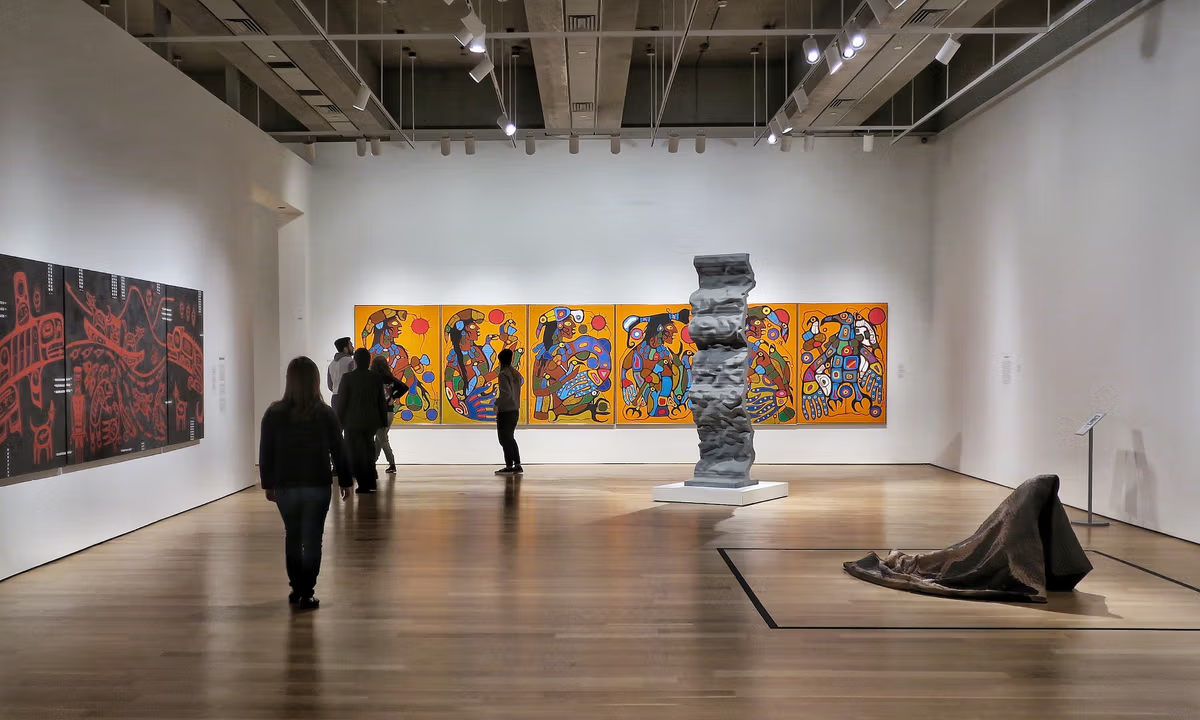
Morrisseau is considered the founder of the Woodlands School of Art, which drew on traditional Native cosmology. Dubbed “the Picasso of the North” by Marc Chagall, Morrisseau made work that spoke to the cultural and political tensions between Indigenous and settler traditions, and also celebrated fluidity, both cultural and sexual. The artist’s later work embraced contemporary idioms, paving the way for painters such as Lawrence Paul Yuxweluptun, who merged Indigenous cosmology with Surrealism.
Jacobson was a fan of Morrisseau, whom he met by chance in a Nanaimo gallery in 2005. In court documents, the estate claimed that Jacobson, who is also an artist, paints in the style of Morrisseau “and to some extent has also fashioned his artistic persona after Norval Morrisseau, naming himself ‘Rainbow Thunderbird’ after Morisseau’s Anishnaabek name ‘Copper Thunderbird’”.
Morrisseau’s estate stated in its response to the lawsuit, filed last 9 September, that Jacobson had contacted Cory Dingle, the chief executive of the company associated with the estate, in 2022 and asked to be promoted as Morrisseau’s “sole spiritual and artistic successor”. In a subsequent affidavit, Dingle stated that he refused and the next day Jacobson allegedly began a “vile and profane text message and internet defamation campaign” against Morrisseau and the estate.
Jacobson stated that he “categorically denies” that he asked to be appointed as “spiritual successor or gatekeeper of the Woodlands style”.
Dingle tells The Art Newspaper he feels relieved and vindicated by the dismissal of the case. “The estate will always vigorously defend the legacy of Norval Morrisseau against all actions attempting to diminish his importance,” he says. “As we’ve seen with the most recent crown convictions of all six fraud cases now successfully concluded with guilty on all accounts, these victories show the world our passion to defend Morrisseau’s legacy.”
Morrisseau became aware of forgeries of his work on the market in the years before his death. But it was a 2019 documentary by the Canadian film-maker Jamie Kastner, There Are No Fakes, that brought what has been described as the biggest art fraud in history to wider public attention.
