


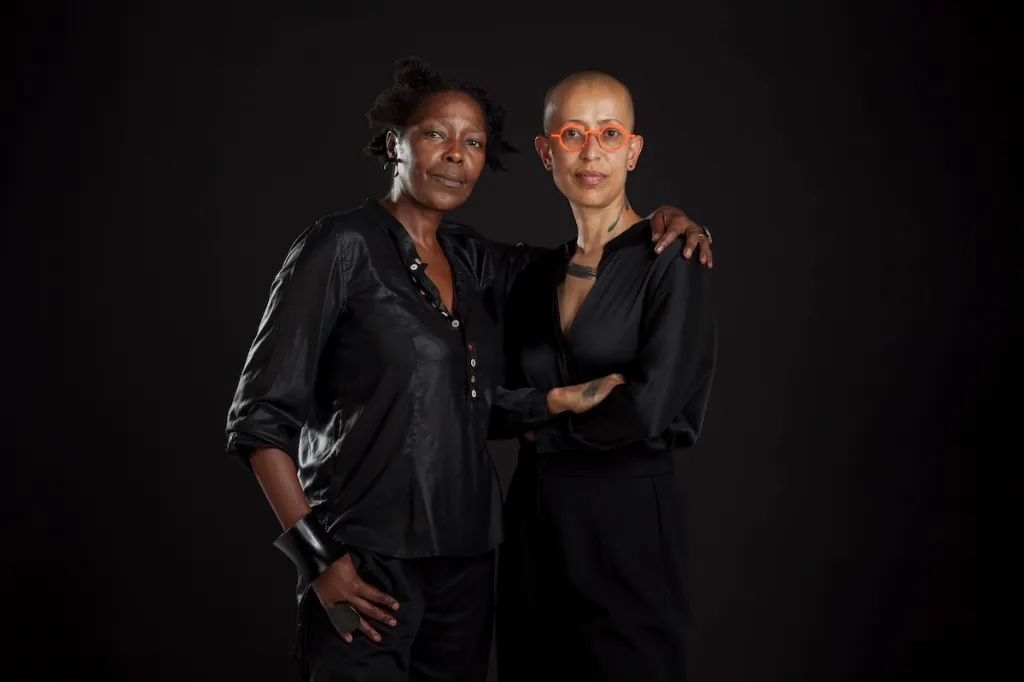
South Africa selected a Gabrielle Goliath work about Gaza for its Venice Biennale pavilion, then rescinded the decision amid concerns that the work was “polarizing,” according to a report by the Daily Maverick, a South African publication.
The decision to pull the pavilion was reportedly made by the culture ministry on January 2, just eight days before nations must finalize their Venice Biennale pavilions. In an unusual move, the South African Pavilion’s selection committee then issued a statement of its own, saying that it disagreed with the cultural ministry decision.
Goliath, a South African artist who figured in the main exhibition of the 2024 Venice Biennale, was set to exhibit a work from her ongoing “Elegy” series, which the artist describes as an “ongoing labour of remembrance, repair and black feminist love” on her website. The series was begun in 2015 as a performance about sexual assault and femicide, both in South Africa and outside it, and it has since been expanded to include a video installation.
According to the Daily Maverick, Goliath was going to address Israel’s war in Gaza, a topic she also broached in a video installation currently on view at her solo show at MoMA PS1 in New York. The new “Elegy” work was set to explore the killings of women and queer people in South Africa, as well as the killings of women in Namibia by German forces during a genocide in the early 20th century, but it was one section in particular that reportedly raised concern at the culture ministry. That section was to feature words by the Palestinian poet Hiba Abu Nada, who was killed, along with her son, during an Israeli airstrike in October 2023.
In a letter to the pavilion’s organizers, Gayton McKenzie, the South African culture minister, reportedly sought for this section to be changed in late December, noting that he had the power to cancel the country’s participation in the Biennale. McKenzie claimed that the work was “highly divisive in nature and relates to an ongoing international conflict that is widely polarising.”
“As an artist, I am concerned with revealing and refusing conditions that make violence possible, permissible and terrifyingly ‘ordinary,’” Goliath told the Daily Maverick. “Whose lives are available to be displaced, raped, killed, disavowed?”
She added, “I have said it many times: my work is not about violence, but rather foregrounds practices of mourning, survival and repair, within and despite this normative disregard. At a moment in which sustaining hope is a political imperative, I think it is all the more crucial to emphasise my work as life-work rather than death-work, and as rooted in a decolonial black feminist project of care and radical love.”
On Thursday, the selection committee called McKenzie’s request a form of “censorship.” The committee’s statement, published by the South African art publication ArtThrob, said that the cancelation highlights larger problems with the pavilion’s organization.
“The cancellation of an independent and transparent curatorial process is deeply troubling, particularly in light of the Pavilion’s long history of non-transparency and mismanagement,” the statement said. “We therefore reject, without reservation, any effort to coerce artists or curators into altering artistic statements to serve political narratives.”
The committee also said that Goliath’s work spoke appropriately to the theme of this Biennale, which is curated by Koyo Kouoh, who directed Cape Town’s Zeitz Museum of Contemporary African Art when she died midway through the exhibition’s making last year. “The proposed work recognises and mourns the tragic loss of innocent lives, including Palestinian women and children,” the committee said. “Elegy’s understated yet powerful engagement with grief speaks to Kouoh’s emphasis on practices that address historical and ongoing forms of violence with sensitivity, responsibility, and emotional depth, representing South Africa with a courageous and challenging project.
In a statement to the Daily Maverick, McKenzie denied that he questioned the “validity or otherwise of international findings regarding Gaza.” Instead, he attributed his decision to his belief that the South African Pavilion was “meant to showcase South African artistic expression rooted in South African experience.” He rejected the allegation that he censored Goliath.
Goliath’s studio told ARTnews that the artist and curator Ingrid Masondo had been unanimously selected for the pavilion. “We dare to think and dream the world differently,” they said in an email.
ARTnews has reached out to the South African culture ministry for comment.
The decision has already generated scrutiny from artists such as Candice Breitz, a South African–born filmmaker whose work faced pushback in Germany because she made statements in support of Palestine on social media. On Instagram, Breitz called the Goliath decision “an astonishing clampdown on freedom of expression.”
It is not the first time a pavilion for the 2026 Venice Biennale has faced controversy over its artist’s beliefs on Israel, Gaza, and related matters. Last year, Australia revoked its selection of Khaled Sabsabi after conservative publications in the country questioned the meaning of a past work featuring a Hezbollah leader. Amid an international outcry, Sabsabi was ultimately reinstated as Australia’s representative.
