


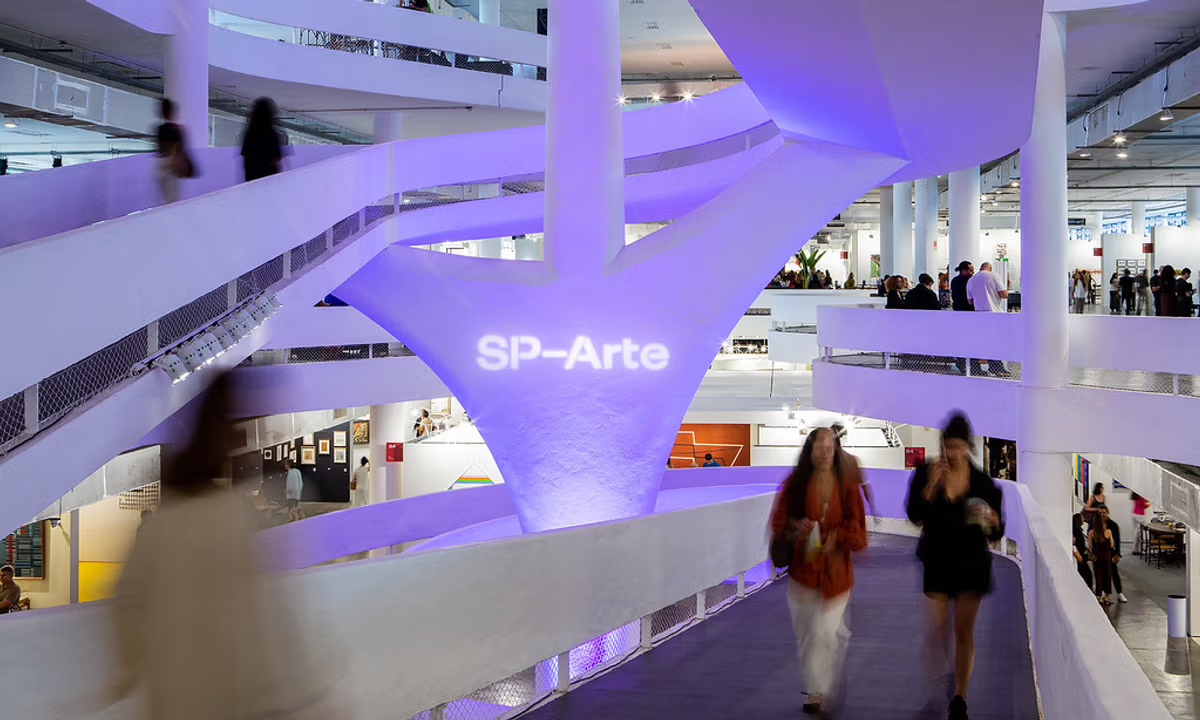
São Paulo’s Ibirapuera Park hosts the 22nd edition of SP-Arte this week (April 8–12), as over 180 galleries, design studios, and cultural institutions fill the Oscar Niemeyer-designed biennial pavilion for Brazil’s largest art fair amd one of South America’s most closely watched art events. As established art markets around the world recalibrate, galleries in this part of the world seem to only be gaining strength.
“The Latin American market is a market accustomed to crises. We are truly resilient,” SP-Arte founder Fernanda Feitosa, tells The Art Newspaper.
According to the most recent Art Basel and UBS Global Art Market Report released last month, art dealers in South America reported strong sales over 2025, driven by a 21% increase year-on-year by Brazilian galleries.
“Latinos are warriors. Brazilians are warriors. We manage to thrive despite everything, despite economic crises, political crises and a lack of cultural policies in our respective countries,” Feitosa adds. Ricardo Gonzalez Ramos, founder of Galería RGR, based in Mexico City, agrees.
“Every country in Latin America has a very distinctive culture and history. For collectors in Europe and the United States, this plurality is attractive,” he says. In his third year at SP-Arte, Gonzales is confident regarding sales.
“The economic and political troubles around the world have impacted the art market, but overall we are a very resilient sector,” Gonzalez Ramos says. “There are always important collectors and institutions that keep buying and promoting artists.”
Saltamonte (2024) by Santiago Yahuarcani. Courtesy of Crisis Galeria
Juan Luis Balarezo, director of Crisis Galeria from Lima, Peru, a newcomer to this year’s fair, sees the resilience of Latin American galleries as a result of their structure.
“Galleries in Latin America are not as large and don’t have the same cost structure as those in the US or Europe,” he says, adding that the international art market has begun, in recent years, to properly value Latin American work: “People are just realising that there shouldn’t be a premium on so-called Western art. Works should be valued the same.”
Although some international galleries are present at this year’s SP-Arte, the vast majority are Brazilian, and most works on display are by Brazilian artists.
“SP-Arte is a Brazilian fair to anchor national production,” says Feitosa. “It has international participants, but it is a fair with a Brazilian identity, just as Zona Maco has a very Mexican identity.”
That local identity, she argues, is increasingly an asset. “Many of the large international fairs are devoid of personality [and] of a certain local connection,” she notes.
Cities like São Paulo, Mexico City, Bogotá and Buenos Aires, she says, have every condition to become international art hubs, with erudite markets and sophisticated consumption patterns, but are held back by political and structural constraints that keep their fairs largely local. Interest in Brazilian art is growing, buoyed by a broader shift in the global art world toward greater inclusion of women, Indigenous, Black and street artists. It is a rebalancing in which Brazil, says Feitosa, is a natural protagonist.
“We have all of this; we check all the boxes,” she says.
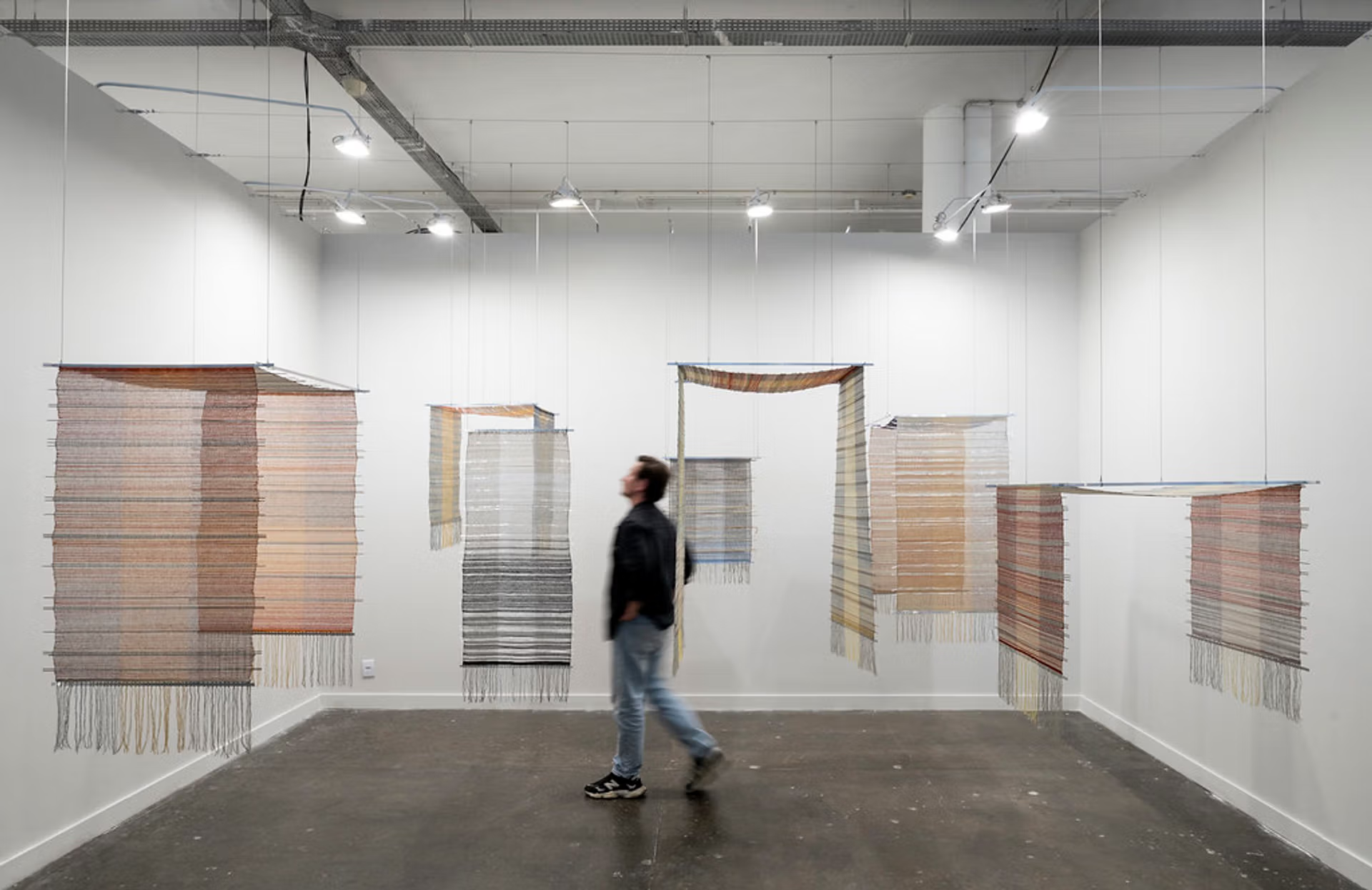
Galleria Foco’s stand at SP-Arte. Courtesy SP-Arte
With those characteristics, the Brazilian art scene is attracting the attention of museum curators like Jennifer Inacio, associate curator at Pérez Art Museum Miami (PAMM). One of PAMM’s focuses is to bring artists from Latin America and the Caribbean to the museum. She notes that there is much interest from curators at American and European museums in holding exhibitions of Latin American and Brazilian artists.
“To have a global conversation, more museums need to include artists from Latin America and artists from the Global South in their collections,” Inacio says.
SP-Arte has also in the last few years cemented its role as a major showcase for design. Since its introduction, in 2016, the design sector has grown from 23 to 64 stands, and this year introduces a new section dedicated to contemporary Brazilian design. The new sector, DesignNOW features ten creators who work independently, with no links to major design houses.
“Brazilian design is extremely powerful, but it was waiting for an event worthy of its output,” says Feitosa. “When you create a calendar for the sector, it thrives.”
The fair’s growing international pull is perhaps best illustrated by Australian art advisor and consultant, Fiona McIntosh, who is part of a group taking a deep dive into Brazil’s art scene, with stops in São Paulo, Rio de Janeiro and the Inhotim Institute.
“What is exciting about this fair is that it is such a local event,” she says, showing works she and her fellow Australians have already purchased. “Fairs like Basel and Frieze tend to reflect the international art scene. SP-Arte is much more about Brazil, and that has been very exciting for us.”
