

Close Menu
  • News
  • Stocks
  • Bonds
  • Commodities
  • Collectables
    • Art
    • Classic Cars
    • Whiskey
    • Wine
  • Trading
  • Alternative Investment
  • Markets
  • More
    • Economy
    • Money
    • Business
    • Personal Finance
    • Investing
    • Financial Planning
    • ETFs
    • Equities
    • Funds

Subscribe to Updates

Get the latest markets and assets news and updates directly to your inbox.

Trending Now

Refik Anadol to Stage Monumental AI Installation on Smithsonian Castle in DC

June 29, 2026

IsoEnergy Finalizes Toro Energy Acquisition

June 29, 2026

Three Swiss Museums Return Trove of Benin Bronzes to Nigeria

June 29, 2026
Facebook X (Twitter) Instagram
The Asset ObserverThe Asset Observer
Newsletter
LIVE MARKET DATA
  • News
  • Stocks
  • Bonds
  • Commodities
  • Collectables
    • Art
    • Classic Cars
    • Whiskey
    • Wine
  • Trading
  • Alternative Investment
  • Markets
  • More
    • Economy
    • Money
    • Business
    • Personal Finance
    • Investing
    • Financial Planning
    • ETFs
    • Equities
    • Funds
The Asset ObserverThe Asset Observer
Home»Art Market
Art Market

Spain’s Culture Minister Rejects Guernica Transfer, but Basque Leaders Refuse to Take No for an Answer

News RoomBy News RoomApril 9, 2026
Share
Facebook Twitter LinkedIn Pinterest Email

When the Basque regional government made a formal request last week to Spain’s Ministry of Culture to authorize a temporary loan of Pablo Picasso’s Guernica (1937), the region’s head of government, Lehendakari Imanol Pradales, said he expected more robust discussion on the issue after Easter Sunday.

According to El País, that discussion came on Tuesday—and the culture minister, Ernest Urtasun, was unequivocal. During a government oversight session in Spain’s Senate, Urtasun told senator Igotz López, of the Basque National Party, that he would not approve the transfer request.

“I understand the sensitivity behind this request,” Urtasun said. “We are talking about a work linked to the memory of Gernika and the pain it symbolizes. My obligation is to guarantee access to culture and also to safeguard our heritage. In matters like this, we must listen to the experts who have been preserving the work for 30 years. Their reports are clear and advise against moving the piece due to the risks involved. Celebrating the 90th anniversary of Gernika should also mean ensuring that this work can last another 90 years. My obligation is to preserve this heritage.”

López was not taking Urtasun’s answer as the final word. He reiterated that the Basque government is already familiar with the Reina Sofía’s condition report—which deems the painting too fragile to travel—and that it is instead requesting a feasibility report from independent technicians on how a transfer to the Guggenheim Museum Bilbao could be carried out safely. He also challenged Urtasun’s assertion that the Reina Sofía could not survive without the painting.

“If their survival depends on exhibiting Guernica, they have a problem. The Reina Sofía could be valued for more than just Guernica,” López said.

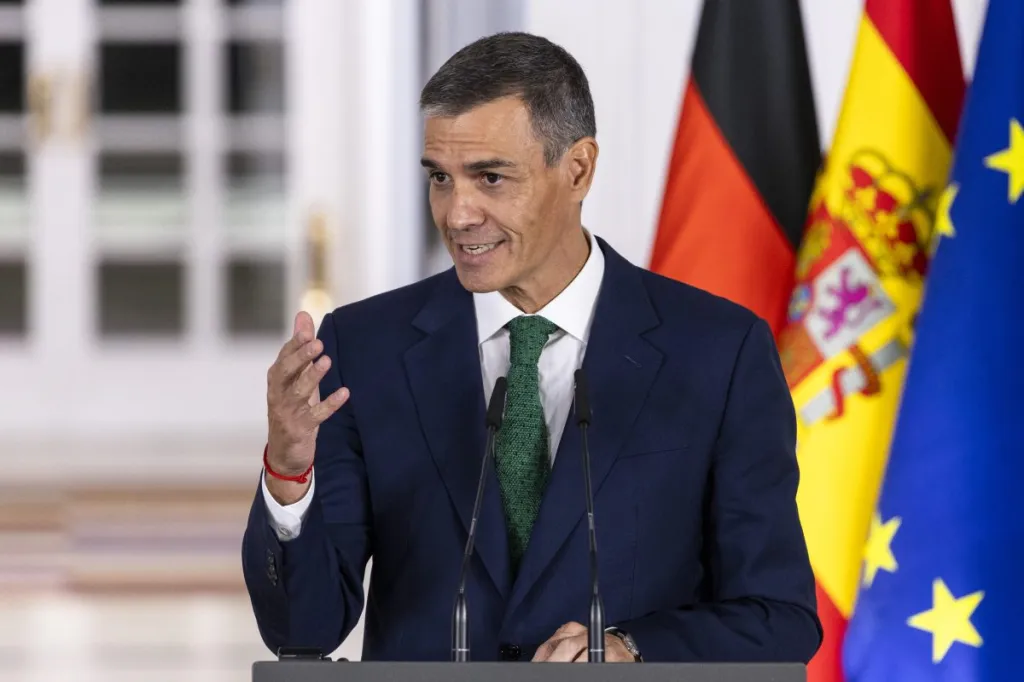
The Basque government has continued to say that it is awaiting a “formal response” from Prime Minister Pedro Sánchez, apparently declining to treat Urtasun’s Senate remarks as such.

Also on Tuesday, a spokesperson for the government of Catalonia—like Basque Country, an autonomous region of Spain—endorsed the transfer, calling it “not only culturally sound but a democratic duty.”

The Basque government’s request for Guernica is far from its first. The government has made similar appeals several times over the years, including for the opening of the Guggenheim Bilbao in 1997. Barcelona also requested a transfer in 1992. None have been successful.

Painted in Paris over five or six weeks, the monumental canvas measures 11 feet 5 inches by 25 feet 6 inches. It was first shown at the 1937 World’s Fair before touring Europe and the United States. In 1939, it was on long-term view at the Museum of Modern Art in New York, with Picasso stipulating that it should not return to Spain until democracy was restored. After the Franco dictatorship ended in 1975, MoMA transferred the painting to Spain in 1981. It first went to the Prado and then, in 1992, to the newly oepned Reina Sofía, where it has remained ever since.

Share. Facebook Twitter Pinterest LinkedIn Tumblr Email

Keep Reading

Refik Anadol to Stage Monumental AI Installation on Smithsonian Castle in DC

Three Swiss Museums Return Trove of Benin Bronzes to Nigeria

Chyrum Lambert’s Paper Cutouts Open New Dimensions

70-Ton Statue of Lionel Messi Appears in Argentina Amid World Cup Fervor

Man Pleads Guilty in Fraud That Swindled Bruce Springsteen Manager

What the Hell Is That Weird Painting Donald Trump Just Posted?

Pre-Hispanic archaeological discovery in western Mexico features ‘unprecedented’ characteristics – The Art Newspaper

Song Burnsoo, pioneering Korean fiber artist, dies at 83.

Swiss Institute to Move to Permanent Home on the Bowery Next Spring

Recent Posts
  • Refik Anadol to Stage Monumental AI Installation on Smithsonian Castle in DC
  • IsoEnergy Finalizes Toro Energy Acquisition
  • Three Swiss Museums Return Trove of Benin Bronzes to Nigeria
  • Zymeworks Expands Into Respiratory Market WithTheravance Buyout
  • Chyrum Lambert’s Paper Cutouts Open New Dimensions

Subscribe to Newsletter

Get the latest markets and assets news and updates directly to your inbox.

Editors Picks

IsoEnergy Finalizes Toro Energy Acquisition

June 29, 2026

Three Swiss Museums Return Trove of Benin Bronzes to Nigeria

June 29, 2026

Zymeworks Expands Into Respiratory Market WithTheravance Buyout

June 29, 2026

Chyrum Lambert’s Paper Cutouts Open New Dimensions

June 29, 2026

Victory Metals Awarded AU$350,000 for Rare Earth Work

June 29, 2026
Facebook X (Twitter) Instagram
© 2026 The Asset Observer. All Rights Reserved.
  • Privacy Policy
  • Terms
  • Press Release
  • Advertise
  • Contact

Type above and press Enter to search. Press Esc to cancel.