


After weeks of bombardment that forced its closure and prompted emergency efforts to protect its collection, the Tehran Museum of Contemporary Art (TMoCA) has reopened with a weekly, rotating post-ceasefire programme—this week turning to Spain, including three works from Pablo Picasso’s Weeping Woman series.
Home to what is widely considered the largest collection of Western modern art outside Europe and the United States, the Art and War programme at TMoCA aims to explore artistic responses to conflict across time and geography. The programme began last week—still under emergency protocols—with six works by American Pop artists James Rosenquist, Roy Lichtenstein and Robert Indiana.
TMoCA’s collection was primarily assembled in the 1970s by Iran’s former Shah’s wife, Farah Pahlavi, and is a rich collection of masterpieces, among them around 60 works by Picasso, as well as pieces by Andy Warhol, Willem de Kooning, Jackson Pollock, David Hockney, Vincent van Gogh and Pierre-Auguste Renoir.
The museum’s Art and War programme opened with six works by American Pop artists James Rosenquist, Roy Lichtenstein and Robert Indiana last week. Image: © Tehran Museum of Contemporary Art
The collection has remained largely intact over the years, with one notable exception: De Kooning’s Woman III (1953), which was exchanged in 1994 with the British art dealer Oliver Hoare for the text, binding and 118 miniature paintings from Shah Tahmasp’s Shahnameh, a 16th-century Persian manuscript considered one of the masterpieces of Islamic art. The manuscript had been acquired in 1959 by the American industrialist and bibliophile Arthur Houghton Jr., who later dismembered it and dispersed around 140 of its folios among museums and collectors.
Protecting a $3bn collection
It was while safeguarding the museum’s collection during the war that the programme began to take shape, Reza Dabirinezhad, the museum’s director, tells The Art Newspaper from Tehran.
On 28 February, the first day of the war, Dabirinezhad was in a meeting in Tehran when explosions from US-Israeli strikes rocked the city. He rushed back to the museum, sent non-essential staff home, and began securing the works with a reduced team.
At the time, the museum had been preparing a major exhibition of non-Iranian photography from its collection, spanning from shortly after the invention of photography to 1980. The exhibition had to be quickly dismantled and packed. Among the first priorities was retrieving works on loan—20 of which were held at another museum in northern Tehran. “Despite the chaos and traffic, we managed to transfer them back by the end of the day,” Dabirinezhad says. The team also coordinated with Iran’s National Commission for Unesco to ensure the museum was registered as a cultural site, while preparing emergency inventories.
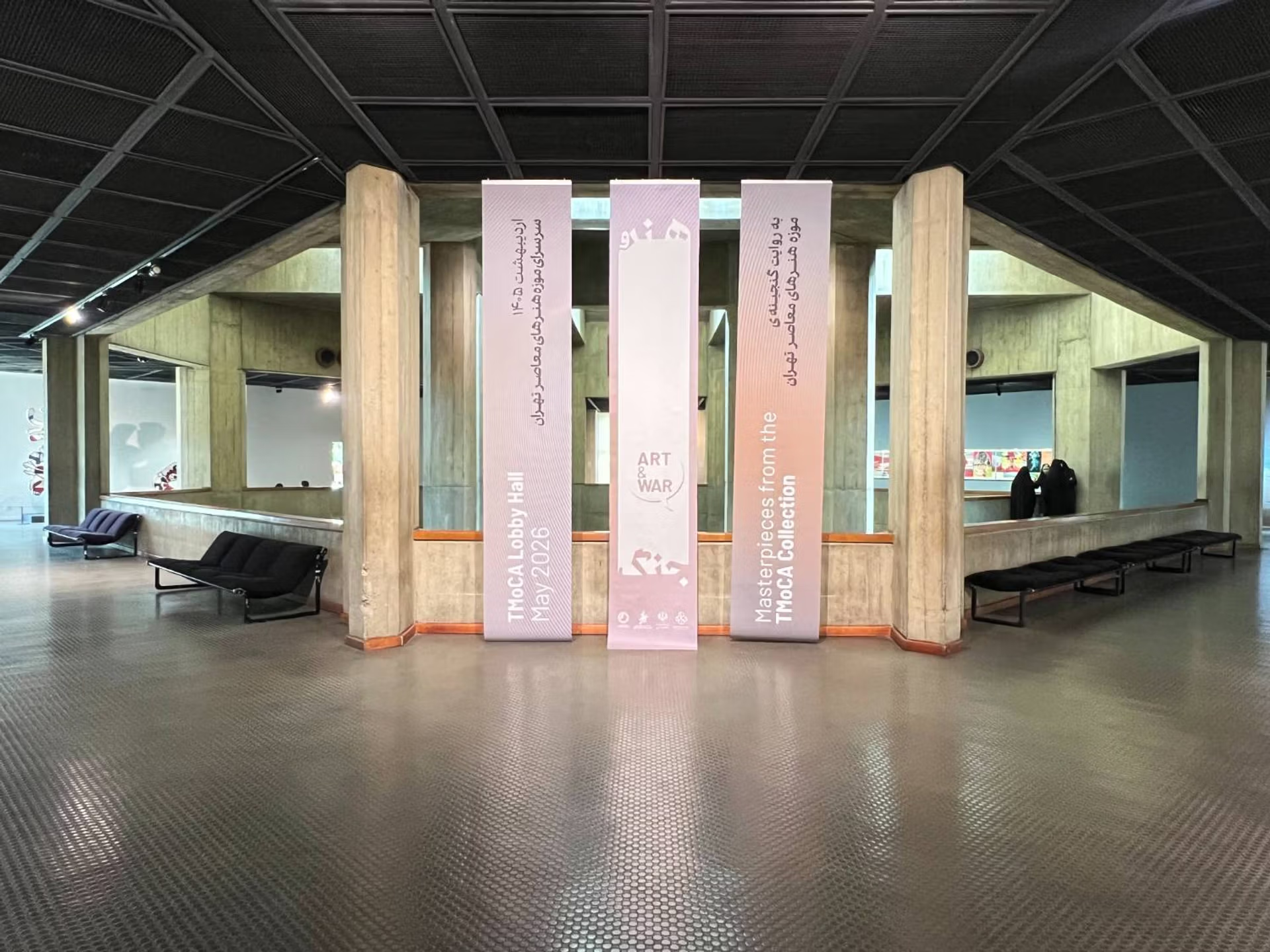
TMoCA’s lobby with banners for its new Art and War programme Image: © Tehran Museum of Contemporary Art
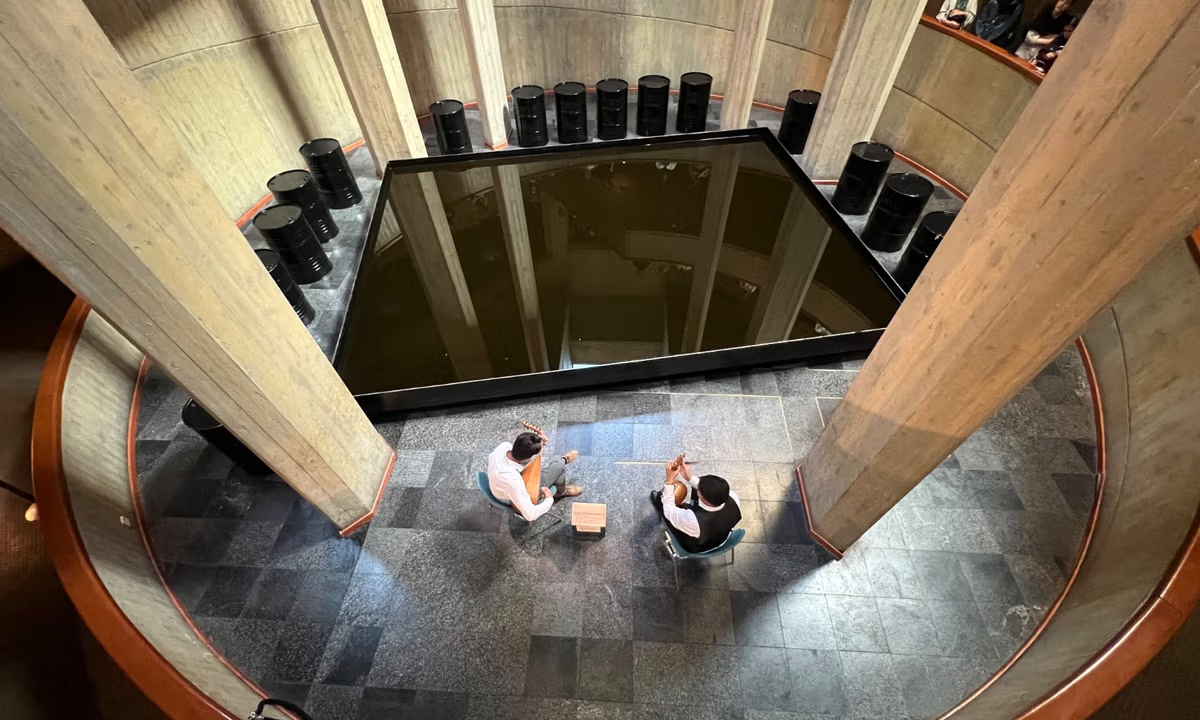
One of the most complex challenges involved Noriyuki Haraguchi’s Matter and Mind (1977), an installation containing more than 4,000 litres of waste oil in a large pool. “We were worried that shockwaves from explosions could cause it to overflow or ignite,” Dabirinezhad says. After much deliberation, around 80% of the oil was removed. “We wanted the work’s original form to remain visible, so we kept 20% in place to preserve its appearance.”
With limited resources under bombardment, the team sourced pumps and barrels from outside Tehran for the operation. The filled barrels were placed next to the work—where they remain—so the oil can later be returned.
Another challenge was protecting the museum’s extensive sculpture collection, which includes works by Henry Moore, René Magritte and Max Bill, most of which are installed in its garden. “We reviewed different protection methods, but access to suitable materials was very limited during the war,” Dabirinezhad says. There were also concerns that covering the works could cause damage through vibration in the event of nearby blasts. In the end, aside from two smaller portable sculptures that were moved, the rest were left in place and monitored daily.
“This responsibility weighed on us constantly, even at night, when we were not at the museum,” Dabirinezhad says, describing the strain of safeguarding the museum’s estimated $3bn collection during the war. Staff were continually checking the news and responding to explosions and tremors, fearing damage to the museum, while maintaining an internal communication network to coordinate their response.
As the number of cultural sites damaged or destroyed by the US-Israeli strikes, including museums, continued to rise across the country, Dabirinezhad says he wrote to around 40 international museums and cultural institutions, including ICOM, informing them of the situation and urging them to speak out.
Responding to conflict
Under constant threat of bombardments, he says, public gatherings on site were impossible and the priority for TMoCA and other museums remained protecting their collections. Yet questions about the relevance of those works lingered during the nearly 40-day war.
“We kept asking: what do we have? Which works relate to these conditions?” Dabirinezhad says. “As we reviewed the archive, we began to see patterns—how artists have approached war and peace, directly and indirectly, as representation or as response to their social context.”
After a ceasefire between the US and Iran was announced on 8 April, discussions with artists and researchers led to the Art and War programme to provide a space for reflection, contemplation and emotional response for a society under sustained psychological pressure.
“Our approach is socially oriented. We see artworks as cultural forms with multiple layers, capable of being reinterpreted in different contexts,” Dabirinezhad says.
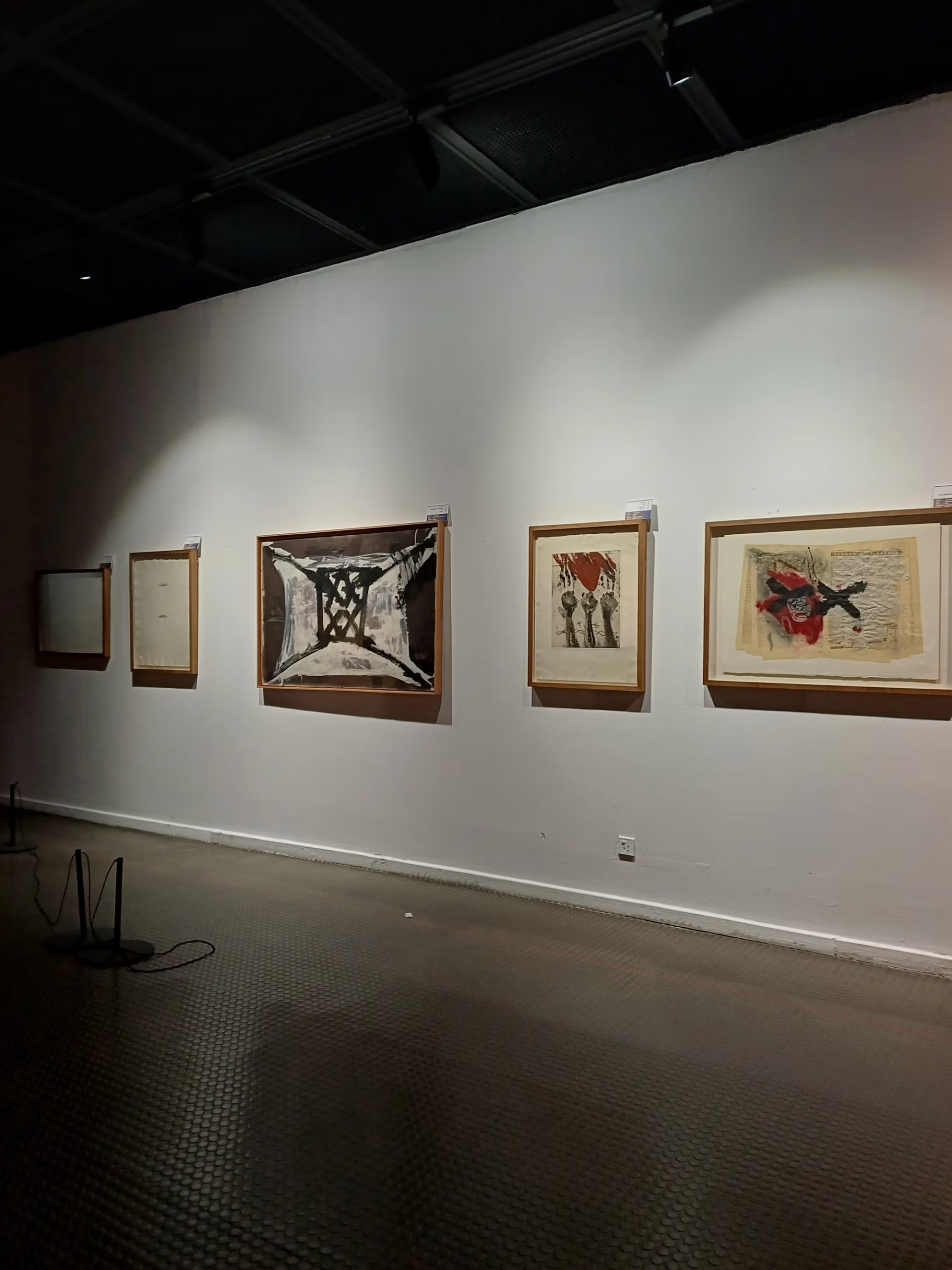
Eleven works by Pablo Picasso, Antoni Tàpies, Robert Motherwell and Juan Genovés, addressing the Spanish Civil War, are on display at TMoCA this week as part of the museum’s Art and War programme. The limited display reflects ongoing precautions in case war resumes and the collection must be moved to storage. Image: © Tehran Museum of Contemporary Art
Starting with Picasso’s Weeping Woman series, developed after Guernica (1937), the team identified nearly 100 works that fitted the theme and began grouping them. This week’s display brings together 11 works by four artists—Picasso, Antoni Tàpies, Robert Motherwell and Juan Genovés—addressing the Spanish Civil War.
A message from Spain’s ambassador to Iran, Antonio Sánchez Benedito Gaspar, is also included in the display, emphasising art’s role in responding to conflict. “Art has the capacity to preserve historical memory, to question violence, and to open spaces for reflection and shared thought,” it reads.
Still operating in “war mode”, Dabirinezhad says the museum is balancing quality with practical constraints. “We remain in a transitional situation and must be prepared for emergencies, including the need to secure the works again if necessary. This is why the number of works is limited,” he explains, adding that “what matters is the narrative and its conceptual and social impact”.
The programme also includes live music, documentary screenings and talks, with plans for performances, live art production and presentations of works created during the war. “There is a clear appetite for cultural engagement—people seeking reflection rather than spectacle,” Dabirinezhad says.
Next week, the exhibition will focus on Mexico, including artists such as Demián Flores, Emiliano Gironella and Adolfo Mexiac, followed by Europe and finally Iran, where Dabirinezhad says works from the Shah Tahmasp Shahnameh may also be presented.
“War, by its nature, is anti-human, while art seeks to create human narratives,” Dabirinezhad says.
