


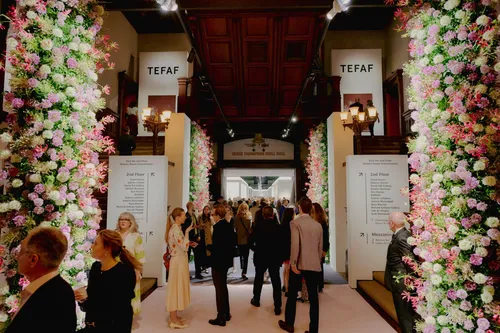
TEFAF New York has unveiled their list of participants for its 2026 edition, which will bring together 88 dealers from across modern and contemporary art, design, jewelry, and antiquities.
The total is a small drop from its 2025 edition, which hosted 91 exhibitors. The fair will return to the Park Avenue Armory from May 15th to 19th during New York Art Week, which will feature a host of art fairs across the city, including Frieze New York, Future Fair, and Independent.
Of the 88 exhibitors, 10 are new to TEFAF New York, including Paris and New York’s Galerie Lelong, London’s Piano Nobile and Annely Juda Fine Art, and Zurich’s Larkin Erdmann. Hauser & Wirth, Pace Gallery, Lévy Gorvy Dayan, and Berggruen Gallery are also returning to the fair after brief absences.
“The heart of TEFAF New York lies with its exhibitors,” said TEFAF New York director Leanne Jagtiani in a statement. “In 2026, we’re proud to present a compelling lineup of dealers, both longstanding participants and an exciting group of newcomers, who represent the best across disciplines. From internationally celebrated modern and contemporary art, iconic design, cultural antiquities, and high jewelry, this year’s edition will further strengthen the fair as a leading platform for connoisseurship and discovery."
Other international galleries participating include Gagosian, White Cube, Gladstone, and Thaddaeus Ropac. They will be joined by design-focused galleries such as Demisch Danant, Galerie Patrick Seguin, and Carpenters Workshop Gallery. Antiquity and jewelry dealers, including Galerie Chenel, Charles Ede, and Ana Khouri, will round out the presentation.
Started in 2016, the New York edition of TEFAF leans into more contemporary and modern presentations than its flagship fair in Maastricht, the Netherlands, whose offerings span thousands of years of art history.
This year’s fair in New York will once again open the Armory’s 16 distinct period rooms to exhibitors, and is the only art fair held at the legendary New York space granted access to do so. The historic rooms, whose Gilded Age interiors are designated as historic landmarks, were individually conceived by prominent figures from the American aesthetic movement, including Louis Comfort Tiffany, Stanford White, Pottier & Stymus, and Candace Wheeler.
