


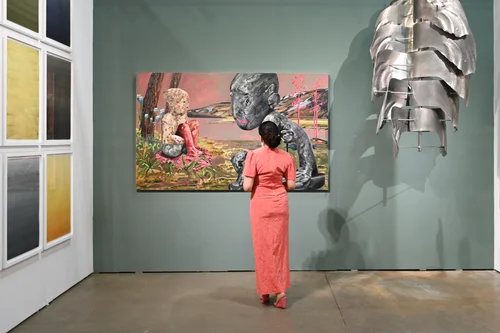
A buoyant energy ran through Navy Pier during EXPO Chicago 2026’s VIP day on April 9. In early conversations, one theme recurred: the fair felt refreshed. That shift was drawing back Midwestern collectors who had not attended in years, as well as an increased international crowd.
The 2026 edition is EXPO’s second under the ownership of fair conglomerate Frieze, and the first led by director Kate Sierzputowski, the fair’s former artistic director. Working with notable Chicago curator Essence Harden, she has introduced a cleaner floor plan and a stronger curatorial vision that reduces the fair to 140 galleries, compared to 170 in 2025.
Leaner, meaner, and more focused, this year’s EXPO feels re-energized. The fair kicked off in lively spirits, with several booths selling out within the first few hours, including Public Gallery and Megan Mulrooney. As the day went on, VIPs continued to flood into the convention center, with the fair hitting its peak as the post-work crowds drifted in after 6 p.m.
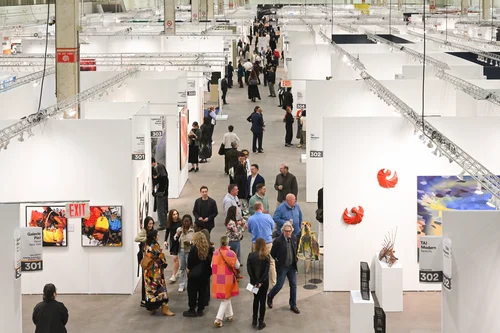
Much of this renewal stems from owners Frieze, which operates fairs in London, Seoul, Los Angeles, and New York, and acquired both EXPO Chicago and The Armory Show in 2024. Leveraging Frieze’s international network, Sierzputowski explained how EXPO is reaching global art communities, thereby solidifying connections with Asian and European galleries. Indeed, the fair’s glamorous atmosphere resembled the stylish ambiance of Frieze’s stateside fairs in Los Angeles and New York.
At the same time, one of the organizers’ main goals this year was to bring local collectors back into the fold. Sierzputowski spent the past several months traveling extensively around the region and focused on reconnecting with audiences whose attendance had wavered since the fair's founding in 2012. Judging by the crowds on the fair’s VIP day, that outreach is paying off.
When visitors did arrive, there was plenty to hold their attention, thanks to a lean, curated structure that made the fair far less exhausting to traverse than in previous years. “It was really important for me to make really specific choices with the sections, make them more thematic, make them more exciting to experience, have it be something that curators really want to explore,” said Sierzputowski.
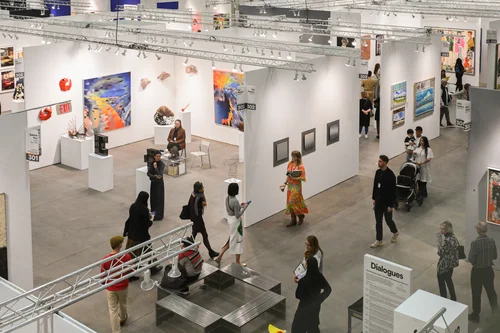
This approach is especially visible in EXPO Projects, a section featuring interactive installations and performances throughout the fair. Among the inaugural collaborations are “Evolution,” a display curated by Louise Bernard, director of the nearby Obama Presidential Center Museum, which is set to open later this year. Other institutions with an increased presence at the fair include Artists in Public Schools, a residency pairing Chicago artists with Chicago Public Schools, and the Saint Louis Art Museum, which organized a group to visit the fair for the first time in around a decade.
Indeed, incorporating local institutions is a natural move in a city like Chicago, where museums, foundations, and academic collections have long played a central role in shaping the city’s cultural identity. “We want to embed them deeper into the fair, and not just have institutions visit or do a program or a discrete installation, but have it feel more like a full collaboration,” said Sierzputowski.
Here, we present the five best booths from EXPO Chicago 2026.
Public Gallery
Booth 324
With works by Taylor Simmons
Eurydice, 2026
Taylor Simmons
Public Gallery
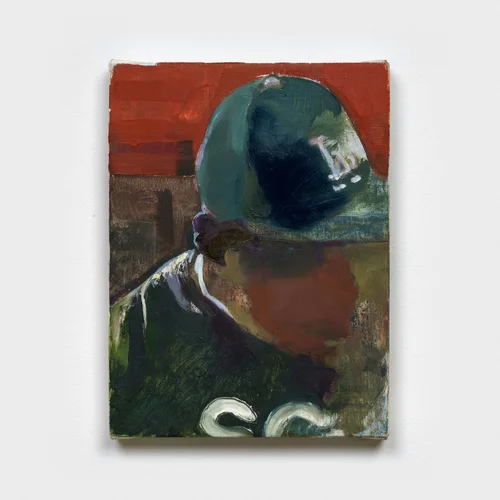
Dark, Deep, 2026
Taylor Simmons
Public Gallery
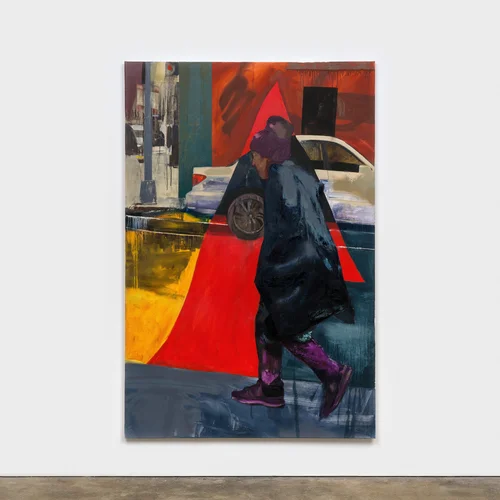
Solitary figures wander in states of transformation in new paintings by Artsy Vanguard 2025 alum Taylor Simmons at Public Gallery’s booth. The presentation centers on what gallery director Nicole Estilo Kaiser calls “acts of becoming,” with Simmons drawing from biblical narratives and Greek mythology to probe questions of vision and the meaning of looking.
Eurydice, 2026
Taylor Simmons
Public Gallery
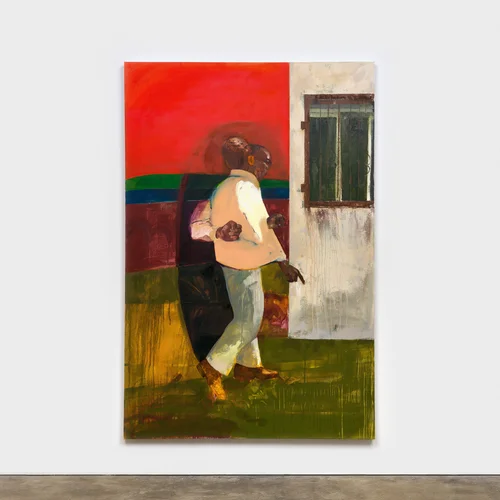
Orpheus, 2026
Taylor Simmons
Public Gallery
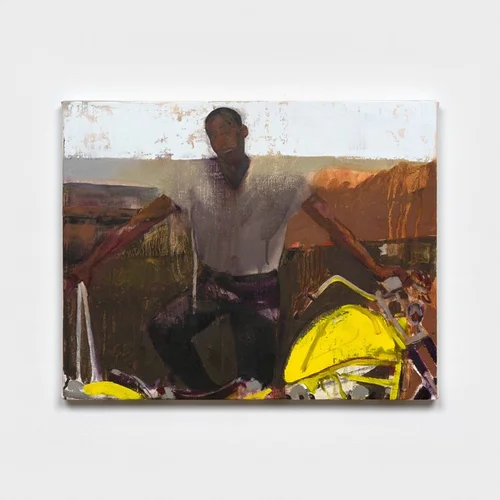
A Moment, 2026
Taylor Simmons
Public Gallery
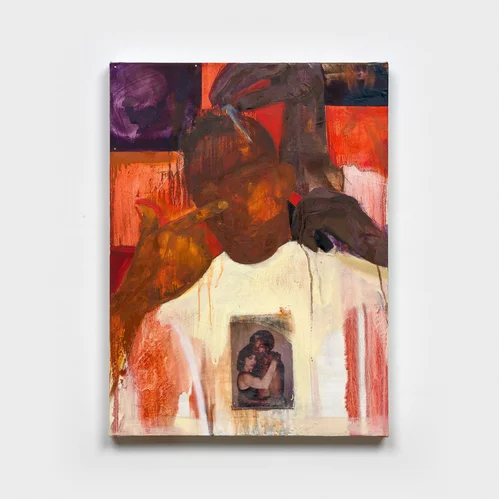
A Smaller Gesture, 2026
Taylor Simmons
Public Gallery
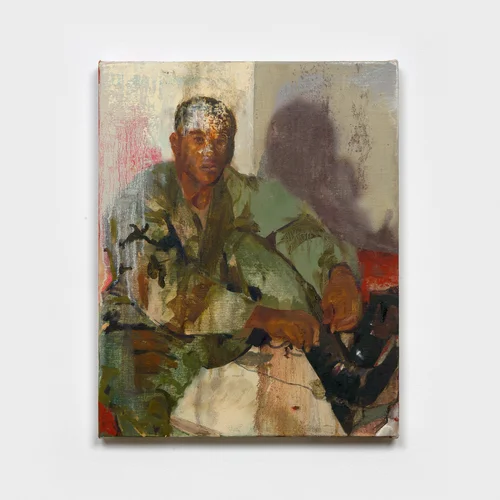
For the Hellcat, 2026
Taylor Simmons
Public Gallery
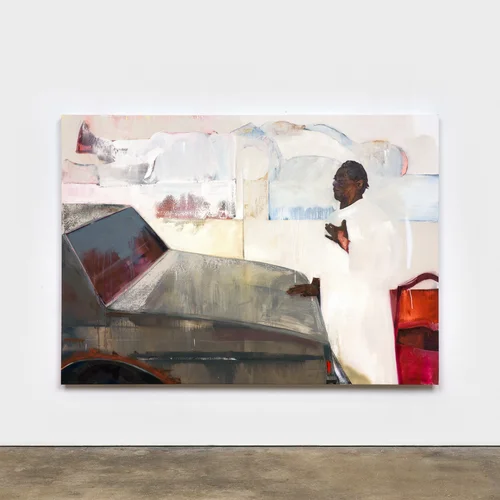
I Prayed About It, 2026
Taylor Simmons
Public Gallery
Dark, Deep, 2026
Taylor Simmons
Public Gallery
In I Prayed About It (2026), for instance, a woman dressed in all white places her hand on a car, while the subtle outline of a body rests in the sky above her. The figure resembles an angel, representing a guardian for the partially rendered figure above her. That sense of partial obscurity is central to Simmons’s evolving practice. Figures are often “cloaked,” as the curator Rayna Holmes, a friend of Simmons, explained.
This compositional strategy shields subjects, who are often drawn from the artist’s community, from the hyper-visibility and commodification of Blackness. “Taylor has a certain diligence with which he paints that protects the figures that he’s rendering,” Kaiser said. The result is a body of intimate works that show a careful restraint in the fast-rising painter’s practice.
Works are priced between $3,000 and $20,000, with the booth selling out to a mix of private and institutional collections on the first day of the fair.
ILY2
Booth 215
With works by Catherine Telford Keogh
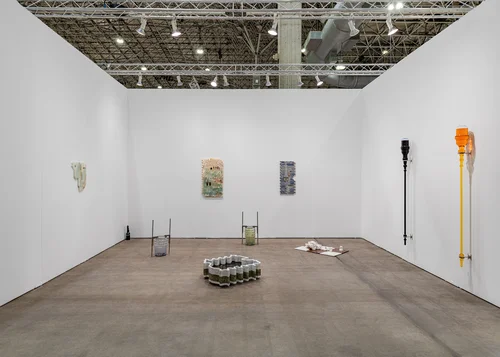
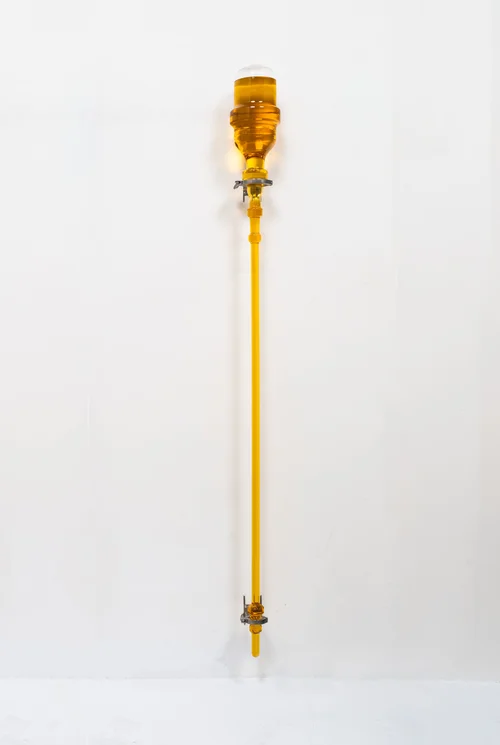
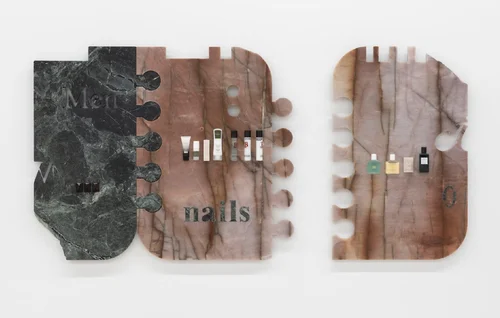
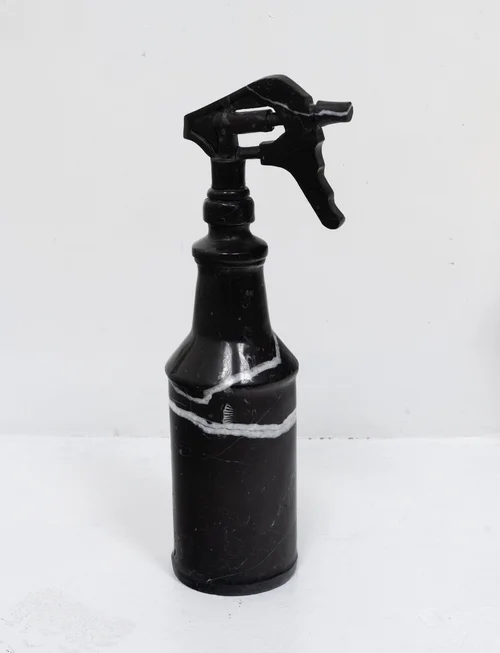
Catherine Telford Keogh’s stone sculptures, scattered across the floor and walls of ILY2’s booth, read like fossils for the modern age, embedded with pharmaceutical products, BVLGARI cologne bottles, Versace perfumes, and miniature Windex bottles, among other common pharmacy finds. The Toronto-born, New York–based artist’s practice traces “the life cycles of different materials,” as ILY2 director Rosie Motley explained, moving between “ancient geological materials” and “fast commodities” like product samples and Styrofoam.
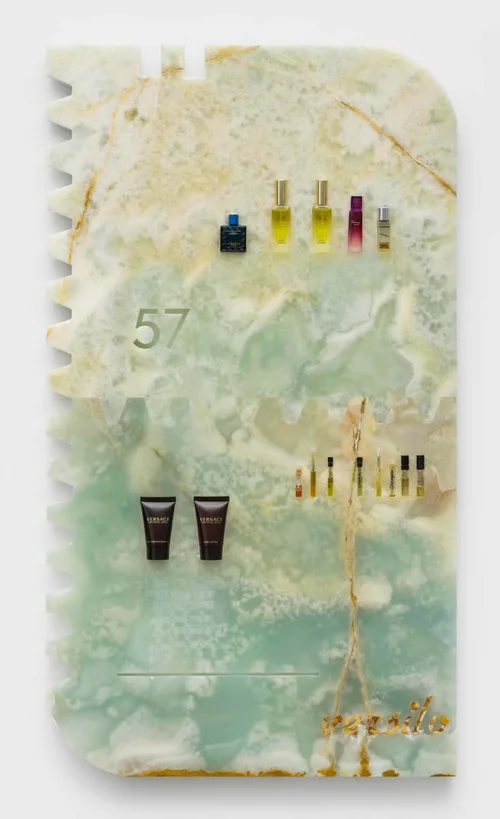
Sampler, 2023
Catherine Telford Keogh
ILY2
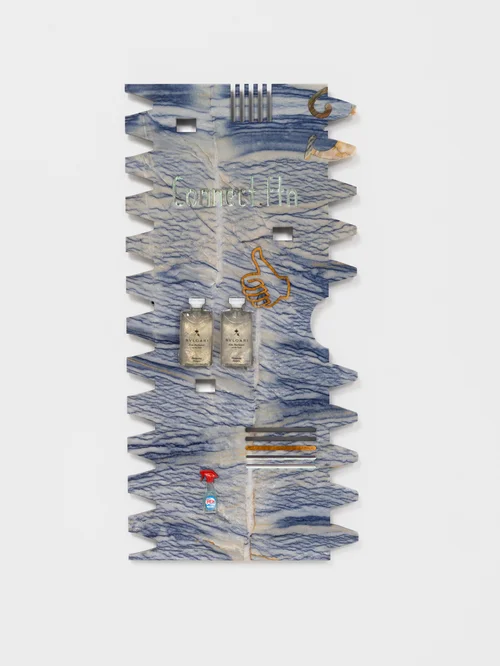
Endorsement , 2026
Catherine Telford Keogh
ILY2
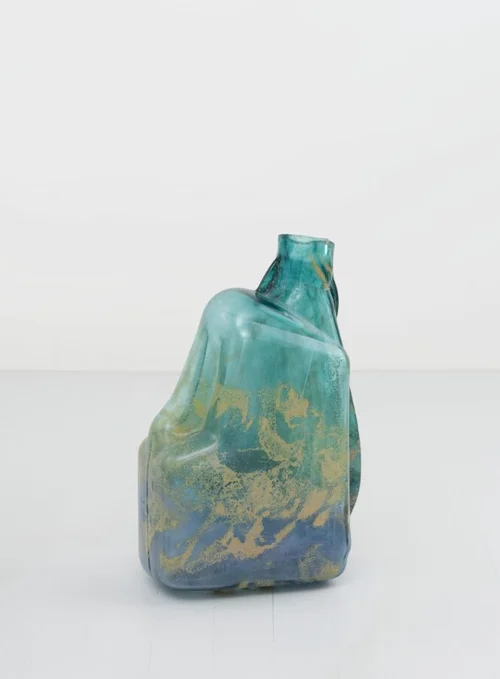
Volume , 2023
Catherine Telford Keogh
ILY2
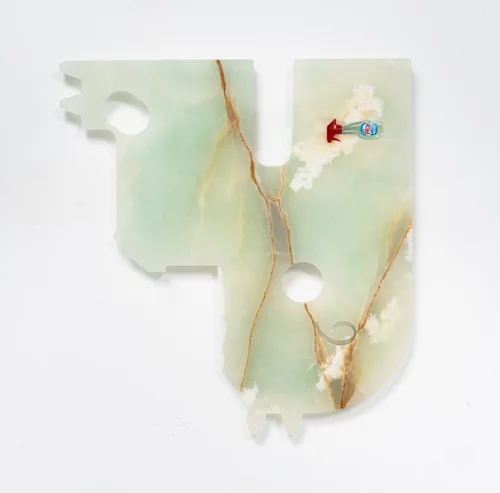
Cloud Cover, 2025
Catherine Telford Keogh
ILY2
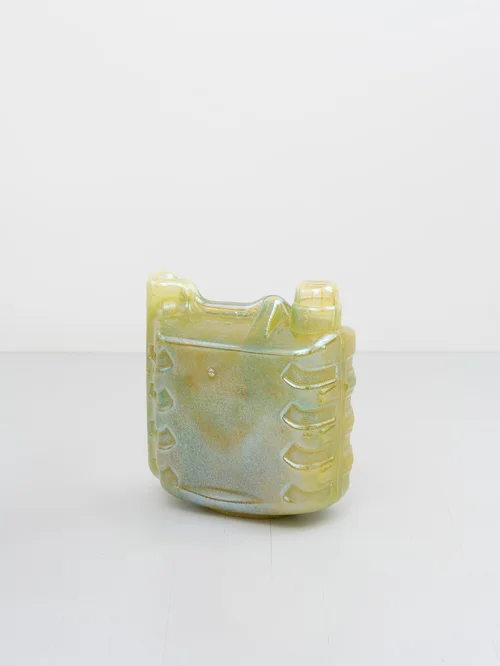
Volume 4.4, 2024
Catherine Telford Keogh
ILY2
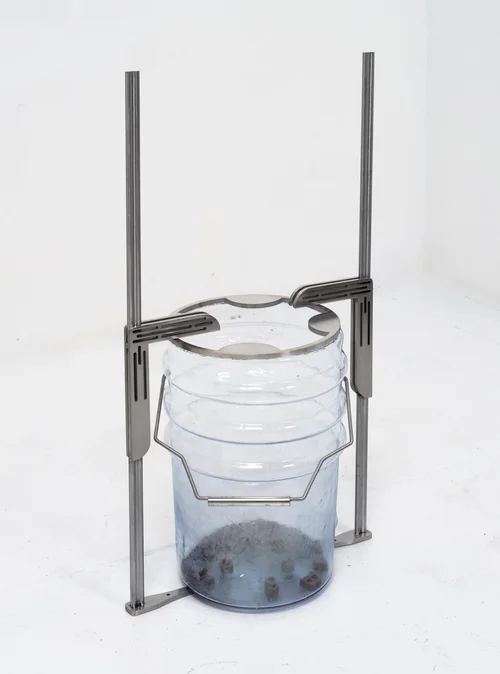
Bearing 1.2, 2026
Catherine Telford Keogh
ILY2
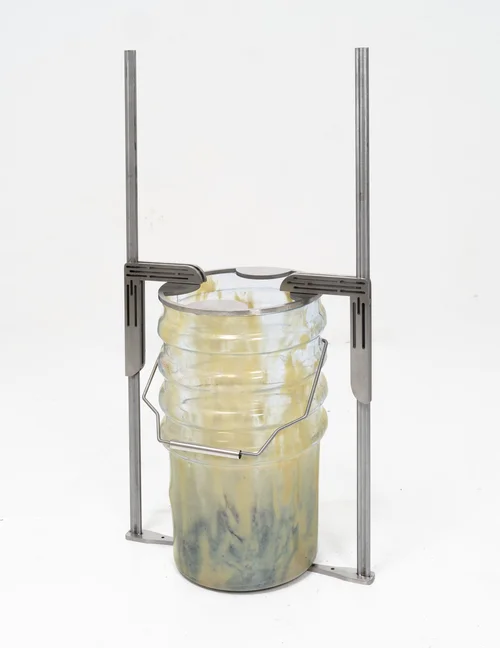
Bearing 1.1, 2026
Catherine Telford Keogh
ILY2
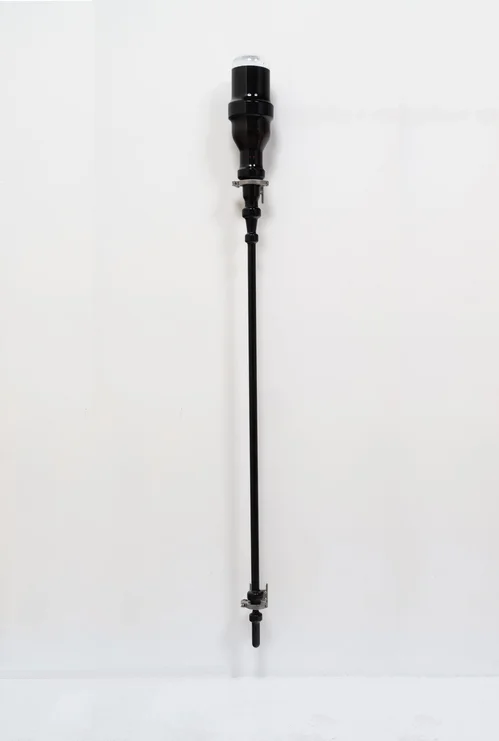
Colorimetric No. 1.1, 2026
Catherine Telford Keogh
ILY2
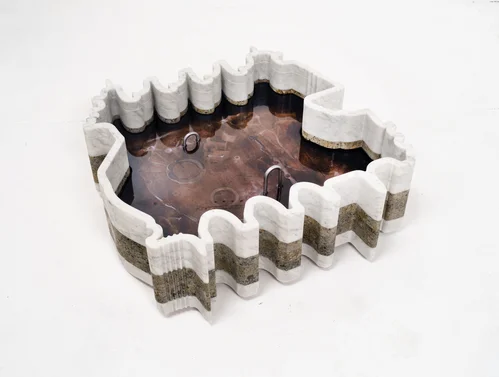
Low Life (Deadtime) , 2026
Catherine Telford Keogh
ILY2
Colorimetric No. 1.2, 2026
Catherine Telford Keogh
ILY2
Elixir for the Spirits, 2023
Catherine Telford Keogh
ILY2
Expired Zep Professional® Spray Bottle (J34P042FieldAR5), 2024
Catherine Telford Keogh
ILY2
Keogh’s sculptures incorporate marble, green onyx, and Azul Macaubas quartzite, a stone sourced from a Pakistani quarry. On the outer wall, Elixir for the Spirits (2023) features three interlocking stone elements that resemble puzzle pieces. The surfaces are embedded with beauty product samples, using these remnants to examine how “our relationship to a substance changes depending on the context,” according to Motley.
Meanwhile, large glass ampule vials, titled Colorimetric No. 1.1 and Colormetric No. 1.2 (both 2026), typically used for substances such as saline or promethazine that cannot be contaminated by air, sharpen the artist’s interest in containment and in the idea of hyperexposure. Motley explained that these works represent “this tension between a fear of contamination and a desire for sterilization,” and that for both series, Keogh wants us to grapple with how “we can’t ever be separate from our environments.”
Works in the booth start at $5,000 and go up to $18,000.
OSMOS
Booth 124
With works by Herbert Holsey
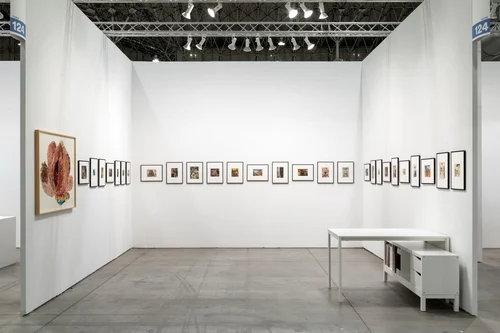
For OSMOS founder Cay-Sophie Rabinowitz, the New York gallery’s solo presentation of the late Atlanta-based collage artist Herbert Holsey is deeply personal. During their time as friends in Atlanta, Holsey would invite Rabinowitz to watch soap operas together, only if she brought scissors and magazines for him to collage. At EXPO Chicago, Rabinowitz is showing a selection of Holsey’s razor-sharp collages for the first time since his last exhibition in 1995, just weeks before his passing.
Holsey began making collages in the 1980s while serving in the military and living in Germany with what Rabinowitz describes as “his highly ranked military husband.” He later moved to Atlanta, where he performed at one of the city’s 24-hour gay clubs. As a queer man in the Deep South, he brought acerbic political commentary to his collages, particularly during the AIDS crisis in the United States, which ultimately claimed his life.
Some of these untitled works feature biting depictions of Ronald Reagan or images of Uncle Sam’s arm dropping gasoline into Niagara Falls. Others, such as Man from Another Planet (1985)—which features a silhouette floating off the moon—directly address the isolation he felt during his lifetime. Bright, kaleidoscopic surfaces give way to incisive, often unsettling juxtapositions. The works are priced at $1,600 apiece.
Mindy Solomon Gallery
Booth 411
With works by Dee Clements
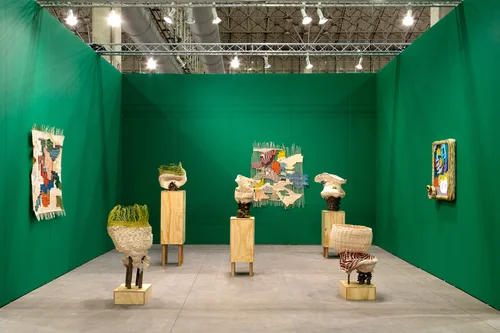
A series of sculptures featuring sagging, woven forms spilling over ceramic vessels anchors Mindy Solomon Gallery’s booth of works by Dee Clements. The Miami gallery is showcasing the Chicago artist with five works that combine hand-built ceramic forms with hand-dyed basketry to explore the aging body.
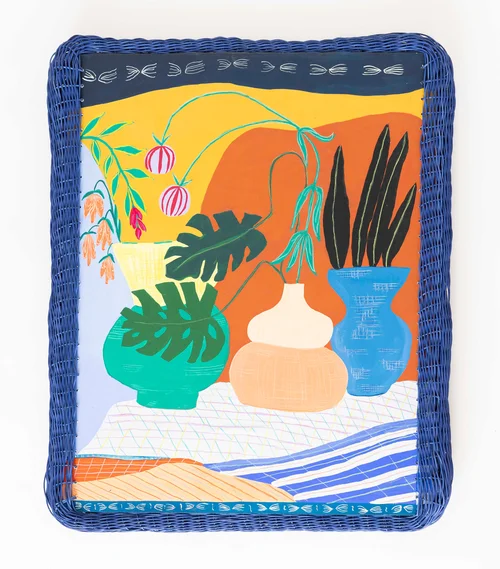
My early baskets with flowers and textiles 2, 2026
Dee Clements
Mindy Solomon Gallery
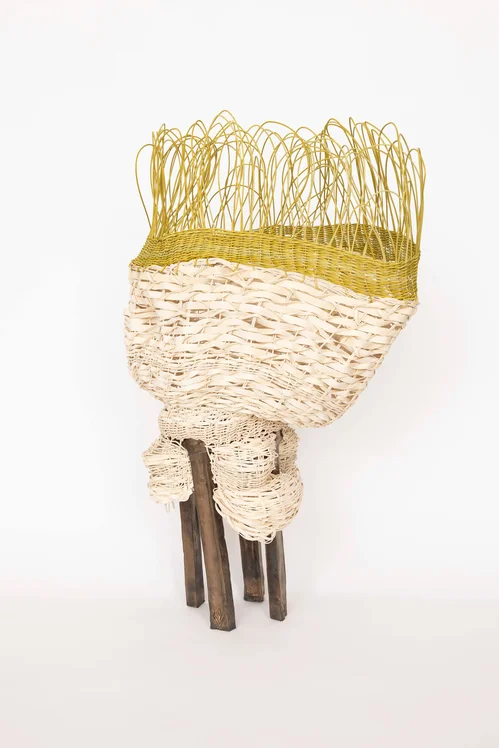
Gams, 2026
Dee Clements
Mindy Solomon Gallery
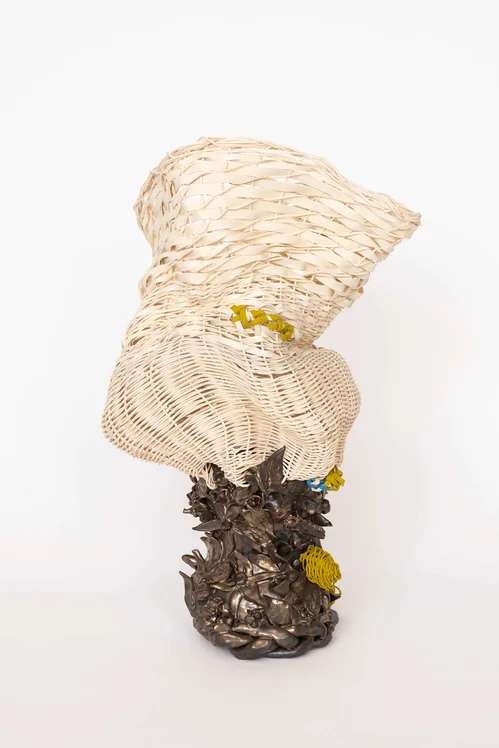
Fibroid, 2026
Dee Clements
Mindy Solomon Gallery
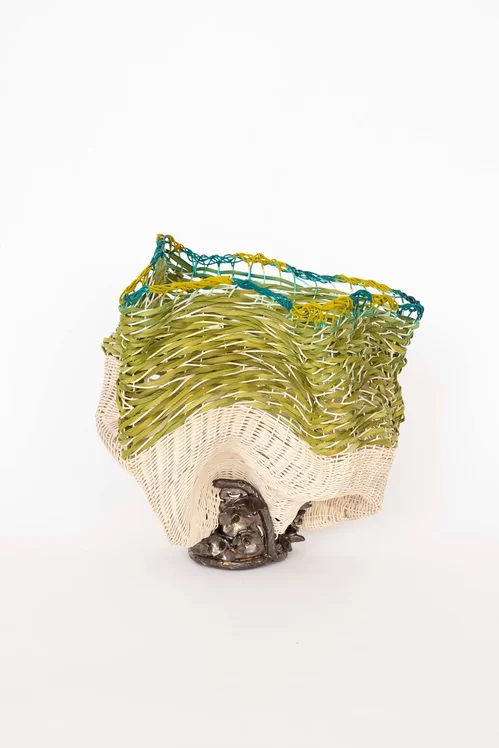
Bloom, 2026
Dee Clements
Mindy Solomon Gallery
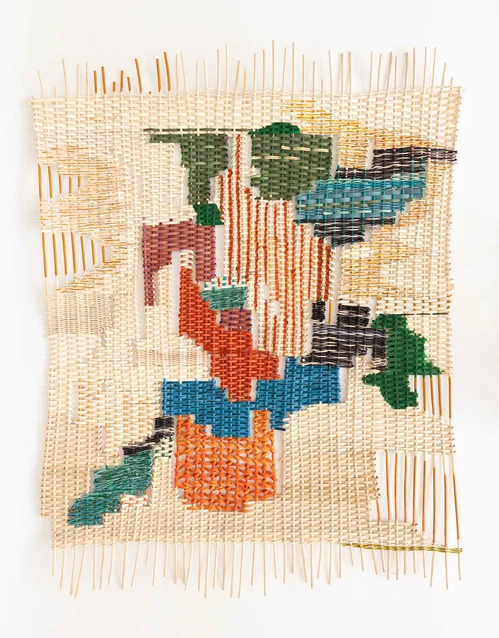
Woven Painting, 2026
Dee Clements
Mindy Solomon Gallery
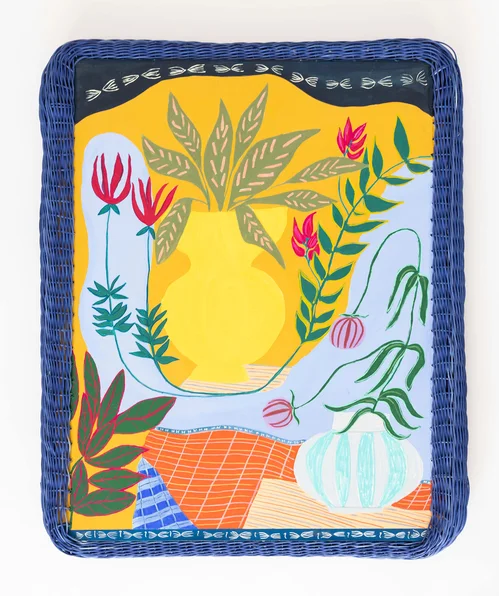
My early baskets with flowers and textiles 1, 2026
Dee Clements
Mindy Solomon Gallery
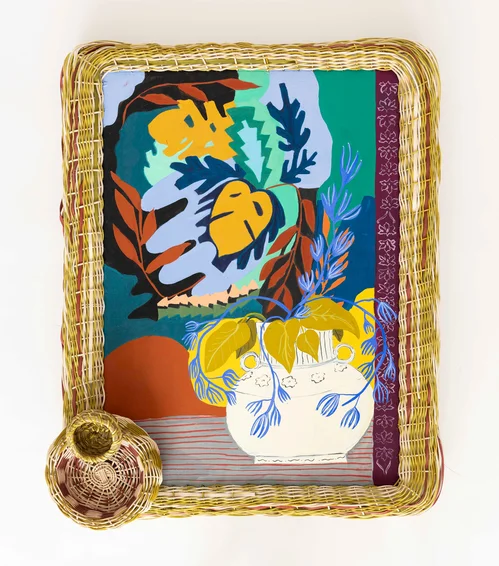
Flowers, Vase, Baskets, 2026
Dee Clements
Mindy Solomon Gallery
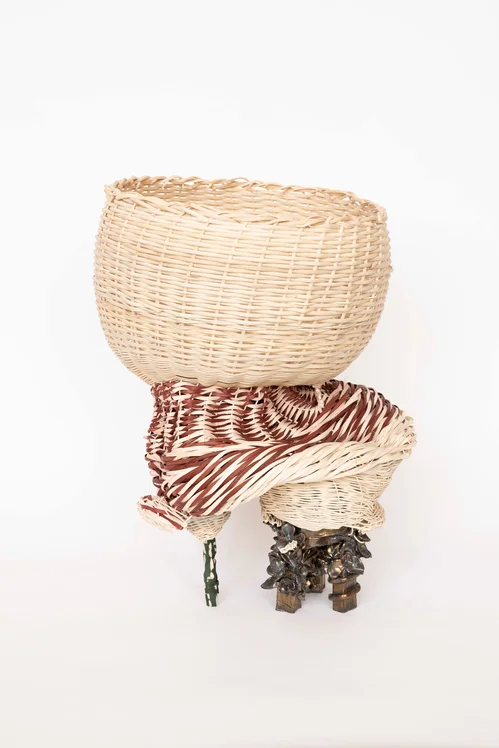
Crone, 2026
Dee Clements
Mindy Solomon Gallery
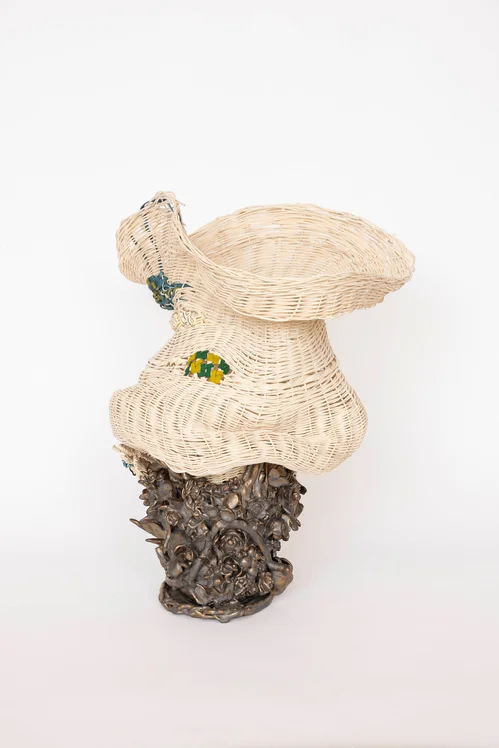
Mended, 2026
Dee Clements
Mindy Solomon Gallery
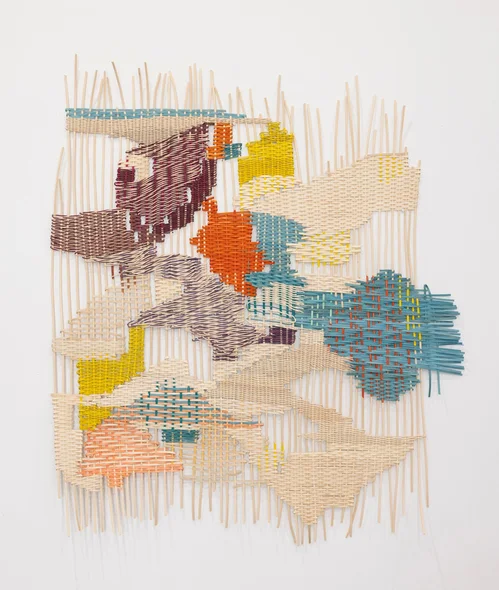
Ramona, 2025
Dee Clements
Mindy Solomon Gallery
At the center of the booth, Fibroid (2026) features a contorted woven reed basket, subtly painted with golden gouache, sprouting from a harsh, bronze ceramic base. This ceramic sculpture is shaped to depict a bundle of flowers and plants sprouting out. According to Mindy Solomon, Clements, who is now 46, uses these works to grapple with aging. “She is very cognizant of her aging self, and the work that she's making is really driven by her connection to the body and the change of the body,” Solomon told Artsy. “How she chose to sculpt is really what was coming from her intuition of the female form. She describes it really well when she talks about the sagging and the movement [of the body].”
These works are paired with a few of the paintings and wall works around the green-painted booth. Flowers, Vase, Baskets (2026), for instance, features a pastel-and-gouache painting of plants sprouting from a vase within a bespoke hand-woven reed-and-pineboard frame. In the left-hand corner, the frame itself is another basket.
These five sculptural works are priced between $10,000 and $16,000. Meanwhile, the woven wall works are priced at $12,000, and the paintings are priced at $6,000.
Artemin Gallery
Booth 425
With works by Juli Baker and Summer
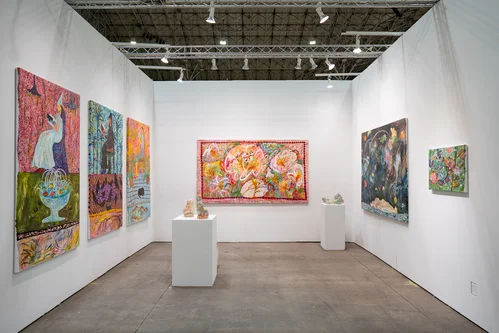
Each painting in Juli Baker and Summer’s standout triptych featured at Artemin Gallery’s booth depicts a young woman absorbed in reading, stemming from the Thai artist’s realization that many children outside Bangkok grow up with fewer than three books at home. Raised in Bangkok, the artist began to reconsider how formative that access had been, particularly how influential the women characters in translated novels and folk tales had been in shaping her imagination.
Throughout the Taipei- and Seoul-based gallery’s booth, the artist’s warm, saturated hues pair with loose, expressive brushwork to balance nostalgia for these stories with the urgency of the theme. These acrylic paintings are marked by a playful, deliberately unrefined quality, as if bursting with spontaneous, impulsive energy. Each of these works is priced at $10,000.
Elsewhere, Baker and Summer’s energetic aesthetic is most unruly in Sita’s Trial by Fire (2026), an 8.5-by-4.6-foot explosive abstract painting that evokes the moment in the Ramayana—or its Thai adaptation, the Ramakien—when the princess is forced to walk through flames to prove her purity. This work is priced at $12,600.
