


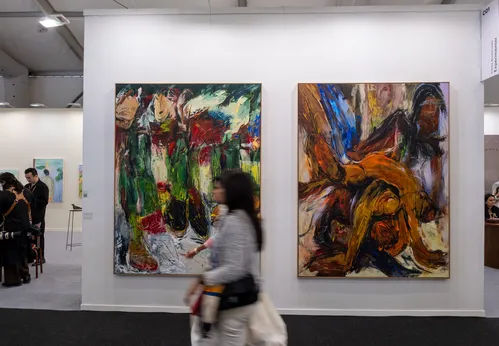
Those looking for evidence of India’s much-talked-about art market boom could do worse than to observe the bustling scene during the closing moments of Delhi’s India Art Fair 2026 VIP day on Thursday, February 5th. A lively DJ maintained a festival-like atmosphere in the fair’s packed outdoor foyer, while across its four tents, further throngs of VIPs flowed in for a last-minute browse. Dealers Artsy spoke to during the fair’s twilight hour reported that the waves of visitors throughout the day were in a decisively buying mood.
This 17th edition of India Art Fair is its largest in terms of scale (123 exhibitors, a new high for the fair, are taking part), but it also feels like the most ambitious iteration in terms of reach. Some of South Asia’s most important contemporary galleries were there, presenting historical masterpieces through to cutting-edge contemporary works from the region, while an expanded pool of international dealers reflects the increasingly global tastes of the local market.
In Delhi, the fair has an ideal location. A growing number of expats are settling in the city, and the fair is also near a cluster of foreign embassies and cultural centers such as the British Council, Goethe-Institut, and Alliance Française. Delhi also boasts the National Gallery of Modern Art, the Kiran Nadar Museum of Art, and numerous private foundations that create an ecosystem of events during the fair week.
Indeed, India Art Fair is fast becoming a key fixture in the Asian art fair calendar. This is largely because of its wide-ranging offerings. Alongside the standard gallery booths, a curated design section spotlights emerging and leading design practices, while an institutional section platforms the country’s leading museums, foundations, and cultural organizations. Elsewhere, the fair’s Platform section spotlights South Asia’s living artistic traditions and craft-based practices.
“With a record number of exhibitors and a truly global line-up, India Art Fair continues to serve as the definitive meeting point for the international art community in South Asia,” said the fair’s director, Jaya Asokan.
It all amounts to an art fair that effectively reflects India’s blossoming creative moment, one that is supported by diverse collectors and fueled by a burgeoning artistic scene.
Here, we select our five best booths from the fair.
Rajiv Menon Contemporary
Booth A02
With works by Nibha Akireddy, Shyama Golden, Melissa Joseph, Gisela McDaniel, Rajni Perera, Sahana Ramakrishnan, Maya Seas, Devi Seetharam, and Tarini Sethi
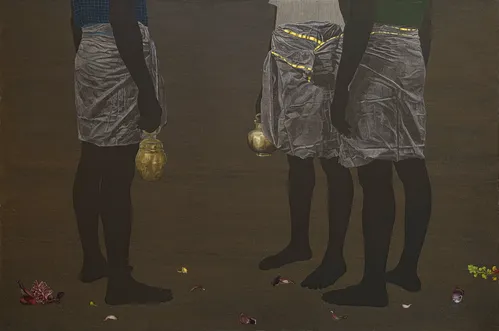
Nagapushpam (Cannonball Flower), 2026
Devi Seetharam
Rajiv Menon Contemporary
Lightworks, 2025
Maya Seas
Rajiv Menon Contemporary
Future Heirlooms, 2025
Melissa Joseph
Rajiv Menon Contemporary
Agaga, 2025
Gisela McDaniel
Rajiv Menon Contemporary
Moon Caught in the Net, 2025
Gisela McDaniel
Rajiv Menon Contemporary
Kulot Dirosa, 2025
Gisela McDaniel
Rajiv Menon Contemporary
Isha in Front of Wardrobe, 2025
Nibha Akireddy
Rajiv Menon Contemporary
The Lovers Dance, 2026
Tarini Sethi
Rajiv Menon Contemporary
Sun Dog, 2025
Sahana Ramakrishnan
Rajiv Menon Contemporary
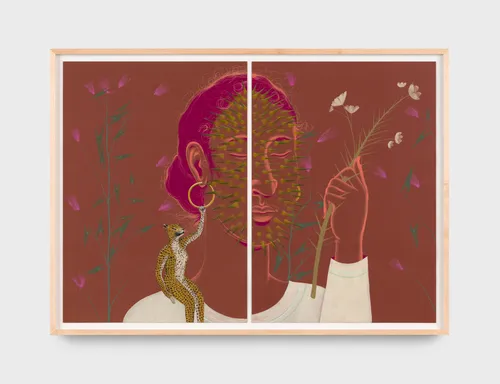
Nature is my weapon, 2025
Rajni Perera
Rajiv Menon Contemporary
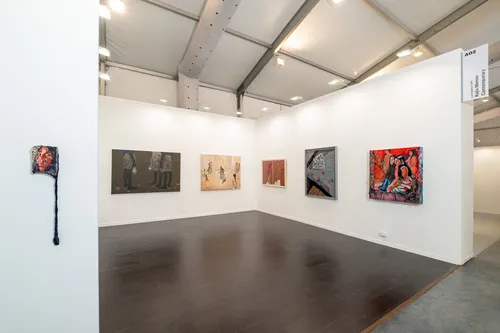
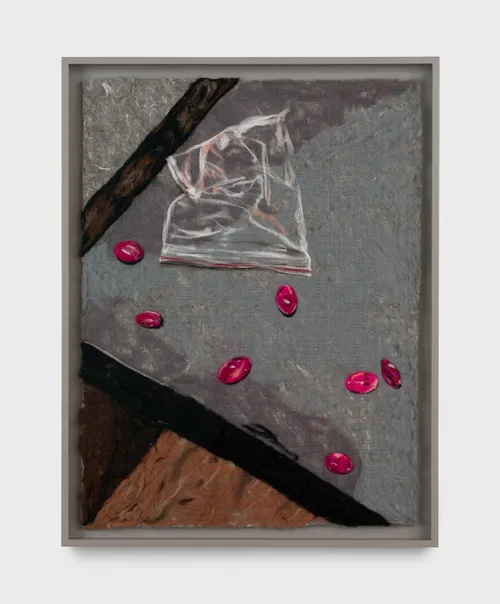
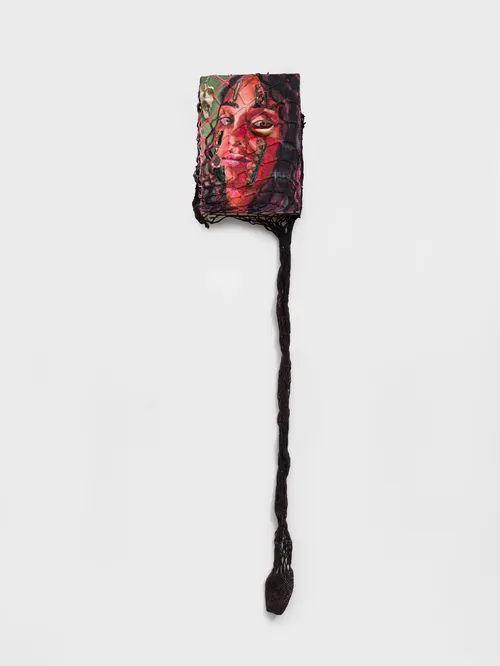
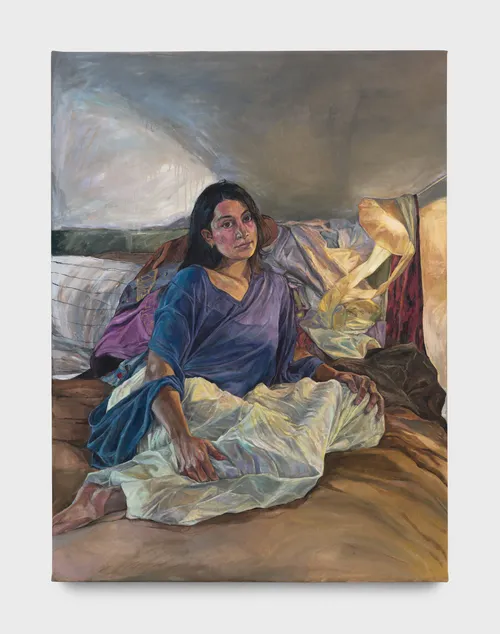
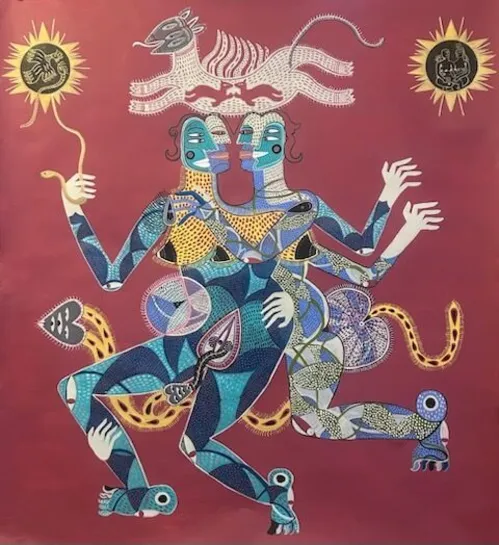
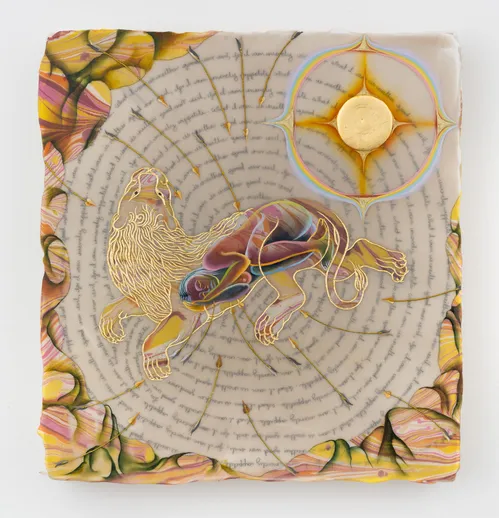
The Artsy Vanguard alum Melissa Joseph’s Future Heirlooms (2025) anchors a wall of Rajiv Menon Contemporary’s standout booth. The large-scale felted-wool on industrial-felt work shows gems cascading out of a plastic bag, rendered in Joseph’s signature wispy style.
“The material evokes that sensory experience of remembering, and there’s such an appreciation of textile in India,” Menon told Artsy. The work is part of a debut presentation from the Los Angeles gallery that spotlights artists whose practices circle the topic of “diasporic visibility,” as the dealer put it.
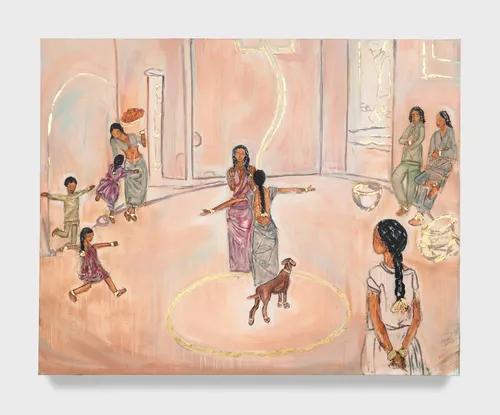
Another standout at the back of the gallery’s booth is Maya Seas’s Lightworks (2025). Loosely composed and dotted with gold leaf, this depiction of young women dancing is a joyful scene. “Her work is thinking about creating realms of femininity, of peace, of serenity, especially in this cultural climate, and thinking about how she can imagine realms of comfort,” Menon noted. The painting was one of five works from Menon’s booth to sell to institutions by the end of VIP day.
Kumar Gallery
Booth B18
With works by M.F. Husain, F.N. Souza, S.H. Raza, Krishen Khanna, Ram Kumar, Sohan Qadri, Nasreen Mohamedi, K.K. Hebbar, Prodosh Das Gupta, K.S. Kulkarni, and Jamini Roy.
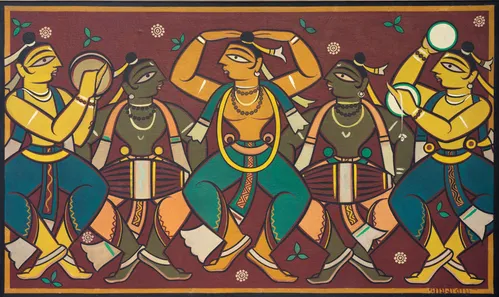
Untitled (Musicians), c. 1950s
Jamini Roy
Kumar Gallery
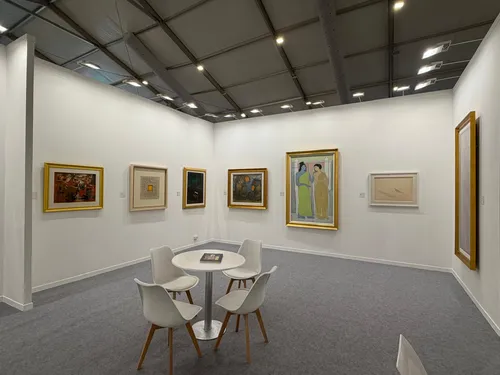
Stalwart local dealer Kumar Gallery presents an outstanding selection of major Indian artists for its booth. Many of the post-war Indian artists who have powered the domestic art market’s momentum are featured.
At the exterior of the booth is Jamini Roy’s striking painting Untitled (Musicians) (ca. 1950s), a sterling example of the Kalighat (19th-century Indian folk art from West Bengal, India) style from one of India’s first modernist artists. Featuring the bold outlines, almond-shaped eyes, and earthy palettes characteristic of Bengali folk art, the painting depicts symmetrical dancing figures in the artist’s signature flattened format.
As a whole, the booth offers a mini crash-course in Indian post-war art, from a vast, 1960s pastel-colored portrait of two women by avant-garde pioneer K. S. Kulkarni, to an abstracted, crimson-rippled portrait of a man’s back by Krishen Khanna, an icon of Indian modernism who turned 100 last year.
DAG
Booth B12
With works by Arthur William Devis, Sewak Ram, M V Dhurandhar, Radha Charan Bagchi, S H Raza, Bikash Bhattacharjee, Nirode Mazumdar, P T Reddy, Kanwal Krishna, Devayani Krishna, and more.
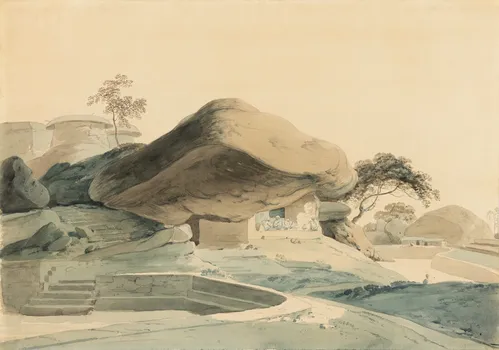
Krishnagiri Fort, Tamil Nadu, South India, 1792
Thomas and William Daniell
DAG
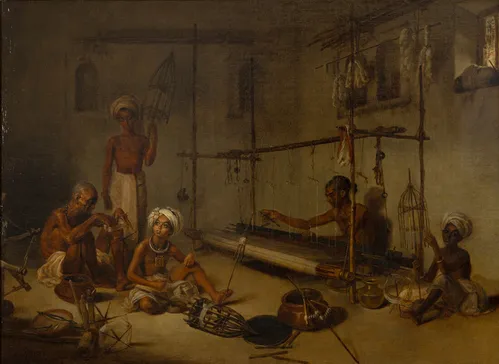
The Weavers, 1792
Arthur William Devis
DAG
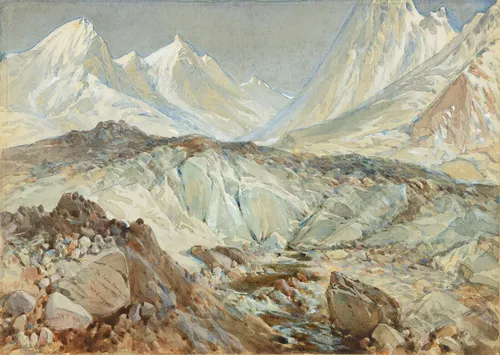
The Cow’s Mouth (Gaumukh), 1894
WILLIAM SIMPSON
DAG
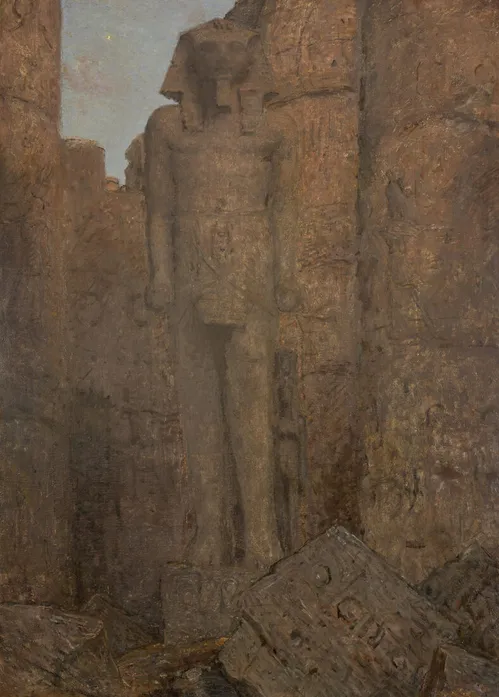
Karnak (Statue of Ramses II), 1919
Marius Bauer
DAG
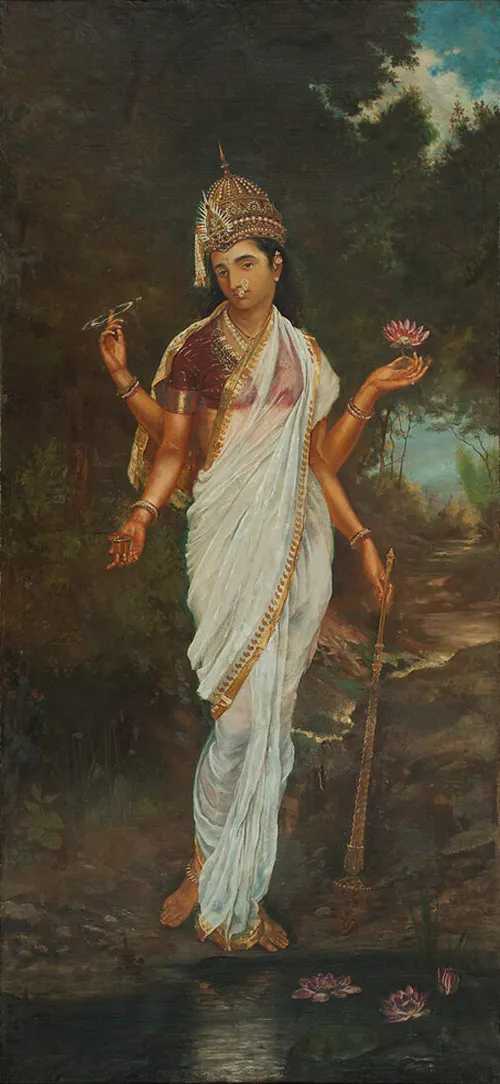
Shri Mahalakshmi, 1899
M. V. Dhurandhar
DAG
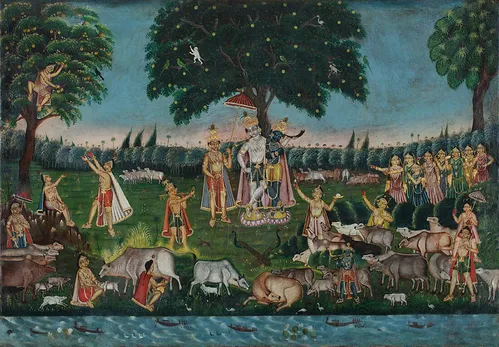
Balarama and Krishna at Vrindavan, late 19th century
Unidentified Artist (Early Bengal School)
DAG
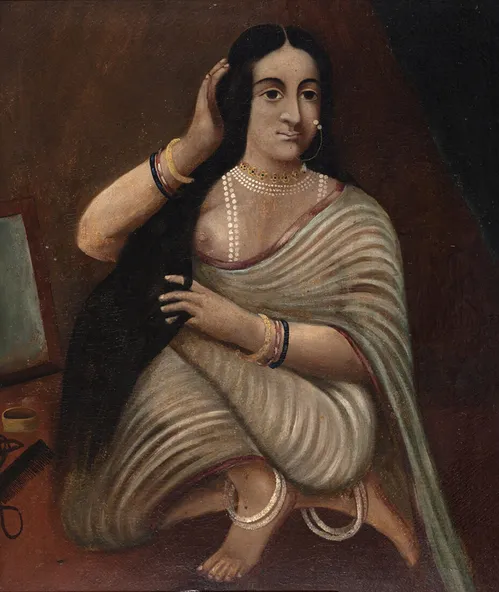
Promoda Sundari, late 19th century
Unidentified Artist (Early Bengal School)
DAG
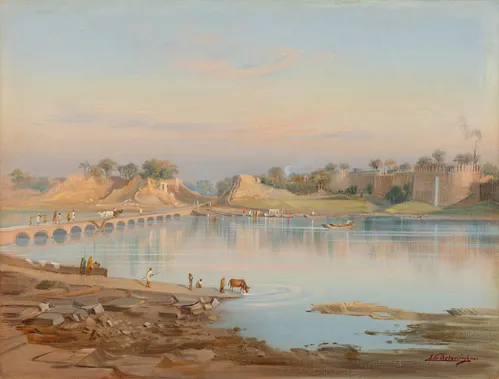
The Old Bridge, Kota, Rajasthan, 1944
S. G. THAKAR SINGH
DAG

Birth of Buddha, 1960s
Radha Charan Bagchi
DAG
Dashkhat (Bond of Slavery), Undated
KSHITINDRANATH MAZUMDAR
DAG
Queen Prabhavati, 1953
Asit Kumar Haldar
DAG
Untitled (Dancing Ganesh), Undated
Jamini Roy
DAG
Untitled (Lotus), 1952
Nandalal Bose
DAG

Untitled (Gateway of India), 1947
Sayed Haider Raza
DAG
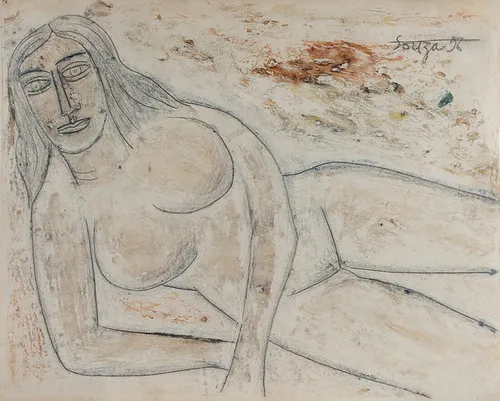
Untitled, 1956
Francis Newton Souza
DAG
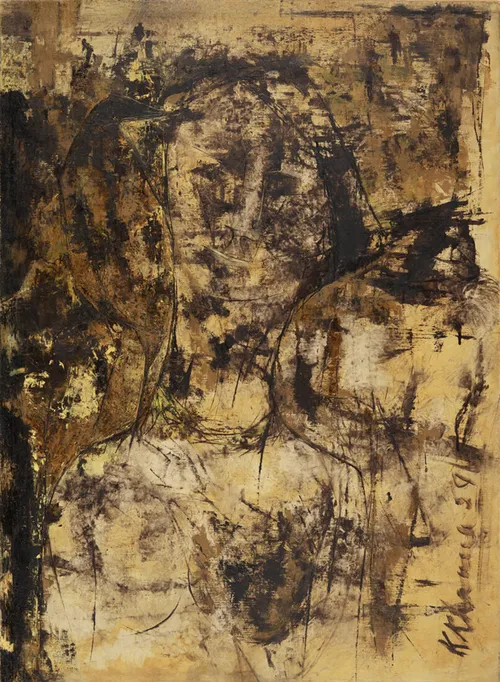
Autumn, 1959
Krishen Khanna
DAG
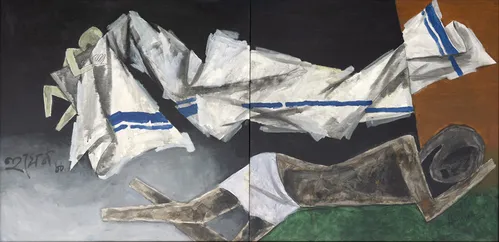
Mother Theresa (Diptych), 1980
M.F. Husain
DAG
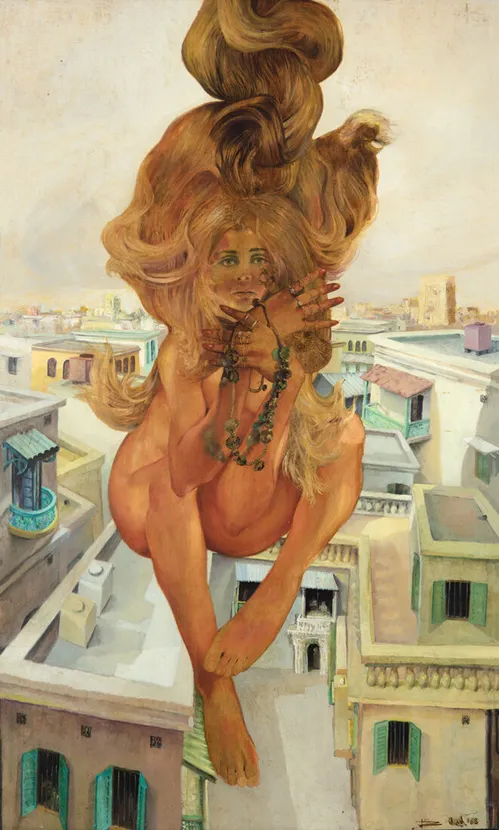
She, 1968
Bikash Bhattacharjee
DAG
Spring, early 1970s
Nirode Mazumdar
DAG
Untitled, 1970
Rabin Mondal
DAG
Nude, 1959
Laxman Pai
DAG
Untitled, 1967-68
G. R. SANTOSH
DAG
Man Weighing Fish, 1956
Biren De
DAG
Untitled, 2010
Sohan Qadri
DAG
The Growth, 1977
P. T. Reddy
DAG
Untitled, 1969
Satish Gujral
DAG
MITHUNA XII, 1991
Natvar Bhavsar
DAG

Untitled, 1964
Ambadas
DAG

Composition, 1965
Rajendra Dhawan
DAG
Untitled, c. 1968
Shanti Dave
DAG
Untitled, 1981
Avinash Chandra
DAG
Elves, 1961-62
J. Sultan Ali
DAG
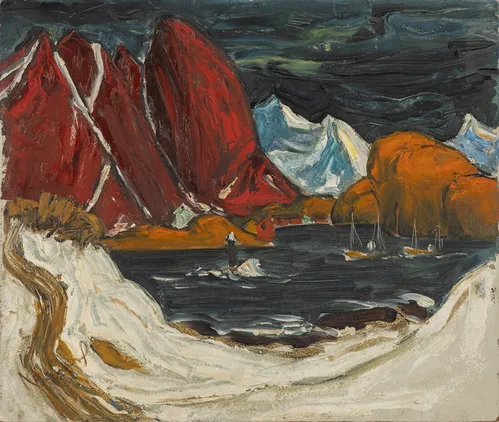
Norway, 1952
Kanwal Krishna
DAG
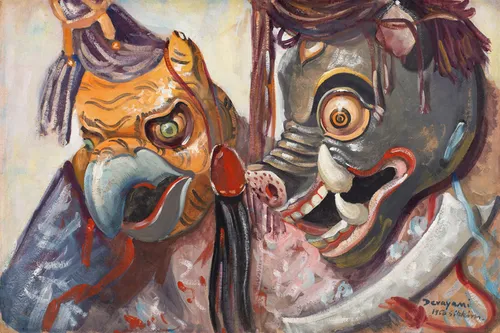
The Owl and the Pig (Tibetan Mask Dance), 1950
Devayani Krishna
DAG
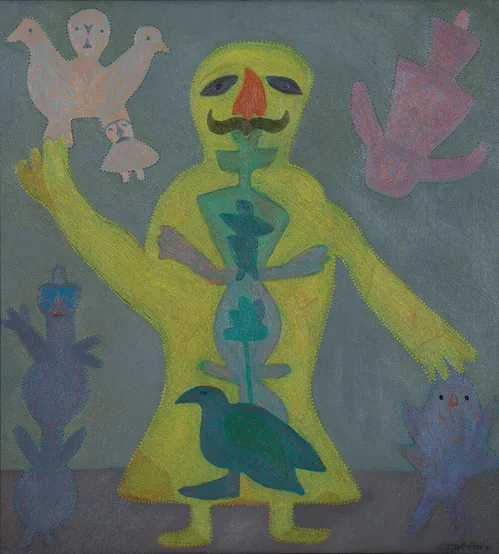
King of the Puppet, 1980
Madhvi Parekh
DAG
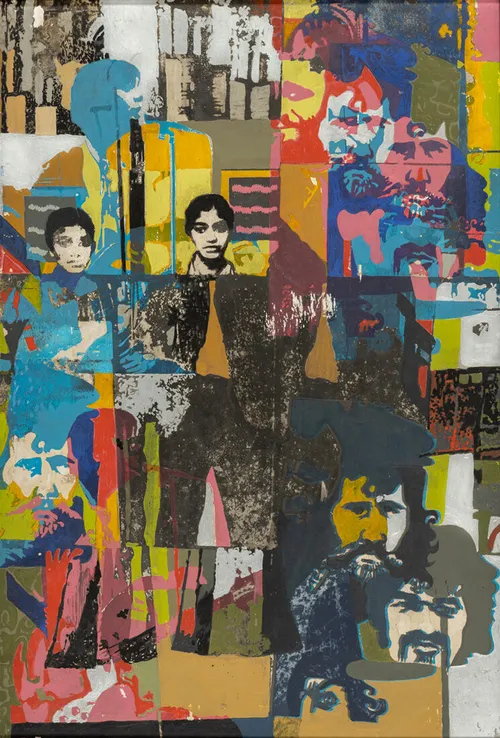
Echoing Memories, 1969-75
Jyoti Bhatt
DAG
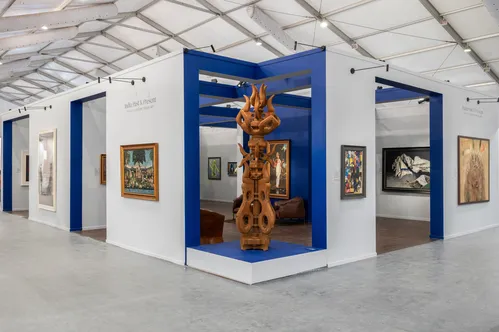
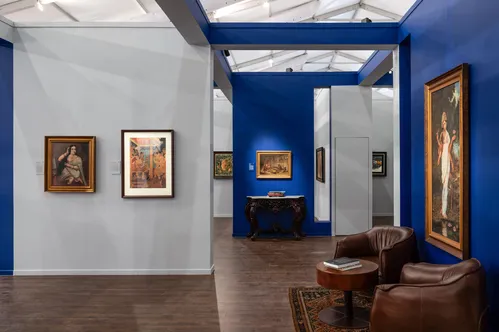
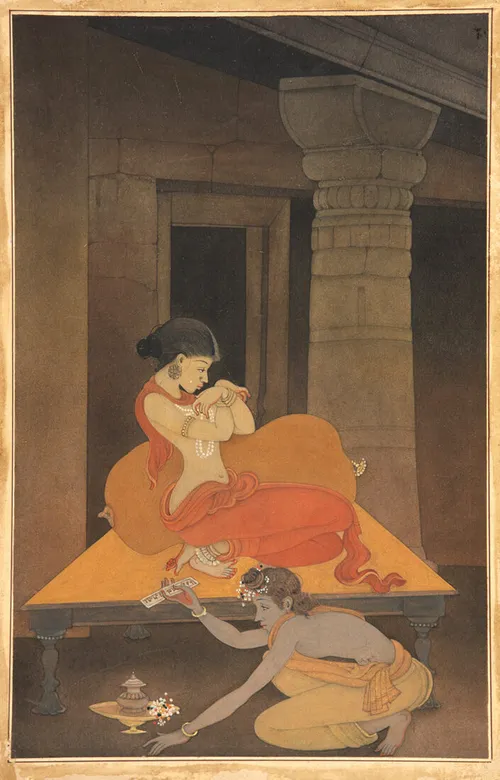
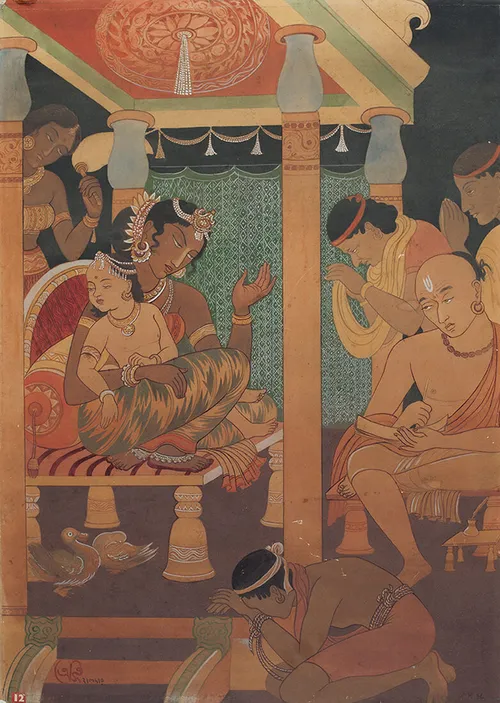
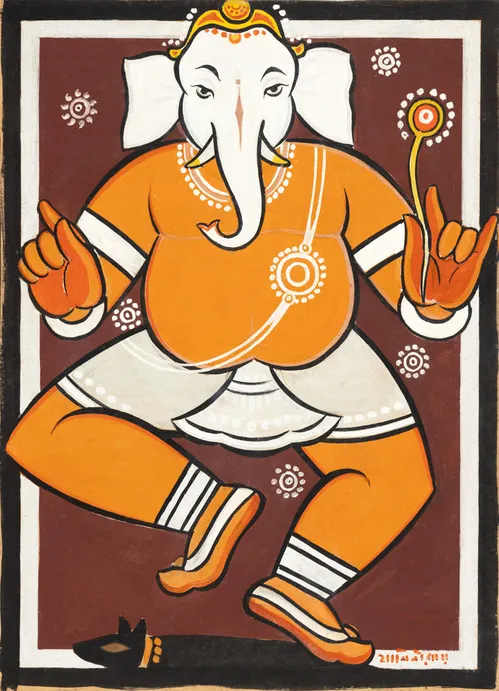
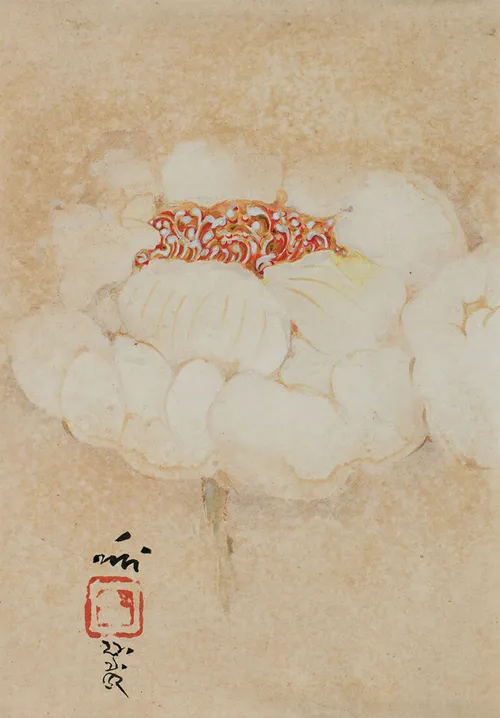
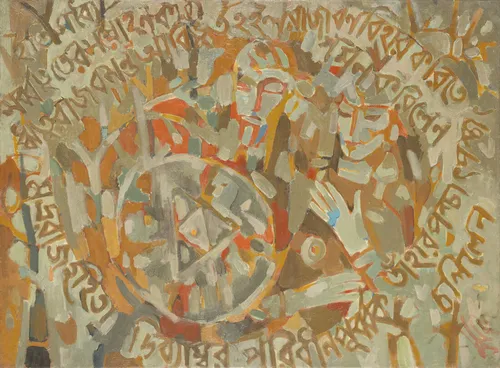
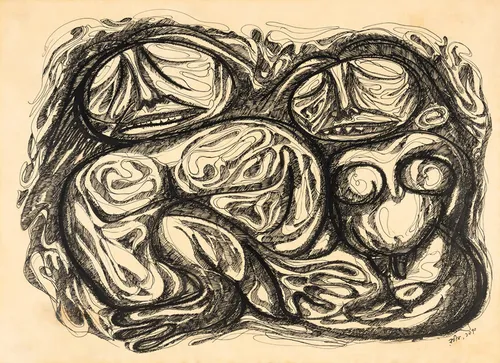
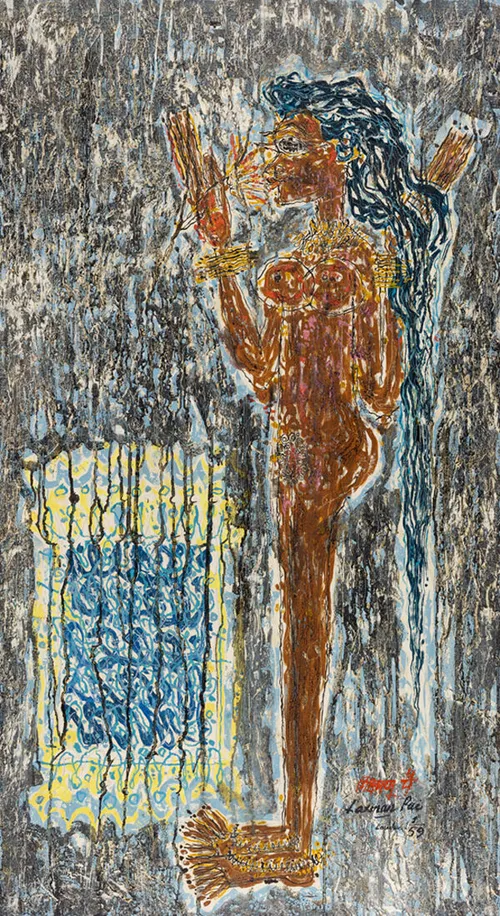
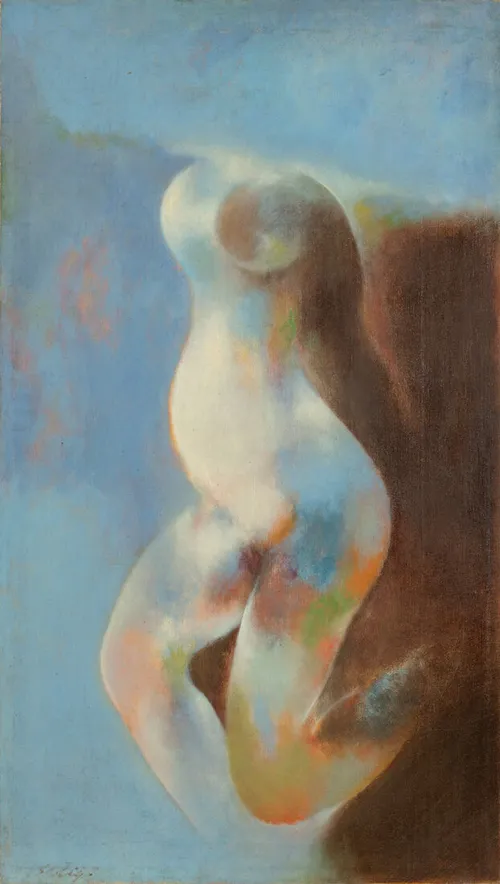
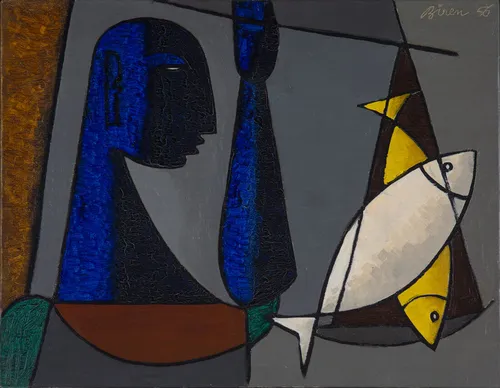
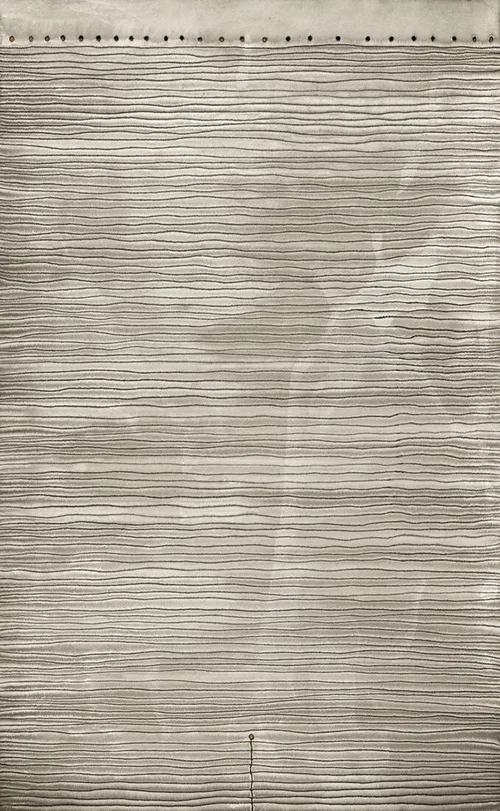
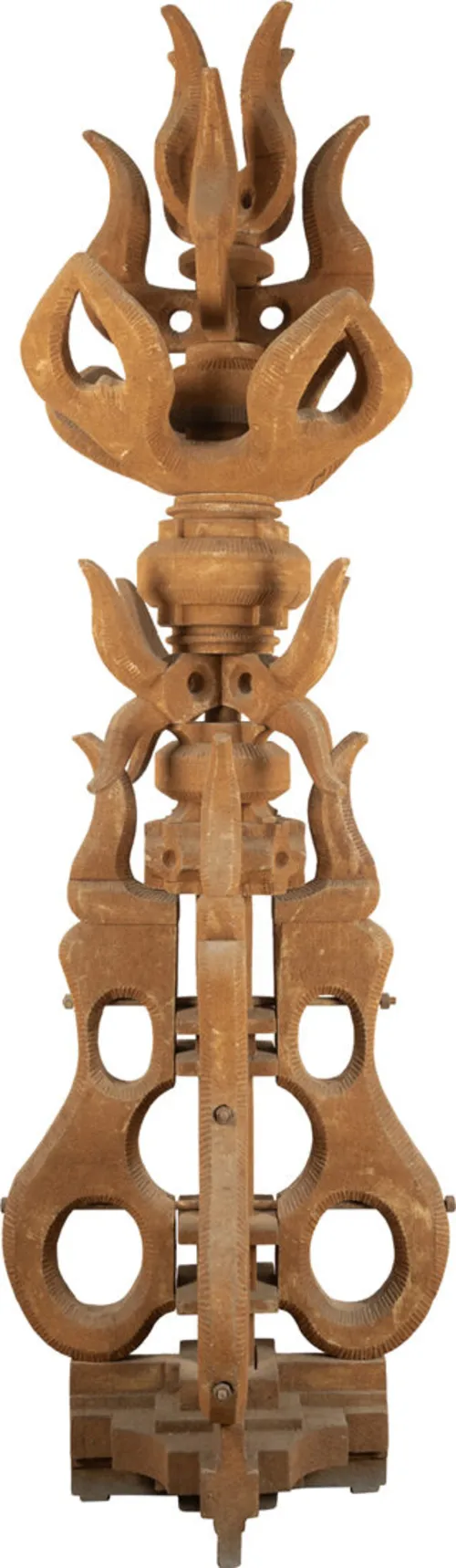
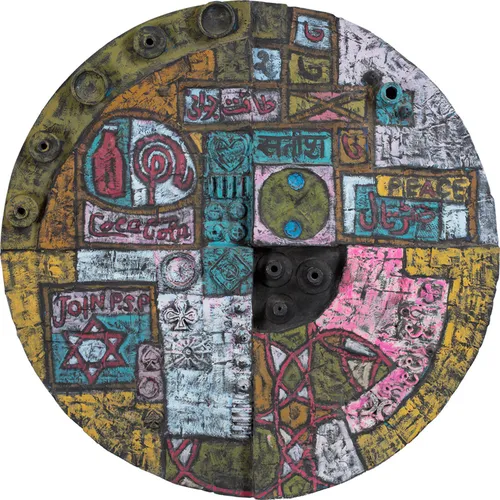
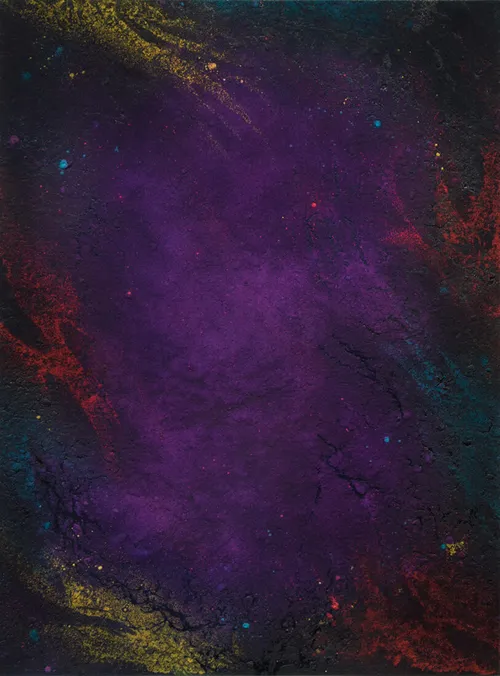
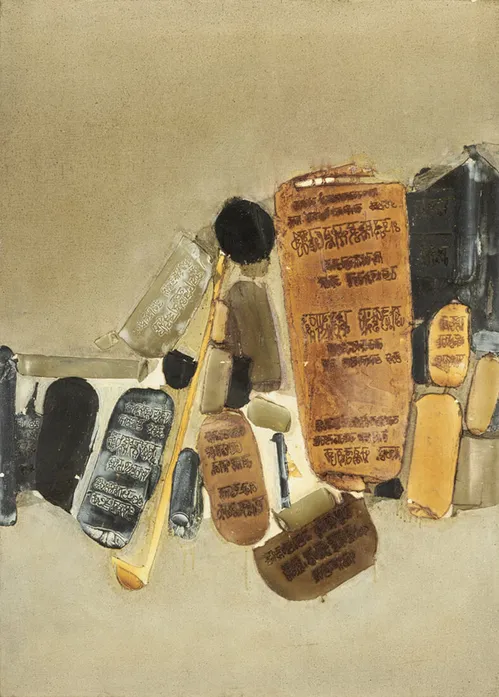
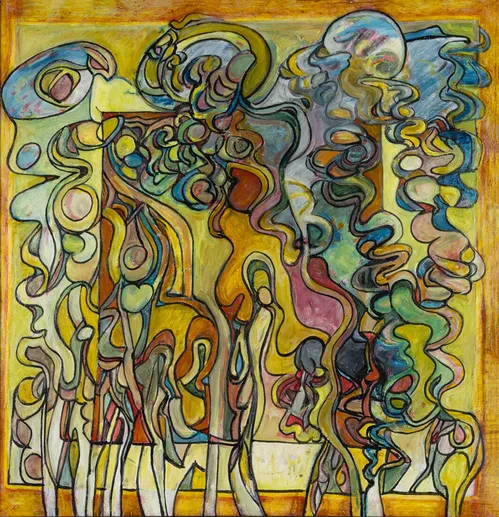
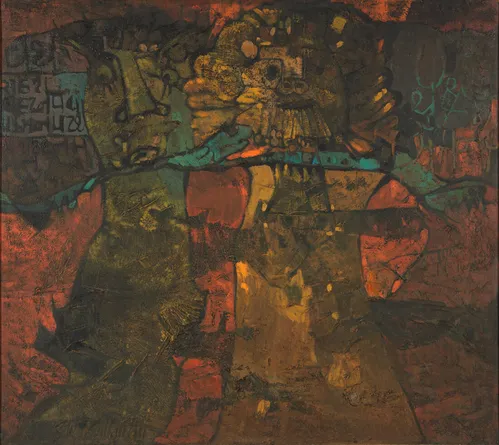
One of India’s leading commercial galleries DAG offers an expansive historical and cross-cultural dialogue in its huge booth, which has the gravity of a walk-in museum show. Titled “Past and Present,” this booth spans works from the 18th to 21st centuries by Western and Indian artists.
The presentation is excellently curated with an extensive selection of works. In a section of the booth dedicated to landscapes, Thomas and William Daniell’s Krishnagiri Fort, Tamil Nadu, South India (1792), through to S.H. Raza’s 1947 Untitled (gateway of India) are among the highlights. Each offers vastly different interpretations of how “artists have seen, imagined and inhabited land across centuries,” as a spokesperson for the gallery described it.
Also on view are works that document, across different styles and periods, various aspects of Indian life, such as Arthur William Devis’s The Weavers (ca. 1792–1795). First exhibited at the Royal Academy of Arts in 1796, the work comes from a decade the artist spent capturing artisanal life in India, showing a Tanti, a traditional Bengali weaver, at his loom in the historic muslin-weaving center of Santipur, India.
LAMB
Booth A108
With works by Camile Sproesser and Bea Bonafini
Bitter Sweet , 2025
Bea Bonafini
LAMB
Currents , 2025
Bea Bonafini
LAMB
Manifestation, 2025
Bea Bonafini
LAMB
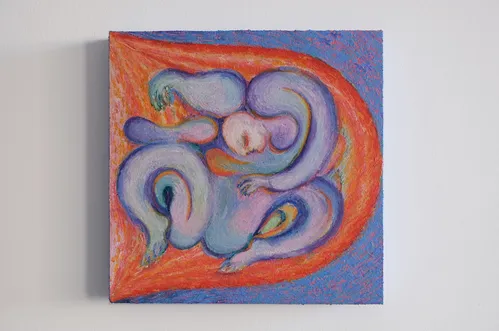
Pure Idea , 2025
Bea Bonafini
LAMB
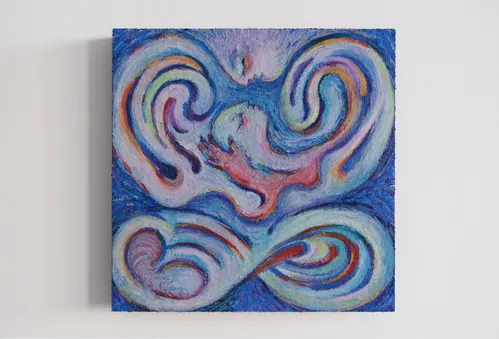
Under a Spell , 2025
Bea Bonafini
LAMB
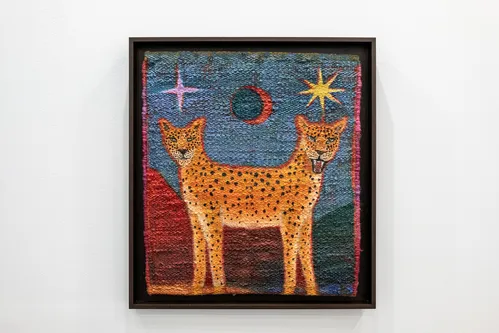
Eclipse , 2025
Camile Sproesser
LAMB
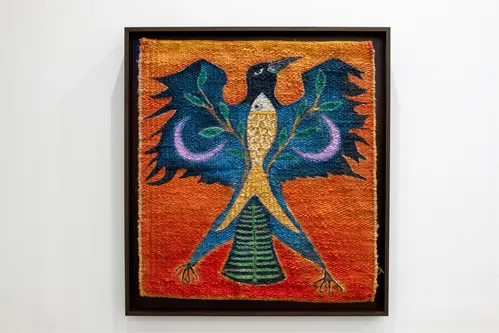
Fênix, 2025
Camile Sproesser
LAMB
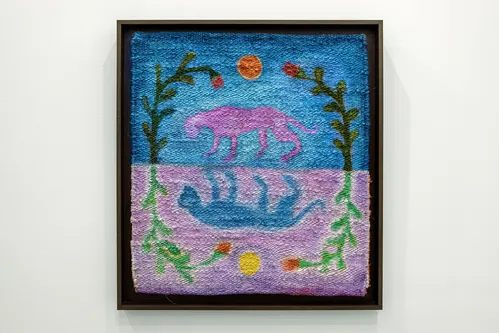
Pandora in the Underworld, 2025
Camile Sproesser
LAMB
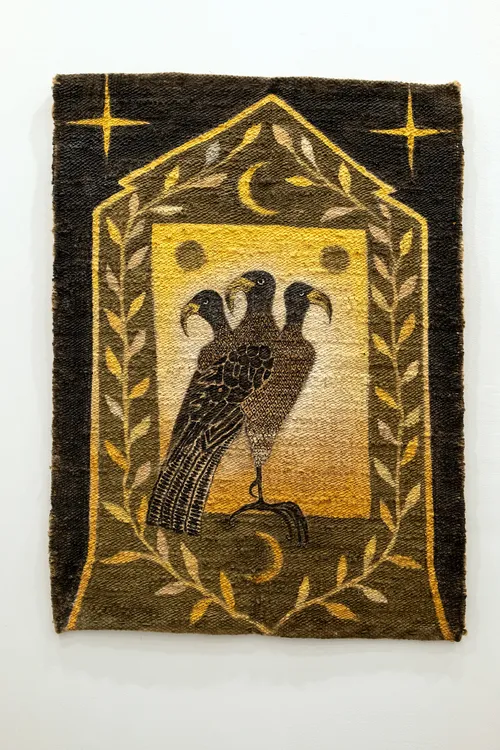
nazar battu bird , 2025
Camile Sproesser
LAMB
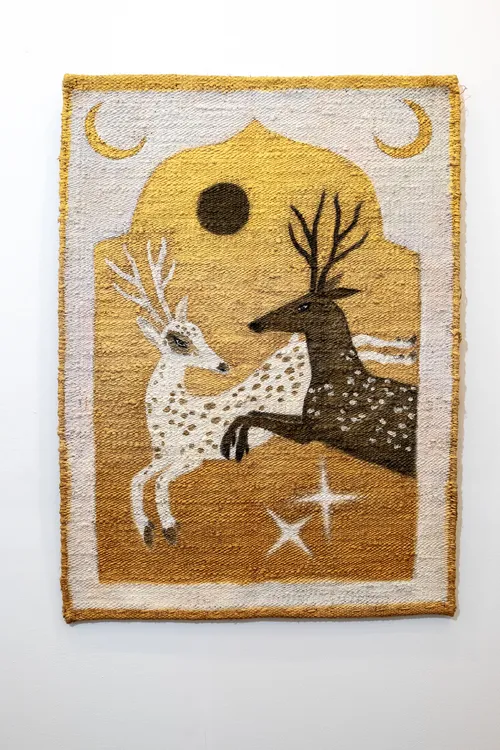
a new day , 2025
Camile Sproesser
LAMB
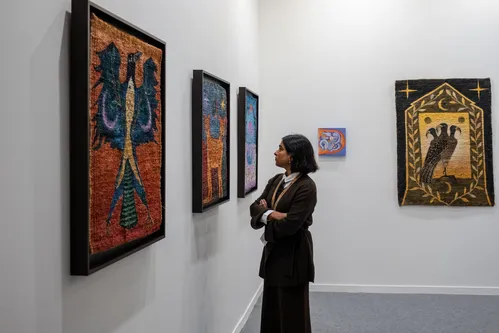
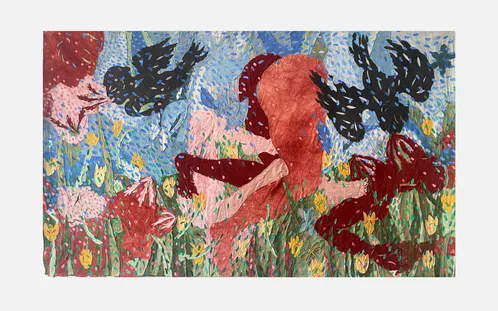
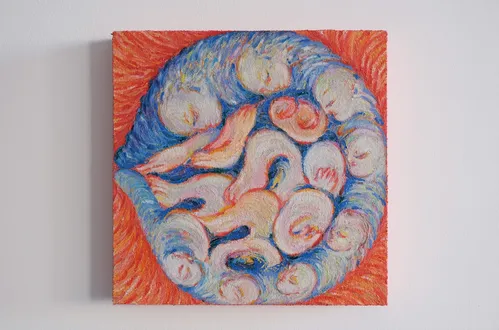
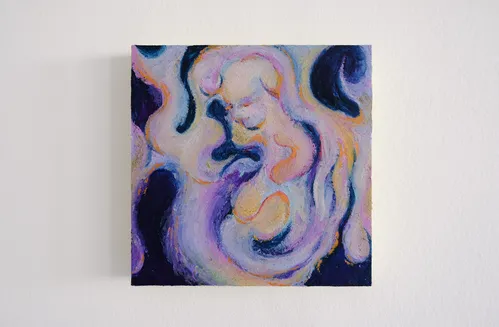
This year, London gallery LAMB is making its debut at India Art Fair with minimum fuss, but maximum impact. The artists who feature in its dual presentation, Camile Sproesser and Bea Bonafini, are a canny pairing, the former’s rugged jute paintings a clever counterpoint to the fluid color palettes of the latter’s small-scale paintings.
The works by Sproesser, made on a surface that references Indian culture (the country is the world’s largest producer of jute), are the result of two months the Brazilian artist spent in South Nagaur in India. Depicting figures such as crows and cheetahs in totemic and emblematic styles, these works draw on Indian and South American mythology. “The works are a nice mix of both cultures through materiality, through iconography, and through concepts,” said gallery staffer Akshay Kumar Sharma.
The four works by Canadian artist Bonafini, meanwhile, capture transitory states, made around the time she was pregnant. They are “reminiscent of what she felt like her child was going through,” as Sharma noted.
Jhaveri Contemporary
Booth A03
With works by Birender Yadav, Haroun Hayward, Jake Grewal, Lionel Wendt, Lubna Chowdhary, Matthew Krishanu, Prabhavathi Meppayil, Pranay Dutta, Rana Begum, Sayan Chanda, Shiraz Bayjoo, and Simryn Gill.
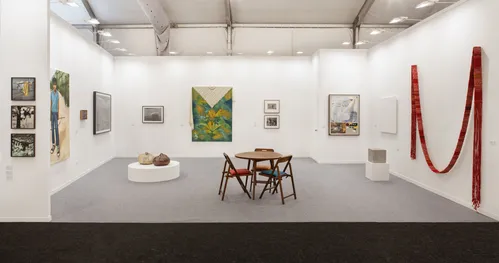
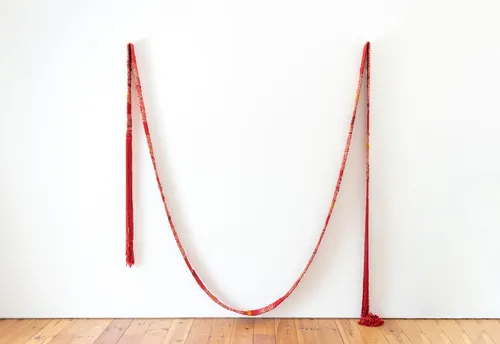
All the Boons You Want, 2025
Sayan Chanda
Jhaveri Contemporary

Pa Bliye Mwa (Don't Forget Me) Three – Pilea Balfouri , 2025
Shiraz Bayjoo
Jhaveri Contemporary

seventy four twenty five, 2025
Prabhavathi Meppayil
Jhaveri Contemporary
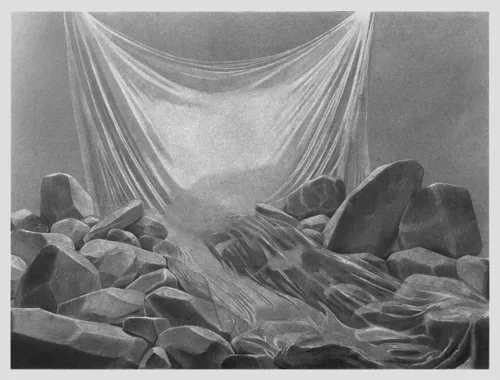
Proscenium VIII, 2025
Pranay Dutta
Jhaveri Contemporary

No.1585 Painting, 2025
Rana Begum
Jhaveri Contemporary
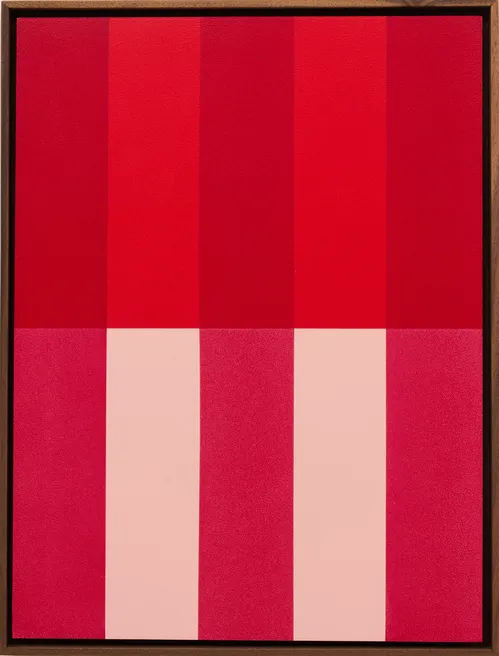
No.1583 Painting, 2025
Rana Begum
Jhaveri Contemporary
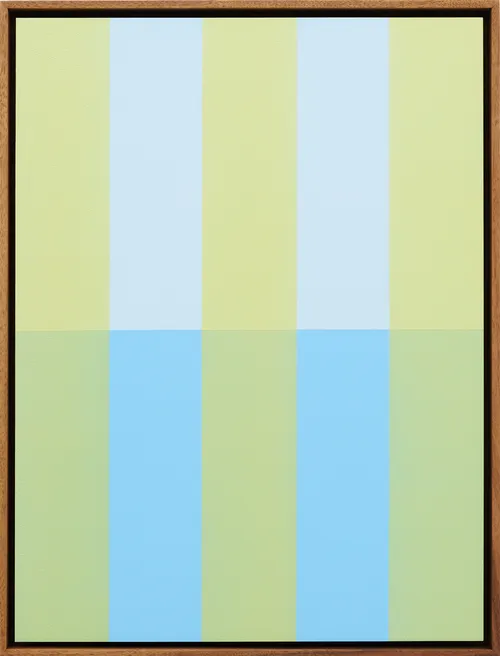
No.1580 Painting, 2025
Rana Begum
Jhaveri Contemporary
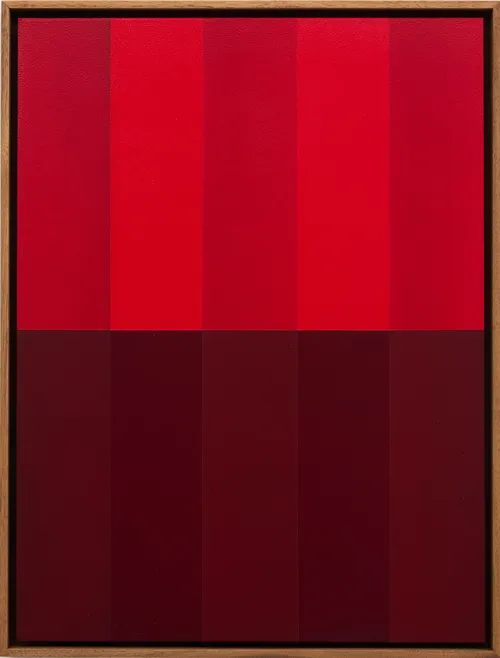
No.1588 Painting, 2025
Rana Begum
Jhaveri Contemporary

No.1582 Painting, 2025
Rana Begum
Jhaveri Contemporary
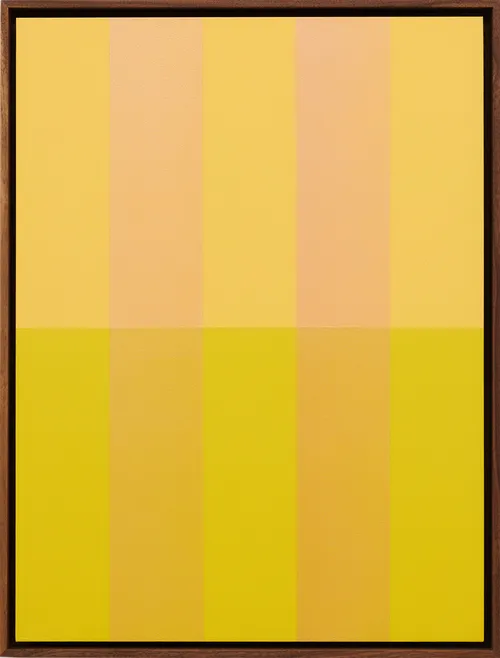
No. 1582 Painting, 2025
Rana Begum
Jhaveri Contemporary
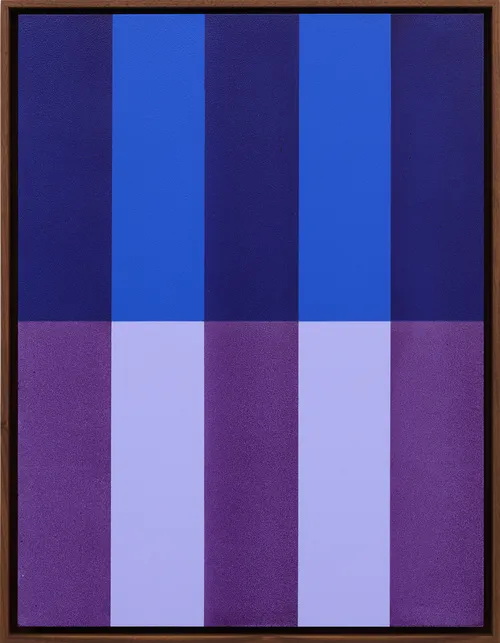
No.1587 Painting, 2025
Rana Begum
Jhaveri Contemporary
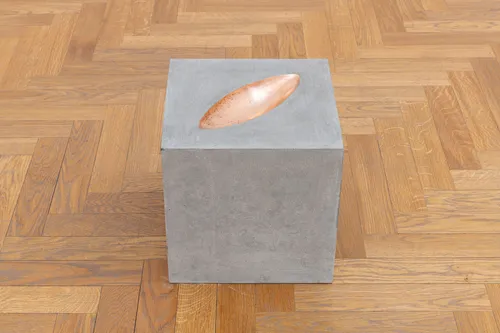
thirty two five-0645, 2019
Prabhavathi Meppayil
Jhaveri Contemporary
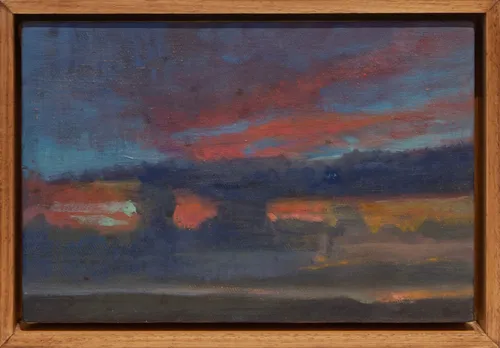
Things Are Allowed To Die, 2025
Jake Grewal
Jhaveri Contemporary
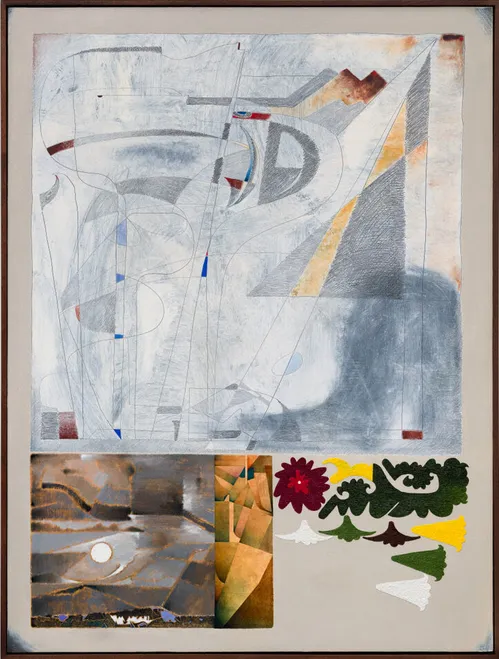
Landscape of The Vale-Moonlight (Strictly Rythm), 2025
Haroun Hayward
Jhaveri Contemporary
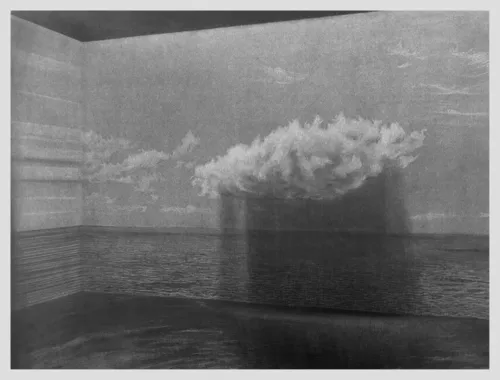
Proscenium V, 2025
Pranay Dutta
Jhaveri Contemporary
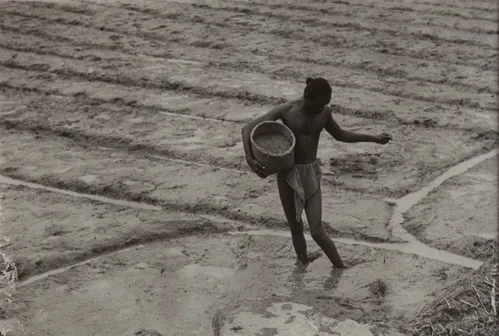
Farmer in field, 1930-1944
Lionel Wendt
Jhaveri Contemporary
Men with big saws, 1930-1944
Lionel Wendt
Jhaveri Contemporary
Blue Boy (Bow and Arrow), 2024
Matthew Krishanu
Jhaveri Contemporary
From Site to Site I, 2025
Birender Yadav
Jhaveri Contemporary
Channel, 2014
Simryn Gill
Jhaveri Contemporary
Channel, 2014
Simryn Gill
Jhaveri Contemporary
Channel, 2014
Simryn Gill
Jhaveri Contemporary

Bind 3, 2025
Lubna Chowdhary
Jhaveri Contemporary
Bind 2, 2025
Lubna Chowdhary
Jhaveri Contemporary
Channel, 2014
Simryn Gill
Jhaveri Contemporary
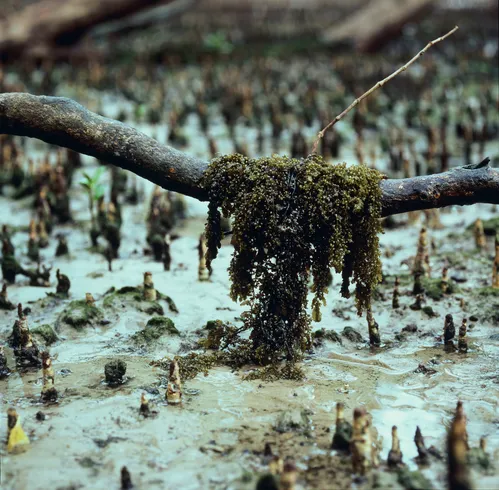
Channel, 2014
Simryn Gill
Jhaveri Contemporary
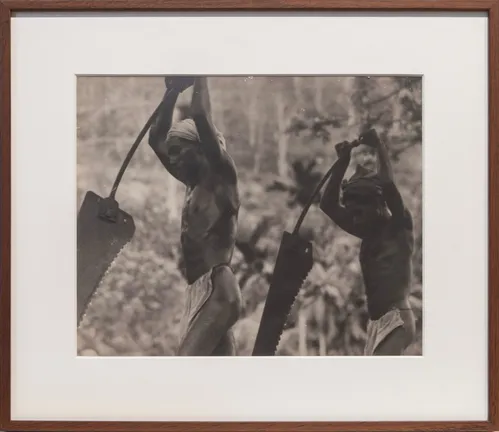
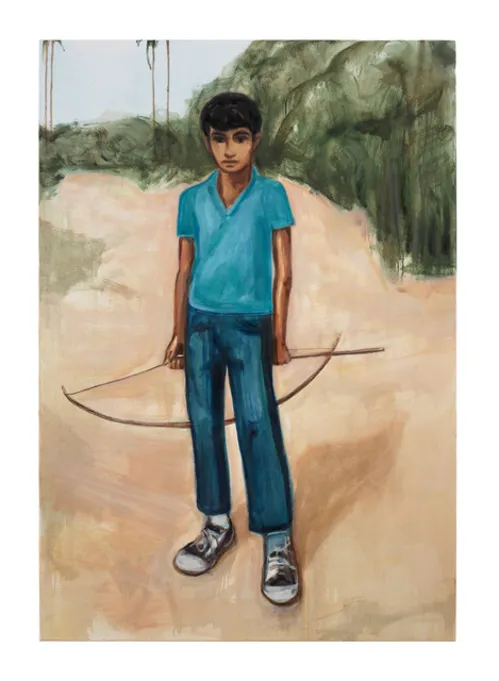
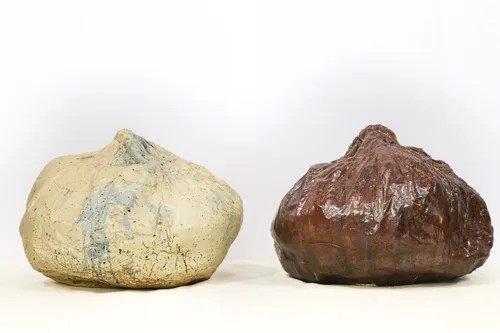
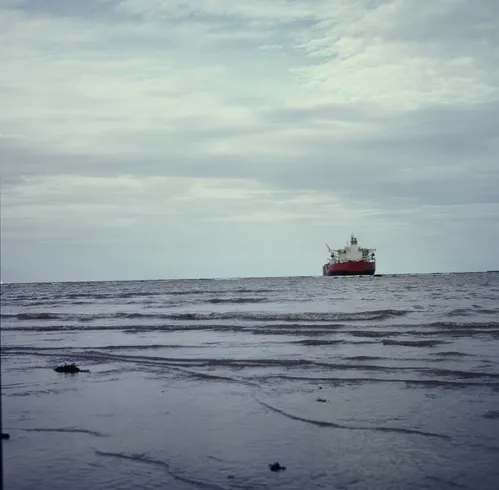
Jhaveri Contemporary’s booth is a powerful display of works that illustrate why the Mumbai gallery is a trailblazing force in the country’s art scene, bringing together a selection of standout South Asian and diaspora artists. Indeed, five artists presented here are featured in the current Kochi-Muziris Biennale.
An immediate highlight is The Artsy Vanguard alum Sayan Chanda’s All the Boons You Want (2025), a red textile that tapers and extends downward into loose, tassel-like ends. Upon close inspection, the work’s layering and detailed stitching become apparent.
Also of note, occupying the central spot of the booth, is a work by Shiraz Bayjoo. The Mauritian artist’s painting Pa Bliye Mwa (Don’t Forget Me) Three – Pilea Balfouri (2025), represents a tropical flower, wrapped in crocheted cloth similar to an item that the artist’s grandmother used to own. The work explores the ways that colonized people learn about countries mainly through food and agriculture, “something that was iconic to him, because whenever he visited gardens and in the U.K., he would see a lot of the samples of food and crops that normally originated from Mauritius,” according to a staffer from the gallery.
The booth also includes the gallery’s heavyweight artists, such as Rana Begum, who presents a series of gridded minimal abstract paintings.
