


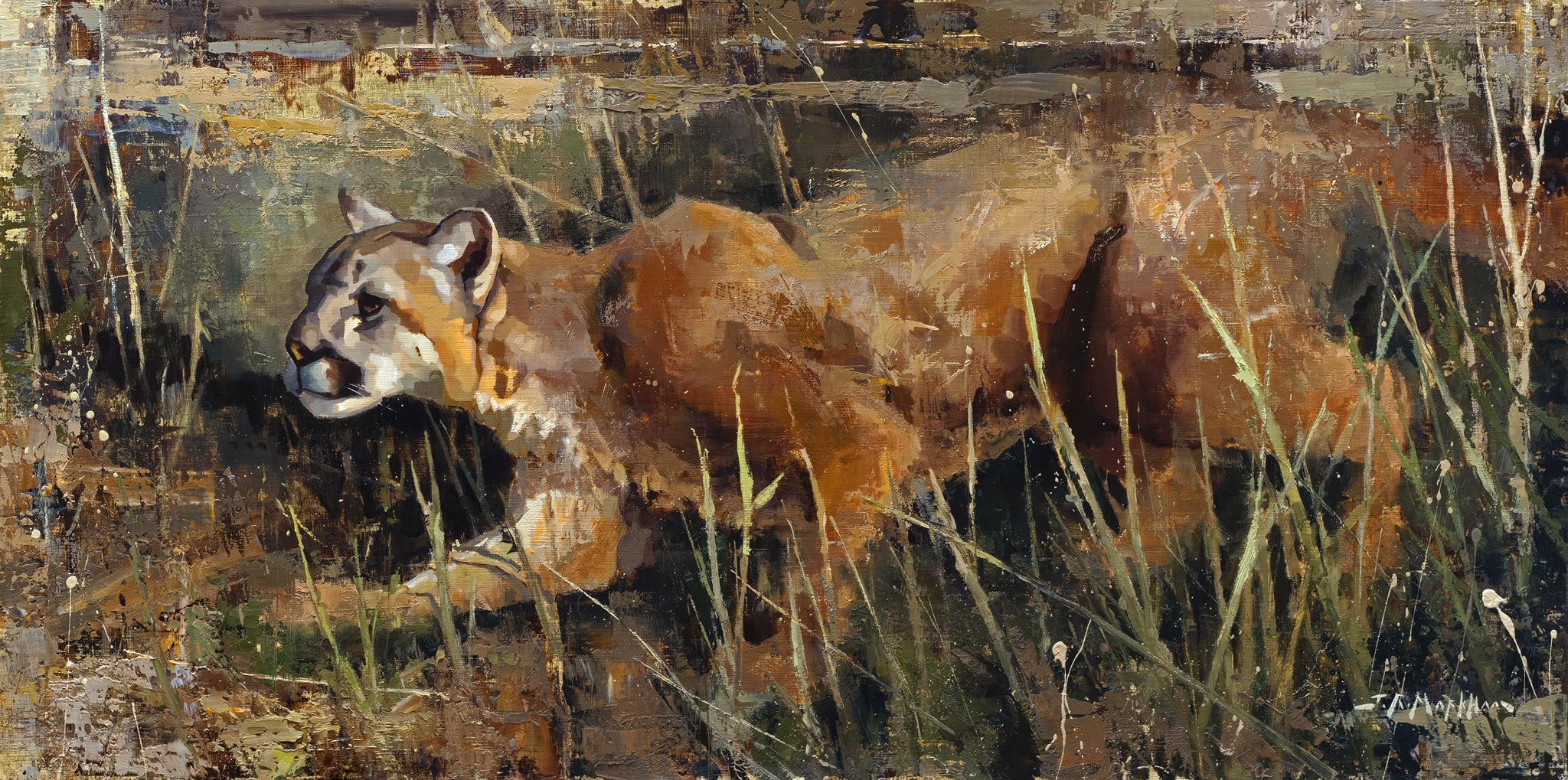
Jerry Markham’s paintings offer something rare: deliberate incompleteness. Bold brushstrokes remain visible. Palette knife marks texture the surface. Abstract elements coexist with recognizable forms. The work is loose and undone by design. And that’s precisely the point.
“I want to capture the essence of a subject more than the specifics,” Jerry explains from his ranch in the Rocky Mountains of British Columbia. “If the work is loose and a bit undone, there is more room for the viewer to interpret, to access the painting through their own imaginings.”
For over 20 years, Jerry has been painting full-time from his mountain sanctuary, creating work that spans wildlife portraits, sweeping landscapes, historical Western scenes, human subjects, and vibrant florals. His diverse portfolio reflects his wide-ranging interests: the majestic wilderness surrounding his home, his travels, his fascination with history, and his commitment to creative evolution. What unifies this varied body of work is his distinctive technical approach and his willingness to let paintings reveal themselves rather than forcing predetermined outcomes.
The Canadian Context
Jerry lives and works on a ranch in British Columbia’s Rocky Mountains with his wife, Leah, surrounded by the kind of wilderness that provides endless subject matter. The location is both practical and philosophical. Proximity to wildlife allows regular observation. The dramatic landscape offers constantly shifting light and atmospheric conditions. But more importantly, the isolation supports the kind of sustained studio practice necessary for genuine artistic development.
The Canadian Rockies differ from their American counterparts in subtle but significant ways. The light is cooler. The wilderness feels less conquered. Wildlife populations remain robust. These qualities inform Jerry’s work, giving it a particular character that distinguishes it from other Western art. His paintings carry a northern sensibility, a different relationship to wildness and space.
Working from this location also positions Jerry within the strong tradition of Canadian landscape and wildlife painting. Artists like Robert Bateman established international reputations for Canadian wildlife art, creating market awareness and collector interest. Jerry benefits from this foundation as he carves out his own distinctive approach.
The Technical Philosophy
Jerry’s artistic approach centers on a balance between control and spontaneity, between accurate drawing and expressive paint handling. He starts paintings loose and somewhat abstract, allowing the picture to evolve rather than following a rigid predetermined plan. “Trying not to get too bossy with the paint,” he describes it, “allowing it room to move while pulling out the form of the whole.”
This methodology requires both technical confidence and philosophical commitment. You must understand drawing well enough to capture accurate form quickly, without overworking. You must trust that loose brushwork and palette knife application will coalesce into coherent images. And you must resist the temptation to tighten up, to add just one more detail, to make everything explicit.
“I feel this helps keep the painting from getting too tight or content-driven,” Jerry explains. “I have found paintings like this more interesting to view, so I try to paint that way. It is a challenge to keep it loose while remaining accurate without getting too tight in the process, but I am learning. It is the struggle to balance form and content.”
The phrase “but I am learning” is telling. After 20 years of full-time painting, Jerry still positions himself as a student rather than a master, continually evolving his approach, challenging himself with new subject matter, experimenting with composition, lighting, color palettes, and paint application techniques.
Subject Range and Versatility
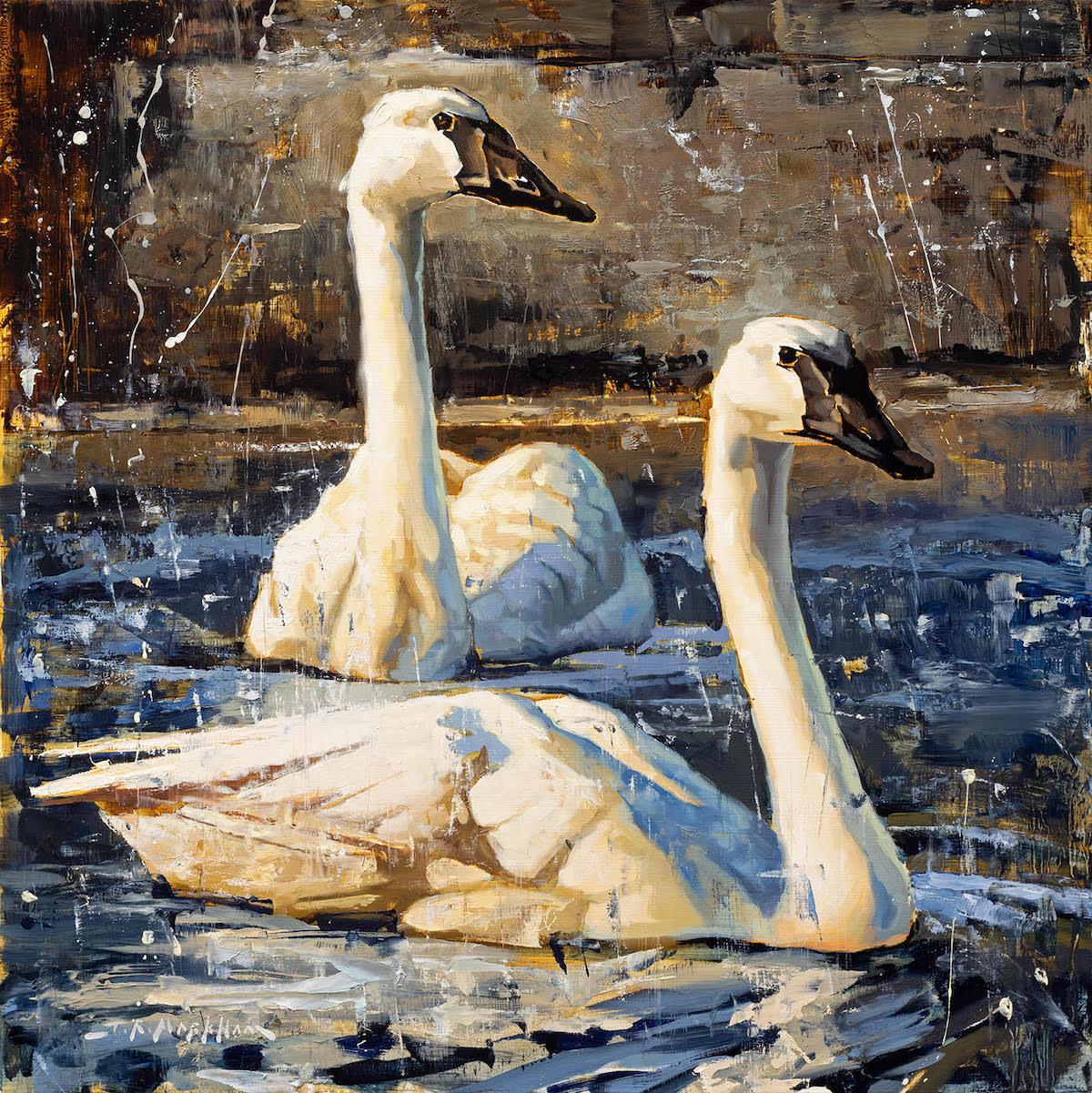
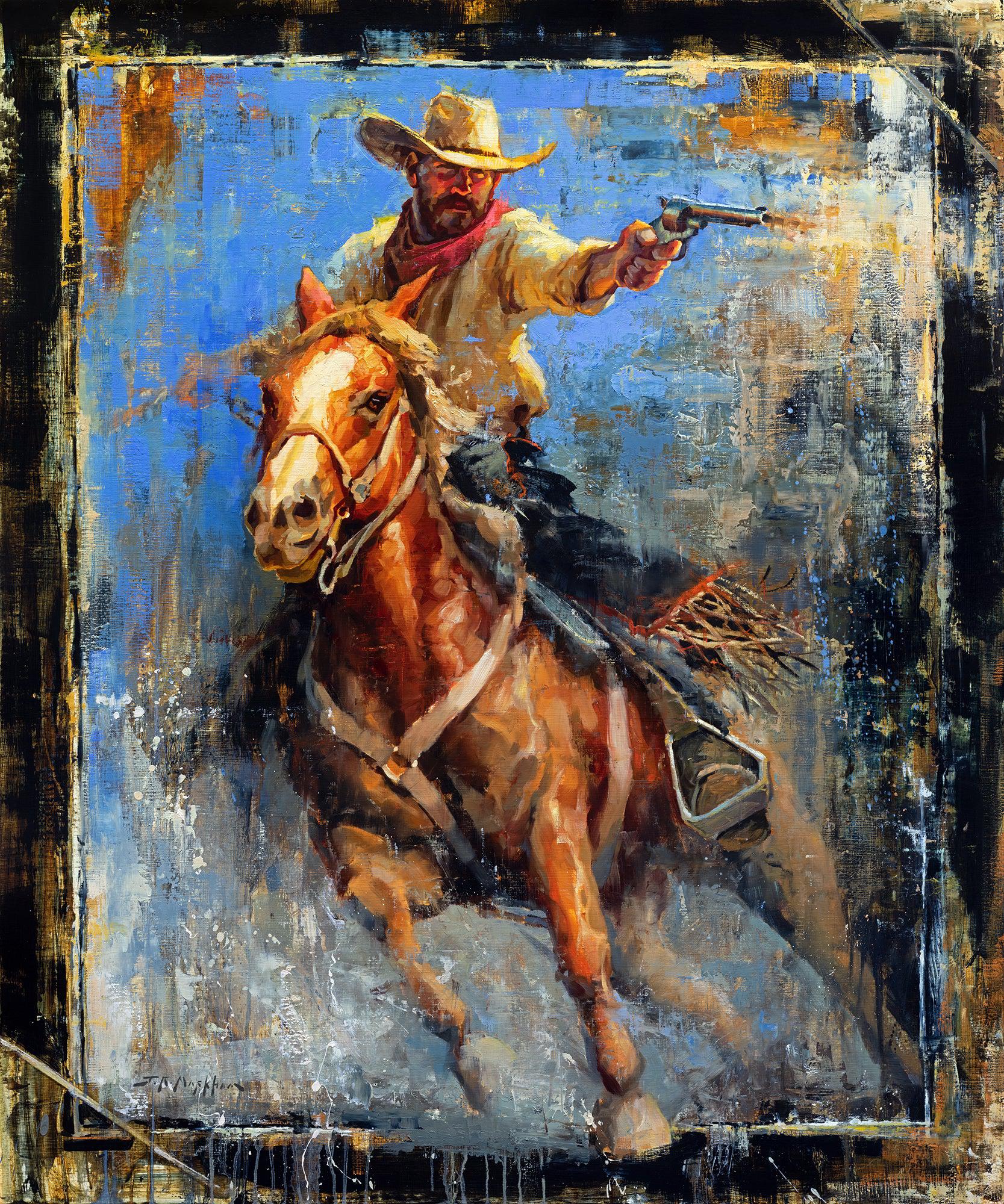
Jerry’s portfolio demonstrates unusual versatility. Works like “Red Rider,” “Fearless,” and “Run and Gun” capture the drama and action of the historical West. “American Grizzly,” “Autumn Moose,” and “Silent Stalker” showcase his expertise in wildlife. Pieces like “Dynamic Duo” and “Brilliant Crown” explore bird subjects with unexpected painterly freedom. And titles like “Tickling the Ivories” and “He Played All Night” reveal his interest in human subjects and interior scenes.
This range distinguishes Jerry from artists who specialize in a narrow field. He paints anything that captures his interest, following curiosity rather than market expectations. This approach requires substantial technical facility. Wildlife demands different skills from figurative work. Landscapes present different challenges than interior scenes. Maintaining consistent quality across such varied subject matter demonstrates genuine mastery.
But the diversity serves another purpose. It keeps Jerry’s practice fresh, prevents stagnation, and forces continual problem-solving. Each new subject offers opportunities to experiment with composition, explore different color approaches, and experiment with various paint-handling techniques. The variety is pedagogical, a way of continuously challenging himself.
The Ralph Waldo Emerson Influence
Jerry quotes Emerson: “Never lose an opportunity of seeing anything beautiful, for beauty is God’s handwriting.” This philosophical foundation informs his entire practice. He’s not documenting wildlife behavior or recording landscape topography. He’s sharing beauty through his own expression, whether painting wildlife, florals, people, landscape, or architecture.
This mission statement positions art as translation rather than transcription. Jerry encounters beauty in nature, in human activity, in light and color, and in form. Then he translates these encounters into painted expressions that hopefully allow viewers to access something of what he experienced. The loose, expressive technique serves this goal. By leaving things undone and creating room for viewer interpretation, he makes the paintings inviting rather than declarative.
“I feel now, more than ever, that the arts are important for sharing beauty,” Jerry reflects. In a cultural moment dominated by bad news, political division, and manufactured outrage, this seems almost radical. But it’s grounded in genuine conviction rather than naive optimism. Jerry has spent two decades in serious studio practice, grappling with formal and technical challenges, earning the right to these beliefs through sustained engagement with his craft.
The Technical Signature
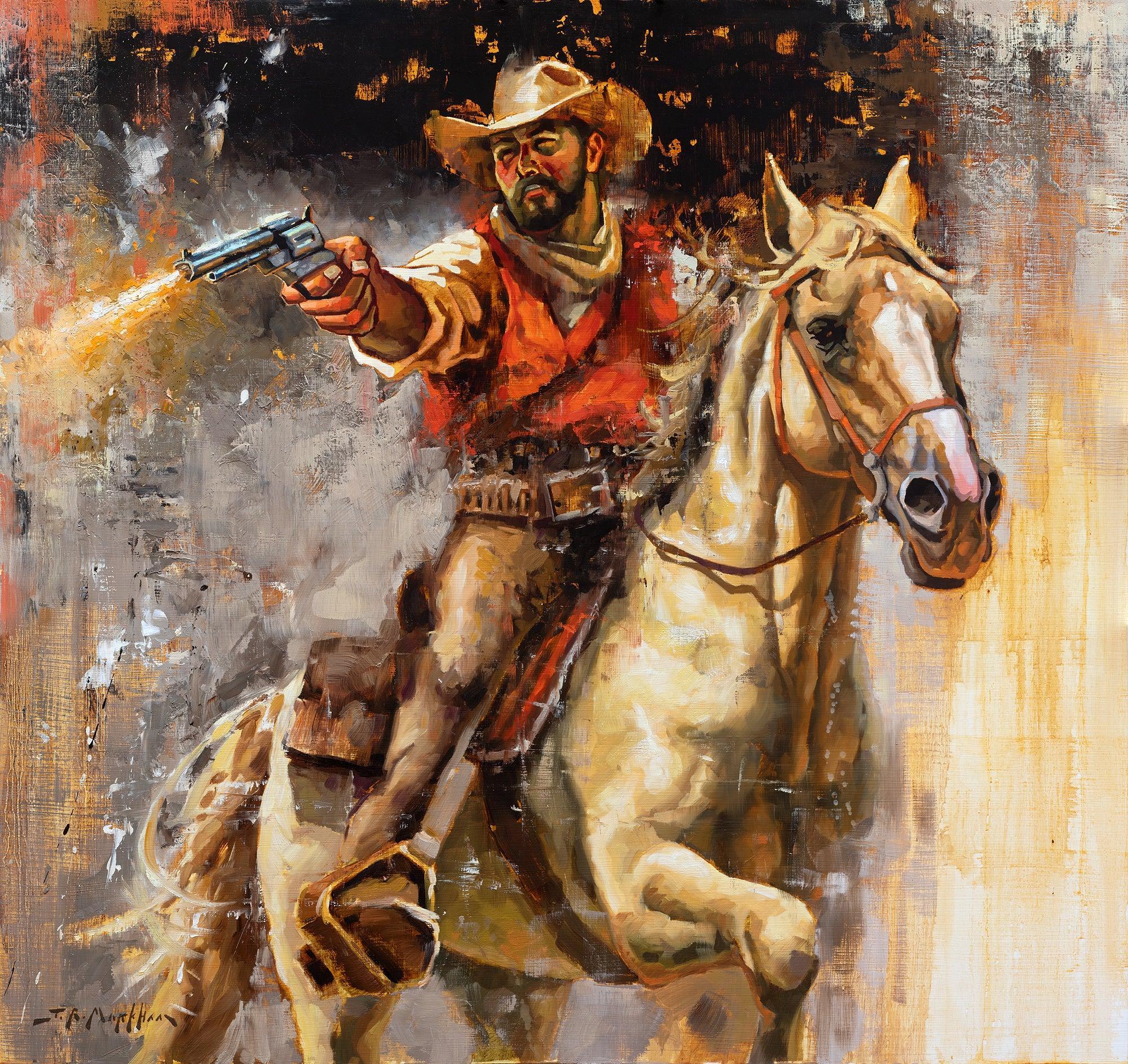
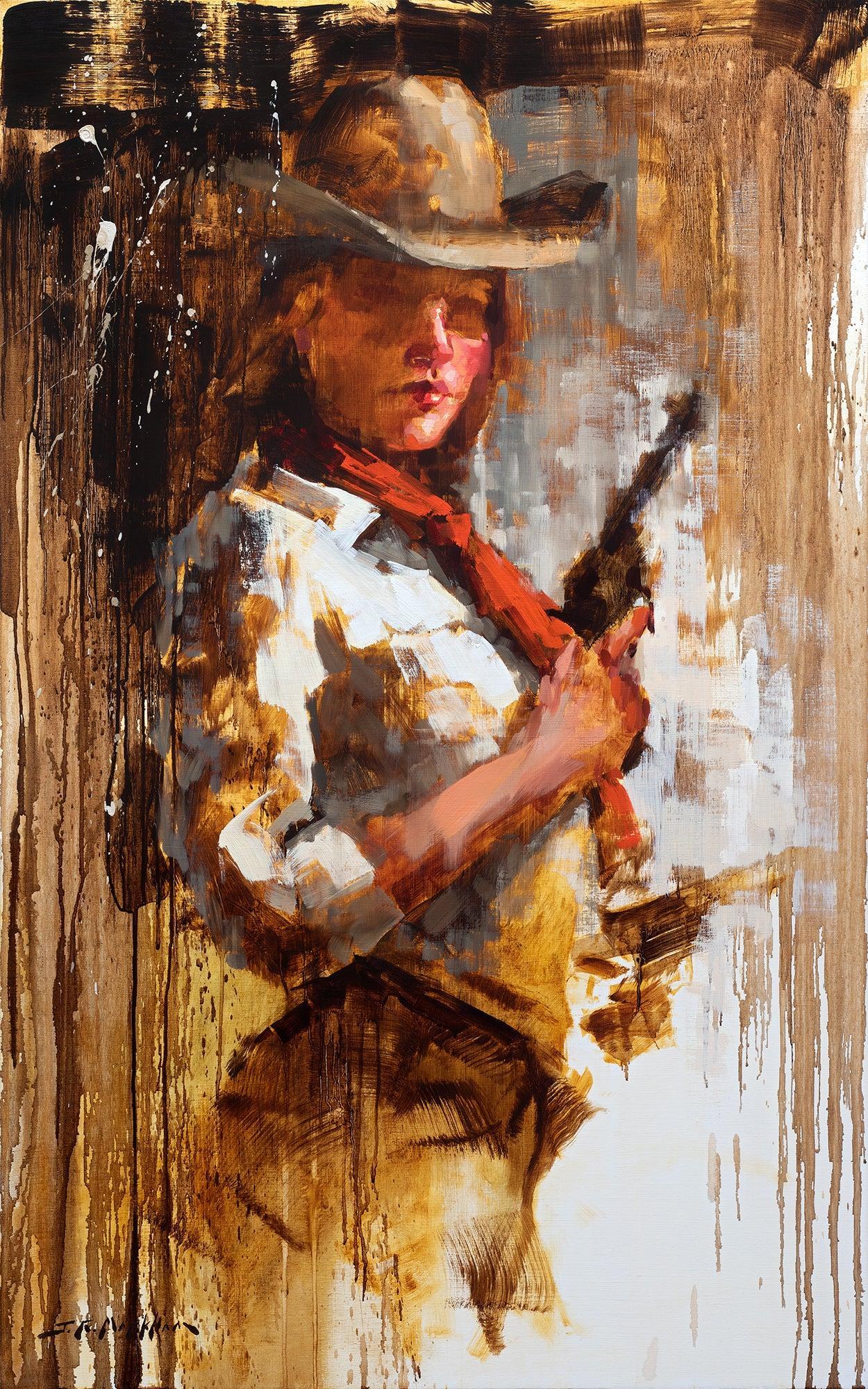
Jerry’s distinctive style features bold, confident brushstrokes and expressive palette knife work that create deliberate imperfections and abstract elements within representational contexts. Look closely at “Watch Your Back” or “To You Little Lady,” and you’ll see passages that barely cohere into readable forms, areas where color and gesture do more work than careful rendering.
This approach requires courage. The temptation to add just one more stroke, to clarify just one more edge, to make everything perfectly legible is strong. Leaving things undone feels risky. But Jerry understands that the risk is necessary. The loose passages create visual interest, provide breathing room, and allow viewers’ eyes and imaginations to fill in what he deliberately left incomplete.
His palette knife work is particularly distinctive. Rather than smooth blending, he often leaves knife marks visible, creating textured surfaces that catch light and add physicality to the paintings. Works like “Fearless” and “Snatching Supper” demonstrate how he uses the palette knife technique to build forms while maintaining spontaneity.
The color choices are sophisticated and often unexpected. He’s not bound by local color or naturalistic accuracy. If a passage needs a certain blue or an unexpected warm accent, he’ll use it, trusting that color relationships matter more than literal accuracy. This freedom with color contributes to the paintings’ expressive power.
Publication Recognition
Jerry’s artistic excellence has earned recognition in prestigious publications such as Southwest Art, Western Art Collector, Western Art & Architecture, and International Artist. This editorial attention validates his approach and introduces his work to broader audiences. Art magazine coverage often translates directly to collector interest, particularly when magazines feature in-depth profiles rather than simple listings.
The international recognition positions Jerry as more than a regional Canadian artist. His work speaks to collectors across North America, demonstrating how technical excellence and authentic artistic vision transcend geographic boundaries.
The Creative Evolution Commitment
What distinguishes Jerry from many accomplished artists is his explicit commitment to continuous evolution. He could have settled into a successful formula years ago, painting variations on established themes. Instead, he continually challenges himself, tackling subject matter that pushes his abilities, experimenting with new approaches to composition, lighting, and paint application.
This commitment to growth keeps the work vital. There’s no sense of repetition or stagnation. Each painting represents genuine exploration rather than formulaic application. For collectors, this means work that continues to develop and surprise, an artist who hasn’t peaked but remains in active evolution.
“Always the consummate student,” Jerry describes his approach. This humility, combined with substantial technical accomplishment, creates work that’s both confident and searching, accomplished yet still reaching.
The Studio Practice
Jerry’s daily practice involves regular walks with Leah and their dog, taking photographs for reference, and sustained studio time working on paintings. He uses photographs from these walks and previous travels as starting points, but the paintings evolve over the course of the process rather than serving as mere copies of the photographic references.
The wilderness surrounding his ranch provides both inspiration and subject matter. He observes wildlife behavior directly, notes how light changes throughout seasons, and experiences the landscape in all its moods. This direct engagement with his subjects informs the paintings in ways that working solely from photographs never could.
His studio practice balances discipline with openness. He maintains regular working hours and committed studio time. But within that structure, he allows paintings to develop organically, responding to what happens on the canvas rather than forcing predetermined outcomes.
Collecting Strategies
For collectors interested in Jerry’s work, several approaches make sense. Wildlife enthusiasts can focus on his animal paintings, building collections that showcase his range across species and his evolving technical approach. Western art collectors might concentrate on his historical scenes and cowboy subjects. Landscape collectors find in his work a contemporary sensibility applied to traditional subject matter.
Some collectors respond primarily to his loose, expressive technique, acquiring works that showcase his palette-knife mastery and bold brushwork. Others are drawn to specific subjects or color palettes that complement their collections or living spaces.
Entry-level collectors can acquire genuine Markham paintings at accessible price points, experiencing his distinctive style firsthand. Established collectors find in his top-tier work paintings that hold their own against any contemporary Western artist, offering both visual impact and technical sophistication.
The Historical West Series
Jerry’s paintings depicting scenes from the historical West deserve particular attention. Works like “Red Rider,” “Fearless,” and “Run and Gun” bring fresh energy to familiar subject matter. Rather than the tight realism or romanticized nostalgia that often characterizes Western genre painting, Jerry’s approach emphasizes action, gesture, and expressive paint handling.
These paintings capture the spirit and energy of their subjects without getting bogged down in period detail or historical accuracy. A cowboy on horseback becomes an explosion of color and movement. A poker game in a saloon focuses on character interaction and atmospheric lighting rather than authentic costume details.
This approach makes the historical West feel immediate and relevant rather than distant and museological. The paintings are about human drama, conflict, courage, and connection, themes that transcend specific historical periods.
Looking Forward
As Jerry continues his practice from his British Columbia ranch, the trajectory remains one of exploration and evolution. His core technical approach is well-established: loose, expressive paint handling; bold brushwork and palette knife work; subject matter that interests him; commitment to capturing essence rather than specifics. But within these parameters, he continues to push boundaries, trying new subjects and experimenting with different approaches.
For galleries like Sorrel Sky, representing Jerry means offering collectors an artist who bridges multiple constituencies. Traditional Western art enthusiasts appreciate his cowboy and wildlife subjects. Contemporary art collectors respond to his technical sophistication and expressive approach. Wildlife enthusiasts find paintings that capture animal character without becoming illustrative. Landscape collectors discover work that honors the tradition while maintaining a fresh, personal vision.
The Viewer’s Role
Jerry’s artistic philosophy explicitly includes viewers as active participants. By leaving work loose and undone, he creates space for interpretation and imagination. The paintings don’t dictate single readings. They invite engagement, reward sustained looking, and reveal different aspects on repeated viewing.
This approach positions collecting as a relationship rather than mere acquisition. The loose passages that might initially puzzle become sources of ongoing visual interest. The balance between accurate drawing and expressive paint handling manifests differently under different lighting conditions and viewing distances.
For collectors seeking art that elicits this sustained engagement, Jerry’s work offers exactly that. These aren’t paintings you glance at once and fully comprehend. They reward attention, invite contemplation, and continue to surprise.
The Beauty Mission
Jerry’s commitment to sharing beauty through painting might seem simple or obvious, but it represents a clear-eyed artistic stance. In an art world often dominated by conceptual complexity, political messaging, or pure aesthetic innovation, Jerry’s focus on beauty as a primary goal offers clarity and directness.
This doesn’t mean the work is uncomplicated or merely decorative. Jerry’s paintings demonstrate sophisticated formal understanding, technical mastery, and genuine artistic vision. But these qualities serve the larger goal of sharing beauty, of translating encounters with natural and human subjects into expressions that might allow others to experience something of what he finds compelling.
Working from his Rocky Mountain ranch with characteristic discipline and openness, Jerry Markham continues to create paintings that balance form and content, control and spontaneity, and accurate drawing and expressive paint handling. It’s work that honors Western and wildlife art traditions while pushing those traditions forward through technical innovation and personal vision. For collectors seeking art that’s both accomplished and evolving, traditional and contemporary, specific and invitational, Jerry’s paintings offer exactly that balance. Twenty years into full-time painting, he remains a consummate student, still learning, still evolving, still finding ways to leave things beautifully undone.
The post The Art of Leaving Things Undone: Jerry Markham’s Expressive Western Paintings appeared first on Art Business News.
