






Claydon, a beautiful 18th-century pile less than 30 minutes by car from Stowe and Bletchley Park, both in Buckinghamshire, is a National Trust-owned stately home that is designed to wow. Its opulent state rooms open onto magnificent gardens, endless rolling fields and three ponds that have been artfully landscaped to look like one massive lake. Day trippers this summer, however, are being greeted with almost blushing intimacy. Installed across the house’s grand façade until 14 September is an instantly recognisable Tracey Emin bedside missive, I Loved You Until the Morning, scrawled in bright yellow neon.
Emin’s 2025 piece has been installed as part of White Cube at Claydon, a ground-breaking partnership between the contemporary art gallery and the National Trust. Given full rein over the house’s interiors and grounds, the White Cube curator, Susanna Greeves, has convened a group show of 47 works by 24 artists, including Gabriel Orozco, Cai Guo-Qiang and Tunji Adeniyi-Jones.
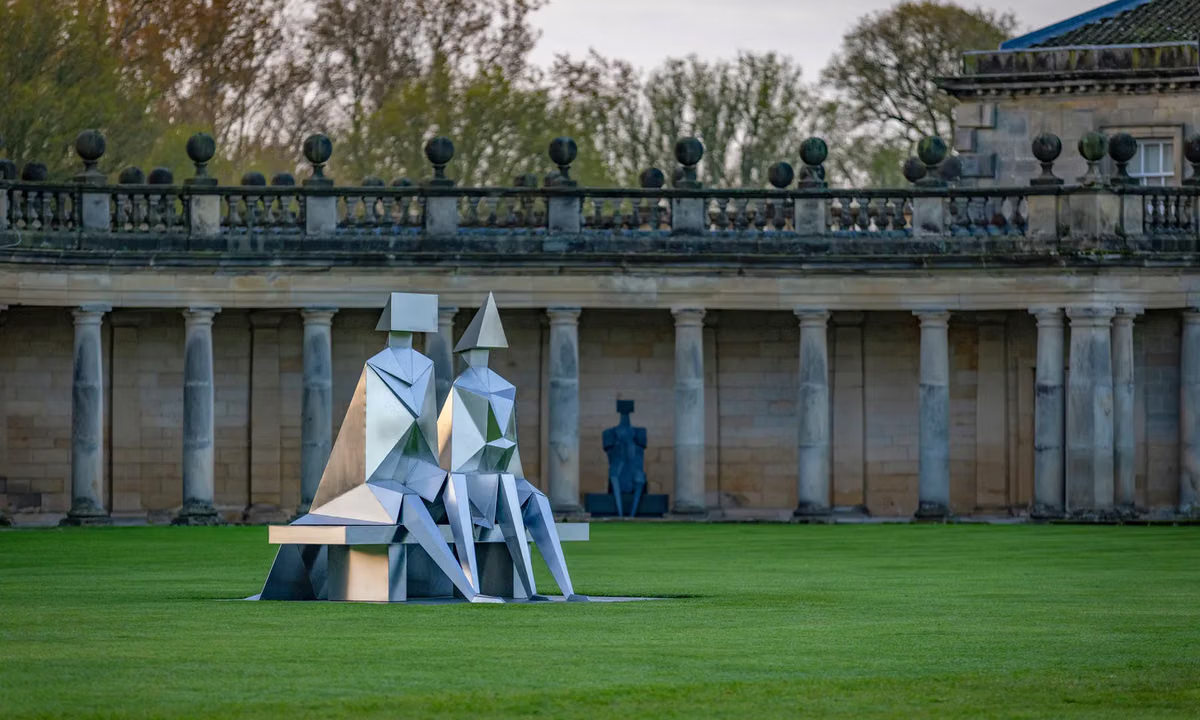
Within Britain’s constellation of country houses, it is by no means the only instance of contemporary art stealing the limelight this summer. In Norfolk, art lovers will find Phyllida Barlow and Daisy Parris at Wolterton (until 31 October), Lynn Chadwick at Houghton Hall (until 4 October) and Anya Gallaccio within the 1,000-acre deer park at Gunton (until 13 September). Nancy Holt is at Goodwood in Sussex (until 1 November) and Catherine Goodman is at Boughton House (until 2 September) in Northamptonshire. And in Scotland, Veronica Ryan is at Mount Stuart on the Isle of Bute (until 18 October).
Tracey Emin’s I Loved You Until The Morning (2025) is part of White Cube at Claydon until 14 September 2026 © Tracey Emin. Photo © White Cube (Theo Christelis)
White Cube’s takeover, however, does signal an interesting shift in how using this built heritage can be beneficial for artists and their galleries, as well as the public. A November 2025 report from Historic Houses highlighted that despite the boost from the Covid Cultural Recovery Fund, the nation’s stately homes face a £2bn backlog in repairs. As Tanya Brittain, the National Trust general manager for Stowe and Aylesbury Vale, puts it, “We have to do something really drastic with our properties.”
Artistic stimulation
When Sophie Crichton-Stuart set up the contemporary art programme at Mount Stuart 25 years ago, she initially created a white-cube gallery space. But, she says, artists did not want to show there, and it was eventually repurposed as a visitor centre.
Over the years, the invited artists, from Kate Whiteford and Lucy Skaer to Langlands & Bell and Monster Chetwynd, have been taken in by the innovation that underpins every era of the house’s interiors, its collection of botanical drawings and the sheer richness of its detailing. This summer, Veronica Ryan has fixated on a monkey puzzle tree in the grounds as well as some beautifully ornate drain covers, of which she has made casts.

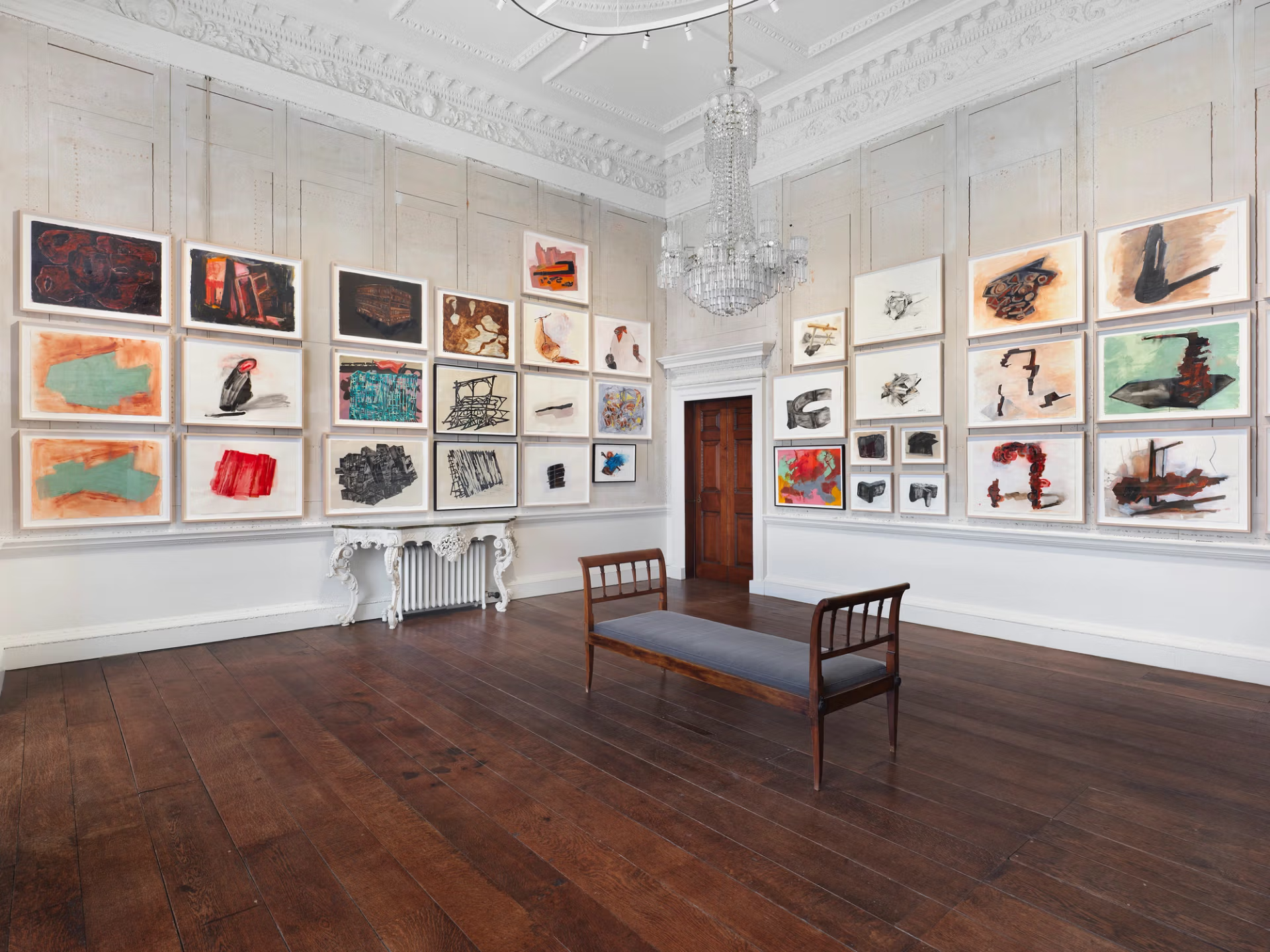
An installation view of Phyllida Barlow’s Disruptor show at Wolterton until 31 October Photo: Eva Herzog; courtesy of Wolterton. © Phyllida Barlow Estate
At Wolterton Hall, meanwhile, removing historical paintings from the rooms in which Barlow’s sculptures are now installed has breathed new life into the building. It has also revealed markings and traces—even a pencil drawing—on the walls, which the artistic director, Simon Oldfield, says Barlow would have loved.
At Claydon, where Greeves has been free to displace and remove items from the historic collection, two giant Cerith Wyn Evans chandelier sculptures, titled Mantra (2016), hang from an upstairs ceiling. Also installed is a Marguerite Humeau piece in a private garden within the grounds. The White Cube artists were all excited at the prospect of exhibiting there and it is not hard to see why. As Greeves puts it, “You can see how extraordinary the house is.”
The artists are not simply treating the estate as a gorgeous backdrop. Instead, they are engaging with its physical fabric and the makers who were involved in it—all the stellar contemporaries of their time—as well as its dramatic history of reversals of fortune, which encapsulate the wider national history of kingdom and empire, because, Greeves adds, “that’s where this kind of wealth inevitably comes from”. An untitled piece by Danh Võ, which comprises a 17th-century French polychrome wood putto set within a luxury Rimowa suitcase, is placed in the house museum, alongside treasures (stuffed birds, ancient silks, half a Javanese gamelan) brought back to England from the four corners of the globe.
Economic incentive
Hignell Gallery, which specialises in monumental sculpture, has this summer installed works by Helaine Blumenfeld at Gainsborough’s House in Sudbury and Sophie Ryder at RHS Wisley. The director, Abby Hignell, underscores the clear aspirational investment the public has in visiting places of this grandeur. “They are theatre settings,” she says. “If you go to Chatsworth, the whole thing is about shock and awe, you are meant to be impressed. It’s the same theatre as religious buildings. It gets your mind in the place to receive art.”

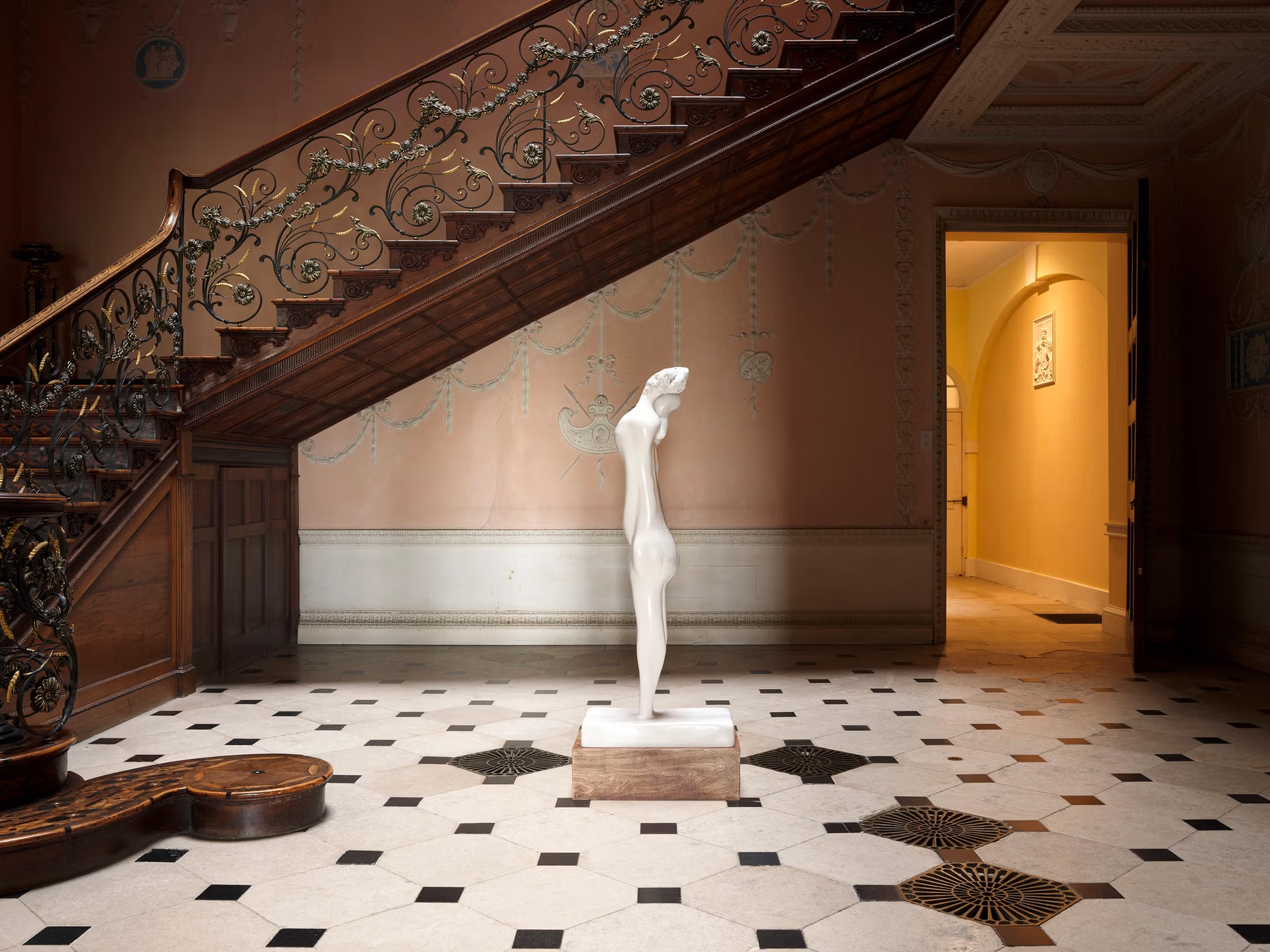
Enrico David’s Aurora (2025), part of White Cube at Claydon until 14 September 2026 © Enrico David; photo © White Cube (Theo Christelis)
For a gallery looking to reach a wider audience, a stately home provides the chance to show how its exclusive wares behave in rich interiors and the glamorous outdoors. Hignall can attest to the pull. Every Christmas, her clients send her pictures of their sculptures when it snows: “It’s a very childlike joy.”
Inside Claydon, Enrico David’s alabaster figure, Aurora (2025), positively sighs in the descending light of a monumental staircase, lit from above by a domed roof lantern, which Greeves describes as one of the house’s hero moments. And Jeff Wall’s photograph of a woman in a library, titled Maquette for a monument to the contemplation of the possibility of mending a hole in a sock (2023), looks tailor-made for the library that Florence Nightingale’s sister Parthenope dreamed up.
Outdoors at Claydon, Brittain says David Altmejd’s white bronzes on the south lawn look spectacular in the moonlight. And the deer in the park have taken to sleeping around Antony Gormley’s Big Clasp (2023) in the upper garden; she suspects it is because the cast iron retains the heat of the day. That is not something you will find in Mayfair.
For the National Trust, the show is about boosting return visitor appeal. Losing out on the fees it would have otherwise gained by closing for film shoots (bits of Bridgerton were shot there) is offset by having an Emin or a Gormley. Even for visitors who do not know much about art, those are household names on a par with the two van Dycks in the collection, Brittain says. It gives people a reason to come back.

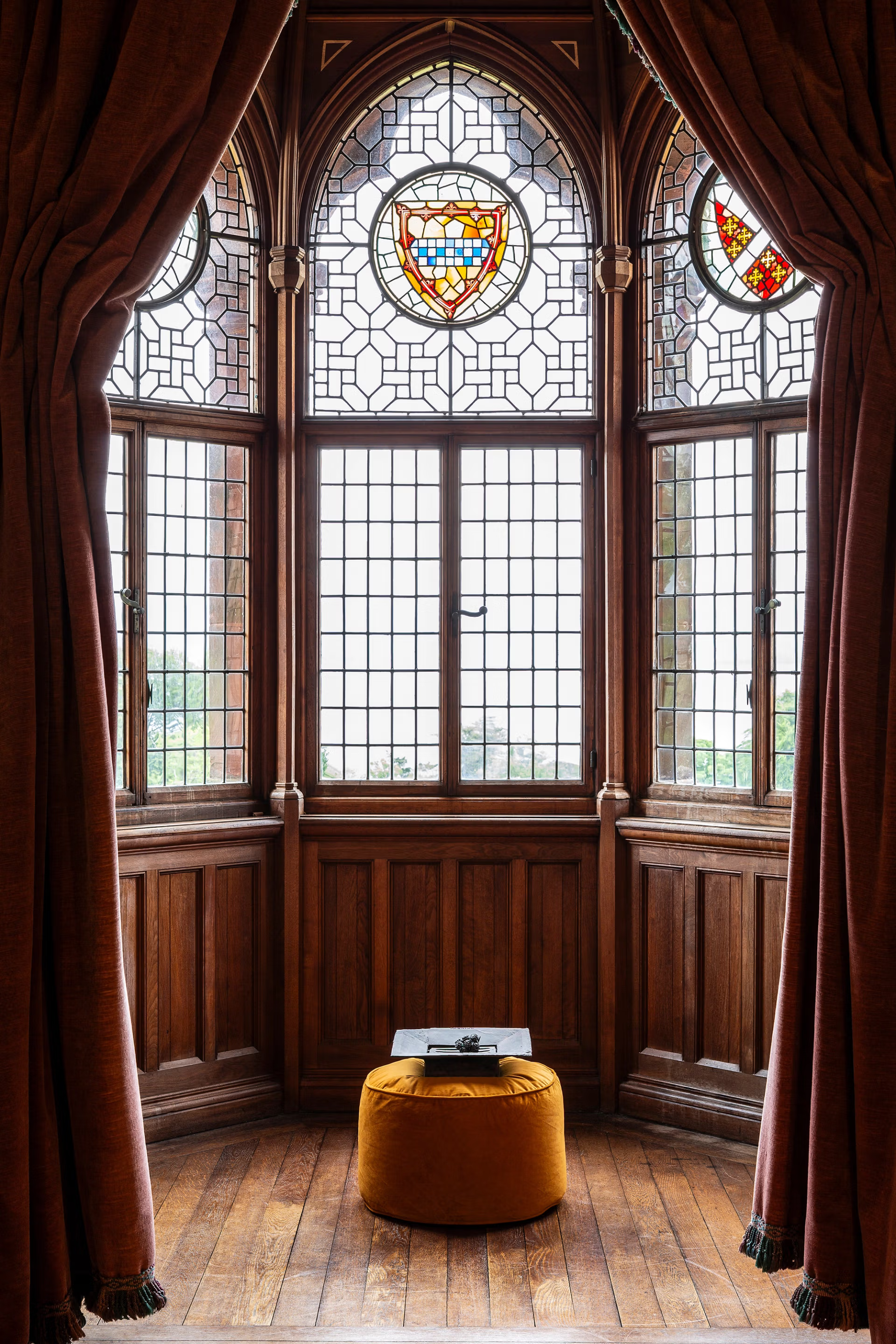
Veronica Ryan: The Weather Inside II is on show at Mount Stuart on the Isle of Bute until 18 October 2026 © Keith Hunter Photography
“We’ve been very precious about what happens in our historic houses,” Brittain says. Her goal is to change that. “These are party houses, aren’t they? They were built for entertaining; they were built for pleasure.” Returning them to that purpose is a way to buy time and come up with longer-term, more sustainable solutions to keeping them alive.
Of course, the question for the National Trust, English Heritage, Historic Homes and everybody else in the heritage sector is whether it is realistically possible to preserve every single country house, castle and manor. Conservation costs are rising exponentially, driven by accelerating climate-
related requirements and the rising costs of construction materials. The cost-of-living crisis, meanwhile, means that visitors have less disposable income to spend on tickets—the gap between income and cost is only widening.
The local businessman Richard Ellis bought Wolterton Hall in 2023 and the Ellis family funds the contemporary art programme, which Oldfield has devised as part of that mission to breathe new life into what was once a working estate. Fostering connections with local institutions, from the Sainsbury Centre to Norwich University of the Arts, is central. As Oldfield puts it, “We have to work out what the point is of this building, like any of these other buildings, in contemporary Britain. My feeling is that they have to redefine themselves. Putting Wolterton at the heart of a community and making it open to people has been key.”


