


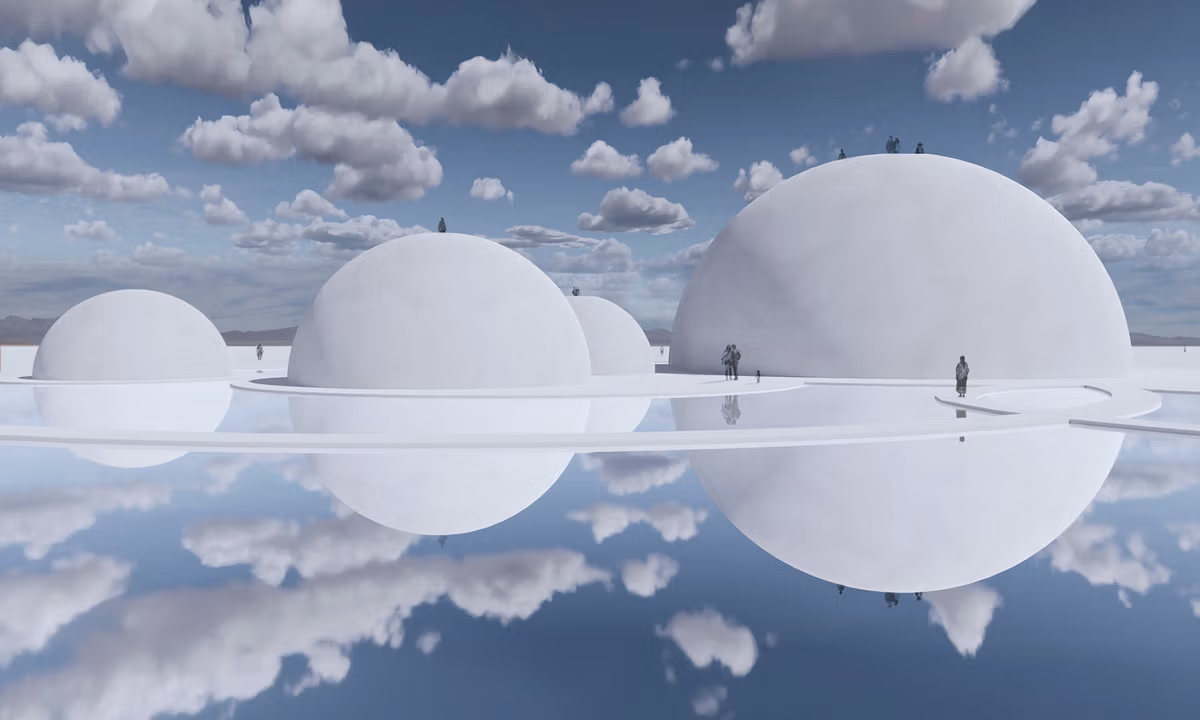
“We don’t eat batteries. They take away the water; they take away life.” This pronouncement, in Spanish, appears in a photograph that the artist Tomás Saraceno sent via WhatsApp last month from Salinas Grandes, a high-altitude salt flat in northern Argentina. There, in one of the world’s largest lithium reserves, the artist is working alongside 11 Indigenous communities to build El Santuario del Agua (The Water Sanctuary), a monumental work about the global energy transition.
Located in the provinces of Jujuy and Salta, Salinas Grandes sits 11,300ft above sea level. Water rises from underground aquifers, evaporates under the sun and crystallises into salt, creating, after rainfall, a vast mirror-like surface in which the sky appears reflected. The region is arid, receiving only about 300mm of rain per year. To produce a single ton of lithium carbonate for use in smartphone batteries, more than two million litres of fresh groundwater are evaporated.
Construction of El Santuario del Agua recently got underway and the site is due to open in October. The project consists of five semicircular structures built principally of salt in varying sizes, ranging from 7ft to 99ft in diameter and up to 50ft high. Their forms will be completed when reflected on the ground, “when the water returns its hidden half”, Saraceno says. Visitors will be able to climb stairs carved into the back of the structures to elevated viewing platforms.
Prototype construction of The Sanctuary of Water, Salinas Grandes, northern Argentina. Photography © Studio Tomás Saraceno
The five structures, inspired by apachetas (stone mounds traditionally placed as offerings to Pachamama, the Andean earth deity) take their names from Andean cosmology: Inti, Killa, Ch’aska, Hawcha and Tiqsimuyu.
“Water—puri—is not an element but a living being, an essential part of life,” Saraceno and representatives of the Red Atacama, a coalition of Indigenous communities, wrote to The Art Newspaper in a joint message sent from Salta. Joining him there are the Indigenous leaders Miguel Casimiro, Iván Arjona Acoria, Romualdo Fabián, Justo Casimiro, Celeste Valero, Andrei Fernández and Álvaro Simón Padrós, whose ancestors have lived on these lands for centuries.
Saraceno, an Argentine artist based in Berlin whose practice spans art and science, has exhibited at the Venice Biennale, the Metropolitan Museum of Art in New York and countless other venues; he has collaborated with institutions such as Nasa and MIT. In the case of El Santuario del Agua, the project is conceived not only as an art installation that bridges aesthetic vision and Indigenous cosmology, but also as a model of territorial and economic sovereignty.
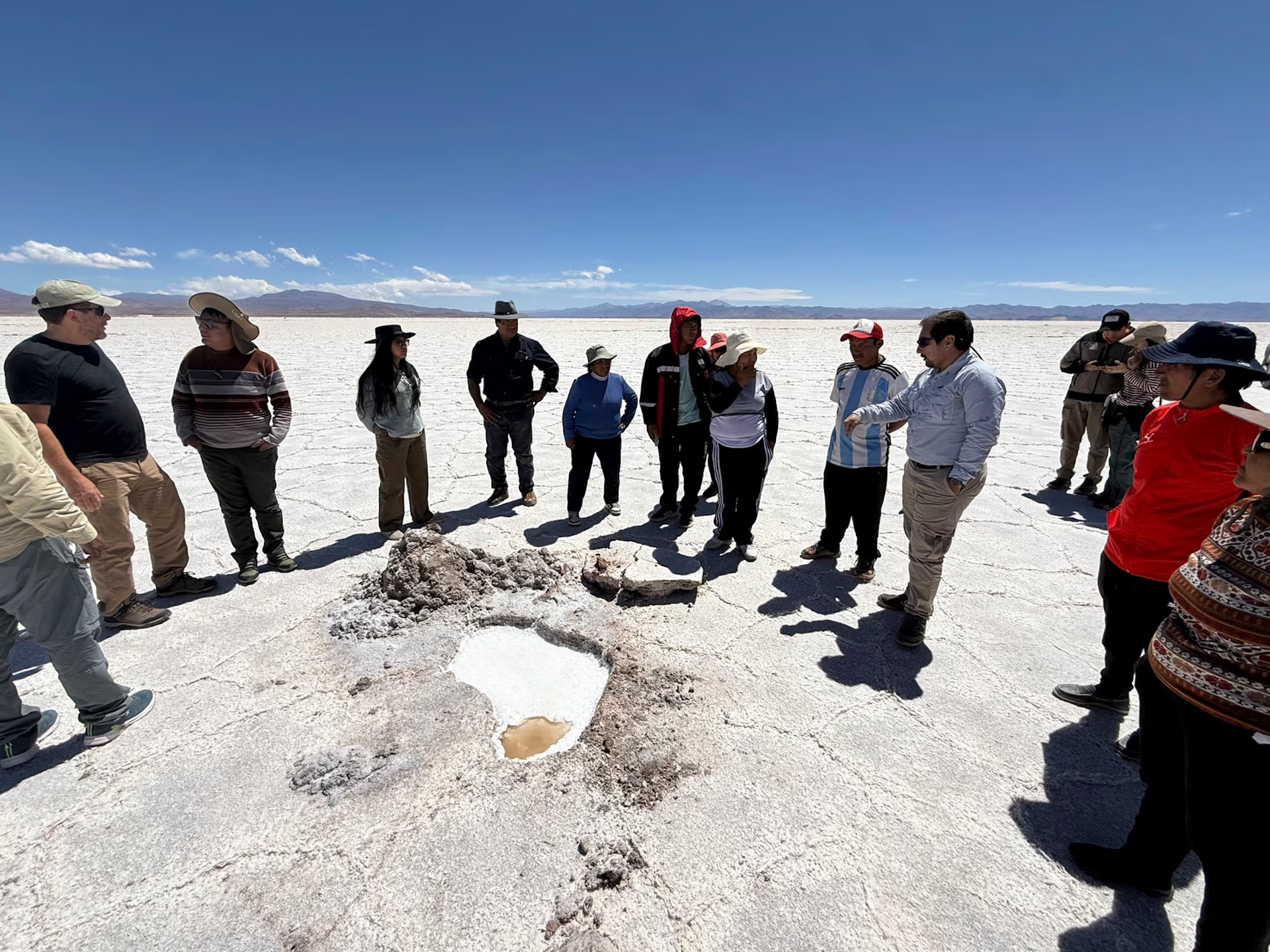
Preparations for the construction of The Sanctuary of Water with the communities of Red Atacama, Salinas Grandes Photography © Studio Tomás Saraceno
“We are building a sanctuary, a work of art that seeks to reinforce the activism Atacameño communities have long led in defence of water and territory,” Saraceno said. “It is about safeguarding ancestral knowledge and resisting development models imposed without consultation.”
The collaborators on the project are hoping to establish a community-led model of sustainable tourism that generates funds and long-term employment while also responding to extractive economies. All the income from the project will remain with the communities, which will own and administer the project. It is expected to attract between 100 and 350 visitors per day in an area that receives more than 1,500 tourists daily. Admission will be $20 per person.
“We hope we can imagine more sustainable ways of living together in a world that feels increasingly fragile,” Saraceno added. The project has taken shape over more than a decade of collaboration with Indigenous communities and the environmental justice movement Aerocene, rethinking the role of art in climate justice, territorial sovereignty and community economies. The project will be previewed in an exhibition of Saraceno’s work opening in July at Haus der Kunst in Munich, curated by Sarah Theurer and Andrea Lissoni.
