







Florence’s Uffizi Galleries have announced a two-year, €50 million (roughly $57 million) transformation of the Uffizi Gallery, Palazzo Pitti, and Boboli Gardens, which the institution has described as an operation “without precedent” in scope.
Uffizi director Simone Verde unveiled the plans this week, saying the roughly 40 individual projects will allow the museum to “present an even better image to the world than it does today,” according to a statement reported by The Art Newspaper.
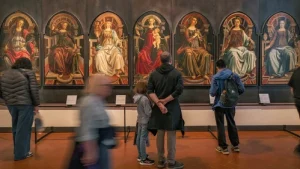
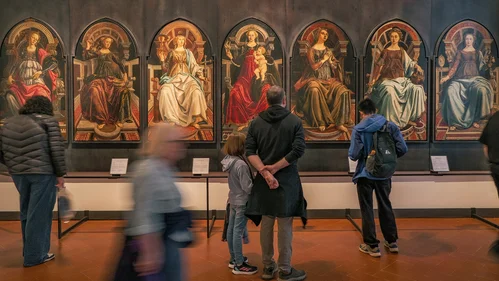
Rather than closing the museum, the work will proceed in stages so visitors can continue to see the storied collection throughout construction. With the revamp, the Uffizi is rethinking how it presents its holdings, and galleries are being reorganized chronologically and geographically. The museum’s star attractions will also receive more devoted space. The museum has already offered a preview of that approach with its redesigned rooms devoted to Sandro Botticelli, where The Birth of Venus (1486) and La Primavera (1477) now face each other in new hermetically sealed cases meant to improve both conservation and viewing conditions.


Other planned work includes a new introductory exhibition space on the history of the collection at the Uffizi, budgeted at €2.4 million ($2.8 million), along with a lighting overhaul in the Palatine Gallery and new air-handling systems and accessibility upgrades across the complex. At Palazzo Pitti, the largely unused “Piano degli Occhi,” a 1,000-square-meter space on the palace’s top floor, will be converted into new exhibition galleries for €4.9 million ($5.7 million). In the Boboli Gardens, the 17th-century “amphitheatre” and the Fountain of Neptune will undergo a €3 million ($3.5 million) restoration.
Half of the budget will come from ticket sales, and half from the Italian government’s culture ministry, The Art Newspaper reported, with the various projects initiated or planned since Verde took over the Uffizi’s administration in 2024. Additional elements have already been completed include the restoration of the Flemish Masters rooms, which reopened in July 2024. A spokesperson for Verde told the publication that finished projects were included in the announcement “out of a sense of seriousness, to avoid triumphalist communications before concrete results had been achieved.”
The transformation follows other recent changes across the complex. These include a new entrance at Palazzo Pitti that opened in July and the reopening of the Vasari Corridor, the elevated Medici passageway connecting the Uffizi to the Pitti across the Ponte Vecchio bridge, after an eight-year restoration completed in December 2024. The Uffizi separately announced a €50 million ($57 million), eight-year masterplan for the Boboli Gardens in 2022, focused on climate resilience and accessibility, distinct from this new initiative.
The investment underscores the challenge facing one of the world’s most visited museums: preserving centuries-old architecture and masterworks by Botticelli, Leonardo da Vinci, Michelangelo, Raphael, Titian, and Caravaggio while accommodating millions of visitors each year.


