


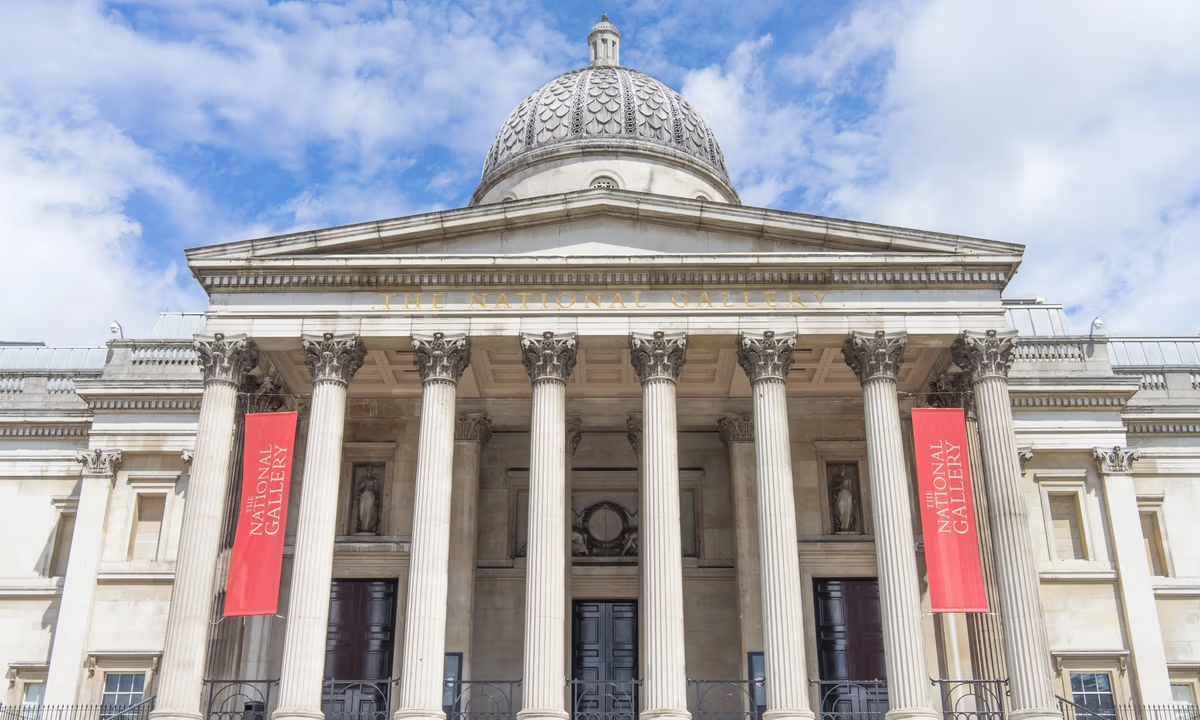
London’s National Gallery will save £2m a year through staff cuts, which it initiated to help tackle an anticipated £8.2m deficit. An annual £1.5m will be saved by staff deciding to depart as part of a “voluntary exit scheme”, announced in February, and a further £500,000 per year through what a spokesperson calls a “recruitment pause”.
“Taken together, this means we have delivered the targeted £2 million in savings that we set out to achieve through the VE [voluntary exit] scheme,” a gallery spokesperson says. The news was first reported by Arts Professional and confirmed by The Art Newspaper.
All staff of the gallery and its commercial arm, who together number nearly 500, were told in February they would be offered compensation if they chose to leave. The gallery did not give the number of staff who have taken part in the exit scheme. The amount paid to the departing staff will depend on their number of years of service.
The exit take-up means that no compulsory redundancies are now on the horizon. The gallery spokesperson tells The Art Newspaper that the “voluntary exit scheme” has enabled the gallery “to make progress” towards dealing with the anticipated deficit.
Further savings in non-staff costs, however, will need to be made, to deal with the previously anticipated £6.2m deficit in the current financial year, which began on 1 April, and an estimated £2m deficit in the year that has just ended.
The National Gallery is currently considering how to further reduce costs, though whatever the choices are they will almost certainly impact the institution’s public offering. For example, the cuts could mean fewer free exhibitions, fewer ticketed shows each year, less international borrowing of works of art and more expensive tickets. A spokesperson said in February that the gallery “must make difficult and painful decisions”.
The gallery has stressed that its current financial problems will not affect its long-term project to build a new extension on the site of St Vincent House and expand its collection beyond early 20th century paintings to the present.
Last Tuesday it announced that the winning architect for the extension is the Japanese firm of Kengo Kuba and Associates. The building is expected to cost around £350m. It is part of a wider £750m plan, entitled the Project Domani, to safeguard the financial future of the gallery and expand its collection. One element will be an endowment fund, to deal with financial crises such as the one currently facing the gallery.
