


Western art has long had a complicated relationship with nature. A hierarchy of genres that prized the nude and the grand themes of religion, mythology and history pushed the natural world to the margins, shaping artists, art historians and, later, curators. Landscape painting, from the pastoral idyll to the sublime, often turned nature into a stage set for human drama. Even when nature seemed to be celebrated, as in the Dutch 16th-century still-life, it was carefully arranged and pressed into symbolic service, ultimately speaking less about plants and animals than about us. Modernism, with its emphasis on abstraction, only sharpened the paradox.
The museum building, designed by Renzo Piano Mark Niedermann
Over the past decade, the art world has taken a turn. Ecology is the new watchword, climate change the horizon and social justice the ethical frame. But as nature was reduced to its crisis, and eco-exhibitions slid into data-driven anxiety, the specificities of plants, soils and water systems stayed out of view. Lately, amid headline-grabbing protest actions, eco-fatigue has followed. Critics warn that the “ecological turn” risks becoming curatorial fashion, moral theatre and even virtue signalling: an aesthetics of care that leaves institutional habits and carbon-heavy infrastructures largely untouched.
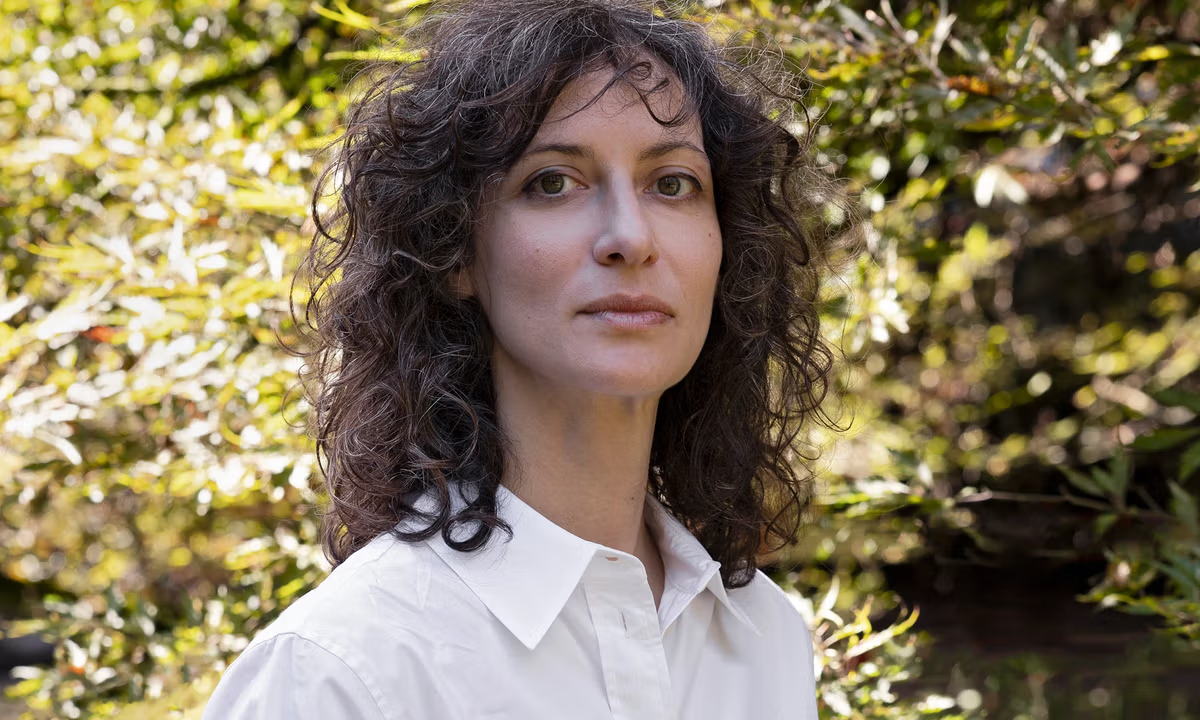
Fondation Beyeler, a Modern art museum near the Swiss city of Basel, has offered an exciting change of direction by appointing 39-year-old Rahel Kesselring as its inaugural botanical curator. The post, created under the auspices of the Chanel Culture Fund, is the first of its kind at a major arts institution. The sprawling and varied landscape of the Berower Park that surrounds the Beyeler provides the perfect setting.
To take plants seriously is to accept that the institution may have to meet them outside on their own ground
Rahel Kesselring, botanical curator
Born in Switzerland, Kesselring formally took up the post on 1 November 2025, arriving from Berlin where she was a research associate at Humboldt University, investigating regeneration and rewilding in plant ecosystems as they intersect with contemporary art. Her appointment does not mean that the eco-revolution in art is over, but that the art world may be ready for a new, more engaged chapter.
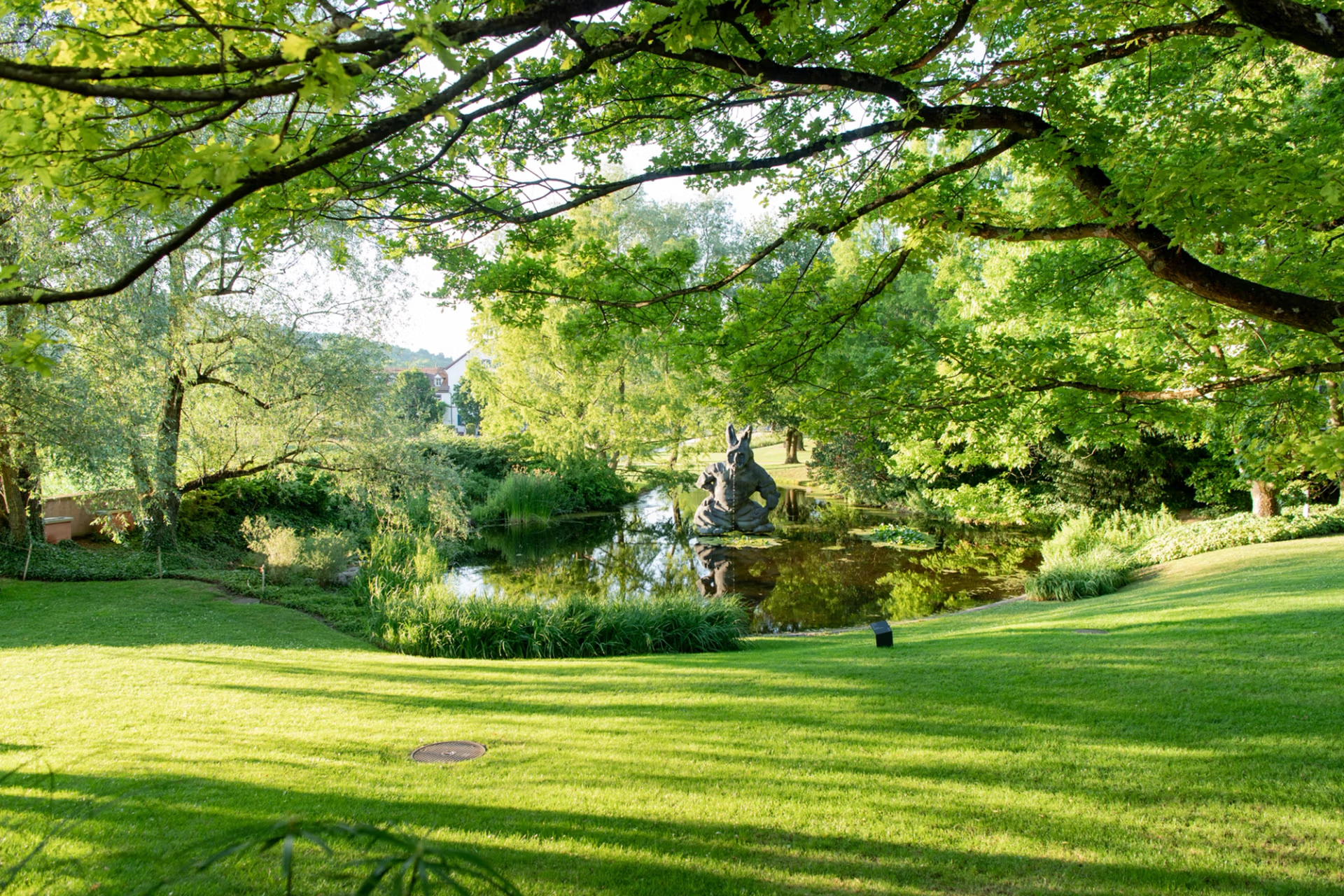
Thomas Schütte’s sculpture Hase (2013); the grounds have hosted site-specific commissions by artists for nearly three decades © 2026, ProLitteris, Zurich
She is careful not to overstate what can be proven so soon in her new role, and her language is precise. What matters, she proposes, is that “the botanical world must not become an abstraction”. The commitment should be, she says, “not on a metaphorical level, but on a practical one, on a material and ecological plane”. This sounds simple until you remember that museums are built around control: climate control, pest control, crowd control, narrative control. Curators are trained to work within those parameters.
Ecology as a new curatorial duty
Plants are an unruly counter-medium. “To take plants seriously,” Kesselring points out, “is to accept that the institution may have to meet them outside—on their own ground—and learn to accommodate their time-scales, cyclicality and impermanence: aspects deeply at odds with institutional scheduling or ethos.” It also means treating ecological care as a new curatorial responsibility.
It’s a time when art and nature have never been more vital to joy, health and community
Yana Peel, president of arts, culture and heritage, Chanel
Kesselring is imagining her programme as a hybrid curatorial proposition: a space where botanical and artistic knowledge can genuinely and often unpredictably enmesh. She speaks of the Fondation Beyeler environment as storied and layered. “It is a living system of ecological realities that begins with the park, expands through water systems and conservation areas, and reaches outward into the broader territory,” she says. In these early days, her objective is to craft a form of ecological literacy from the ground up, beginning with what is near enough to touch, observe and tend—the opposite, in other words, of what is usually permitted inside the museum.
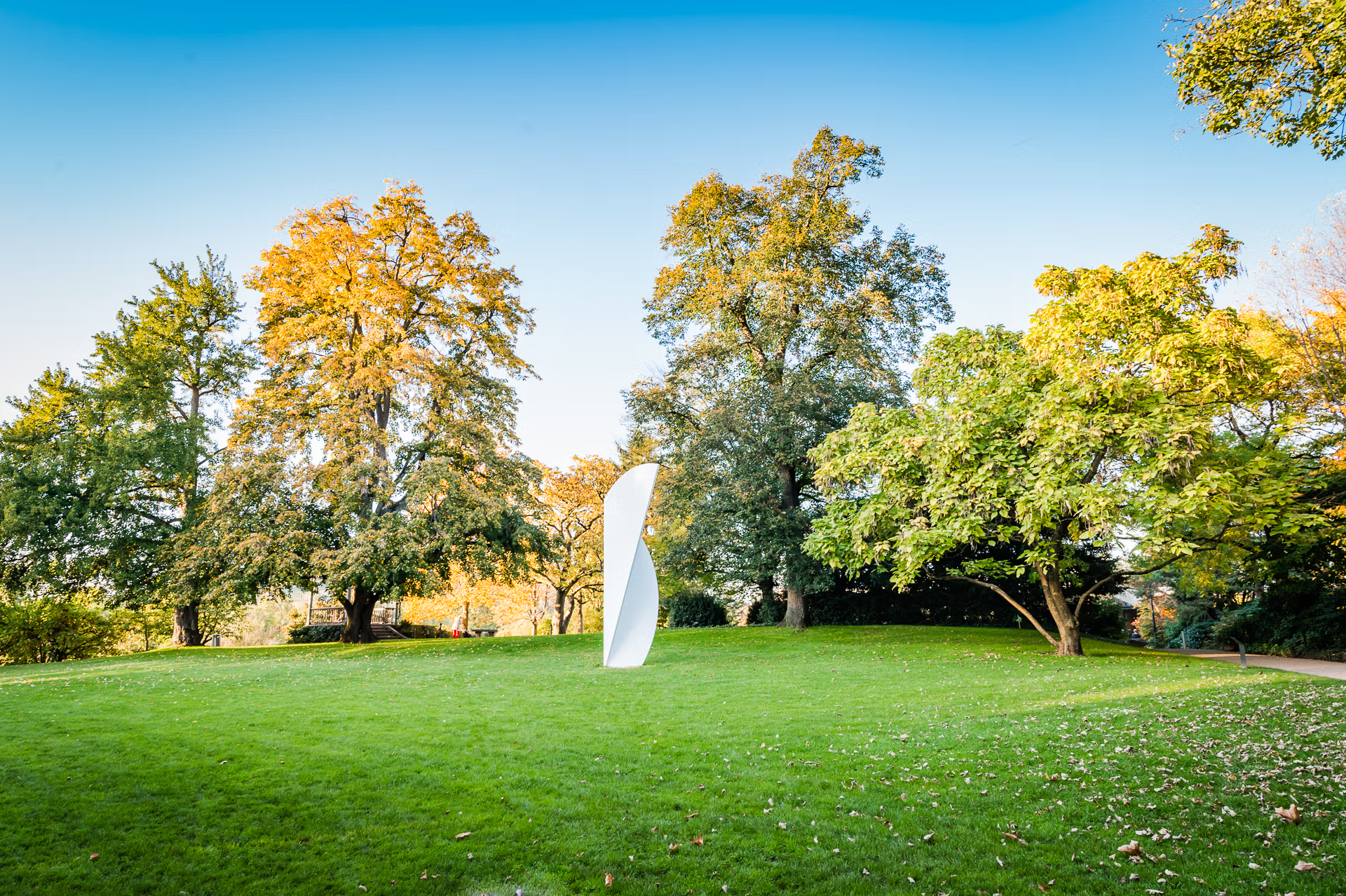
Ellsworth Kelly’s White Curves (2001). Kesselring says the public’s experience of the Beyeler cannot be separated from the botanical element Photo: Mathias Mangold
Kesselring is also wary of the ease with which institutions now deploy ecological grammar. “Designing-with” plants and “being-with” nature are convenient hyphenations that imply partnership and virtue by grammatical decree. “Language can become too frictionless,” she cautions, “too eager to claim the good side, skipping over the ambivalence and friction that shape real human-plant relations.”
Negotiating friction, in fact, is central to her eco-realist approach. A programme built around living systems entails an unusual team of collaborators for a curator, including gardeners, landscapers and architects. The programme proposes a long-term commitment to a place, its living systems and the forms of knowledge that help a public encounter them without reducing them to symbols. Kesselring anticipates that “a generative kind of friction might manifest as new territories are charted. Visitors, too, may have to forgo their inherited idea of what a garden should look like in order to embrace untidiness, wildness and alternative forms of participation.”
Translating between disciplines
Inheriting her love of plants from her mother, Kesselring spent much of her youth dreaming of studying botany. Orchids, in particular, captured her attention early on. Before moving deeper into academic research, she trained and worked as a scenographer for contemporary dance and theatre. “That gave me a practical, hands-on kind of intelligence, especially around communication,” she says. “I had to work out how to find the right language for different groups, from technical teams to landscape architects to conceptual stakeholders.” Botanical curating, in her view, is not only about plants, but also about translation between scientific vocabularies, institutional procedures and public attention.
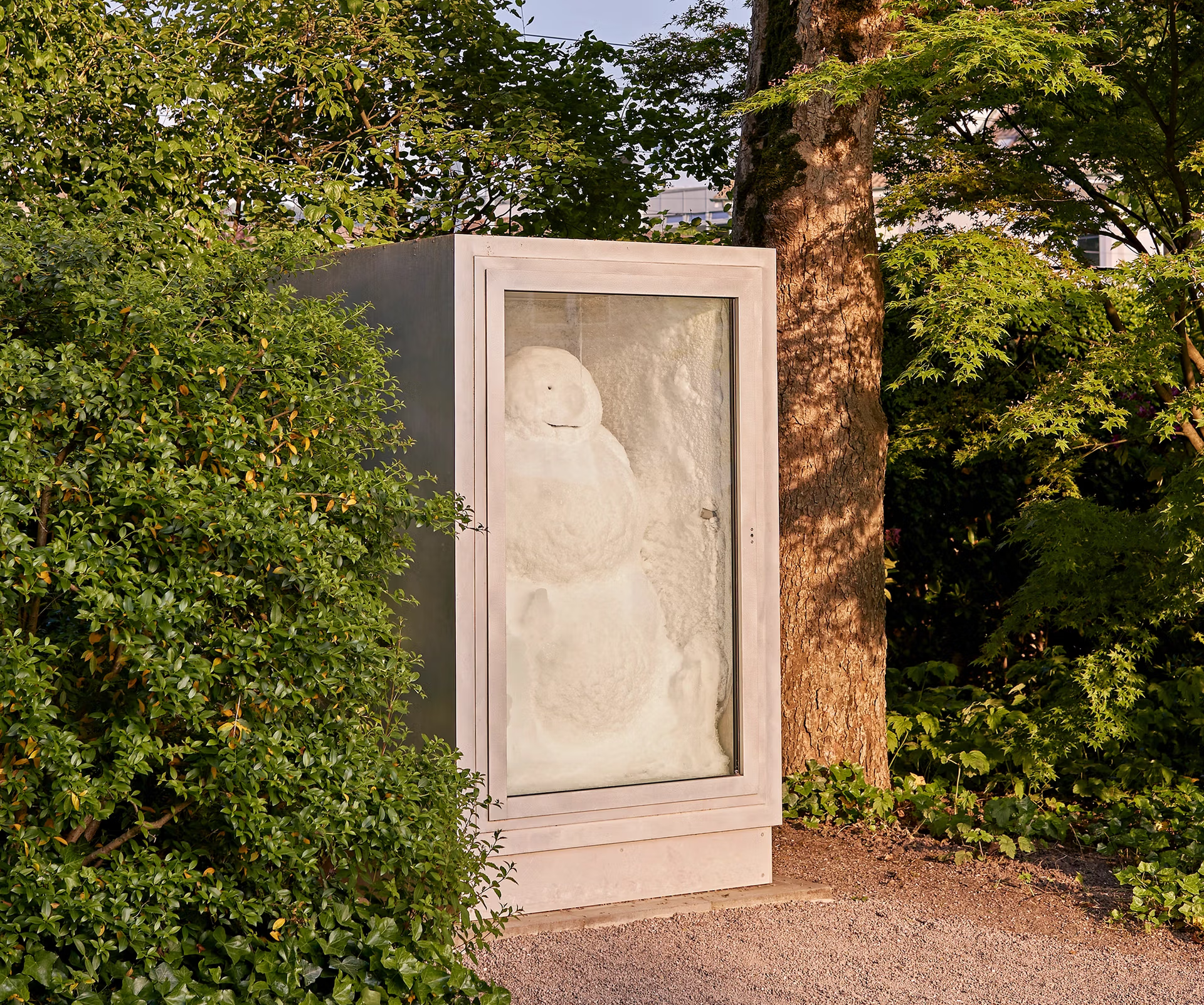
Snowman (1987/2019) by Peter Fischli and David Weiss Photo: Mathias Mangold
For Kesselring, the public cannot be an afterthought. Museums are becoming civic interfaces that stage conversations about living with plants and the more-than-human, without spectacle or ecological alarmism, bringing botanical, artistic and experiential knowledge into a form that can be shared. This ambition is inseparable from the particular setting of Fondation Beyeler. Its idyllic parkland borders a nature reserve and sits within a much loved local recreation area, with long views towards fields, vineyards and the foothills of the Black Forest. Over nearly three decades, the grounds have hosted site-specific commissions by artists including Christo, Fischli/Weiss, Olafur Eliasson, Precious Okoyomon and Fujiko Nakaya—works that already treat landscape as something more than a frame.
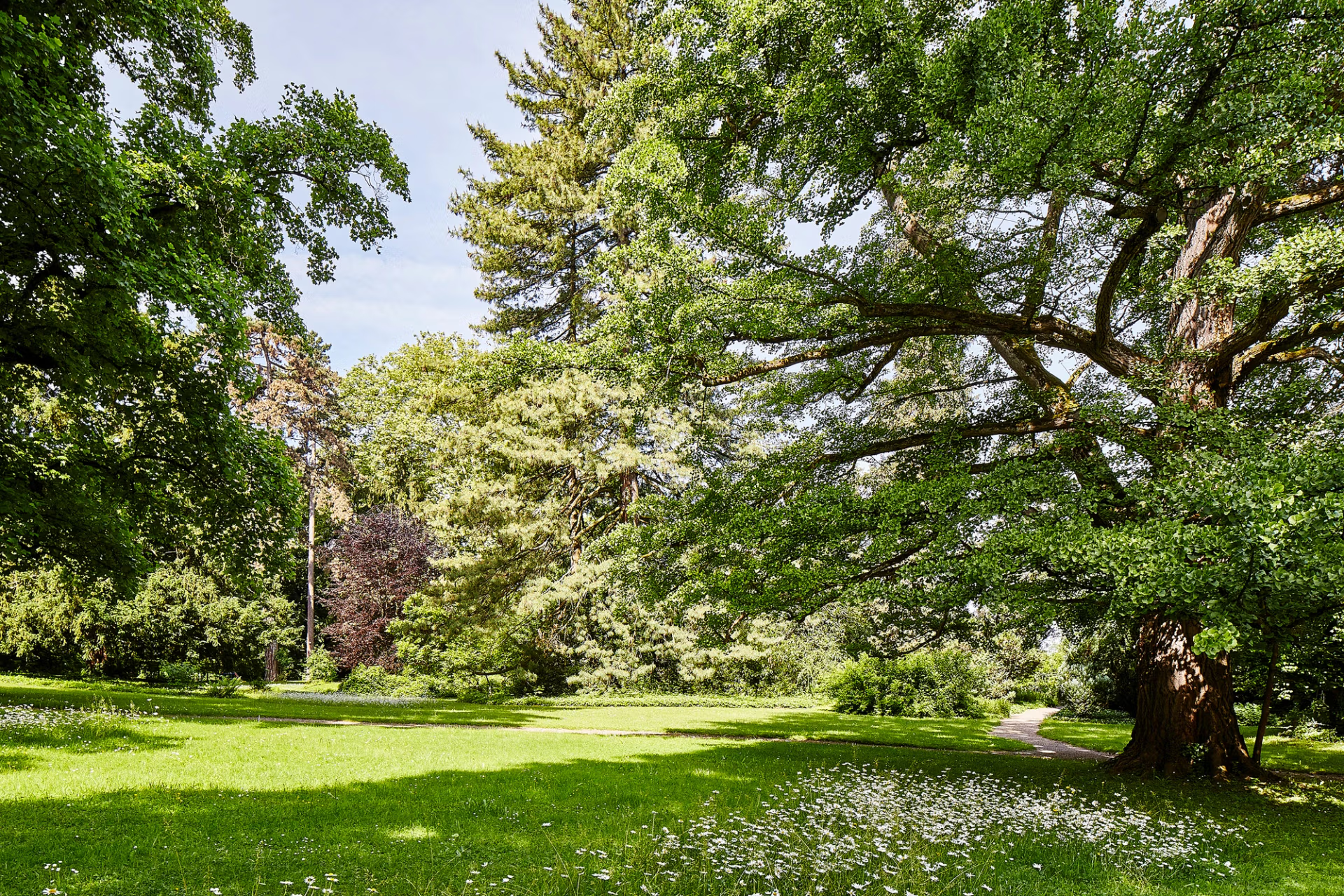
The idyllic parkland borders a nature reserve and offers multiple environments and ecologies Photo: Mark Niedermann
Asked whether she has already found a favourite plant or place of special interest in the grounds, Kesselring does not rush to celebrate a predictably picturesque, contorted old tree or the “artistic commonplace” waterlily pond, but mentions “a stone wall leading toward agricultural fields, crowded with common blackberries and hazel, plants that shouldn’t really be there but have survived the gardener’s seasonal cleaning”.
Yana Peel, the president of arts, culture and heritage at Chanel, points out that the fund’s support of the post is embedded more in history than a current fad for the ecological. “Nature has long been one of the greatest sources of inspiration for the arts,” she says. “Our founder [Gabrielle Chanel] held a deep passion for both.” The appointment of the first-ever botanical curator at the Fondation Beyeler, she adds, “represents a pioneering moment, at a time when art and nature have never been more vital to joy, health and community”.
The art world may still need its big statements. But even more it may need thinkers and artists whose aim is to keep plants from being left behind. If the past decade has taught museums how to talk about ecology, the next might ask whether they can learn to listen to it.
