






The artist William Kentridge has long described his practice as “essentially one of drawing” and his approach to directing an opera is no different. But if putting brush to paper is about working in two dimensions, staging an opera, he reckons, is about working in four. The first three are the “extraordinary canvas” that is the stage. The fourth is “the passage of time”.
This summer he directs Monteverdi’s L’Orfeo at the Glyndebourne Festival in Sussex, a five-act opera first performed in Mantua in 1607, that ends with Apollo promising Orpheus both immortal life and Eurydice’s eternal presence “in the sun and stars”. It is a tantalising prospect.
“So, we make this four-dimensional drawing,” Kentridge explains. “And the structure of this drawing is given by the music and the libretto of the opera. This combination of music, text and spectacle acknowledges and celebrates the form and the excess of sensory experience that opera always involves. It is about there being too much to see and experience that is important.”
In other words, you can forget realism. Opera, as he envisages it, is about sensory overload, the perfect synthesis of music, drama and visuals for which Richard Wagner coined the word Gesamtkunstwerk, or total work of art.
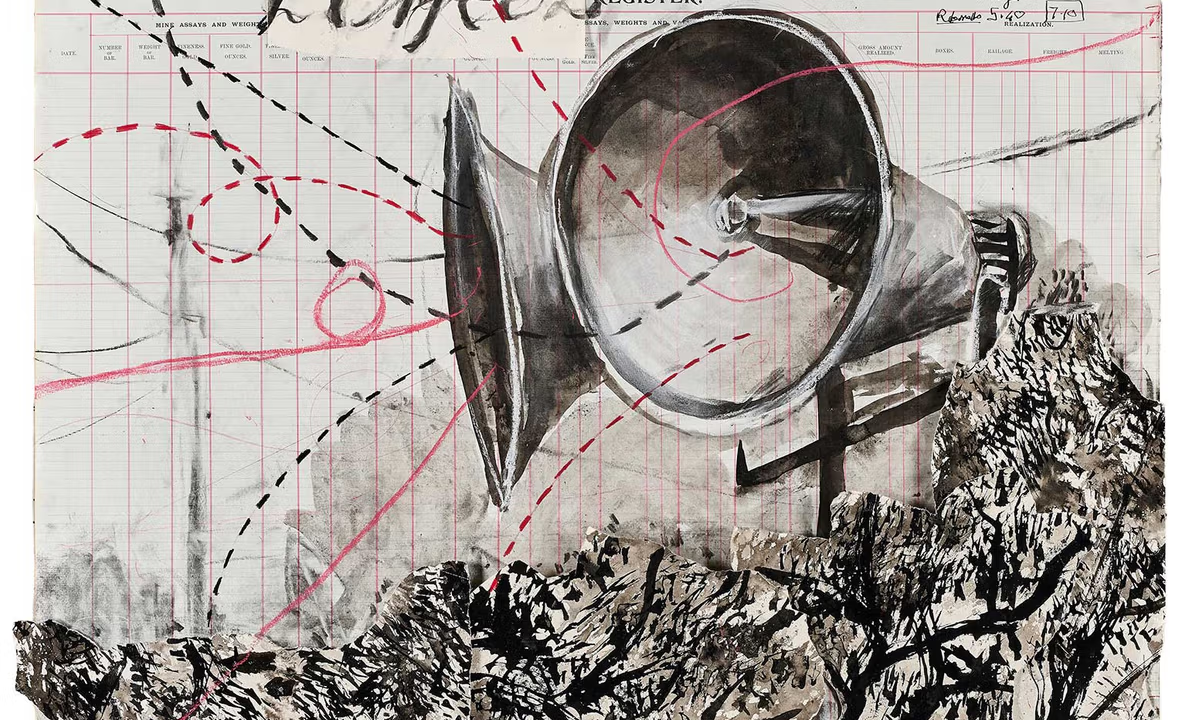
Kentridge may be principally known as a visual artist (shown above), but he has been working in opera since 2005, when he directed The Magic Flute at La Monnaie in Brussels. And, since then, his productions—notably of works by Shostakovich and Berg—have been staged at opera houses from the Metropolitan in New York to La Scala in Milan.
Details of his take on L’Orfeo remain a closely guarded secret, but his last production of an opera by Monteverdi, The Return of Ulysses at Lincoln Center in New York in 2016, featured life-size puppets and a lot of jump-cut video, much of it based on x-rays, MRIs, CAT scans and other types of diagnostic imaging. His wife is a rheumatologist, The New Yorker pointed out in a review that judged it “absolutely thrilling”. The likelihood is that this will be every bit as unexpected and electrifying.
- L’Orfeo runs from 14 June to 25 July: glyndebourne.com


