


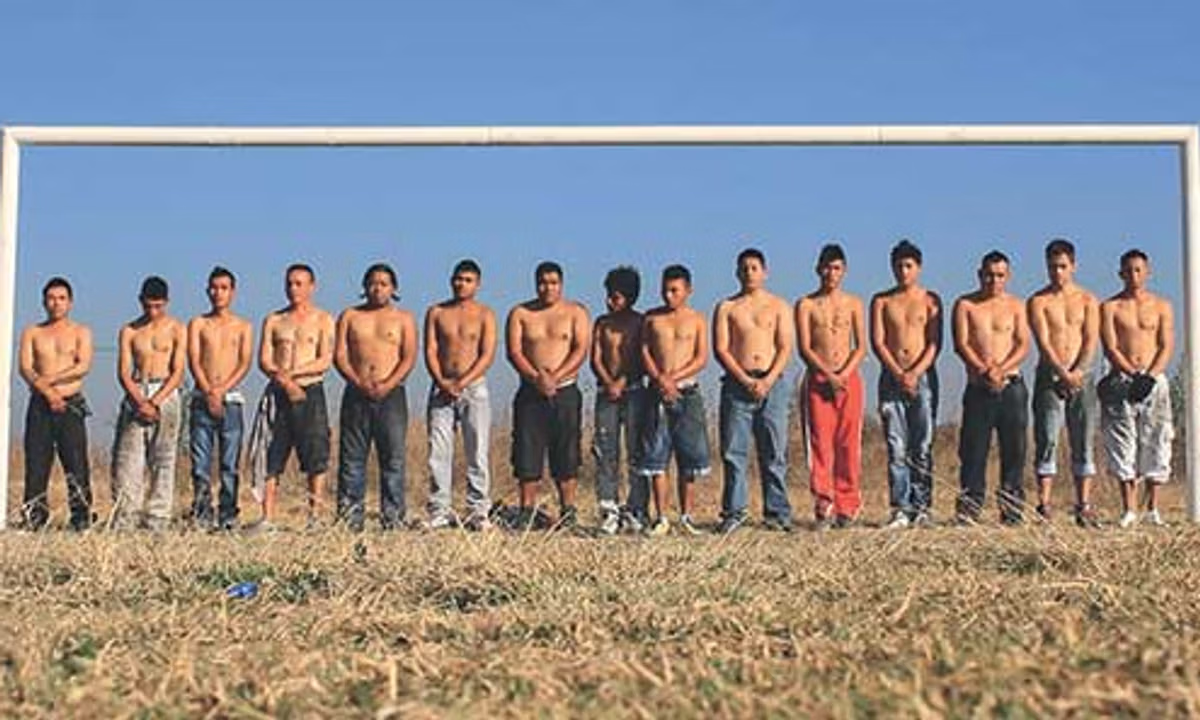
In June, the 2026 Fifa World Cup will kick off at Mexico City’s recently renovated Estadio Azteca, marking the first time a stadium has hosted three World Cup opening matches (following those in 1970 and 1986). Matches in Mexico City, Guadalajara and Monterrey are accompanied by an ambitious cultural programme, and the capital’s mayor Clara Brugada has announced that more than 1,000 murals will be painted across the city, many inspired by the Mesoamerican ritual ball game. The initiative aligns with Brugada’s emphasis on mural art, seeking to turn the city into a “big canvas”.
In a December press conference, culture secretary Claudia Curiel de Icaza said renovations are underway at 12 museums and 46 archaeological sites nationwide, including Teotihuacan, as part of preparations for the World Cup, which the tourism ministry (Secretaría de Turismo) expect will bring more than 5 million visitors to the country. Commemorative exhibitions are scheduled and a new Indigenous textile museum, the Museo Textil de los Pueblos Indígenas y Afromexicanos in Mexico City, will open in May.
Independent museums are getting into the game, too. The Museo Jumex will host Football & Art. A Shared Emotion (28 March-26 July), an exhibition curated by Guillermo Santamarina. New commissions include a participatory installation in the museum’s plaza by the Mexican collective Tercerunquinto featuring bleachers made from recycled Estadio Azteca seats. More cultural programmes are expected to assist what will be the World Cup’s largest edition (co-hosted with Canada and the US), even as it faces controversy over steep ticket prices, logistical challenges and migration barriers in the US.
