


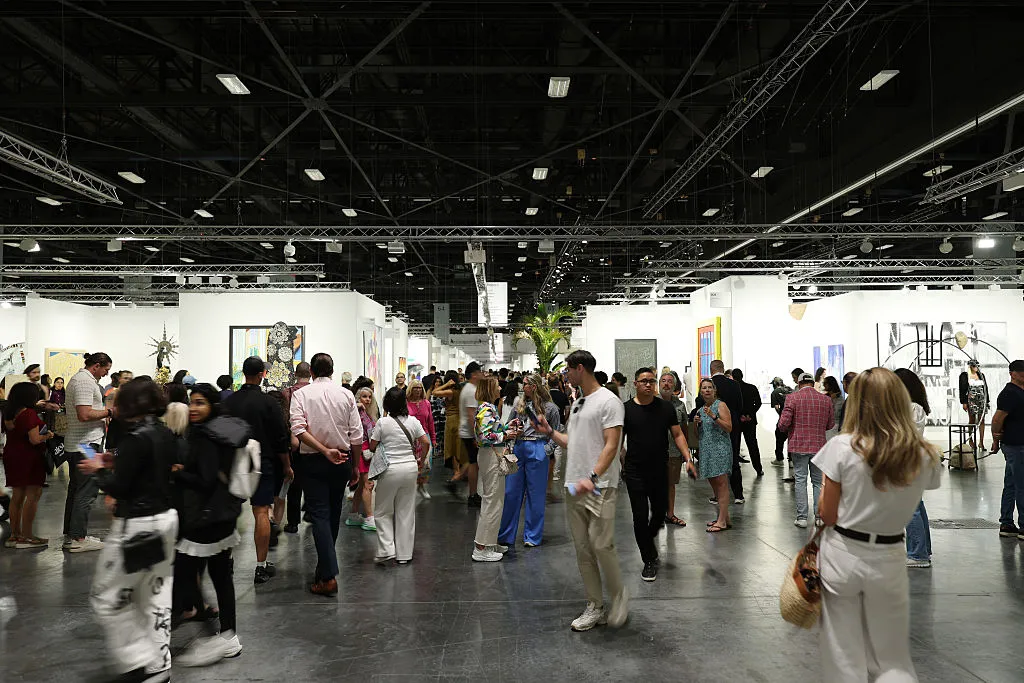
Now that the art world has finally caught its breath after a sun- and champagne-soaked Miami Art Week, it’s worth remembering that Miami Beach does more than host the annual influx of collectors, artists, and fashion pilgrims. The city is also an active cultural player in its own right—not just during the fairs, but throughout the year.
Last week, that role sharpened into view with the announcement of the 2025 Legacy Purchase Program winner, the city’s headline public-art acquisition timed to coincide with Art Basel Miami Beach. Residents and visitors voted to select Ximena Garrido-Lecca’s Modulations – Sequence XXIX, a copper-rope work shown with Livia Benavides Gallery, bringing the Peruvian artist into a growing municipal collection that already includes Sanford Biggers, Amoako Boafo, Ebony G. Patterson, and Farah Al Qasimi. The purchase is the program’s seventh since its launch in 2019 and will eventually enter permanent display at the Miami Beach Convention Center.
Drawn from the emerging artists of Art Basel’s Positions, Nova, and Galleries sectors, this year’s finalists also included Patrick Dean-Hubbell and Ken Tisa, selected by the city’s Art in Public Places Committee before the final vote was opened to the public. Garrido-Lecca’s winning work continues her examination of copper’s role in Peru’s extractive economy, weaving symbols derived from modern corporate logos into forms that echo pre-Columbian abstraction—a commentary on how the language of modernization and resource exploitation cuts across eras.
Ximena Garrido-Lecca’s Modulations – Sequence XXIX
Miami Beach mayor Steven Meiner called the acquisition evidence of a “global destination for creative innovation,” noting the high level of civic engagement the vote drew. Gallery founder Livia Benavides described the purchase as both an honor and a signal of the artist’s rising international stature.
If the Legacy Purchase underscores Miami Beach’s ambition to be a collector, No Vacancy makes the city something of a curator. The sixth edition of the juried public-art program placed 12 site-specific installations across 12 hotel lobbies, running this year from November 13 through December 20, long after fairgoers have boarded flights home.
Designed to support and spotlight Miami-based artists, No Vacancy offers each participant a $10,000 production stipend and awards $35,000 in total prizes, including a $25,000 juried award and a $10,000 public prize funded with support from the Greater Miami Convention & Visitors Bureau. As in previous editions, the program encourages visitors—and locals—to see Miami Beach’s hotel architecture as cultural infrastructure rather than mere hospitality backdrop.
The initiative sits within a broader municipal push that includes dozens of public installations, museum programs, and performances citywide during Art Week. But No Vacancy’s extended run makes it one of the few major projects that continues to animate the city after December’s art-market tide recedes.
Taken together, the Legacy Purchase Program and No Vacancy reflect a maturing cultural strategy: one that uses Art Week’s global attention as a springboard but is increasingly oriented toward long-term visibility, civic participation, and year-round programming. Miami Beach may be best known as the annual epicenter of the global art market’s December rituals, but the city is clearly trying to prove that its cultural life does not disappear when the convention center lights go dark.
