


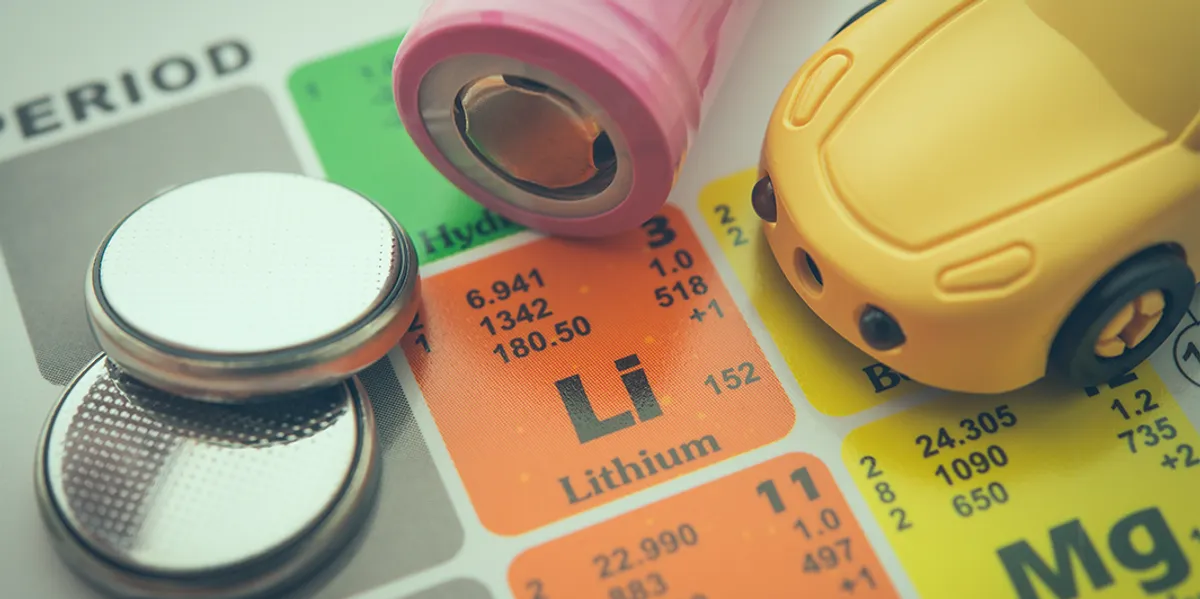
As nations and international organizations set ambitious climate and sustainability goals, commodity prices have soared and supply chains have entered a state of flux. Geopolitical volatility, trade disputes and resource events such as the war in Ukraine and lockdowns in China magnified the trend, exposing the vulnerabilities of Western energy dependence and pushing critical minerals to the forefront for governments and investors.
Countries like Canada and the US have established lists of critical minerals or materials deemed essential to national security and economic prosperity. However, most of these remain sourced from volatile or monopolized foreign jurisdictions. While the energy transitions of the past relied on fossil fuels, the current shift toward sustainability runs on metals. Among the resources at the center of this paradigm shift is lithium.
The supply-demand weight
The June 2026 edition of UN Trade and Development’s Global Trade Update highlights that critical minerals are reshaping global trade as demand surges.
Lithium, specifically, is expected to see a rise in demand by more than 350 percent by 2040. The metal has slowly earned its spot in the renewable energy transition, largely due to its use in manufacturing. Accounting for 87 percent of the total demand is its application in rechargeable batteries for electronics, electric vehicles (EVs) and grid storage. Analysts note that EVs have emerged as a primary catalyst for this historic demand surge, completely transforming the global automotive landscape.
Beyond this demand is the issue of concentration, as supply chains remain highly concentrated. In 2025, Australia, Chile and China together produced over 70 percent of the world’s lithium. This leaves behind giants like Canada and the US in terms of securing upstream supply lines, an irony considering their designation of lithium as a critical mineral.
“The challenge for many mineral-rich developing countries is that they keep exporting raw materials while higher-value processing and manufacturing take place elsewhere,” the UN noted.
Achieving true domestic independence requires scaling up a localized, closed-loop supply chain. This creates an urgent imperative to back domestic projects that offer high-upside resource potential in premier geographic locations.
Why jurisdiction and local infrastructure matter
It is important to note that not all mineral deposits are created equal. An exploration project situated in a faraway location without any power, roads or water infrastructure faces prohibitively costly capital expenditures that can make such a project uneconomical despite the size of the resources. Conversely, a project located in a favorable mining jurisdiction with inherent logistics will likely traverse the path from exploration to development a little more easily.
This is where the power of infrastructure and jurisdiction comes in. By operating in mining-friendly jurisdictions with proven legal stability, companies can benefit from an efficient regulatory process, the presence of local expertise and heavy traffic corridors.
“Governments that spend on infrastructure give themselves the best chance to succeed, while underinvestment restrains inclusive economic prosperity,” an article by private equity firm Webber Wentzel wrote. “Mining is directly impacted by a country’s infrastructure and ability to move mine product, key equipment, materials, and goods from source to market.”
Exploring the power of Apex Resources’ Lithium Creek
Nevada ranked first on the global Investment Attractiveness Index in the Fraser Institute’s 2025 Annual Survey of Mining Companies and scored a perfect 100 for Policy Perception Index.
Vancouver-based exploration company Apex Resources (TSXV:APX,OTCID:SLMLF) is seeking to benefit from this with its flagship Lithium Creek project in Churchill County, Nevada.
[Apex Resources: Lithium Creek]
Besides its advantageous location, the project addresses the exact infrastructure and logistical challenges currently plaguing the wider battery metals sector. It operates within a highly strategic 30-mile radius of the 2,500-acre Tesla Gigafactory near Reno, the principal North American battery hub and Tesla’s first-ever gigafactory.
This proximity to the gigafactory and other core EV manufacturing infrastructure allows Lithium Creek to further its potential as a standard exploration play into a vital logistics asset. This can mean thousands of miles less or no complex international shipping, insulating the asset from cross-border friction and maritime vulnerabilities.
Apex Resources also noted that the Inflation Reduction Act states that 80 percent of critical minerals found in EV batteries will have to be extracted or processed in the United States or countries with which it has free trade agreements, or they will have to have been recycled in North America by the end of 2026—an aspect that opens an opportunity.
A potential world-scale lithium brine resource
What also makes Lithium Creek a beneficial asset is its immense geological potential as a district-scale exploration target. The project targets large, closed-basin environments suitable for substantial lithium brine accumulations like Albemarle’s Silver Peak Mine in Clayton Valley, the oldest active lithium production site in the US.
The conceptual model for Lithium Creek holds that groundwater recharge from precipitation filters through lithium-rich volcanic material, collecting in a structurally closed basin where it is enriched and concentrated through natural geothermal processes.
Lithium Creek is also a candidate for using clean direct lithium extraction
while taking advantage of green energy sources available in the region. This will minimize water usage, reduce production times and provide a minimal carbon footprint, allowing for the delivery of a more sustainable lithium supply for America’s battery and EV market.
Apex Resources is systematically moving the project through the permitting pipeline ahead of its initial drilling campaigns. Because the property has never been historically drill-tested for deep lithium brines, it represents a fresh, high-impact growth catalyst.
Investor takeaway
The macroeconomic forces shaping the lithium sector are clear. The increasing adoption of EVs and the need for renewables to be stored in grid storage are at a fast pace, alongside the geopolitical drive to create self-sufficiency with respect to a country’s resource needs. With this, investors looking to gain from the clean energy revolution may find an answer in assets like Apex Resources’ Lithium Creek. The combination of tremendous exploratory potential with proximity to manufacturing facilities advances the power to potentially supercharge the next wave of energy demand.
This INNspired article is sponsored by Apex Resources (TSXV:APX,OTCID:SLMLF). This INNspired article provides information which was sourced by the Investing News Network (INN) and approved by Apex Resources in order to help investors learn more about the company. Apex Resources is a client of INN. The company’s campaign fees pay for INN to create and update this INNspired article.
This INNspired article was written according to INN editorial standards to educate investors.
INN does not provide investment advice and the information on this profile should not be considered a recommendation to buy or sell any security. INN does not endorse or recommend the business, products, services or securities of any company profiled.
This INNspired article contains forward-looking information, including statements regarding planned activities, timelines, business objectives, and market conditions. Forward-looking information is based on assumptions and is subject to known and unknown risks and uncertainties that may cause actual results to differ materially from those anticipated. Readers should not place undue reliance on forward-looking information, which reflects the views of the profiled company as of the date of this profile and is not updated by INN.
The information contained here is for information purposes only and is not to be construed as an offer or solicitation for the sale or purchase of securities. Readers should conduct their own research for all information publicly available concerning the company. Prior to making any investment decision, it is recommended that readers consult directly with Apex Resources and seek advice from a qualified investment advisor.
Read the full article here
