

Close Menu
  • News
  • Stocks
  • Bonds
  • Commodities
  • Collectables
    • Art
    • Classic Cars
    • Whiskey
    • Wine
  • Trading
  • Alternative Investment
  • Markets
  • More
    • Economy
    • Money
    • Business
    • Personal Finance
    • Investing
    • Financial Planning
    • ETFs
    • Equities
    • Funds

Subscribe to Updates

Get the latest markets and assets news and updates directly to your inbox.

Trending Now

In New York Court, Dealer Yves Bouvier Seeks Sotheby’s Records as Part of New French Criminal Case

August 1, 2026

Archaeologists Uncover Ancient Egyptian Grave Markers Carved with Human Figures

July 31, 2026

6 Books We’re Looking Forward to in August

July 31, 2026
Facebook X (Twitter) Instagram
The Asset ObserverThe Asset Observer
Newsletter
LIVE MARKET DATA
  • News
  • Stocks
  • Bonds
  • Commodities
  • Collectables
    • Art
    • Classic Cars
    • Whiskey
    • Wine
  • Trading
  • Alternative Investment
  • Markets
  • More
    • Economy
    • Money
    • Business
    • Personal Finance
    • Investing
    • Financial Planning
    • ETFs
    • Equities
    • Funds
The Asset ObserverThe Asset Observer
Home»Investing
Investing

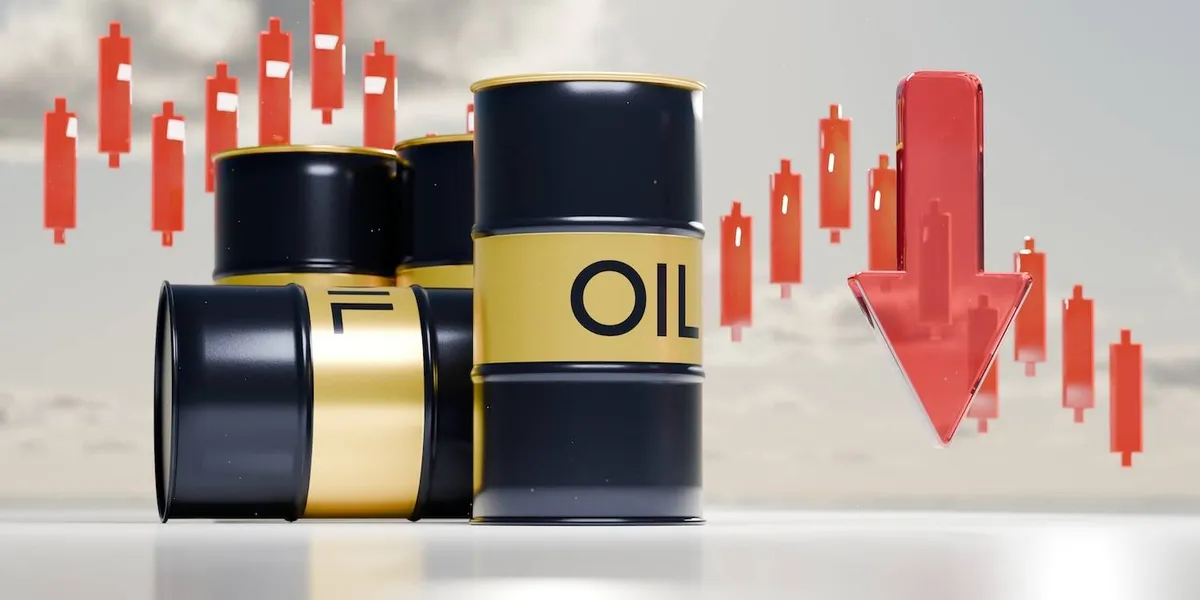
Oil Plunges Below US$100 as US and Iran Strike Two-Week Ceasefire

News RoomBy News RoomApril 8, 2026
Share
Facebook Twitter LinkedIn Pinterest Email

Global markets reversed course on Wednesday (April 8), with oil suffering its steepest daily plunge since the pandemic following a breakthrough two-week ceasefire agreement between the US and Iran.

Brent crude, the international benchmark, tumbled 15.5 percent to US$92.28 a barrel, shedding nearly $17 in a single session. The slide marks its sharpest one-day drop since April 2020.


US crude futures followed suit, diving 16.5 percent to approximately US$94 a barrel. Natural gas markets mirrored the collapse, with UK gas prices sinking 18 percent.

Despite the dramatic sell-off, energy prices remain elevated compared to the US$70 baseline recorded before hostilities erupted on February 28.

The market whiplash stems from a late Tuesday (April 7) announcement by US President Donald Trump, who walked back earlier threats of catastrophic escalation.

Having warned earlier in the day that “a whole civilisation will die tonight” if his demands were ignored, Trump pivoted sharply on social media.

“I agree to suspend the bombing and attack of Iran for a period of two weeks… subject to the Islamic Republic of Iran agreeing to the COMPLETE, IMMEDIATE, and SAFE OPENING of the Strait of Hormuz,” the president stated in a recent post, adding that the US had received a 10-point proposal from Tehran that served as a workable basis for long-term peace negotiations.

Tehran confirmed the de-escalation parameters. Iranian Foreign Minister Abbas Araghchi stated on X that the government would agree to the halt “if attacks against Iran are halted,” confirming that safe passage through the critical waterway “will be possible.”

A senior Iranian official told Reuters the strait could reopen as early as Thursday or Friday, ahead of planned peace talks in Islamabad.

The prospect of unimpeded energy ignited a relief rally across global equities.

In Asia, Japan’s Nikkei 225 leapt 5.4 percent, while South Korea’s Kospi surged 6.8 percent. The bullish sentiment carried into European hours, pushing Germany’s Dax up more than 5 percent and London’s FTSE 100 up 3 percent in mid-afternoon trading.

On Wall Street, all major indices gapped up, with the Dow Jones Industrial Average (INDEXDJX:.DJI) gaining 2.5 percent, the S&P 500 (INDEXSP:.INX) rising 2.2 percent, and the Nasdaq Composite (INDEXNASDAQ:.IXIC) climbing up to 3.3 percent.

While the ceasefire offers immediate financial relief, the physical energy market faces a prolonged hangover. Roughly 1,000 ships remain trapped near the Strait of Hormuz, a conduit that historically handles a fifth of the world’s oil and gas.

Furthermore, output capacity is severely impaired. Retaliatory Iranian strikes have devastated regional infrastructure, with repairs estimated to cost more than US$25 billion.

Mid-March strikes on Qatar’s Ras Laffan industrial hub slashed the nation’s liquefied natural gas export capacity by 17 percent, damage the hub’s owners say will take up to five years to fix.

Don’t forget to follow us @INN_Resource for real-time news updates!

Securities Disclosure: I, Giann Liguid, hold no direct investment interest in any company mentioned in this article.


Read the full article here

Share. Facebook Twitter Pinterest LinkedIn Tumblr Email

Keep Reading

Silver Sector M&A Hits US$14.3 Billion As Miners Hunt for Growth

Crypto Market Update: H1 Crypto Hacks Cross US$1 Billion, Blockaid Reports

Brookfield, NextEra Partner on US$100 Billion Kentucky AI Campus

Parmenion investment director Meera Hearnden departs after 12 years

Schroders' Andy Howard: The case for transition investing in a fragmented world

Report Unveils Undeclared Uranium in DRC Cobalt Exports

Janus Henderson to acquire trio of Insignia Financial’s investment businesses

AI Power Crunch Drives Huge Expansion in Off-Grid BESS

Amundi logs record net income in H1 and Q2 2026 with ‘momentum’ growing

Recent Posts
  • In New York Court, Dealer Yves Bouvier Seeks Sotheby’s Records as Part of New French Criminal Case
  • Archaeologists Uncover Ancient Egyptian Grave Markers Carved with Human Figures
  • 6 Books We’re Looking Forward to in August
  • Citing Censorship, Artist Emma Shapiro Launches Legal Challenge to Restore Instagram Account
  • Gagosian exits locations in Basel and London’s Burlington Arcade – The Art Newspaper

Subscribe to Newsletter

Get the latest markets and assets news and updates directly to your inbox.

Editors Picks

Archaeologists Uncover Ancient Egyptian Grave Markers Carved with Human Figures

July 31, 2026

6 Books We’re Looking Forward to in August

July 31, 2026

Citing Censorship, Artist Emma Shapiro Launches Legal Challenge to Restore Instagram Account

July 31, 2026

Gagosian exits locations in Basel and London’s Burlington Arcade – The Art Newspaper

July 31, 2026

D.C.’s Equestrian Statues Are the Latest Targets of Trump’s ‘Beautification’

July 31, 2026
Facebook X (Twitter) Instagram
© 2026 The Asset Observer. All Rights Reserved.
  • Privacy Policy
  • Terms
  • Press Release
  • Advertise
  • Contact

Type above and press Enter to search. Press Esc to cancel.