


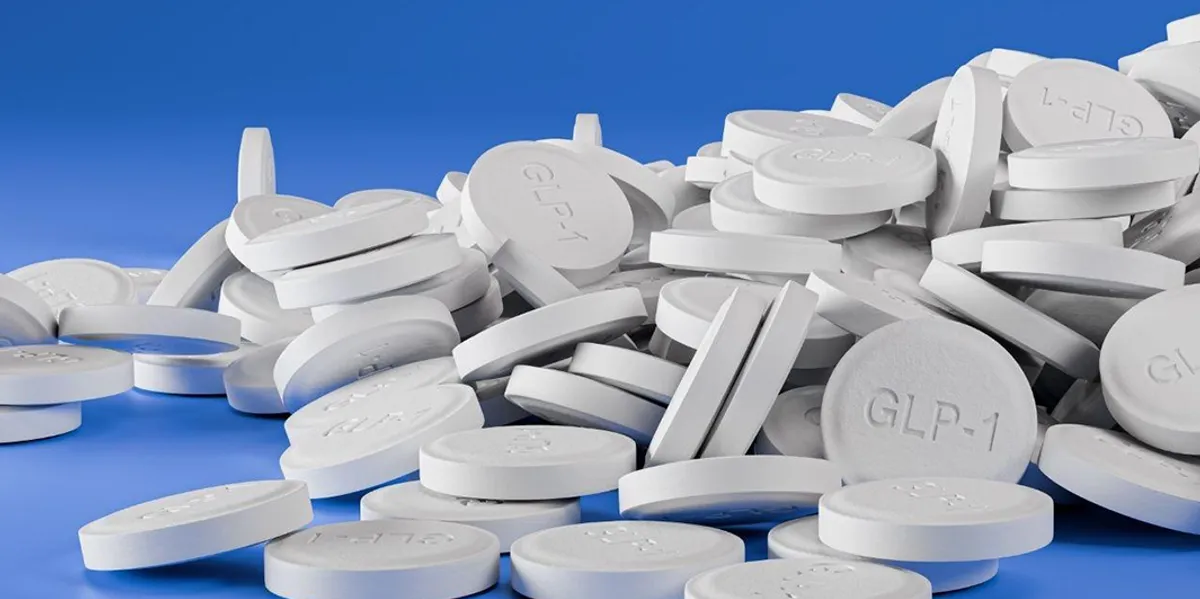
Weight loss drugs continue to play out in the global market, with forecasts estimated at a value of US$200 billion by 2030.
Leading the rise are oral GLP-1 drugs, with new obesity pills projected to push the GLP-1 market into its next chapter in 2026. The demand is perpendicular to rising obesity and diabetes cases, with the 2025 World Obesity Atlas projecting that the total number of adults living with obesity will increase by around 115 percent by 2030.
How do GLP-1 drugs work?
The first GLP-1 receptor agonist was approved for clinical use by the US Food and Drug Administration on April 28, 2005. Called Byetta (exenatide) and originally developed by Amylin Pharmaceuticals, the drug was later marketed by AstraZeneca.
By medical definition, an agonist “is a manufactured substance that attaches to a cell receptor and causes the same action as the naturally occurring substance.” Named after the GLP-1 hormone or glucagon-like-peptide-1, the agonist medications work by mimicking the blood-lowering capacity of this hormone.
The first patients of these medications were people with Type 2 diabetes, as their main purpose is to assist in the management of blood sugar (glucose) levels. Some agonists also help treat obesity.
For Type 2 diabetes patients, GLP-1 medications work by triggering the pancreas to release more insulin and in turn, manage blood sugar. Slower digestion also allows for less instances of blood sugar spikes.
A primary effect of these agonists includes lower appetite levels, therefore reducing food intake and leading to weight loss.
The Health University of Utah says that GLP-1s are often prescribed to adults with a BMI over 30, or adults with a BMI over 27 with obesity-related conditions, such as prediabetes, diabetes, high blood pressure, high cholesterol, sleep apnea and fatty liver disease.
Injectable vs. oral formats
Most GLP-1 drugs are still in injectable formats, with oral pills slowly penetrating the market. Rybelsus by Novo Nordisk, which is used for Type 2 diabetes, was the first oral medication to reach the market.
As of April 2026, the sector achieved a milestone with two additional pills to the market. Wegovy was added in April, while FoundayoTM (or forglipron) was added in January.
But what exactly is the difference between injectable and oral GLP-1s? Medical studies and experts note that injectables have often shown better results primarily because of dosing.
“Because these medications are proteins, they are generally digested by your stomach acid before they can work if swallowed, which is why injecting them directly into the body was the original standard,” Nuvance Health states.
The thing is, the experience of injectables is not for everyone. Some patients experience stress due to discomfort or worse, trauma, from needles. The presence of oral medications eliminates this and offers accessibility for more patients. Daily oral drugs may also be easier to manage, especially for those who are just starting with the treatment.
This is why emerging technologies are aiming to improve both the efficacy and experience of oral medications, such as Lexaria Bioscience’s (NASDAQ:LEXX) DehydraTECH.
“By enhancing the performance of oral dosing choices as a replacement for disliked injections; and by reducing adverse events — often the #1 reason that patients stop using GLP-1 drugs — Lexaria’s proprietary DehydraTECH technology could be of vital importance to any of these companies in their pursuit of the next oral GLP-1 drugs,” the company explains.
What is DehydraTECH proposing?
DehydraTECH is technology platform that combines proprietary formulation and processing techniques focusing on how efficiently it could improve the speed and extent of drug delivery into the bloodstream, and in certain cases, the brain, after oral administration.
Lexaria has been actively evaluating DehydraTECH across multiple therapeutic areas since 2015, with a recent focus on applying the platform to GLP-1 drugs. At least 65 patents have also been granted around the world, while others are pending applications to diabetes, hypertension-related conditions, epilepsy, antiviral drugs, central nervous system conditions, phosphodiesterase type 5 inhibitors and others.
Common concerns in GLP-1 drugs – both injected and oral – are side effects of moderate nausea or diarrhea, vomiting and more. Lexaria’s DehydraTECH eliminated or reduced these as early as their 2024 trials, sharing that Lexaria’s DehydraTECH-processed Rybelsus capsules “demonstrated superior tolerability in delivering the GLP-1 drug semaglutide” compared to commercially available ones.
According to Lexaria, DehydraTECH is the only technology publicly disclosed for its ability to reduce side effects in all 3 of the top GLP-1 drugs currently sold in the world today: semaglutide, tirzepatide and liraglutide.
Why advancing is key
The goal of oral drug technologies is to beat GLP‑1s’ fragility in the digestive tract, potentially replacing injections for many patients by improving convenience and adherence.
While alternative routes, including topical, implantable and microneedle patches, also exist, studies suggest that engineering GLP‑1 analogs to resist enzymatic breakdown extends half‑life and enhances therapeutic effect.
Investor takeaway
Designing the delivery of GLP‑1 therapies shapes the patient’s journey. If the experience of taking such medications becomes more tolerable, oral medications could emerge as preferred methods over injections. Convenience also posits its own argument. If easily administered daily oral drugs can provide the same effect, then what is the point of securing weekly injectables and their associated pain and discomfort? As technologies to better GLP-1 oral medications develop, tilting the experience towards ease opens doors to broader adoption and an even larger, faster-growing market.
This INNspired article is sponsored by Lexaria Bioscience (NASDAQ:LEXX). This INNspired article provides information which was sourced by the Investing News Network (INN) and approved by Lexaria Bioscience in order to help investors learn more about the company. Lexaria Bioscience is a client of INN. The company’s campaign fees pay for INN to create and update this INNspired article.
This INNspired article was written according to INN editorial standards to educate investors.
INN does not provide investment advice and the information on this profile should not be considered a recommendation to buy or sell any security. INN does not endorse or recommend the business, products, services or securities of any company profiled.
The information contained here is for information purposes only and is not to be construed as an offer or solicitation for the sale or purchase of securities. Readers should conduct their own research for all information publicly available concerning the company. Prior to making any investment decision, it is recommended that readers consult directly with Lexaria Bioscience and seek advice from a qualified investment advisor.
Read the full article here
