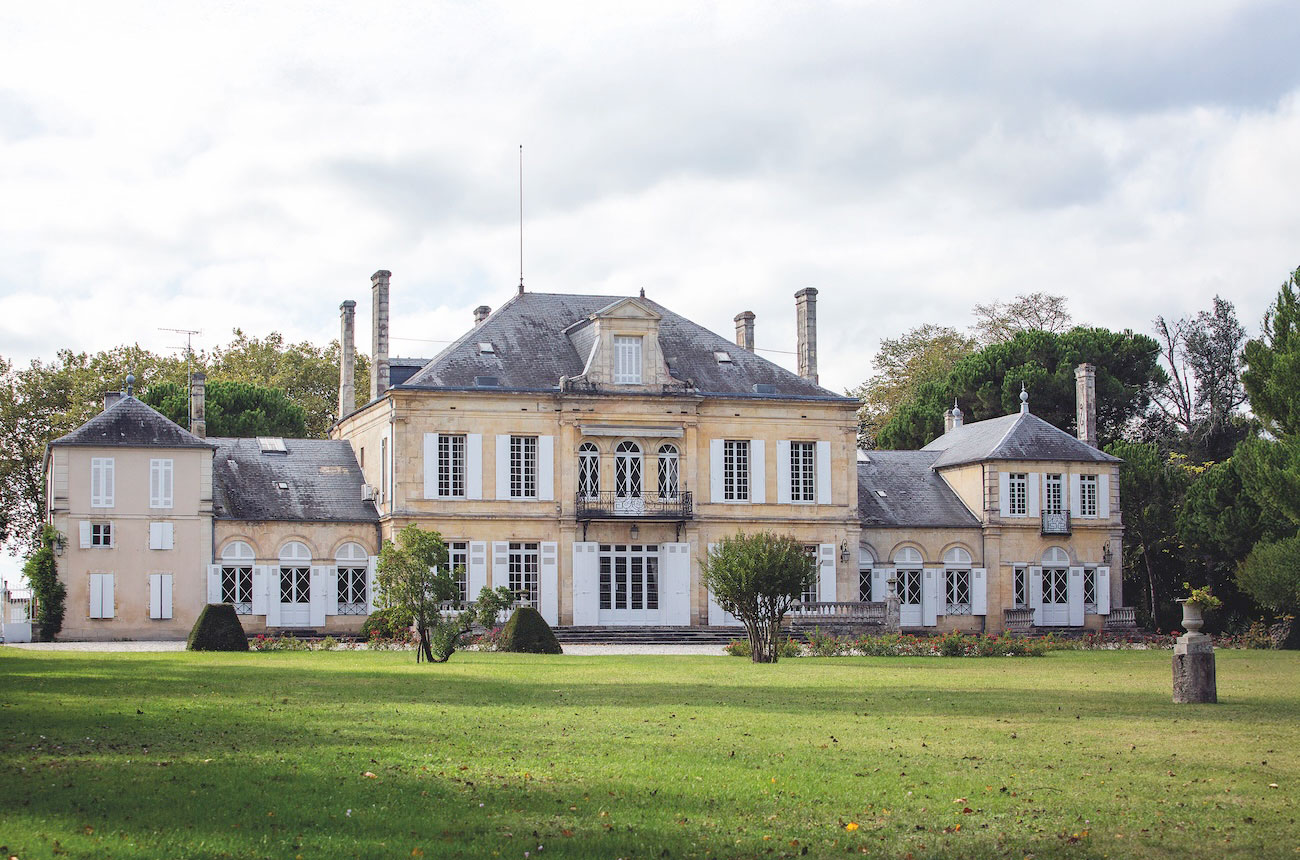






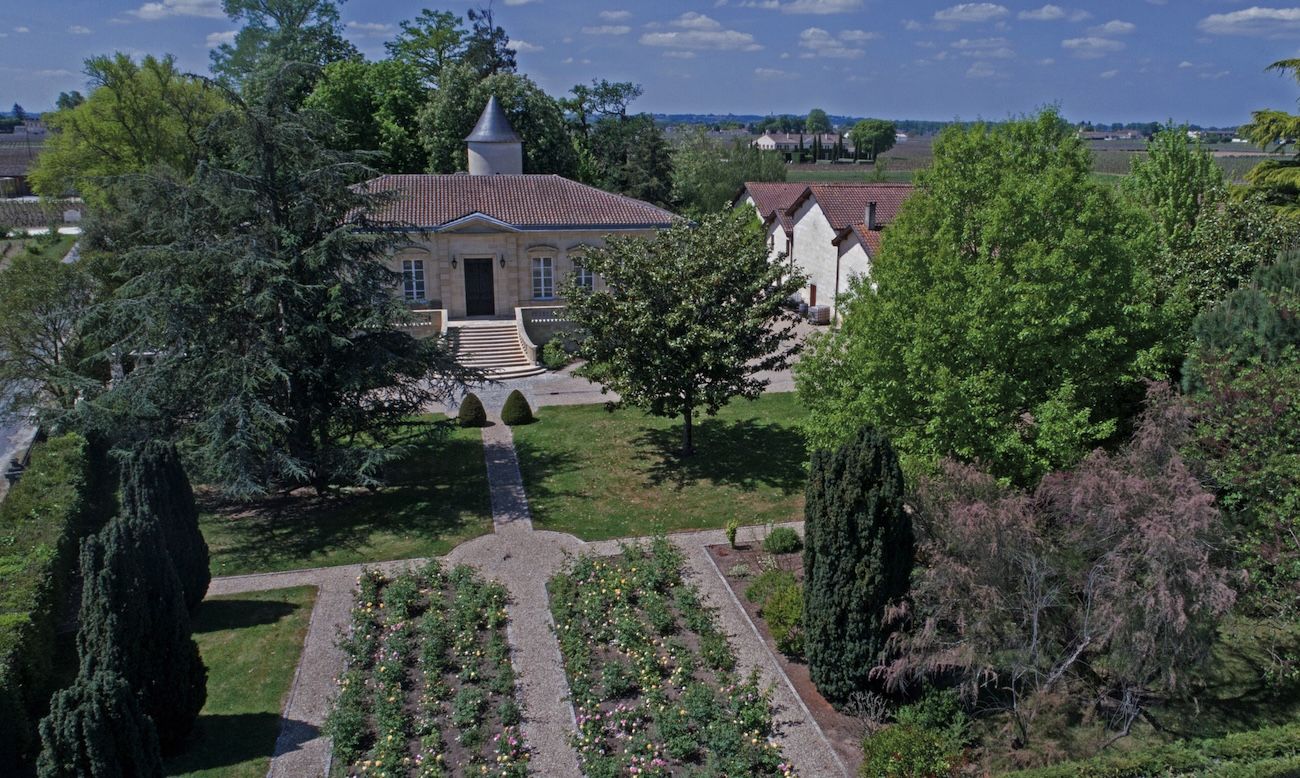
The name promises a tower, but there is no tower at Château La Tour Figeac.
A mill once stood on top of an old well, and this is likely where the name comes from.
Today only the well remains, on the neighbouring property, and the mill is gone.
The estate was born out of the break-up of a larger property, Château Figeac, which sold off parcels in 1876 and again in 1879.
It was from the 1879 sale that the Corbière family bought land to create Château La Tour Figeac.
The new property did not stay together for long: in 1881 it was divided again, half becoming La Tour Figeac and the other half La Tour du Pin Figeac, a separate estate that still exists today.
Since 1973, Château La Tour Figeac has belonged to the Rettenmaier family of Heilbronn. They bought it shortly after their hunting friends, the von Neipperg family, took over the nearby Château Canon La Gaffelière.
The family’s main business is not wine but transport: they run TII Group (Transporter Industry International), a special transport company.
It was Otto Maximilian Rettenmaier, the current owner, who brought the family closer to the wine side, taking over the management in 1994.
Ownership is shared today: Otto holds 50%, and the rest belongs to his father’s seven grandchildren. Otto has one daughter of his own, so it is not yet clear who, among the next generation, will take the estate forward.
Illustrious company
The location is one of the best addresses on the Right Bank. Château Cheval Blanc borders the property to the east, Château Figeac to the south, and Pomerol begins just a few rows of vines away to the north and west.
Château La Tour Figeac has been classified as a Grand Cru Classé since the very first Saint-Émilion classification, in 1955.
The vineyard covers 14.5 hectares in a single block, planted with 60% Merlot and 40% Cabernet Franc. The soil is gravel and sandy clay over a clay subsoil, with more gravel on the side closer to Cheval Blanc.
Vine age is usually given as around 35 years, though Otto says this needs recalculation, since a number of parcels have been replanted over the years and the average is no longer very precise.
Some of this replanting is still ongoing: about 2.5 hectares have already been uprooted, and Otto thinks another 3ha or so may need to follow, a decision driven as much by the market as by climate adaptation.
Planting density is around 6,500 vines per hectare on average, and the most recent plots were planted at a much higher 7,900 vines per hectare but this is now changing.
For future plantings, the estate is looking at wider row spacing, which comes to roughly 6,700 vines per hectare – close to the old average density, and a step back from the recent high-density plots.
The idea is not to intensify further but to adapt to a warmer, drier climate, giving each vine more room and less competition for water.
Vineyard approach
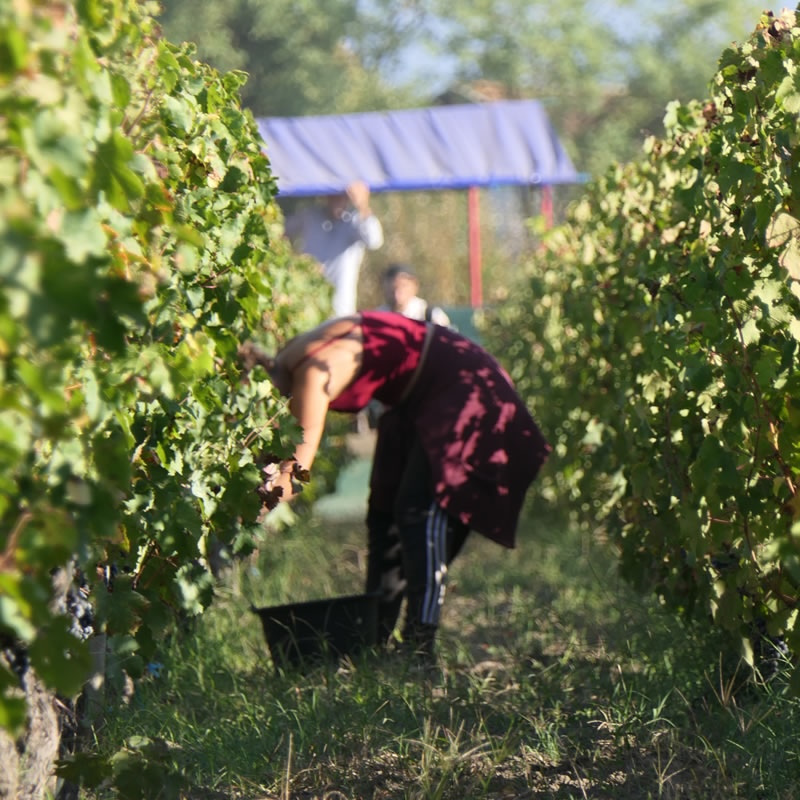

In the meantime, 2026 has already been a difficult year for young vines, which have needed irrigation to cope with the stress.
The estate has worked with biodynamic-inspired methods since 1997, guided by Derenoncourt Consultant and, more recently, their partner Julien Lavenu.
The vineyard is not certified biodynamic – the approach borrows from biodynamic thinking without following it as a fixed rulebook.
Organic certification came later and briefly: the 2021 vintage was the first to be certified through Ecocert France, but the estate lost certification in 2024 after a difficult year forced it to use a treatment not allowed under organic rules.
The vineyard is not currently back in conversion.
Composers in the cellar
Grapes are picked by hand and sorted carefully on arrival at the cellar. In a difficult year, they will rent a densimetric sorter to help the manual selection.
Colour and tannin are extracted using both cap punching down and pumping over.
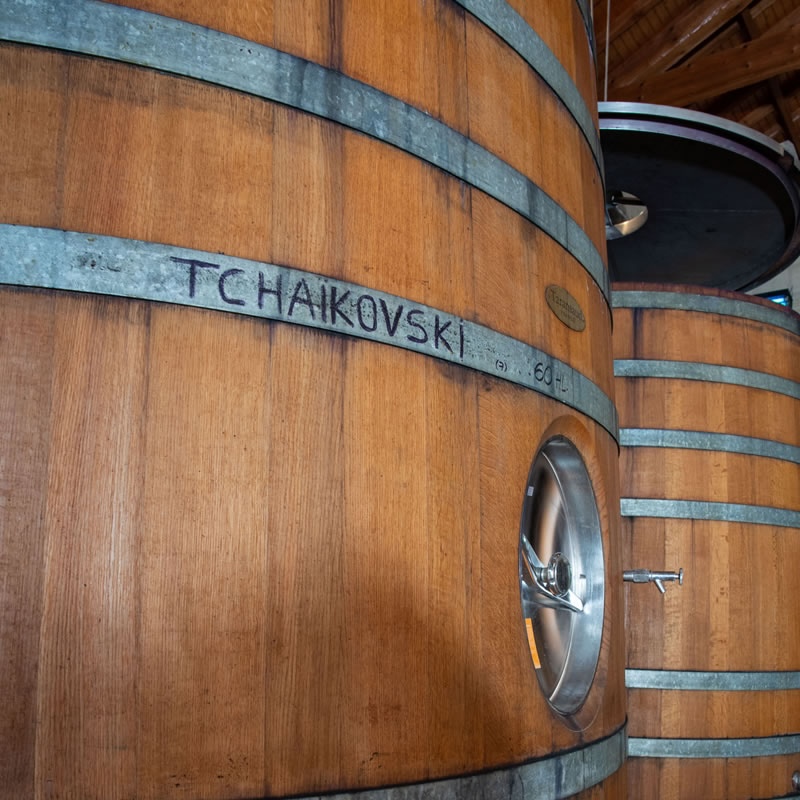
Fermentation takes place in a mix of stainless steel tanks and six wooden vats, each one named after a composer – Beethoven, Bach, Tchaikovsky, and Vivaldi are among them – a small sign of Otto’s love of music.
Malolactic fermentation follows in oak, in a room kept apart for this purpose. Ageing lasts 13 to 15 months for the first wine and 10 to 13 months for the second.
The wines are aged in a mix of 225-litre and 400-litre barrels, with 40 to 50% new oak and at least a third of the barrel stock renewed every vintage.
There are also two 2-hectolitre foudres, and two Clayver spheres,. About 60,000 bottles are produced each year, all bottled at the estate.
Three wines are made at the estate, though not always in the same vintage. The Grand Vin makes between two-thirds and three-quarters of production.
It is joined, in most years, by two second wines: L’Esquisse, made from younger vines, and Cuvée Lucie 45, from selected parcels.
Château La Tour Figeac
Wines are listed youngest to oldest

How Château Cantemerle spread its wings once more

Why Château Corbin is 'an intimate jewel of St-Emilion'