Cycling in Western Slovenia’s wine country
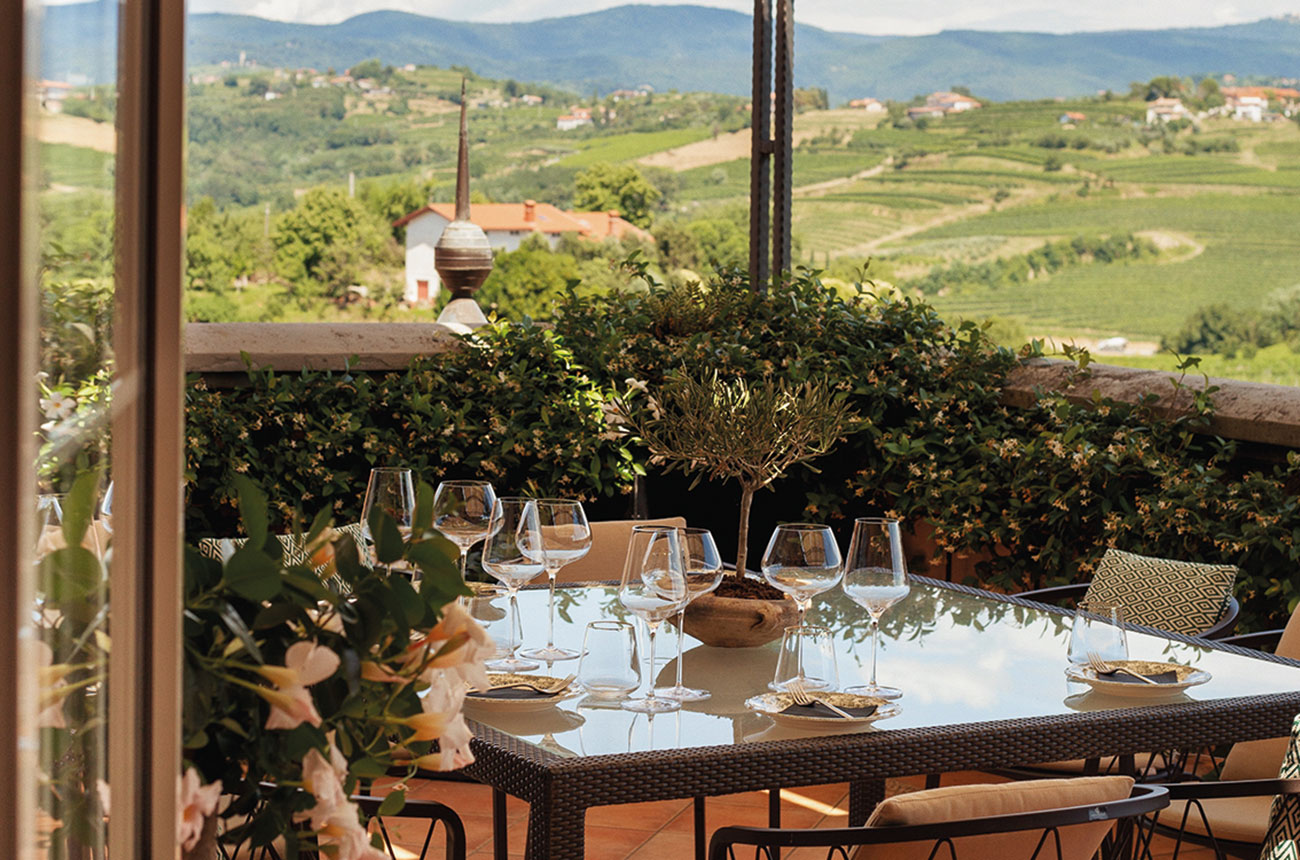
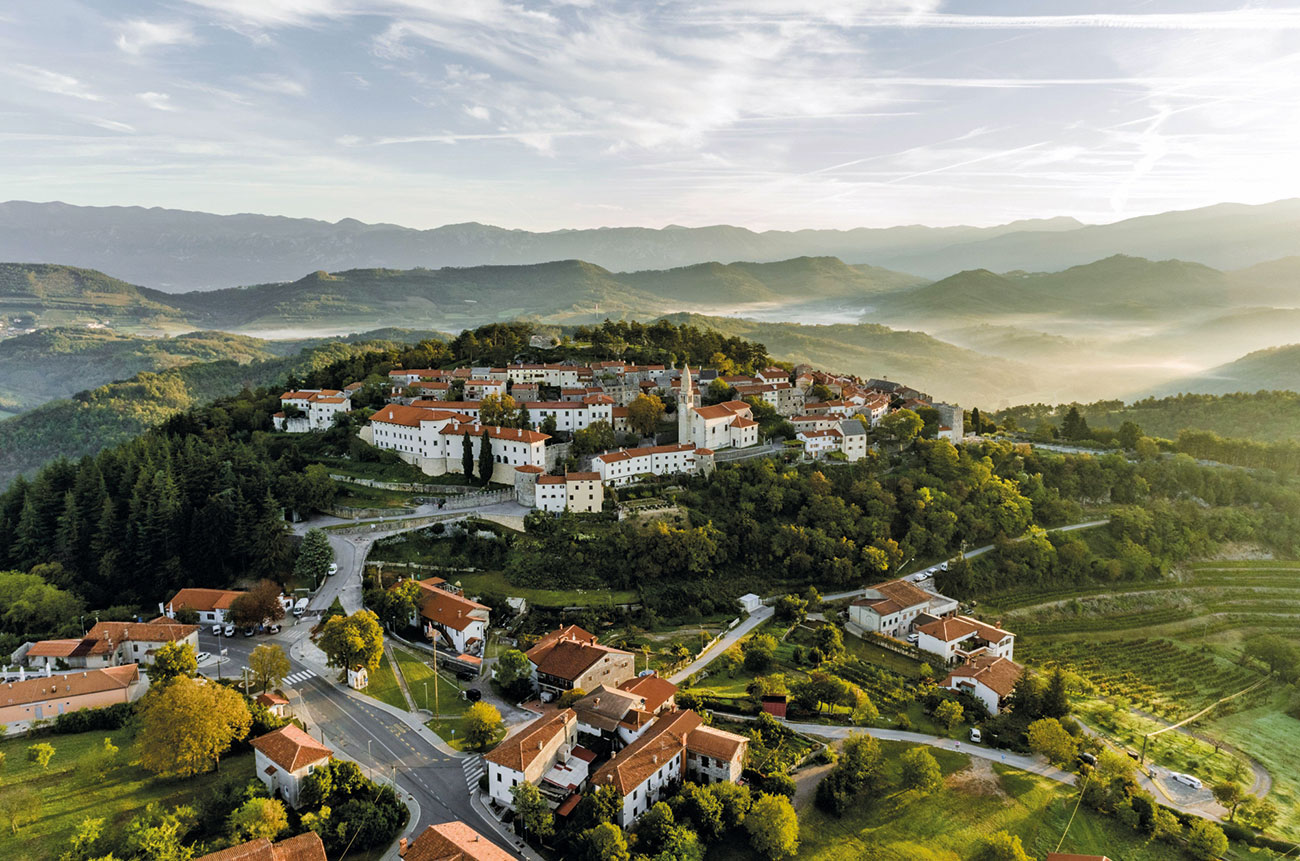
Sun-drenched slopes. Gentle hills sloping into fertile valleys. Terraced vineyards, orchards and olive groves. Every few kilometres, another pretty hilltop hamlet with a stone church, a small square and a different grape variety to try.
From the highest hills, views of the Gulf of Trieste to the south and Alpine peaks in the distant north. The air feels clean: Alpine fresh. The aromas are enticing: Mediterranean.
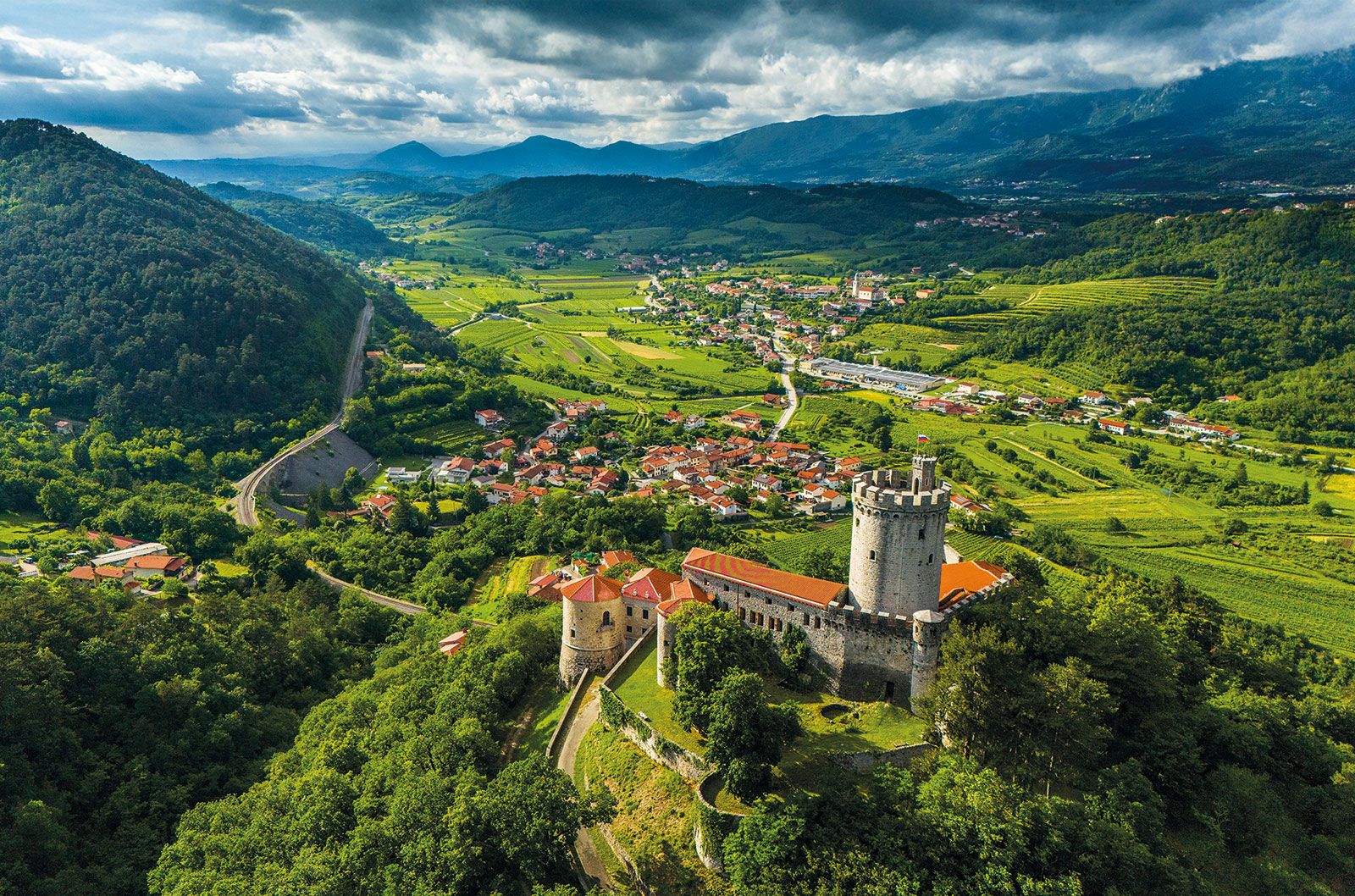
This is what it’s like to cycle through Slovenia’s key wine region, Primorska, in the country’s far west.
It’s a special place – especially for wine. Rebula (also sometimes called Ribolla here, after its Italian name Ribolla Gialla) and Refošk are the key grape varieties, but a few grapes are as local as the dialects.
Many French varieties, brought to the region in the second half of the 19th century, have found homes here, too. Italian varieties have spread from neighbouring Friuli, just over the national border to the west. It’s a vinous melting pot.
And the best way to explore the region? By bike… well, e-bike – there are a lot of hills.
Since 2025, three of Primorska’s sub-regions – Brda (or Goriška Brda), Vipava and Kras – have been linked by a 93km circular cycling route as part of an EU-funded project called Bike Time.
Serious cyclists could do it all in a day or two, but they would miss out on so much. Instead, base yourself in each of the sub-regions for a couple of days and go on loops from the hotel (this also means you won’t need to transport your luggage).
At a glance: Key areas, travel and bike hire
How to make it happen
- Nearest airports Ljubljana, the capital of Slovenia, or Trieste in Italy.
- Best time to visit Late spring to early autumn.
- Bike rental Bike Vibe delivers bikes to hotels in all three districts.
- Top tip Many cellars welcome cyclists, but book tastings in advance – the smaller estates sometimes require a reservation.
Key sub-regions
- Goriška Brda (Brda) Slovenia’s best-known wine region, which sits cheek-by-jowl with northeast Italy’s Collio. Known for highquality white and orange wines, particularly those made from Rebula, and red blends made from Bordeaux varieties.
- Vipavska Dolina (Vipava valley) Specialises in light, crisp white wines made from rare grapes Pinela and Zelen
- Kras (Karst) An iron-rich plateau that produces a notable red wine, Teran or Terrano, from the Refošk variety. This is also the region I go to for white and orange versions of Vitovska Grganja.
Day 1: Brda – The kingdom of Rebula
The bike route
Kabaj → Dobrovo → Medana → Gredič → Ceglo → Vipolže → Kaba
Focus on Rebula
The recommendation for your first day in the saddle is to get to know Rebula, the key grape in Brda.
Although it also grows across the border in Italy, Slovenians swear their version is more mineral, more elegant, more itself.
Rebula has been here since Roman times and now comes in a variety of styles, including unoaked, oak-aged, skin-contact, sparkling and passito.
Try them all, but don’t forget to spit – you’ll need your wits about you for some of the descents.
Wineries to visit on this route
The central town, Dobrovo, is home to Slovenia’s largest wine cooperative. Klet Brda brings together 400 growers and nearly 1,000ha of vines (more than half of the region’s roughly 1,900ha).
It’s a good place to get an overview of Brda’s wide range of wines. Try Bagueri’s Sauvignon Blanc for reference, then Bagueri’s or Krasno’s Rebula.
South of Dobrovo, in the border village of Ceglo, is the acclaimed biodynamic winery Movia, Slovenia’s most celebrated producer. A pioneer of natural wines, the charismatic and idiosyncratic Aleš Kristančič has now handed the reins to son Lan.
Highlights of a tasting include a complex Rebula, an orange Pinot Grigio and the unique sparkling wine Puro, which is disgorged in front of you – in an ice bucket filled with water.
Also in Ceglo is organic producer Marjan Simčič – another standard-bearer for Brda wines.
French and local grapes grown on marl-rich schist (opoka) are fermented with native yeasts and boosted with a little bit of skin contact – try the Sauvignon Blanc and Chardonnay to see a different side of these grapes before experiencing three different Rebulas.
Where to stay in Brda
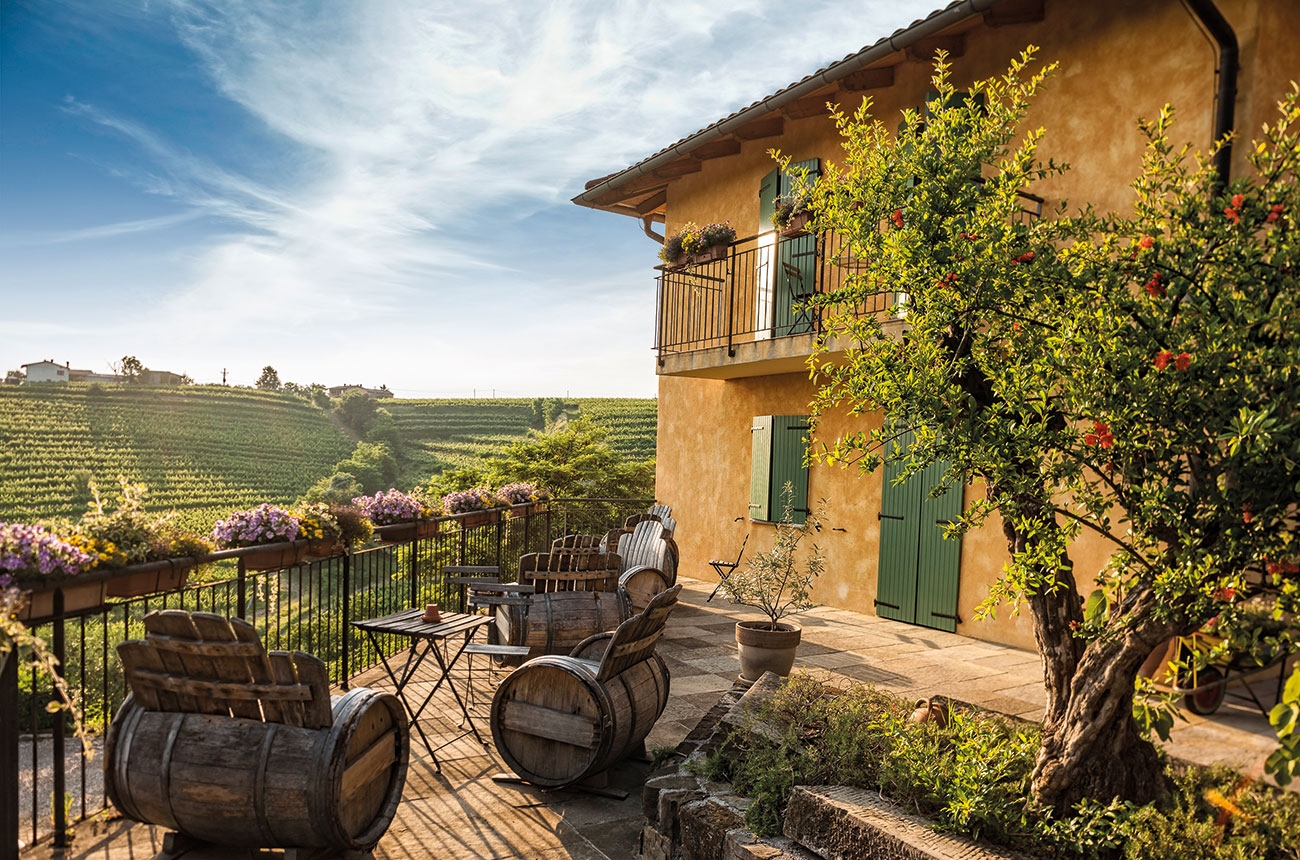
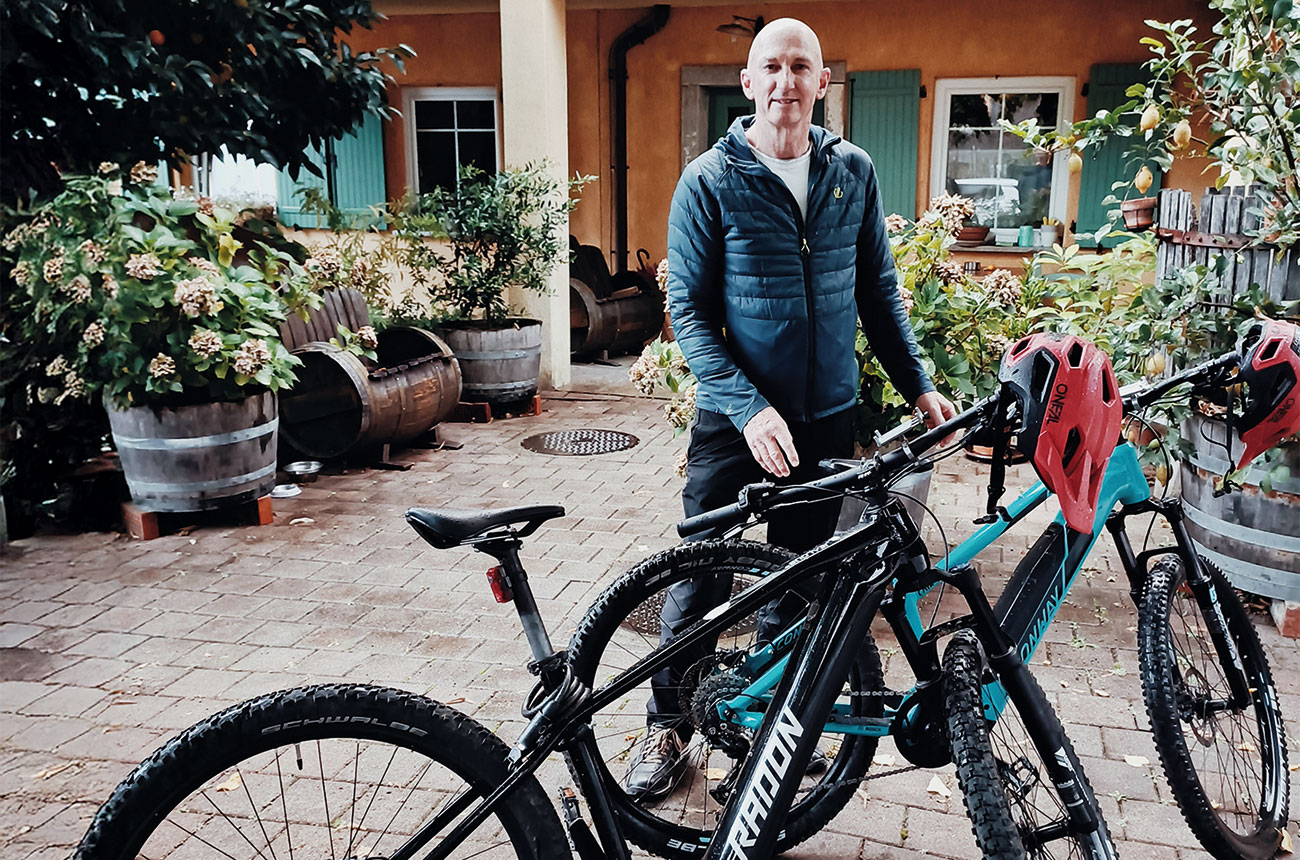
A good base for this first part of the adventure is Homestead Kabaj Morel in the village of Šlovrenc, near Dobrovo.
Also known as Kabaj Wine & Dine, the homestead combines a top winery and charismatic French winemaker with an amazing restaurant and comfortable rooms.
Jean Michel Morel crafts wines that he likes to drink, regardless of trends and commercial viability.
Enjoy his skin-contact, low-intervention whites and old-school Bordeaux-style reds with dinner on the restaurant’s terrace. There’s no menu – the dishes are inspired by ingredients gathered in the market that morning.
Day 2: Brda beyond Rebula
The bike route
Kabaj → Biljana → Šmartno → Gonjače → Kojsko → Višnjevik → Kabaj
Wineries to visit
Brda is small but dense with excellent boutique producers. Whatever route you take, you’ll probably come across a good, family-run cellar.
Today’s loop explores the district’s other grape varieties and its underrated bubbles. Among the best sparkling wine producers in Slovenia is the specialist Bjana in the village of Biljana, east of Dobrovo.
Start the day with a sip of Miran and Petra Sirk’s Cuvée Prestige Extra Brut – typically 50/50 Pinot Noir and Chardonnay, roughly four years on lees. Another good family-run winery in Biljana is Marko Sirk Wines (contact: [email protected]).
Father Marko and son Miha produce two premium sparkling wines, excellent Sauvignon and Malvasia varietals, and a delicious red blend made from Merlot and Cabernet Franc, among others.
At the Ferdinand winery, a small detour off the road between Gonjače and Kojsko, winemaker Matjaž Četrtič has teamed up with Italian friend Robert Prinčič (owner of Gradis’ciutta in Collio) to create a special fizz, Sinefinis Rebolium.
It’s a blend of Rebula/Ribolla Gialla grapes grown on either side of the border, paying tribute to the Brda and Collio terroirs, which have been divided since the imposition of that border in 1947.
The other white grape to try in this part of the world – perhaps at the end of the day in the quaint medieval village of Šmartno, northeast of Dobrovo – is the underappreciated Sauvignonasse (formerly Tocai Friulano; now simply Friulano in Italy).
It makes a beautiful aperitif, but few producers like its official name; Kabaj calls it Ravan, Zanut calls it Zakaj, others call it Jakot (Tokaj backwards) and Sauvignon Vert.
Whatever the name, it’s a fitting glass with which to conclude your time in Brda.
Day 3: Vipava valley – Indigenous treasures
The bike route
Slap → Planina → Vipava → Slap
Wineries to visit
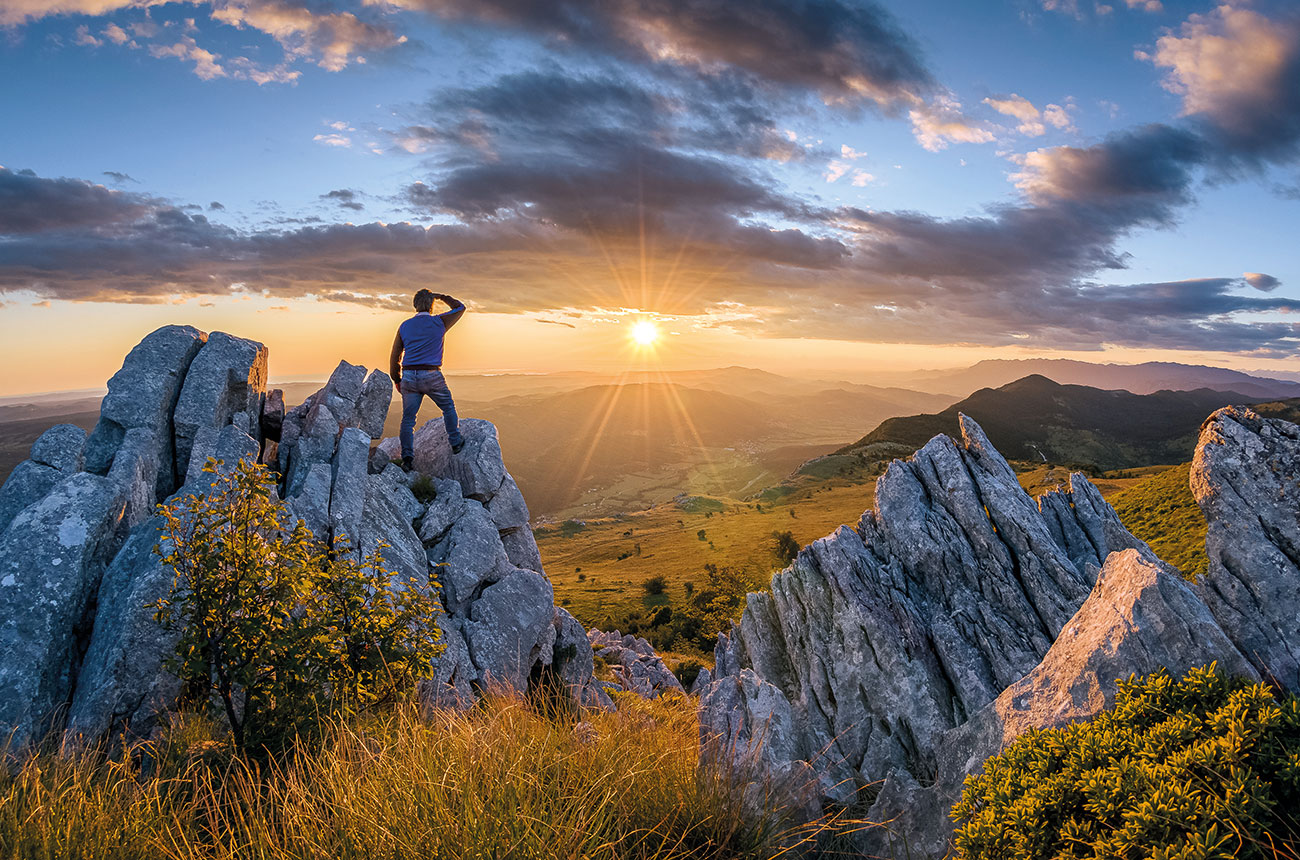
The beautiful Vipava valley, a broad corridor flanked by mountains and dotted with vineyards, is home to three of Slovenia’s rarest, most delicate whites (which sound more like Marvel heroes): Zelen, Pinela and Klarnica.
A key feature of the terroir here is the strong wind, known as the bora or burja, which can exceed 200km/h.
This is why the old villages have narrow streets, the terracotta roofs are littered with rocks to keep tiles in place and such finicky grapes are able to thrive here and nowhere else.
In the picturesque village of Slap, eighth-generation winemaker Urban Petrič at Vino Petrič is working hard to get more complexity into the typically light, easygoing Zelen and Pinela.
He’s harvesting later, maturing longer and selecting the best southeast-facing, limestonerich sites for planting.
Planina is a bit of a climb, but has two producers worth visiting: Guerila and Štokelj.

The terrace, tasting room and three apartments at biodynamic producer Guerila offer amazing views over the valley. These views are best paired with their benchmark versions of Zelen and Pinela, or a sparkling wine made from both varieties: Castra Brut Nature.
Meanwhile, among the Štokelj wines to try are the still and sparkling Pinelas, and a very serious Merlot-Barbera blend.
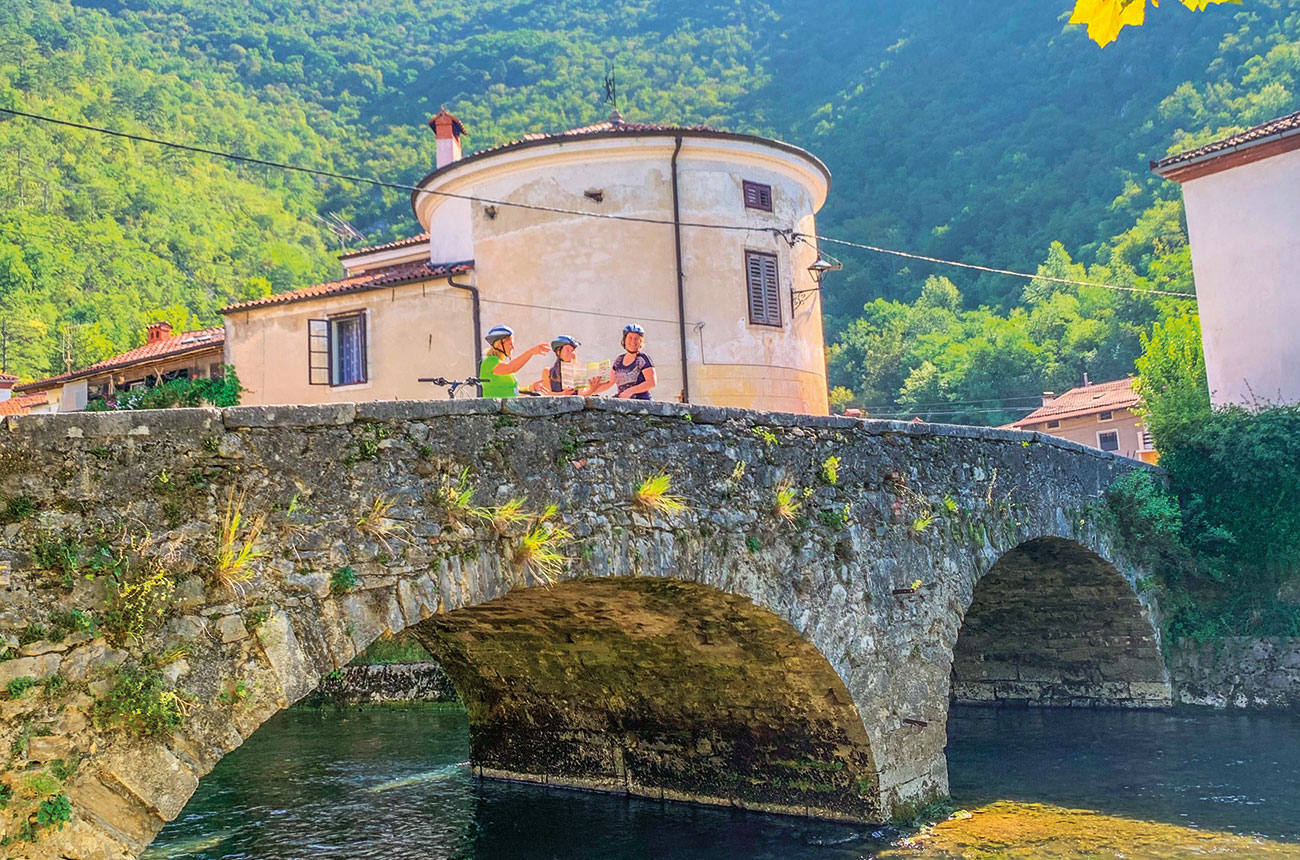
Next, head to Vipava, a picturesque town situated at the source of the river of the same name, which consists of nine karst springs. It has a large winery, the former cooperative Vipava 1894, which makes good-value conventional wines.
However, the bistro and wine bar Gustl has better views, a more eclectic wine offer, and some very tasty dishes – such as the Vipava jota, a stew made from turnips fermented in grape marc.
Where to stay
Majerija in Slap, a 300-year-old estate with 10 rooms located under the herb garden and a superb restaurant, is a good base for the next two nights. Owner Matej Tomažič offers traditional cuisine with a contemporary touch and some excellent pairing suggestions.
Day 4: Vipava valley – International interlopers
The bike route
Slap → Branik → Sveti Martin → Dobravlje → Podraga → Orehovica → Slap
Wineries to visit
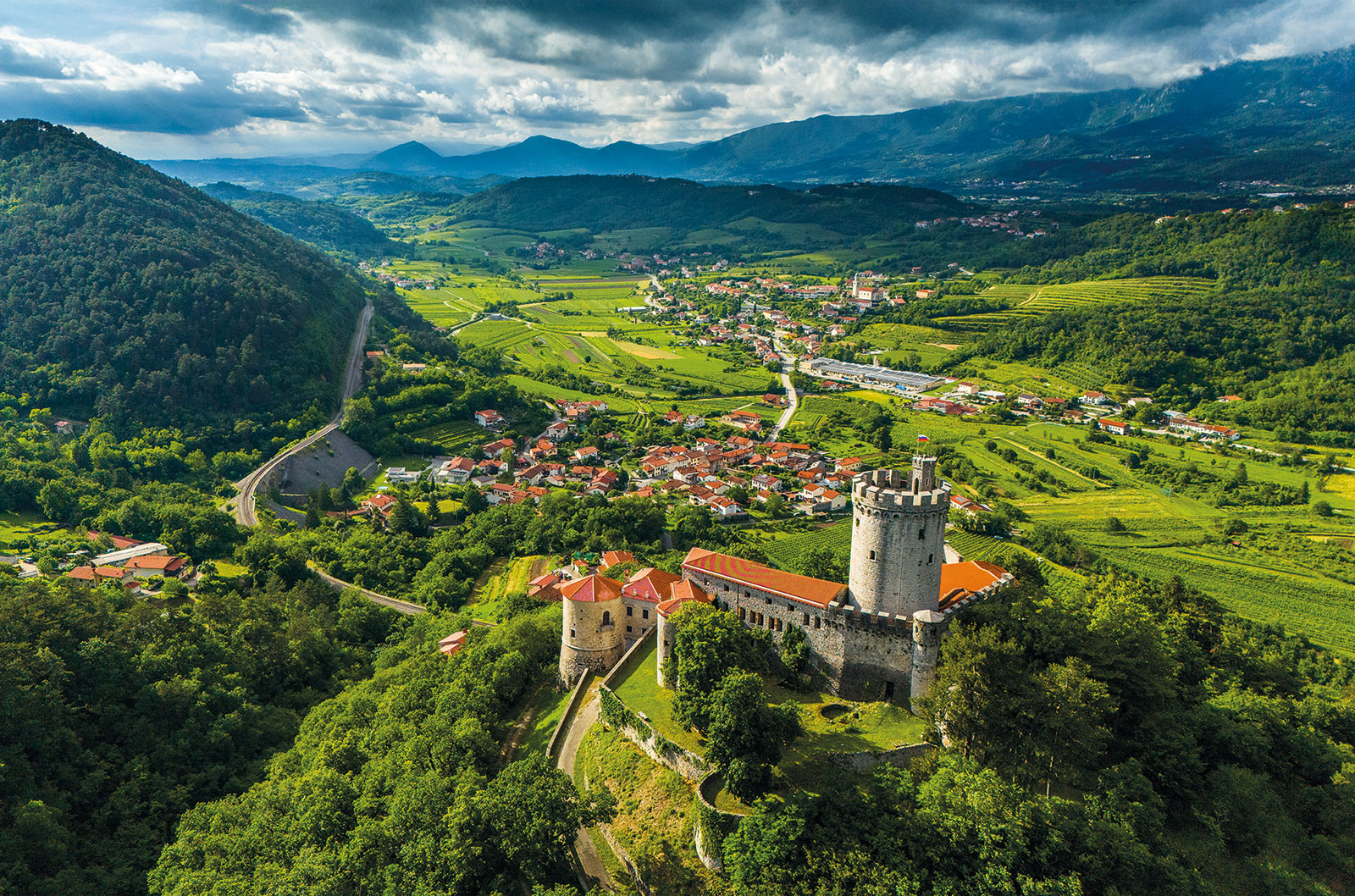
The medieval Rihemberk castle, overlooking the village of Branik, is one of the best and oldest in the region. It’s a fitting place to begin a day exploring the other face of the valley: the invading varieties.
There’s a lot of good Merlot here, but plantings are in decline. It’s largely being replaced by in-demand white Malvazija Istarska. Sauvignon Blanc, Chardonnay, Rebula and Cabernet Sauvignon are also widespread among the valley’s 2,060ha of vines.
From the castle, head north and then east towards the village of Sveti Martin and the Stegovec family’s Vina Sveti Martin.
As well as offering white and skin-contact Pinela and Rebula, Peter Stegovec can pour a good Barbera and Merlot, among others.
Heading northeast towards Dobravlje, the Tilia Estate in Potoče stands out as a Pinot specialist. Matjaž Lemut even calls his winery ‘the House of Pinots’. It’s one of the few wineries in the valley to offer consistently good Pinot Noir and Gris.
Beyond Vipava, near the eastern end of the valley, there’s a cluster of top-notch wineries.
In the village of Podraga, Mitja Lavrenčič of Sutor has built a good reputation for precise, elegant versions of Chardonnay, Merlot and Sauvignon Blanc.
A little further south, in Orehovica, the Burja Estate’s Primož Lavrenčič offers an excellent Pinot Noir (dubbed Burja Noir) and an exceptional red blend named Reddo that combines the valley’s traditional red grapes: Modra Frankinja (Blaufränkisch), Pokalca (Schioppettino) and Refošk (Refosco).
Biodynamic Pasji Rep has a superb Pinot Noir and Merlot, and one of the best examples of the valley’s traditional white blend, known as Vipaveca.
Pasji Rep’s iteration, Moser, contains Rebula, Welschriesling, Malvazija and Zelen.
Restaurant to know: Gostilna Pri Lojzetu
If you want a culinary crescendo to complete your visit, there’s the fine-dining theatre that is Gostilna Pri Lojzetu in Zemono Manor, near the town of Vipava.
You’ll have to book way in advance to land a table. Chef Tomaž Kavčič is one of the best in Slovenia and the wine list is a carefully curated love letter to Primorska.
Day 5: Karst – Where Teran rules
Karst plateau bike route
Štanjel → Sežana → Dutovlje → Krajna Vas → Gorjansko → Štanjel
Cycling the Kras wine road
It would be easy to concentrate on Brda and Vipava and skip the smaller (525ha of vines), more compact Kras, but Kras has a special terroir.
The Karst plateau, which underlies the region, is a table of limestone with a thin layer of rust-red, iron-rich (terra rossa) soil on top.
Refošk or Refosco is the signature variety, accounting for about 70% of plantings. It’s used to produce a wine called Teran (not to be confused with the Croatian grape of the same name) or Terrano, a dark, robust red with pronounced acidity, flavours of sour cherry and wild berries, and distinctive minerality.
To fully appreciate it, try it with fatty meats such as kraški pršut (Karst prosciutto). The region’s signature white Vitovska Grganja was once just a component in the local blend, but now produces elegant varietals and complex orange wines.
The Kras wine road connects almost 170 cellars across the plateau, along with two of the main settlements, Štanjel and Sežana.
The former – a medieval hilltop village – makes a good base. From there, make your way to the largest town, Sežana, in the region’s centre.
Wineries to visit
The Vinakras cooperative in Sežana, the area’s largest producer, is a good place to try different versions of Teran: from young, fruit-driven styles aged in tanks to full-bodied, oak-aged wines.
The ‘must-try’ is the single-vineyard La Marie Izbrani Teran, which is partially matured in concrete eggs. The La Marie Vitovska is also a good introduction to the variety.
On the way back to Štanjel, stop in the village of Dutovlje for Terans and Vitovskas from biodynamically farmed Renčel or family-run Domacija Lisjak – or continue to Krajna Vas for one of the area’s benchmark producers, Vina Štoka.
While Teran is central to their output, father and son Primož and Tadej Štoka also produce traditional-method sparkling wines that mature in a natural karst cave. Amazingly, these are also made from Teran and Vitovska.
But the ‘must-visit’ winery is Gorjansko-based Vina Čotar, a natural-wine reference in Slovenia. Father and son Branko and Vasja Čotar farm organically and bottle distinctive, terroir-driven whites (Vitovska, Malvasia Istriana, Sauvignon Blanc) and reds (Teran, Merlot, Cabernet Sauvignon).
Back in Štanjel, order a well-deserved glass of Vitovska in the castle’s prettily decorated bistro and reflect on your whole experience: Primorska isn’t just a wine and food destination, it’s a feel-good place where ancient grape varieties are kept alive out of love.
Where to stay
Hotel St Daniel is an ‘ecological’ boutique hotel in Štanjel with a range of rooms, suites and apartments, a restaurant that uses only ingredients from certified organic producers, and an outdoor pool.
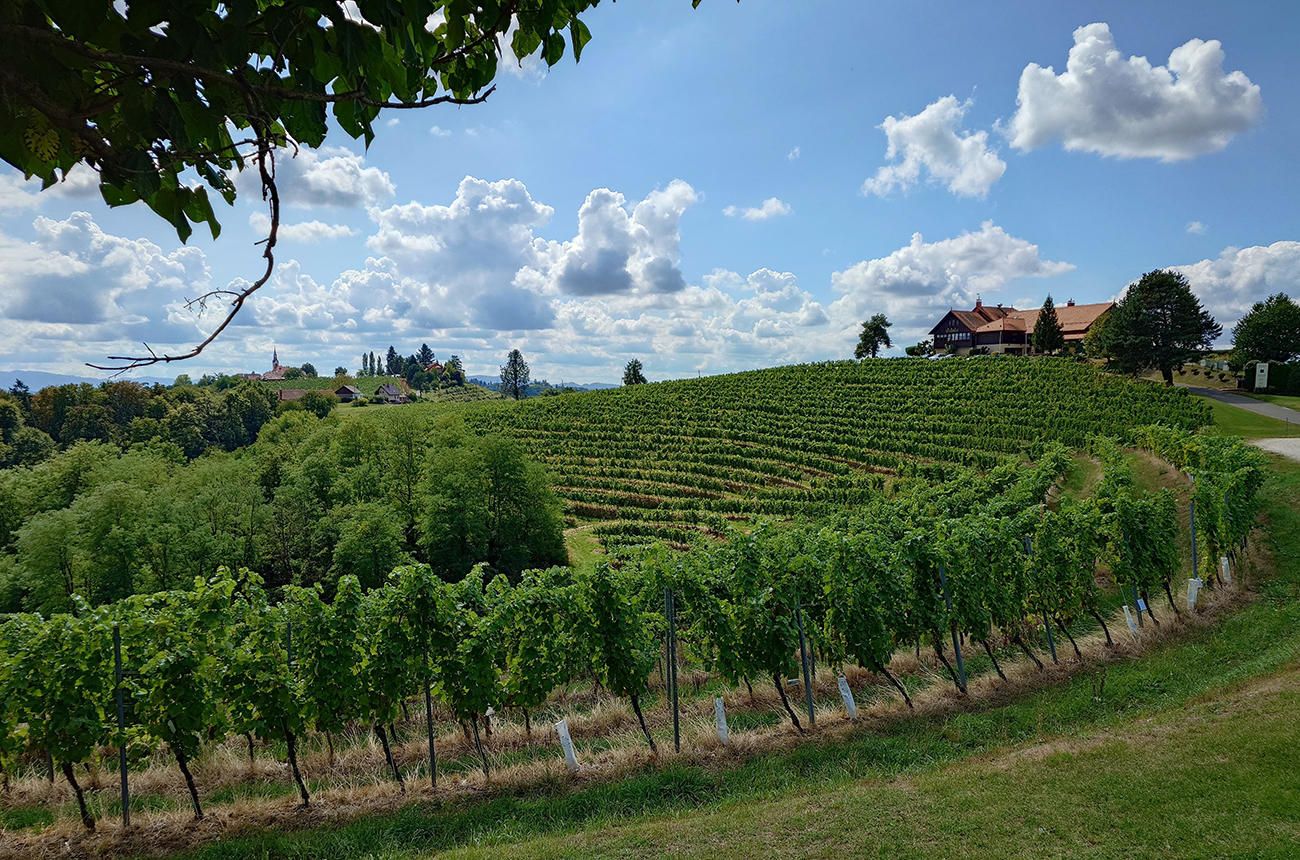
Why Eastern Slovenia is one of Central Europe’s great unsung wine regions
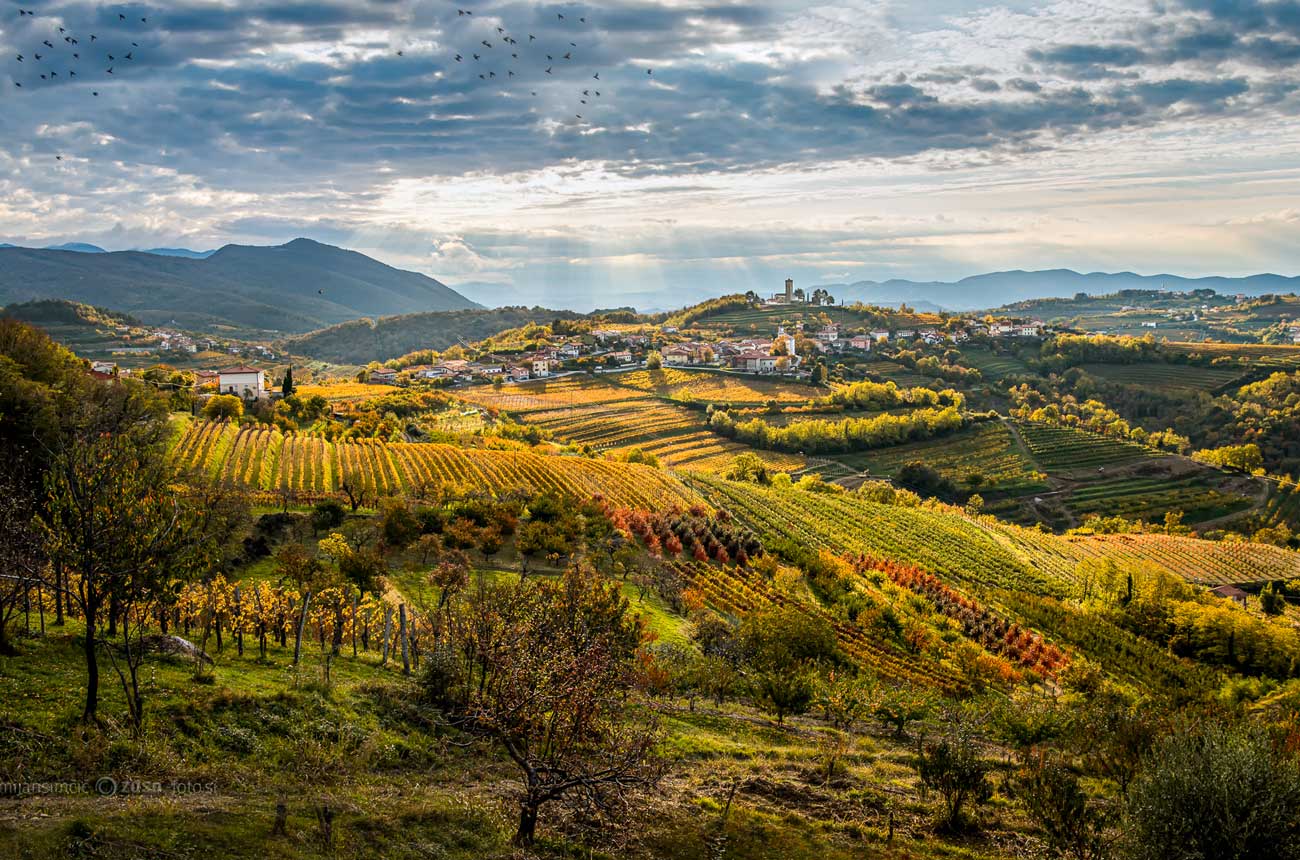
Slovenia: A wine lover’s guide