





The year after its momentous centenary celebration, producers in DOCa Rioja are going through what some might call a ‘post-celebratory hangover’.
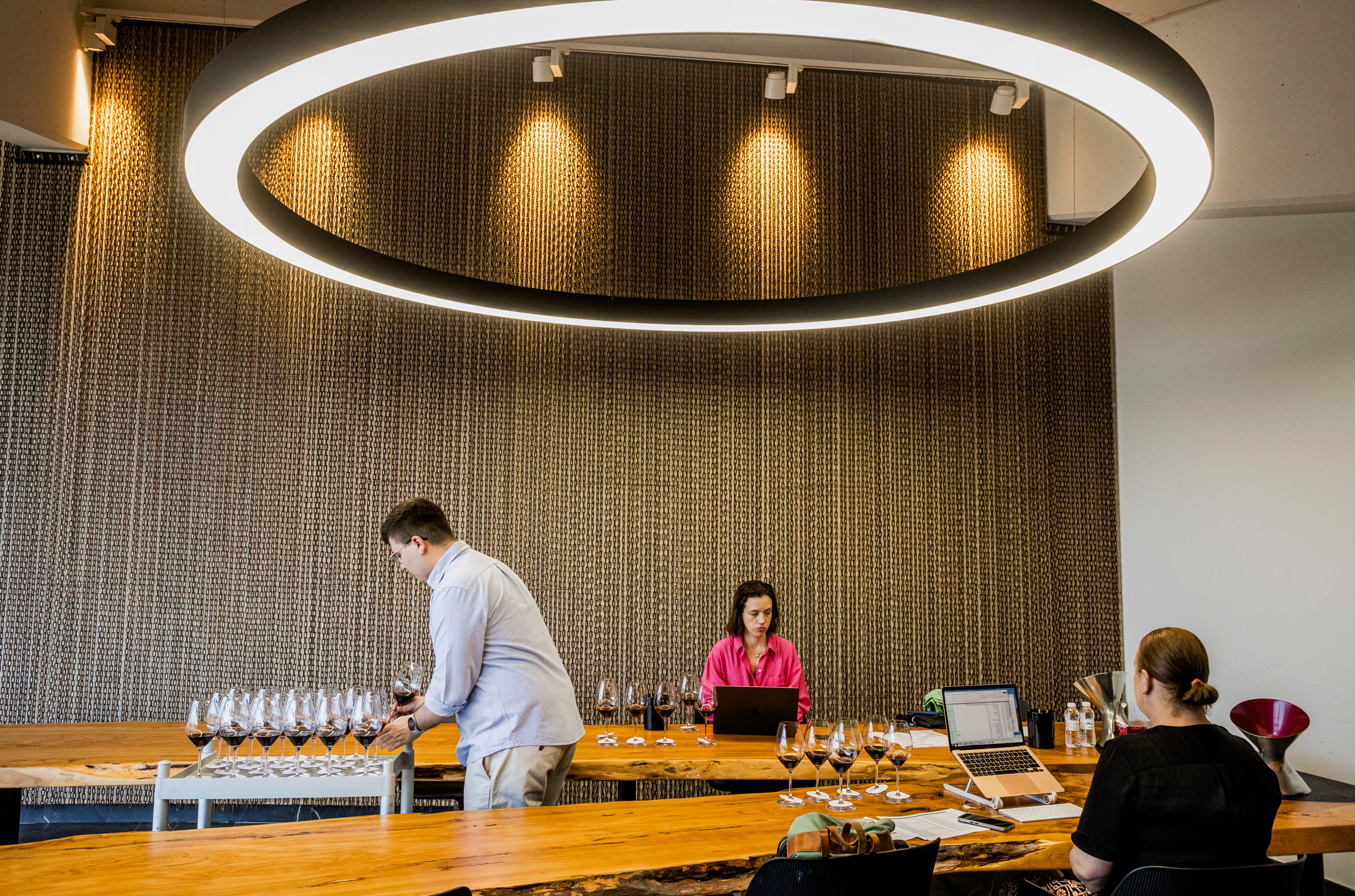
But others – including my fellow tasting judge Beth Willard and I – see it as a moment of exciting development and, crucially, an opportunity to establish a new kind of relevance for Rioja on the world stage.
What does this moment look like? We see it as a point of inflection, in which Rioja’s winemakers become more confident in the quality and character of their wines and the spotlight shines on both small and big names.
New headliners
Last year was not merely a token landmark anniversary.
The centenary coincided with never-before-seen quality levels and the coming of age of a bubbling community of maverick independent growers whose wines – some of which topped this annual report’s scoring charts across categories – questioned where Rioja was heading by reminding everyone about where it had come from.
This year’s report is witness to a new canon that is steadily establishing and framing itself, built from strong historical foundations while animated by a sense of benevolent dissent.
If one of the sections in last year’s Rioja guide report focused on the unsurprisingly standout performance of the long-standing classics of the region, this year a new cast of protagonists (the classics of the future?) has fully come into focus.
It’s an exciting, satisfying validation of many producers that we have long been rooting for and are now topping the score charts (and, in some cases, the investment market spreadsheets).
Overall, this has allowed stylistic expressiveness and character to develop, while also consolidating a more layered yet cohesive portrait of Rioja as a region of great (and significantly differing) terroirs and wines.
In front of these producers is a make-or-break challenge. We circle back to the idea that this is a tipping point for Rioja; leveraging this explosion of potential relies on the ability to deliver what Pablo Franco, technical director at DOCa Rioja, himself identified as a key goal: to support both small producers as innovators and big producers as consolidators, while allowing an overall balance of legacy and progress.
‘In front of these producers is a make-or-break challenge… a tipping point for Rioja.’
Ines Salpico
Creative tension
This means embracing an inevitable tension between different – but certainly not incompatible – ideas on typicity and style in Rioja’s wines.
Evolving beyond the traditional age-based categories is necessary; but so is the preservation and fine-tuning of those categories.
If stylistic freedom, based on a vineyard-first purity principle (see Stylistic variations with the ‘generic’ category and Vino de Municipio & Viñedo Singular), is yielding remarkable wines, equally of note is the finesse and identitarian strength (and outstanding value) of Rioja’s Crianzas and Reservas.
There’s a gradual but inevitable recognition that those differences are not, as perhaps many once thought, contradictions – they are rather expressions of the inherent complexities of a region that has evolved steadily through its long history, forging a strong heritage while never shying away from innovation and progress.
Perhaps the most obvious expression of this magnetic tension is the different attitudes towards the Vino de Municipio and Viñedo Singular categories introduced in 2017, implementing a geography-based quality pyramid in parallel with Rioja’s long-standing ageing-based categorisation.
The quality of the increasing number of wines released with these top-tier regional stamps fully justifies their creation – which ultimately, in the view of myself and Beth, helps to better contextualise the region’s other categories.
Explore the full 2026 Rioja Report
Rioja Report 2026: Vino de Municipio & Viñedo Singular: A sense of terroir unfolds

Rioja Report 2026: Crianza & Reserva: Looking for the sweet spot