While a high-quality baseline determined the tone and rhythm of this report, some producers stood out through wines that not only scored well but also jumped from the glass for their idiosyncrasy and self-assuredness.
Their wines are, in some instances, immediately recognisable – often shamelessly compromising the premise of a blind-tasting exercise – possessing their own distinctive style while also being unmistakably Riojan.
Our list of standout producers therefore aims to celebrate not just quality but also identity.
Theirs are wines that combine a sense of time and place with a distinct personality, making the case for typicity beyond uniformity.
There are clear common denominators: expressiveness (both terroir and personal), purity, drinkability and technical ability.
All of these wines evoke a sense of personal commitment and craftsmanship supported by painstaking work, deep knowledge of the vineyards and an overlap of personal and historical narratives.
This lineup also highlights the fact that it’s possible to arrive at a destination via different paths – it’s all about the journey and the many encounters it allows. And Rioja is, in its very essence, a region forged by serendipitous turns of history leveraged by very different stakeholders.
These are producers whose wines invite further engagement and discovery.
‘These producers’ wines possess their own distinctive style while also being unmistakably Riojan’
Arturo & Kike de Miguel
Artuke
Baños de Ebro, Rioja Alavesa
Brothers Arturo and Kike de Miguel (see what they did with the brand name there?), took over their father’s vineyards and small winery in Baños de Ebro and have since been crafting some of the region’s most exciting and sought-after ‘new wave’ wines. The purity and expressiveness of their creations became apparent in how they performed in our report tasting.
The two farm about 25ha following biodynamic principles and have a terroir-first approach, eschewing all ageing-based classifications in favour of village- and parcel-specific bottlings, all under the Genérico (formerly known as Joven) classification.
Their wines combine fierce intensity with structural exactness and aromatic nuance; not unlike the brothers themselves, whose frankness and bonhomie is framed by broad shoulders and warmly thunderous voices.
While their village blends (Pies Negros and the carbonic maceration namesake Artuke) are among Rioja’s most insanely good-value modern wines, Artuke’s top single-vineyard labels – La Condenada and El Escolladero – are on the path to icon status.
Artuke wines tasted for this report
La Condenada 2024 98pts
Trascuevas 2024 98pts
El Escolladero 2024 96pts
Paso Las Mañas Paraje El Chorro 2024 96pts
Carlos Mazo Gutiérrez

Vinos en Voz Baja
Aldeanueva de Ebro, Rioja Oriental
One of the wines that most surprised and delighted at the masterclass we hosted at the Decanter New York Fine Wine Encounter in June 2025, to celebrate Rioja’s centenary, was Carlos Mazo’s Nace La Sierra.
It stood out for its levity and purity, and introduced the audience – more familiar with the traditional, classical style of Rioja – to the possibility of a different interpretation of the region, more focused, fluid, quieter. It’s not by chance that he decided to name his project Vinos en Voz Baja – ‘wines in a soft voice’.
The same quiet rusticity and gentleness of touch made Mazo’s wines shine in this report’s tasting. Both traits are evocative of Mazo himself, a softly spoken, unassuming winemaker, completely committed to land and family.
He works mostly with old-vine Garnacha (red, white and grey), with scattered and interspersed plantings of Pasera, Viura and Tinto Velasco.
The fruit is handled with remarkable subtlety, infused rather than extracted, allowing the varieties to shine through the prism of their specific location.
Mazo’s wines coax you into slowing down and engaging with a different way of doing things; although refreshing and supremely drinkable, their textural appeal invites time on the palate – and some good bread, thinly cut jamón and fragrant olive oil.
Vinos en Voz Baja wines tasted for this report
Barrio Pastores 2024 95pts
Costumbres Blanco 2024 94pts
Nace la Sierra 2024 94pts
Costumbres Tinto 2024 93pts
Sandra Bravo
Sierra de Toloño
Villabuena de Álava, Rioja Alavesa
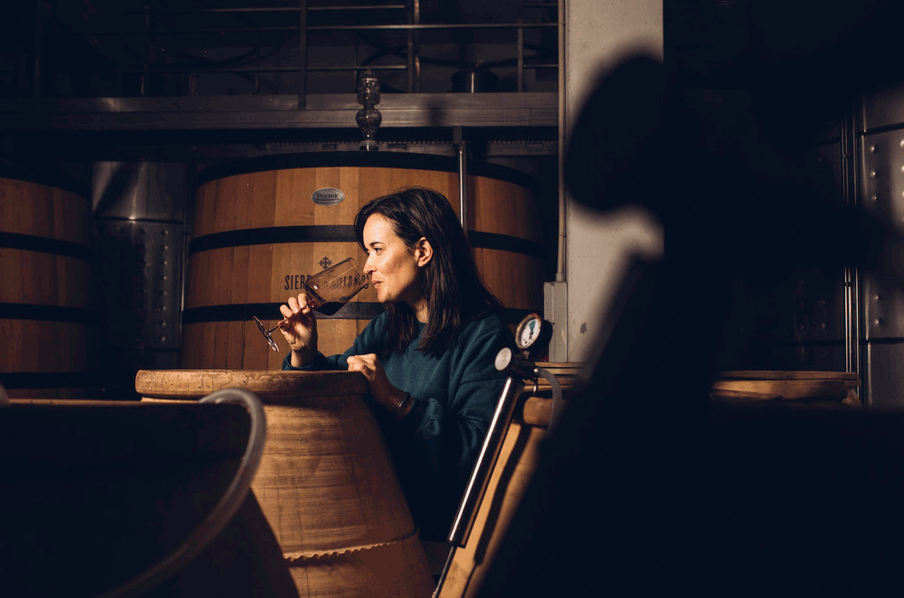
One of our standout producers last year, Sandra Bravo easily earned a spot in our top lineup again. Her wines are immediately recognisable in the glass: elegant, upfront, crystalline and textural.
Their evolution since Sierra de Toloño’s first harvest in 2012 is also remarkable, showing ever greater confidence and increasingly lending more expressiveness to Bravo’s pristine technical ability.
After completing her studies, Bravo honed her craft in Bordeaux, Chianti, Marlborough, California and Priorat, she returned to Rioja in 2012 with equal amounts of emotion, drive, work ethic and critical thinking.
Knowledge and approachability are the foundations of her style, informed by emotion and technique, allowing her to interpret the more than 20 plots of old vines – mostly Garnacha – she farms on the rugged slopes of the Sonsierra region.
While technically pristine, Bravo’s wines never come across as ‘technical’ or ‘cold’; there’s indeed a comforting quality to them that reflects Bravo’s down-to-earth authenticity.
Classical approachability and elegant rusticity are possibly the best ways to summarise the essence of her wines – from her pure, poised so-called entry-level red and white (an outrageous steal at just €12 in Spain, about £20 in the UK), to her single-plot creations, of which there are many.
We’ve said it before and we’ll say it again: wines such as the white Nahikun (‘desire’ in Euskadi) and Tereseño, from Garnacha planted in 1944, are among Rioja’s future (present?) classics.
Sierra de Toloño wines tasted for this report
Tereseño 2023 97pts
La Dula Garnachas de Altura 2023 96pts
Nahikun Blanco 2024 95pts
Sierra de Toloño Tinto 2023 94pts
Victor Ausejo
Alberite, Rioja Oriental
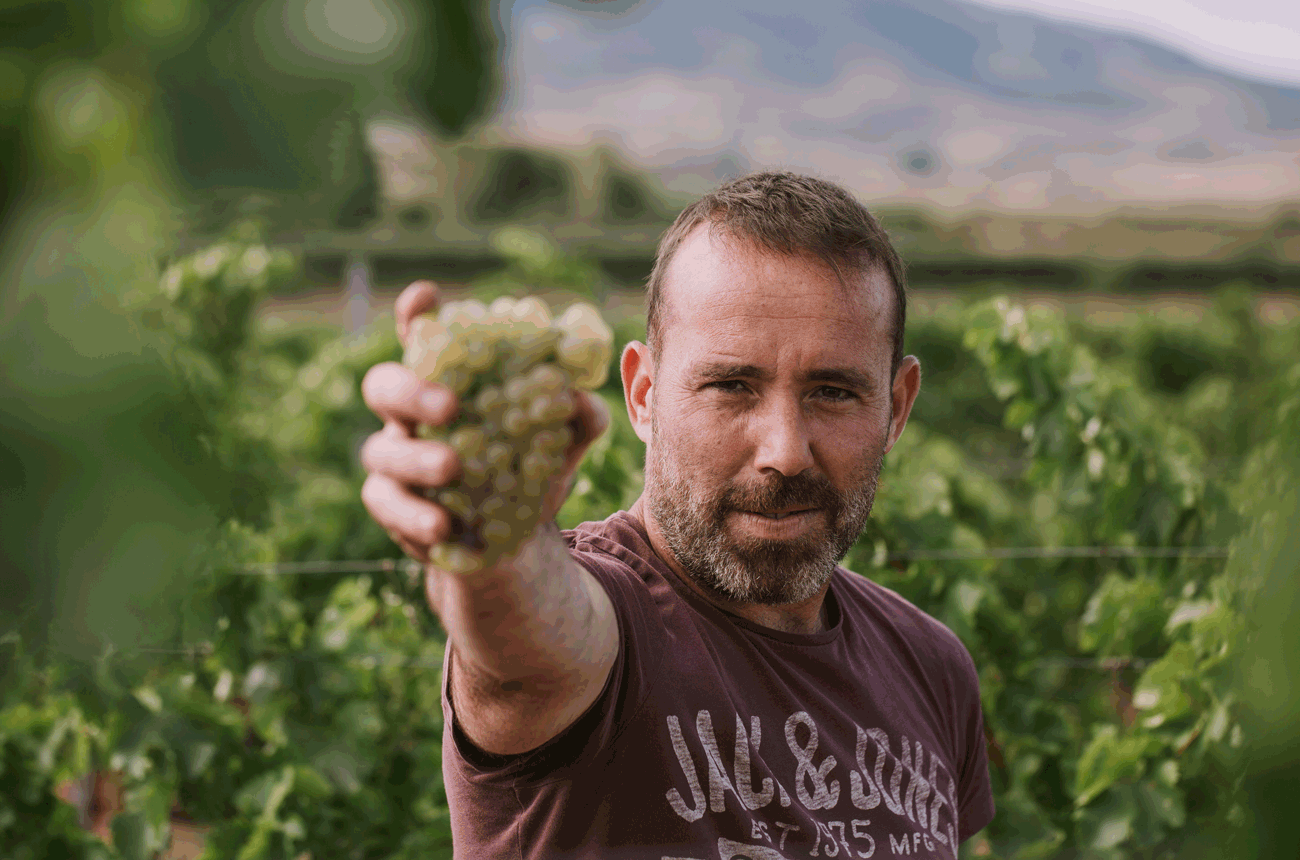
Victor Ausejo’s trajectory was unusual from the outset. The son of an experienced Rioja viticulturist, he never liked viticulture and began working as a plumber.
However, when work dried up, he found himself working towards a degree in viticulture and winemaking in Logroño; and while studying, the wine bug bit him hard. While gaining experience at Vivanco and Gómez Cruzado he started to set his sights on making his own wines.
Here again, his path wasn’t obvious. In 2014, his father convinced him to regraft a family vineyard of Tempranillo with Garnacha Blanca, anticipating (correctly) increased demand for white grapes in Rioja.
Little did he know that this would become one of his son’s specialisms. In 2016, Ausejo planted two more hectares of the variety; in 2018, the first Victor Ausejo Garnacha Blanca was produced. It wasn’t until 2021 that Ausejo produced his first reds.
Today, he works with Garnacha, both white and red, and Mazuelo to produce a boutique range that’s unique in its energetic grip and electric tension. Ausejo calls his tiny winery a workshop, a place of experimentation and discovery.
Victor Ausejo wines tasted for this report
Garnacha Blanca Vino de Clavijo 2024 96pts
Garnacha Tinta 2023 96pts
Mazuelo Vino de Alberite 2023 96pts
Parcela 333 2024 95pts
Muga
Rioja Alta
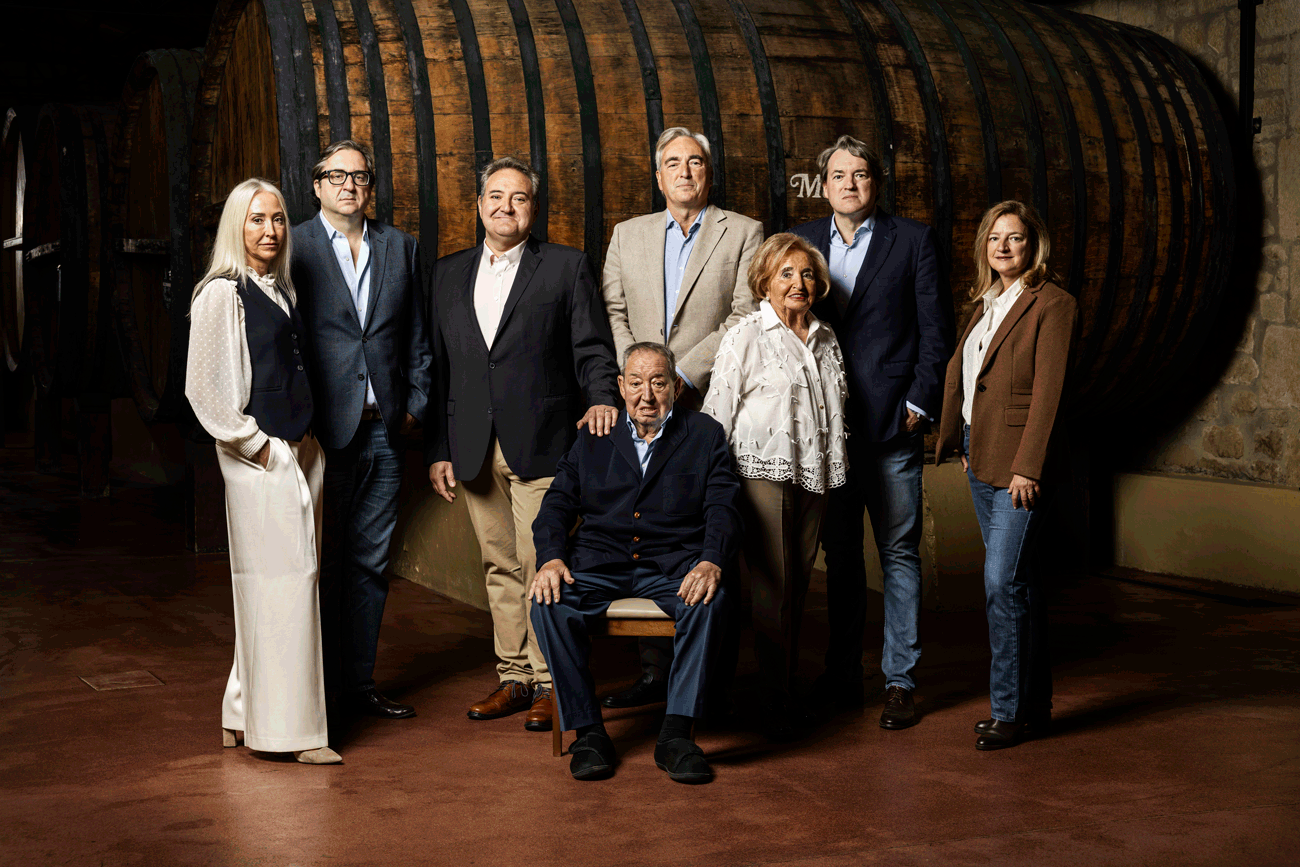
With the third generation now at the helm, Muga continues to evolve, not resting on its many laurels, and not taking success or status for granted. Ultimately, this is part of Muga’s enduring appeal: an unpretentious classicism and authoritative humility.
The evolution of the range has been both a response to market demands and a refinement of the house style.
Alongside long-standing classics such as Torre de Muga and Prado Enea now stand Muga’s flagship white and rosé (both dubbed Flor de Muga), whose development in the past decade itself reflects ongoing fine-tuning and self-questioning – while staying painstakingly true to a recognisable identity.
A meticulous approach is paramount, in the vineyard as in the cellar. With help from the University of Salamanca, technical director Isaac Muga and head winemaker Pablo Orio are conducting an extensive study of the soils in each vineyard parcel.
Meanwhile, Muga is the only winery in Rioja with its own cooperage, fastidiously selecting and maturing the wood for each barrique and foudre in-house.
Clarification of the wines is still done with egg whites and racking (transferring between containers) is done by gravity only – the approach is low-tech, high-detail and craft-heavy.
Like other Rioja powerhouses, Muga also plays a crucial socioeconomic role in supporting a tight-knit network of small growers – something that makes its evolution and success very much a collective endeavour.
Muga wines tasted for this report
Flor de Muga Blanco Reserva 2022 97pts
Flor de Muga Rosado 2025 95pts
Torre Muga 2021 94pts
Muga Selección Especial 2021 90pts
More from the report
Explore the full Rioja Report 2026
Our comprehensive analysis across styles and categories, plus profiles of stand-out producers.
Andrew Jefford on Rioja: Why I love these ‘magnificent’ wines