I’m not a Sauvignon Blanc denier, but I am all too often disappointed with thin, one-dimensional examples.
At its best, however, Sauvignon Blanc can be gorgeously textural and expressive, with weight but no heaviness, and richness balanced by salinity and succulence.
Its aromatic and zingy nature makes it one of the world’s most popular grape varieties, and flavours and aromas vary depending on where and how it’s grown – climate, pruning and trellising systems, even the yeast strains used in fermentation.
Expect anything from tropical and exotic to citrusy and zesty, grassy and herby, or stony and mineral.
Organic Sauvignon Blanc – not an easy task
Despite its popularity, Sauvignon Blanc is fairly tricky to grow, and needs careful work in the vineyard to keep it healthy.
‘Sauvignon is relatively complex to work organically or biodynamically,’ says Jonathan Didier Pabiot, a biodynamic winemaker in Sancerre. ‘It’s sensitive to powdery and downy mildew, so in humid years treatments have to be very regular.’
Yet Pabiot says the vine’s flower is very sensitive to copper, which is problematic for organic growers because copper-based Bordeaux mixture is one of the only permitted fungicides used to protect against powdery mildew.
For Pabiot, Sauvignon Blanc’s very sensitivity to climate and disease stressors is what makes it so responsive to biodynamic farming. ‘Biodynamics helps us overcome these climatic risks, but it isn’t magic either,’ he says. ‘What it does do is help build living soil.’
Biodynamic winemakers in Languedoc Patricia and Luc Bertoni believe that it is precisely the nearly 20 years of organic farming that has made their Sauvignon particularly resilient to disease.
My Sauvignon Blanc moment
The moment I realised the heights and depths that great Sauvignon could reach was when tasting Andreas Tscheppe’s Blue Dragonfly, from south Styria in Austria, near the border with Slovenia.
Tscheppe and his wife Elisabeth farm their terraced vineyards biodynamically, at 500m altitude. These vineyards, like the wines, are full of life: picture lush vegetation, myriad plants, weeds, flowers, grasses, bugs, beetles, bees, dragonflies and birds.
Fermented with natural yeasts and minimal sulphur, and aged for almost two years in large old barrels, it tastes like wildflowers and wild grasses, sun-warmed orchard fruit, lemon and brine, with an intricate texture like a crispy snowflake.
For me, this is one of the purest, most stripped back and alive versions of Sauvignon Blanc – far removed from the pungent blast of Marlborough.
Of course, not everyone is looking for this hyper textural, nuanced version of the grape. Sauvignon has become something of a celebrity accessory,: Gary Barlow and Graham Norton both have their own brands, though Taylor Swift has, tellingly, traded up to Sancerre.
Has the grape’s cultural moment peaked?
Not if this summer’s internet wine trend is anything to go by – dropping frozen dill pickles into a glass of Sauvignon Blanc suggests it’s found a new, slightly unhinged lease of life.
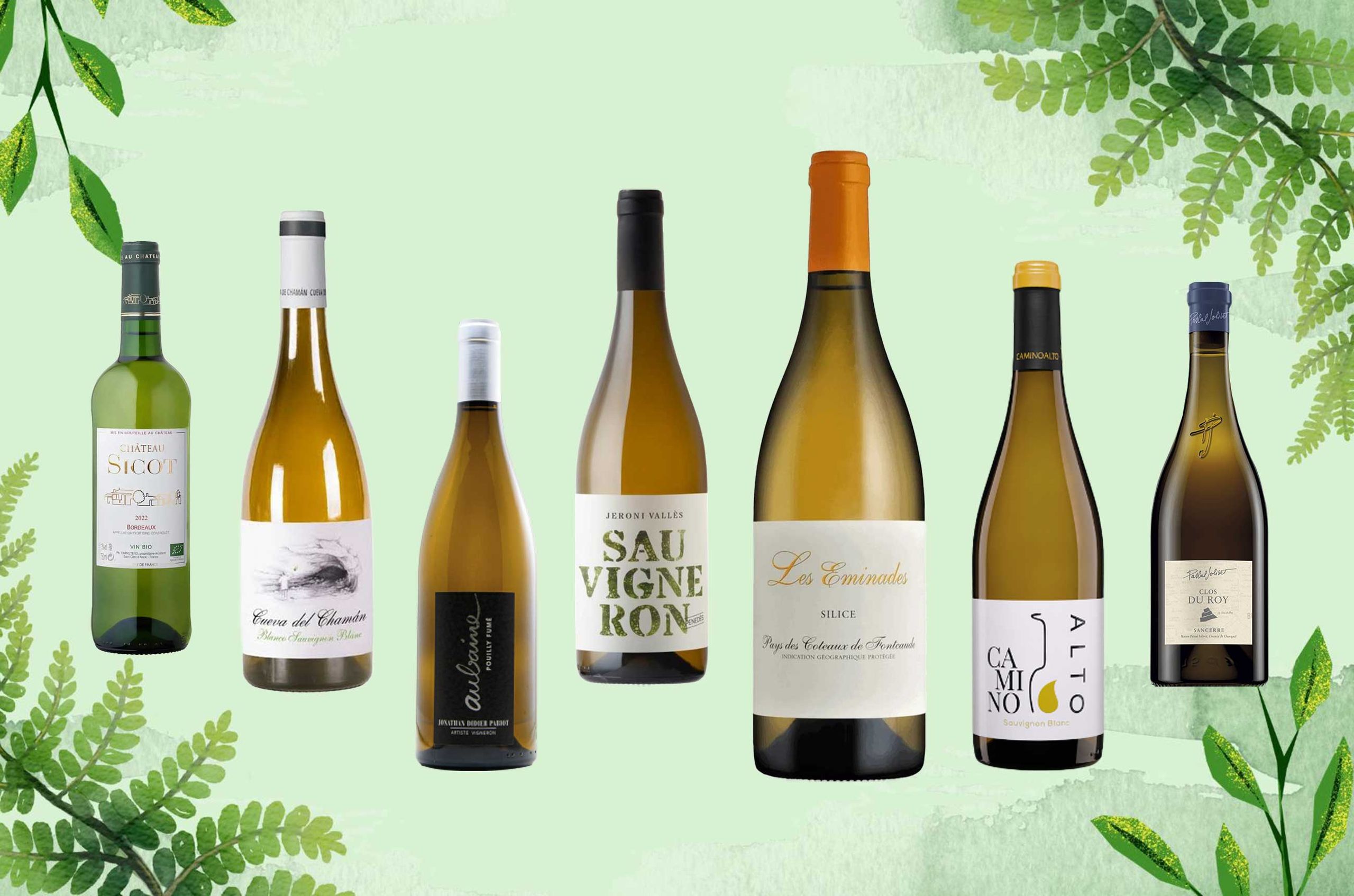
Either way, here are seven delicious organic bottles to satisfy the Sauvignon-seekers this summer – pickle optional, but not advised.
Seven Sauvignon for summer sipping

Champagne vs Prosecco: What’s the difference?
White grapes quiz: 12 questions to test your wine knowledge