


When you’ve lived in Australia for a while, you’ll eventually notice how many Italians – migrants or their descendants – you meet.
By then you’ll also have noticed how entrenched Italian culture, especially food and wine, is in the local landscape.
Following the major post-war waves of migration, Italy remains within the top 10 countries of birth among Australia’s overseas-born population, according to the latest Australian Bureau of Statistics data.
Many migrants from the post-war Italian diaspora chose to work in agriculture and several Australian wine regions – in particular the Riverina in New South Wales and King Valley in Victoria – boast numerous Italian families whose members have been making wine for generations.
Given this generational exposure and deep appreciation, it’s fascinating to see a small, adventurous group of Australians and New Zealanders travelling in the opposite direction.
I reached out to five of these mavericks, each of whom is carving a name for themselves in Italy, and often bringing a uniquely antipodean adventurous spirit to winemaking, shaking up centuries-old traditions along the way.
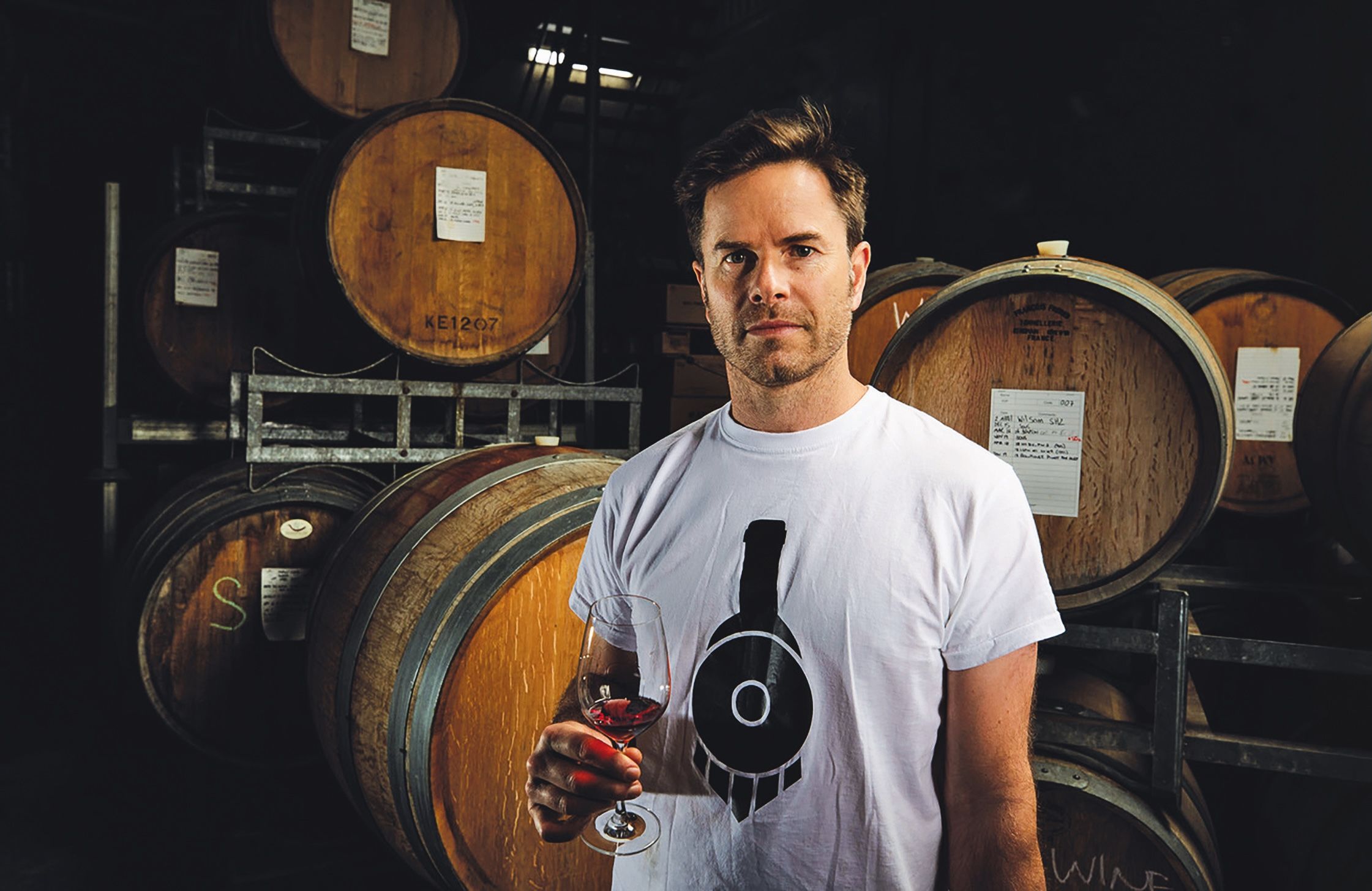
Jeffrey Chilcott
Tenute Cisa Asinari dei Marchesi di Grésy, Piedmont
After being part of the Kiwi hospitality scene during the 1980s, Jeffrey Chilcott moved to London to see some of the bands that had never made the long trip to New Zealand performing live.
After a three-month train trip around Europe, he ended up in Italy, where he caught the Nebbiolo bug, prompting him to knock on doors across the Langhe region until Celestino Vacca, the then president of Produttori del Barbaresco, offered him accommodation.
‘People said the Piemontesi may not be so open, but I found the opposite,’ Chilcott says.
In the early 1990s, he would meet with Giovanni Conterno and other old-guard producers to taste local and international wines.
‘New Zealand Sauvignon Blanc was alien to them as a wine style, and they struggled to get their heads around the overtly herbaceous and pungent nature,’ he says.
Chilcott later joined the historic Marchesi di Grésy. ‘I’m the cellar master at Marchesi and I do some travelling for them,’ he says. ‘I’m very close with the family and everyone else in the region.’
Considered one of Piedmont’s top producers, Marchesi di Grésy is renowned for a style rooted in tradition but ‘open to technology’.
Among its 35ha of vineyards, spread across the Langhe and Monferrato, is the monopole Martinenga, owned since 1797 and the jewel in the estate’s crown.
Considered a human encyclopaedia of vintages, Chilcott has witnessed the rise of the modernists, influencing his approach to Nebbiolo.
While he believes the variety demands patience, he acknowledges that incremental fine-tuning – particularly in tannin management and winery hygiene – has opened Barolo and Barbaresco to international audiences.
‘You know Campari? It has that dolce-amaro – bittersweet – quality, intrinsic to a lot of Italian food, and people,’ Chilcott says.
‘In the old days, Nebbiolo wasn’t always harmonious – the dolce [the fruit quality] was not always in harmony with the amaro [the tannins, which could dominate and require significant time to integrate].’
David Fletcher
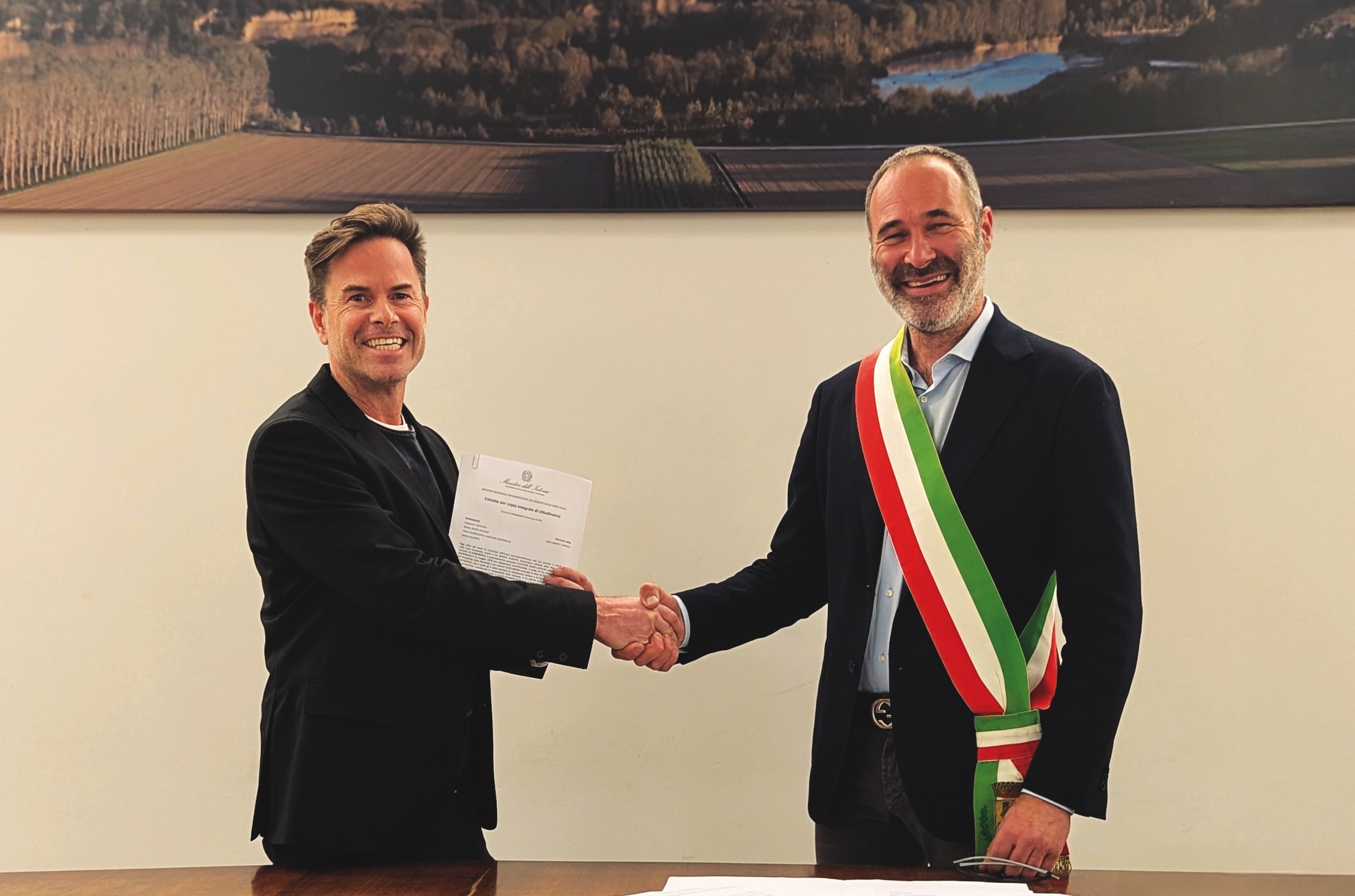
Fletcher Wines, Piedmont
Born in Adelaide and now an Italian citizen, David Fletcher has always had itchy feet. He was working as a winemaker in Victoria, focused on Chardonnay and Pinot Noir, when he first discovered Nebbiolo at a Barolo tasting – the wines stopped him in his tracks.
‘I jumped on a plane a year later to work the 2007 harvest at Ceretto, in the Langhe,’ he says. ‘I wanted to learn everything about Nebbiolo. I thought I might take that knowledge back to Australia – which I did to some extent – but I also fell in love with Italy.’
Fletcher founded his own label in 2009, initially buying grapes from Barolo and Barbaresco, and working out of other producers’ facilities.
It wasn’t until 2012, when he started working full-time as winemaker for Ceretto and stopped dividing his time between Australia and Italy, that he was able to base himself in the latter and fully focus on growing his label locally.
The project began modestly, with wines sold mainly in Australia. For sommeliers there it was exciting to pour a Barbaresco made by an Australian; for the people back in Piedmont, acceptance took longer.
‘There are Barolo families older than me and you put together,’ he says. ‘In Langhe, it’s a very hands-on, relationship-based business. In Australia, you just pick up the phone and someone will do things for you.’
The turning point came in 2015 with the purchase of the building that would become the winery – the dilapidated Babaresco train station, uniquely positioned in a valley surrounded by top-quality vineyards.
‘One morning I walked into the local café and a few pensioners came up to me, patting me on the back and saying I’d done something good for the community.’
Today, Fletcher farms 5.5ha organically, while also making Nebbiolo in Australia under the label of Fletcher, The Minion.
He uses open fermentations, with fully destemmed fruit, extending the ageing beyond minimum requirements in old barriques.
By ‘deconstructing the tradition’, Fletcher has developed a nuanced understanding of the territory.
These days, the only thing he really misses about Australia is his family, though he’s happy to be growing his own in a country where family remains at the heart of everything.
Zoe Johnson
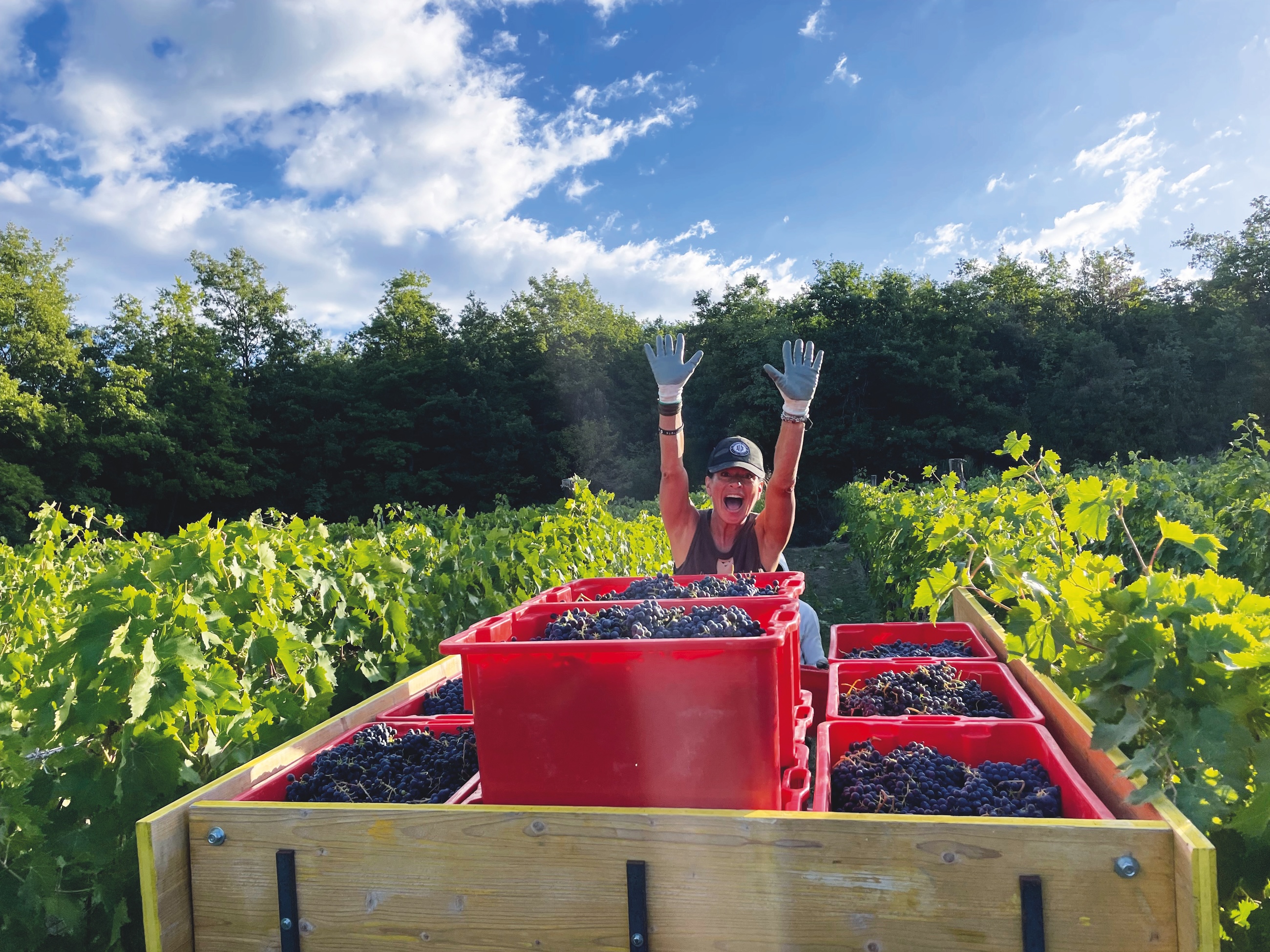
JG Benda, Montalcino, Tuscany
A Sydney-based food and wine journalist with a British passport, Zoe Johnson first bridged the gap with Italy from afar, working in PR for Emilia-Romagna-based kitchen appliance company Smeg and Barilla, the world’s largest pasta producer.
In 2014, she was sent to Venice to assist Australian architects at the Biennale exhibition.
‘From there I decided to stay,’ she says. ‘I promised my dad I would come home after one year, but I never did – it’s still a problem.’
Her path into wine came almost by chance, at a moment when she was considering returning home as she approached 50.
‘I met John [Benda], my partner; he had previously worked in banking and finance in London, and had just bought some land here in Montalcino,’ she says. ‘The 2021 was our first vintage together.’
Though neither comes from a winemaking background, both share a deep love of Italian food and wine. Their 2ha sit at around 550m, higher than many local sites. The couple do everything together, from working in the vineyard to bottling.
The dry-farmed vineyards are certified organic; in the cellar, the approach is firmly minimal intervention, with no temperature control.
They look after distribution and direct-to-consumer events themselves. They only receive occasional guidance from a microbiologist from the University of Florence.
‘We are pruning now; my hand is very sore – I think I have arthritis from using normal cutters. But we’re so humbled,’ Johnson says.
‘I’m staying in Tuscany because if you find a purpose, it doesn’t matter where you are. And I found everything all in one place – the person I love, the job I love and the land I love.’
Trish Nelson
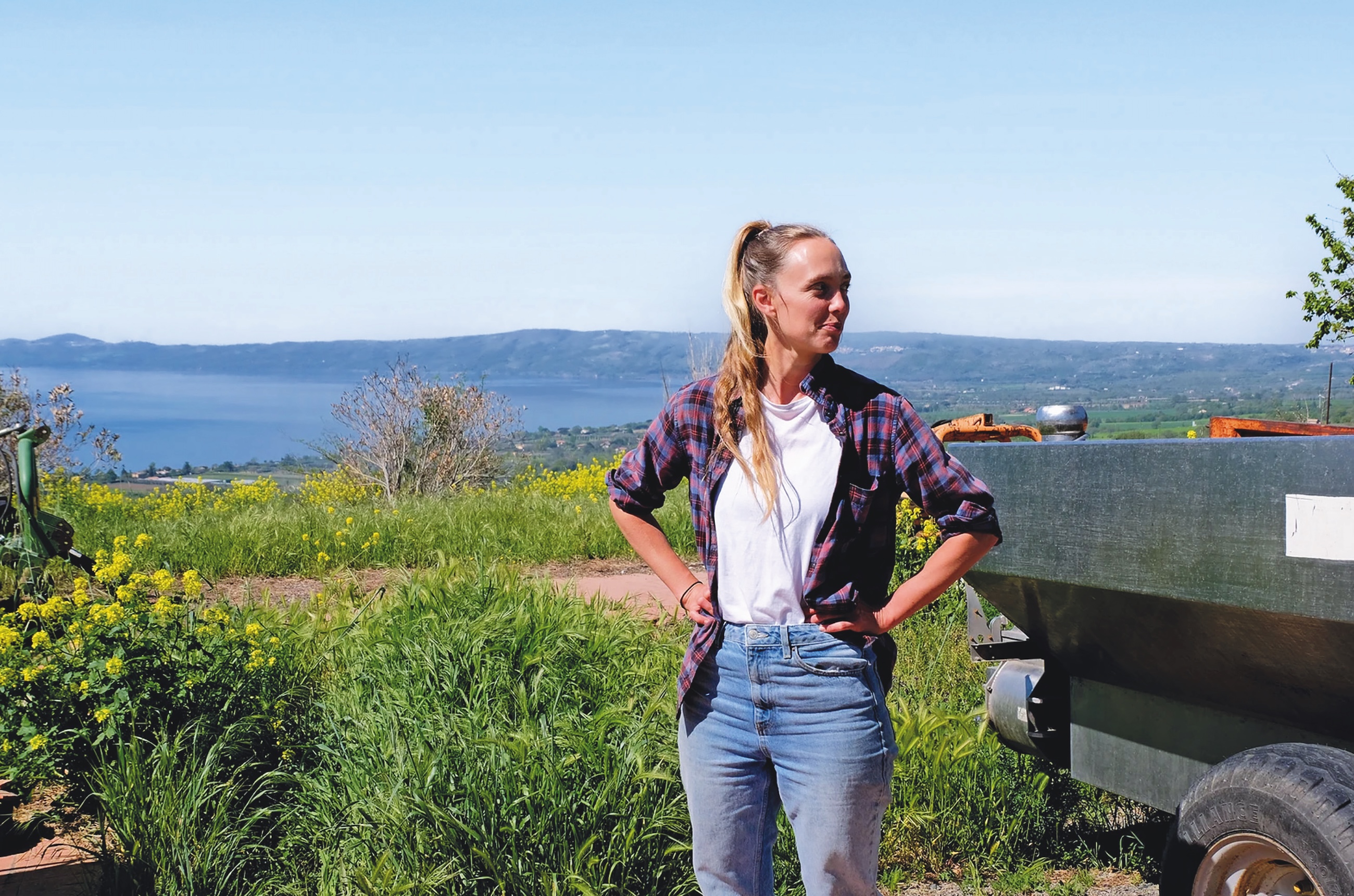
Gazzetta Wines, Lazio
A globetrotter from birth, Trish Nelson changed countries every five years, only arriving in Australia at age 15. Italy took a little longer.
‘I was working in Hong Kong in architectural design and got really interested in sustainable agriculture,’ she says.
‘I then moved back to Sydney and met Giorgio de Maria, sommelier at Berta and natural wine bar 121 BC.’ De Maria’s contagious passion for natural wine proved decisive.
When Nelson travelled to Italy to pursue a master’s degree in sustainable agriculture, she visited many of the producers whose wines had first inspired her in Australia.
An invitation to visit Cantina Giardino in Campania turned into a year and a half there, working in the vineyard and winery. This was followed by stints in viticulture and winemaking at Ajola in Orvieto and Le Coste, on lake Bolsena in northern Lazio, Europe’s largest volcanic lake.
It was there, two hours north of Rome, that she found her base in 2017: a small house and a run-down vineyard above the town, overlooking the lake.
The Gazzetta natural wines – made from organically farmed Procanico, Ansonica, Malvasia, Trebbiano Giallo, Aleatico, Sangiovese and Merlot grapes, among others – are fermented spontaneously, and made without added sulphur.
To stabilise the wines for export – including to de Maria, her Australian distributor – Nelson relies on extended maceration.
‘The tannins are natural preservatives,’ she explains, ‘and if you’re not adding anything and the pH of the wine is high – which it is here, given the volcanic soils – a few days of maceration helps.’
While awaiting Italian citizenship, Nelson admits that life isn’t a bed of roses.
‘It’s beautiful that tradition and regionality are so strong here,’ she says, ‘but as a foreigner, sometimes you feel like a fish out of water.’
Anna Martens
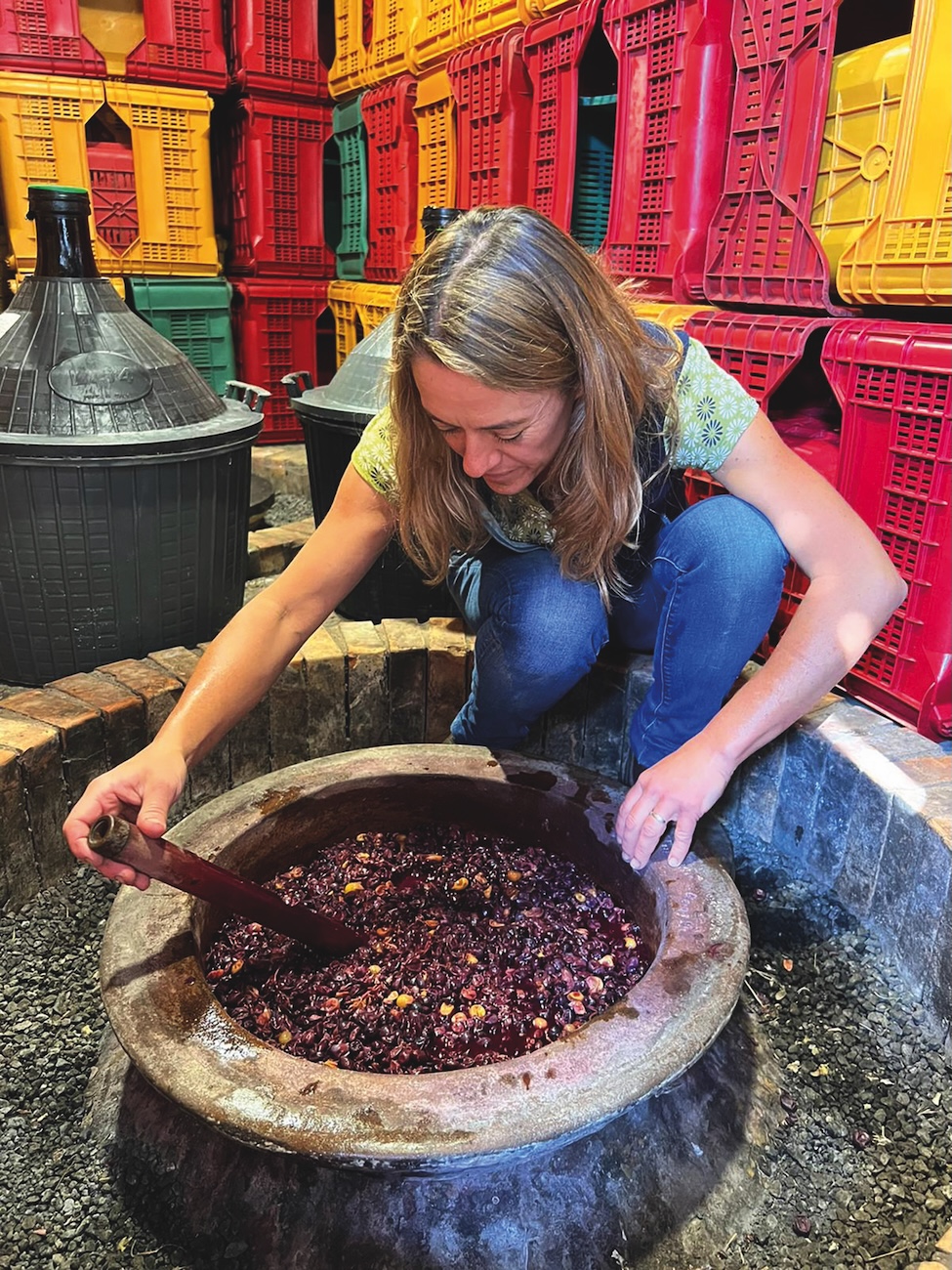
Vino di Anna, Etna
Having begun your career in microbiology at Petaluma in the Adelaide Hills in 1993 and enrolled in the Master of Wine programme six years later, your trajectory might seem set on a prestigious, if conventional, path.
That was certainly the case for Anna Martens, who, in 2004, was offered the position of assistant winemaker at the cult Tuscan estate Ornellaia, where she had previously worked, during the 2001 vintage, in the laboratory.
However, a chance encounter that year with Eric Narioo – founder of UK importer Les Caves de Pyrene and a key figure in the natural wine scene (and now Martens’ husband) – redirected her path to Sicily.
‘Etna was very different back in 2007,’ Martens says. ‘I was working for Andrea Franchetti at Passopisciaro. A few cult names from that versante [‘slope’] were on the rise, like Girolamo Russo and Alberto Graci.’
Martens had already been exposed to natural wine producers through Narioo, which convinced her to adopt a low-intervention approach.
The first Vino di Anna red, 95% Nerello Mascalese, 5% Nerello Capuccio (co-planted), was made in 2008.
‘Until that time, I’d always known that if something didn’t work out, I could add sulphur, enzymes, or filter everything,’ she says.
‘We made our first wine by literally putting whole bunches, with no sulphur, into two mastelloni [‘wine tubs’]. There was so much energy in the wine! Producers told us we were crazy, while to the older locals it was reminiscent of their family wine.’
Now splitting her time between London and the village of Solicchiata, on the northern slope of Etna, Martens says that returning to Sicily always resets her.
‘Every time I land in Catania, I take off my watch, drive with an Italian flair up to the winery, and soak in the luminosity of the place,’ she says.
Martens attributes a profound shift in both her approach to production and her lifestyle to what she has learned on Etna, through others and through the terroir itself.
‘I’ve been asked why I used to rush the wines,’ she says. ‘Energetic as I am, when I get to the winery, the surroundings ground me.’
