The world’s newest grape variety is, paradoxically, centuries old.
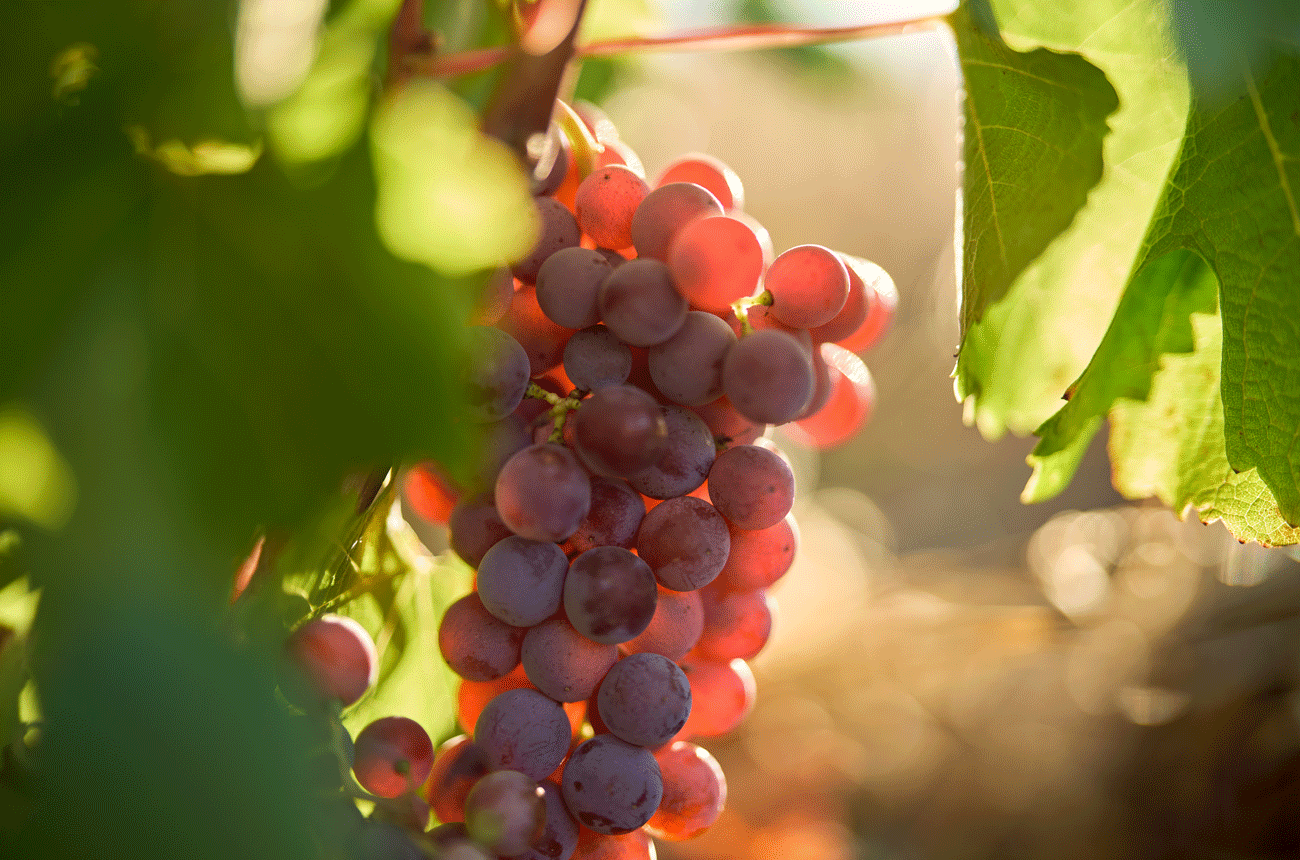
Sémillon Gris, a true Cape original, has been formally recognised by the OIV, with South Africa designated as its country of origin.
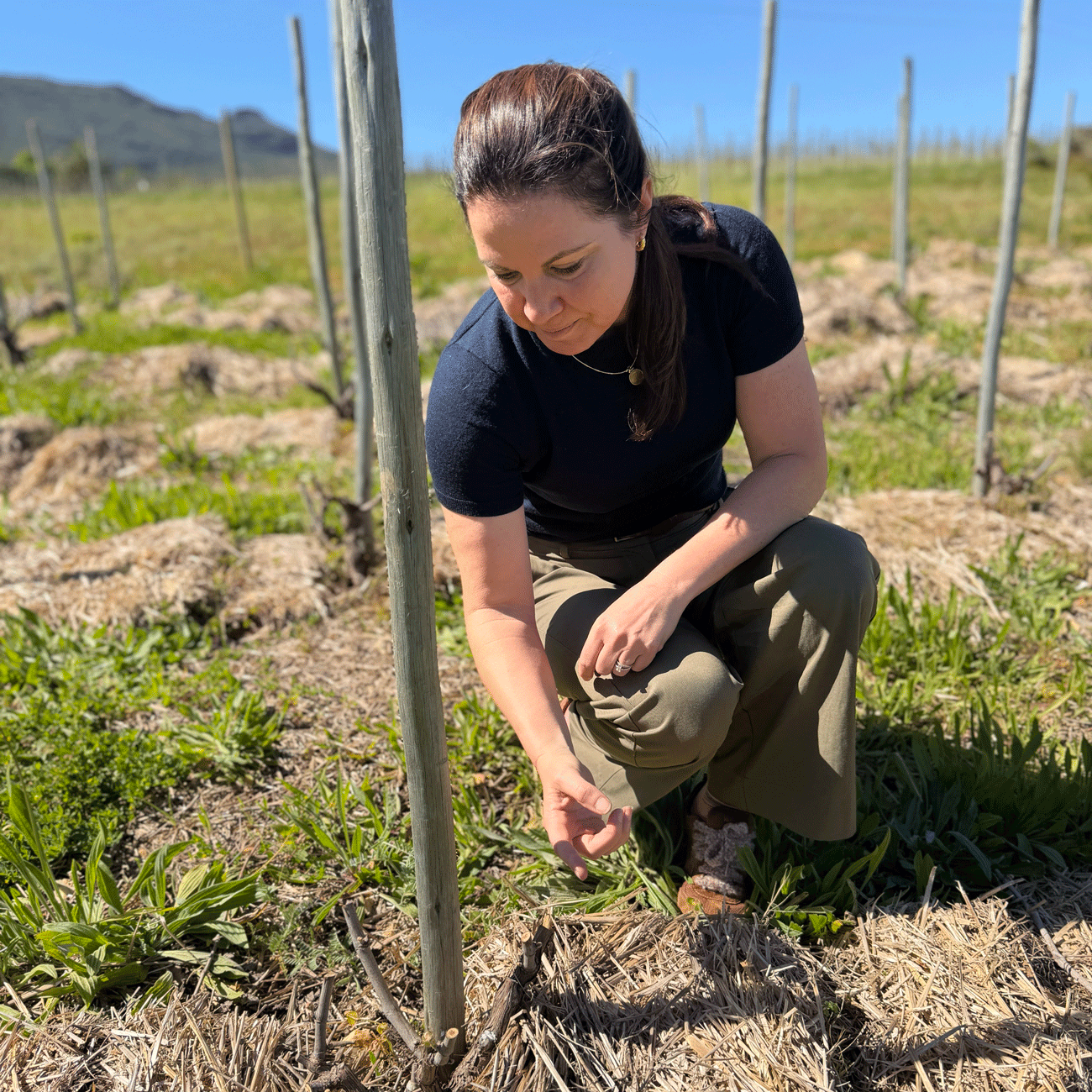
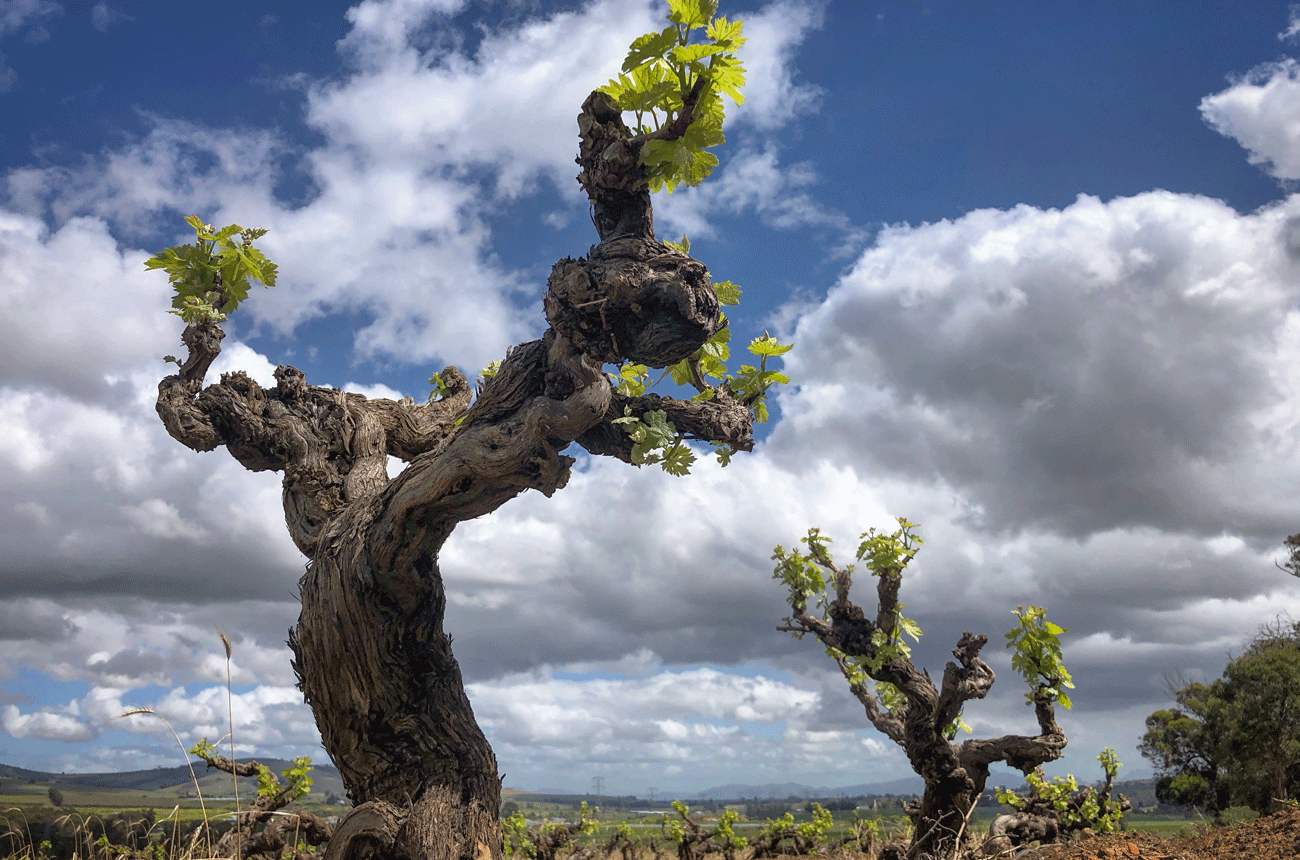
Andrea Mullineux crouches over a stok-by-paaltjie (échalas or vine-by-post) vine in the Sémillon Gris mother block at the Roundstone estate in Swartland.
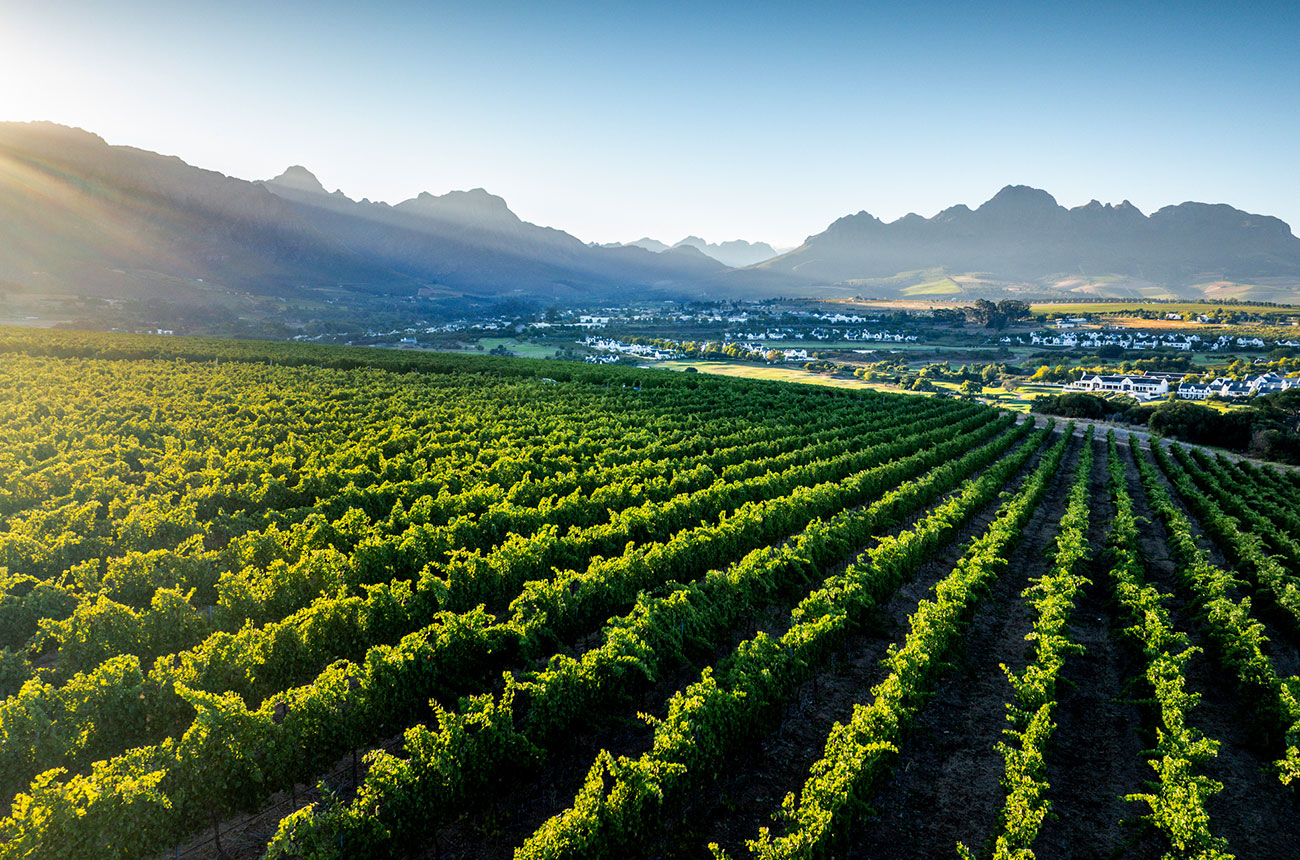
It’s early spring, the Riebeeksrivier slopes ripple behind her, splashed with yellow canola.
Rich in shale, schist and underground water, the ward is often greener than the rest of the Swartland.
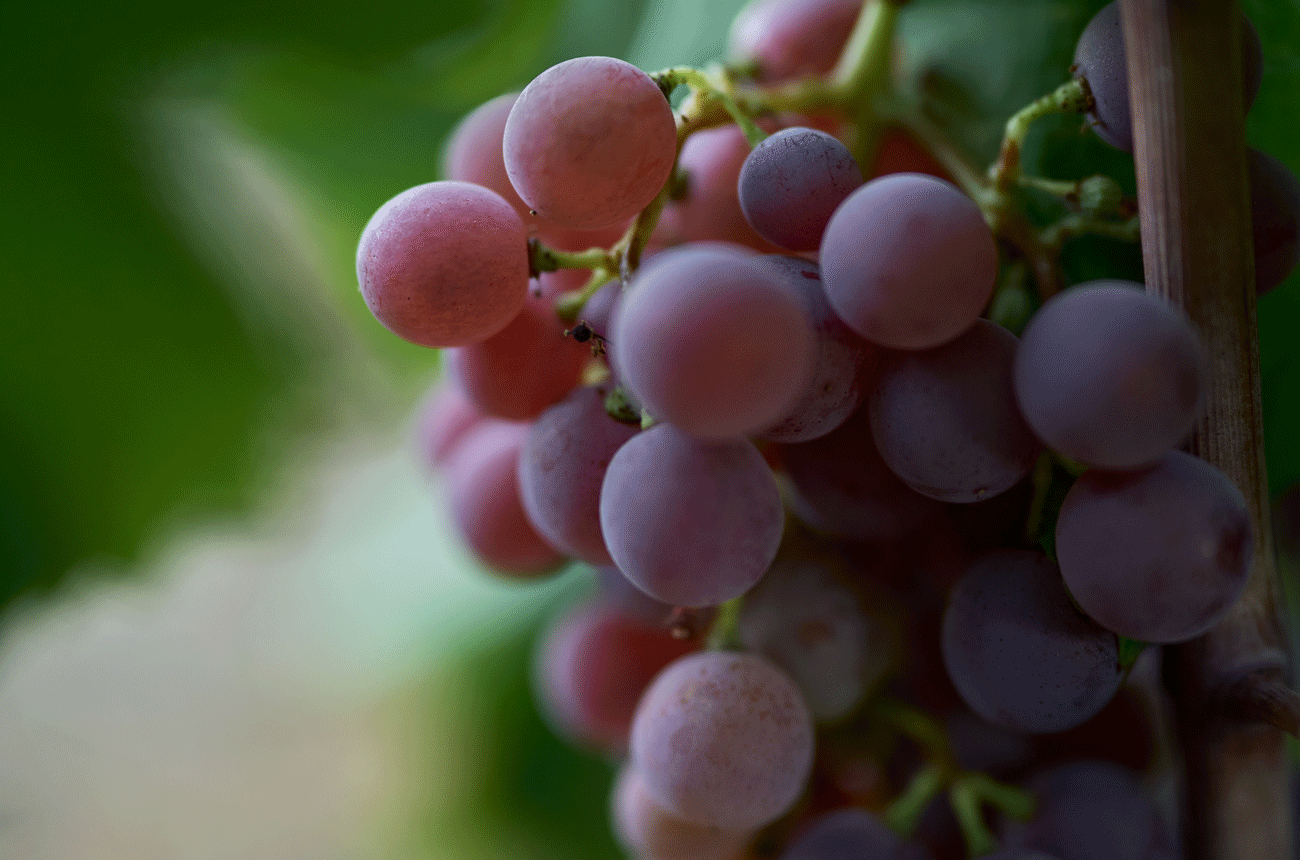
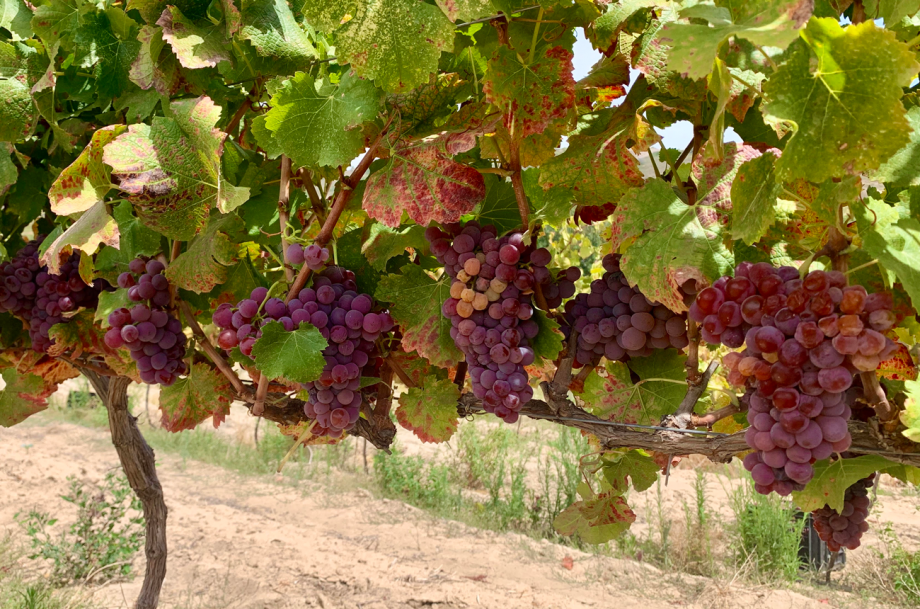
‘Sémillon Gris is part of the Cape’s viticultural DNA,’ says Andrea. Though subject to apocryphal ruminating, what we do know for sure is that the grape is a naturally occurring pink-skinned mutation of Sémillon.
And that it is largely unique to South Africa. Anecdotally vineyards are said to exist in Australia and California, and possibly Bordeaux, but none officially registered.
Championing Sémillon Gris
Founded by Andrea and Chris Mullineux, Mullineux & Leeu Family Wines incorporates Mullineux at Roundstone as well as Franschhoek-based Leeu Passant.
Andrea heads winemaking and viticulture, while Chris runs the ‘entire business side of things’.
For the past 14 years they’ve been advocating for the formal recognition of the historic Cape grape.
In 2012 cuttings from a 1960 Paardeberg vineyard underwent in-vitro thermotherapy to eliminate pathogens, followed by propagation, evaluation and certification.
This culminated in the mother block in 2022 – and with it healthy, certified material now available to growers worldwide.
Making things official proved complicated as there was no roadmap. Unlike imported grapes, which enter through an established quarantine process, the Mullineuxs were effectively starting from scratch, while the Department of Agriculture and Wine and Spirit Board developed protocols alongside them.
As Andrea puts it: ‘There was no manual.’
A grape of mystery
South Africa now has two grape varieties it can claim as its own: Pinotage and Sémillon Gris.
While Pinotage was crossed intentionally, Sémillon Gris emerged spontaneously. That, for Andrea, makes it particularly significant, but also something of a mystery.
No one knows what triggered the mutation in the first place.
To this end a department at Stellenbosch University is stress-testing cuttings, manipulating soil pH, UV and temperature and looking for genetic markers.
They’ve already answered some questions.
‘One was whether the colour was caused by virus,’ says Andrea. In fact, virus-free vines produce the darkest grapes.
They’ve also established that it’s a one-way mutation: Sémillon Gris doesn’t revert to blanc when propagated, nor does it need to be an old vine.
One theory is that the gris is a kind of ‘sunblock’ for Sémillon, which originally hails from the much cooler climate of Bordeaux.
Planting the seed
So how did the fascination begin for her? When Andrea joined the Cape Winemakers Guild (CWG) in 2012, a fellow winemaker suggested she make a bigger, more heavily oaked version of her Syrah for the auction.
‘That just didn’t sound like me. I’m more of a nerd.’
Sémillon Gris has been recorded in South Africa since the 1800s.
‘That’s significant. I thought: “How can we find some of this?”’ she says.
Through the Old Vine Project, she discovered the 1960-planted Paardeberg vineyard that would make a wine called The Gris.
A gris history
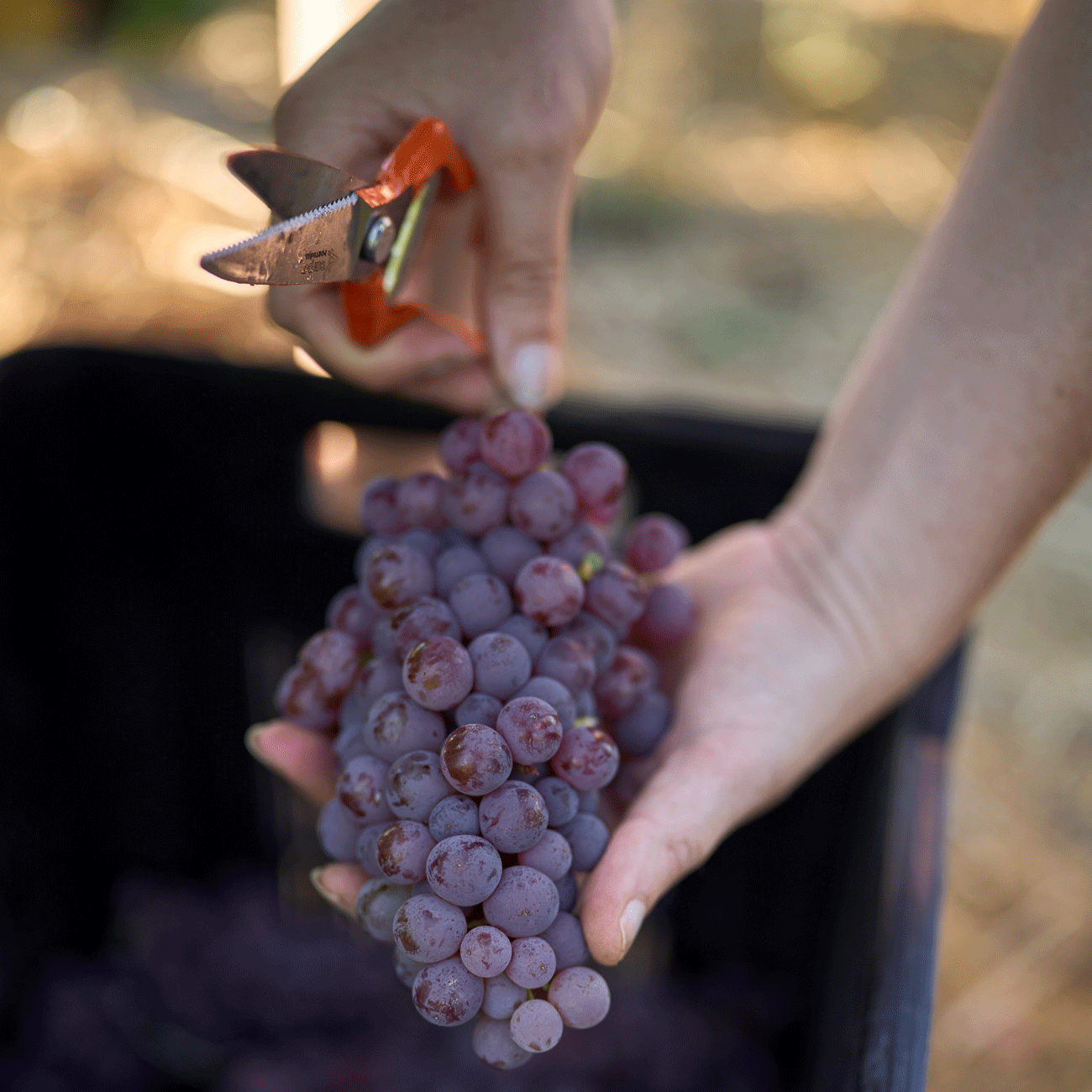
Sémillon has been in the Cape since the very beginning of its winemaking history; it’s thought to have arrived with Jan van Riebeeck in the 1650s.
It was so common it was simply referred to as groendruif (greengrape). In 1822 it accounted for 93% of the vineyards, growing from around one million vines in 1795 to 22m.
Both white and gris were commonplace, and, originally, not really seen as distinct from one another.
The two were interplanted, harvested and crushed together, while other evidence suggests that rooi groendruif aka ‘red greengrape’ may have been more prevalent than the white.
Then came phylloxera, and with it goodbye to groendruif. By 1979 Sémillon accounted for just 3.4% of the national vineyard, with Gris not even referenced.
Today there are some 873.74ha of Sémillon, including Gris, which will be reported on separately from 2027.
The survivor
Yet it survived, like so many jewels hidden among old white vineyards. Eben Sadie’s ’T Voetpad in the northern Swartland is a notable example.
Dating to 1887 it’s South Africa’s oldest ungrafted field blend.
There are also several examples in the grape’s spiritual home of Franschhoek, including La Colline, planted in 1936, Rickety Bridge in 1905 and Eikehof in 1902.
Its survival among these veterans fed the myth that the mutation was an old-vine phenomenon.
However in 2013, viticulturist Franziska Wickens proved the theory incorrect by planting a new vineyard propagated from rooigroen, also the name of a Swerwer wine made by her husband, Jasper Wickens.
Tasting Sémillon Gris
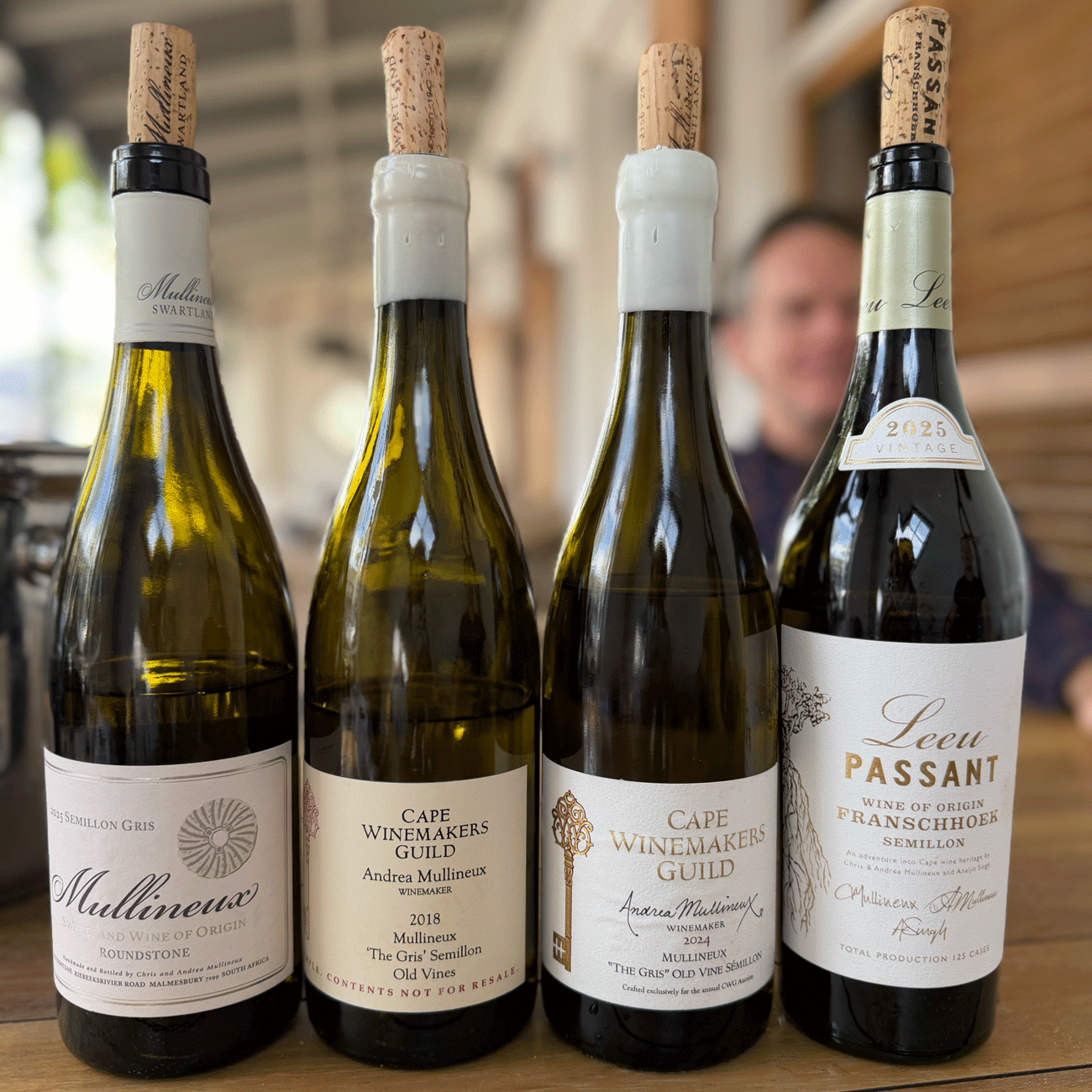
Back in the present, it’s now time to taste the wine from Roundstone’s mother block. We head to Paarl, meeting Chris for lunch at winemaker haunt, Noop.
Andrea pours the 2018 and 2024 vintages of The Gris, first made for the CWG in 2013 from the old Paardeberg vineyard; the maiden Roundstone Sémillon Gris (vintage 2025); and as a counterpoint, the Leeu Passant Sémillon 2025, from a dry-farmed Franschhoek Sémillon blanc vineyard planted in 1963.
Andrea points out the distinction between Sémillon Gris grown on Roundstone’s schist and the Paardeberg’s granite-derived soils.
‘On schist you hit the ground running with quality,’ she says. ‘Granite soil is much easier to establish, but you have to wait a little longer for the same level of character.’
For the time being production from the Roundstone mother block will remain small, with fruit either going into the farm’s white blend, the Roundstone Blanc, as well as for a varietal wine for the CWG.
Buttery kingklip fish is served, its large, firm flakes balm with the gris wines. It’s something of a coming-out party.
After centuries of hiding in plain sight, Sémillon Gris finally has papers of its own. And, as Andrea points out, its claim to South Africa is unusually profound.
‘Pinotage was created here, which is incredible, but Sémillon Gris created itself. It just happened.’
Five Sémillon Gris to try
Get to know South Africa’s old vines in six wines
Semillon Gris: South Africa’s old-vine oddity