


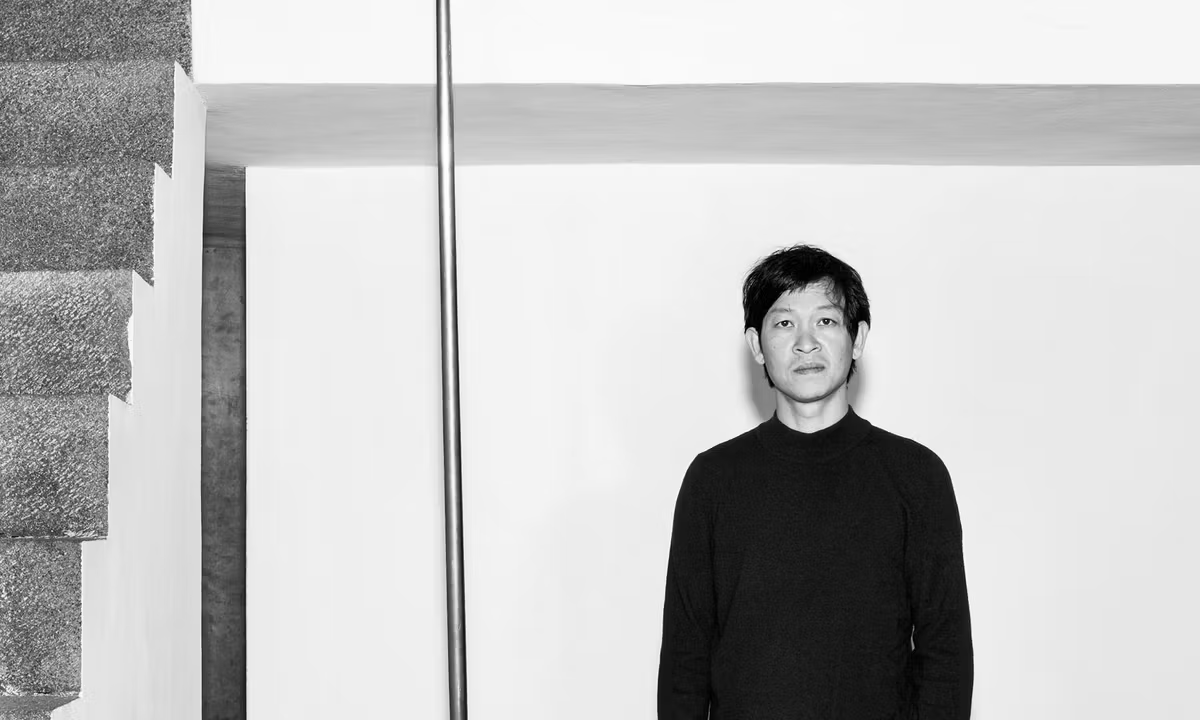
Danh Vo was born in 1975 in Bà Rja, Vietnam and raised in Denmark. He lives and works between Germany, where he has a studio in Güldenhof, 80km outside Berlin, and Mexico City. His art is often founded in personal experiences and relationships, but alludes to wider social and political conditions and structures, both present and historical.
The way he reflects on his autobiography is distinctive: his art is embedded in his experience as a Vietnamese immigrant to Europe as a child and queer identity, for instance, but his collaborative practice often stems from coincidences or serendipitous occurrences in daily life.
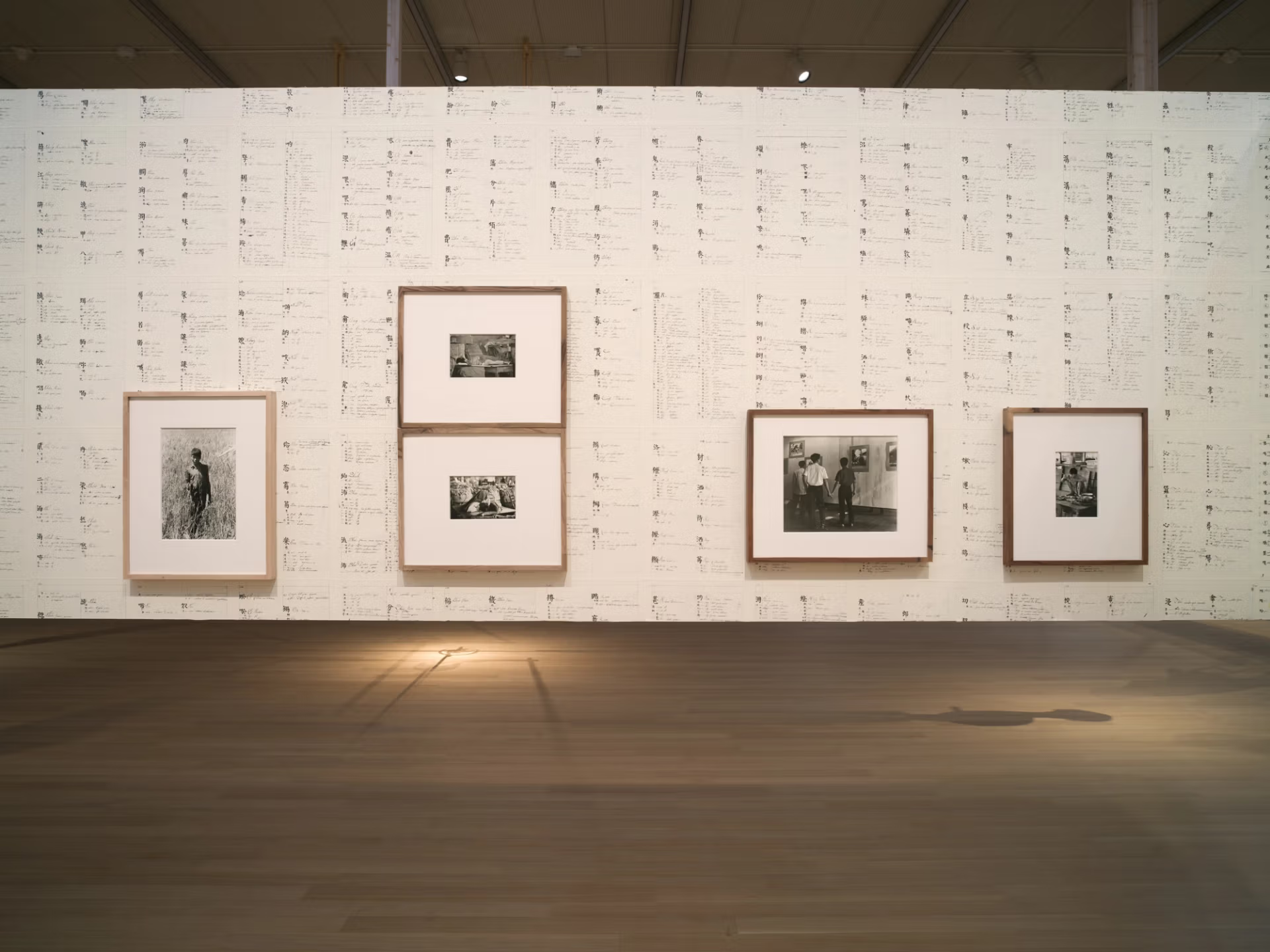
Installation view of Danh Vo — πνεῦμα (Ἔλισσα) at the Stedelijk Museum in Amsterdam Photo: Nick Ash
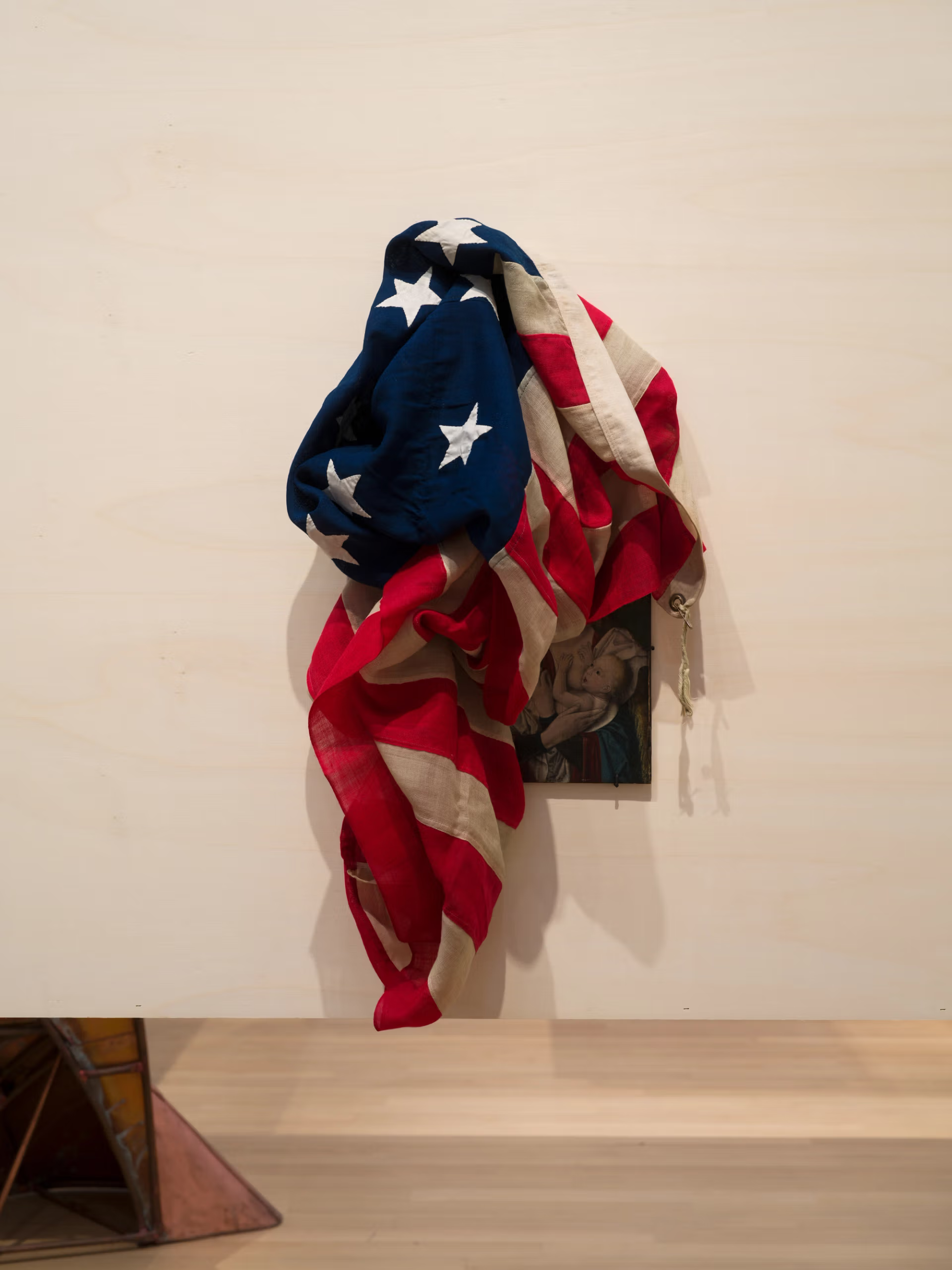
Danh uses found objects of different registers, from household items to historic religious sculptures, as well as archival images and texts, and brings them into dynamic relationships, in which the exhibition space and context is often a vital component. He also incorporates the work of other artists and designers into his installations, and his practice has been likened to that of a curator or archaeologist.
Installation view of Danh Vo — πνεῦμα (Ἔλισσα) at the Stedelijk Museum in Amsterdam Photo: Nick Ash
Ultimately, his vision is entirely his own, but by involving the thinking and making of others, he ensures that it resonates with discussion, providing more questions than answers. He reflects on his idea to set traps for himself through his art in order to question his desires, and how that relates to the viewer’s experience of his work. He discusses the balance between his studio life in Güldenhof and his use of the exhibition space as a studio to forge his installations.
Installation view of Danh Vo — πνεῦμα (Ἔλισσα) at the Stedelijk Museum in Amsterdam Photo: Nick Ash
He reflects on the influence of Felix Gonzalez-Torres and his writing on the work of Roni Horn, he discusses the many collaborations in his work, from that with the artist and writer Julie Ault to his project working with Martin Wong’s mother on the collection she built with her son. And he explains why William Friedkin’s The Exorcist (1973) has been the source for numerous works. Plus, he answers our usual questions, including the ultimate: what is art for?
Danh Vo: πνεῦμα (Ἔλισσα), Stedelijk Museum, Amsterdam, until 2 August; Danh Vo, White Cube, New York, 11 September-10 October
This podcast is sponsored by Bloomberg Connects, the arts and culture platform. Bloomberg Connects offers access to a vast range of international cultural organisations through a single click, with new guides being added regularly. They include several museums in which Danh Vo has had solo exhibitions, from the South London Gallery, to the Guggenheim New York, M+ in Hong Kong, and the National Museum of Art in Osaka. Explore Bloomberg Connects and you will find that the guide to the National Museum of Art features introductory videos to the museum’s collection, with curators exploring the works, and audio content focusing on seven key pieces. They include works by the great Japanese avant garde artist Jirō Takamatsu, by leading Modernist figures like Alexander Calder and Henry Moore, and a famous permanent piece in the museum, Yoshihiro Suda’s Tulip (2006)—a flower realised in painted wood that sits incongruously on a concrete column next to the museum’s escalators. The guide also has an extensive archive section, in which you can find information on Danh Vo’s exhibition at the museum in 2020, and follow the link to the exhibition website.
