


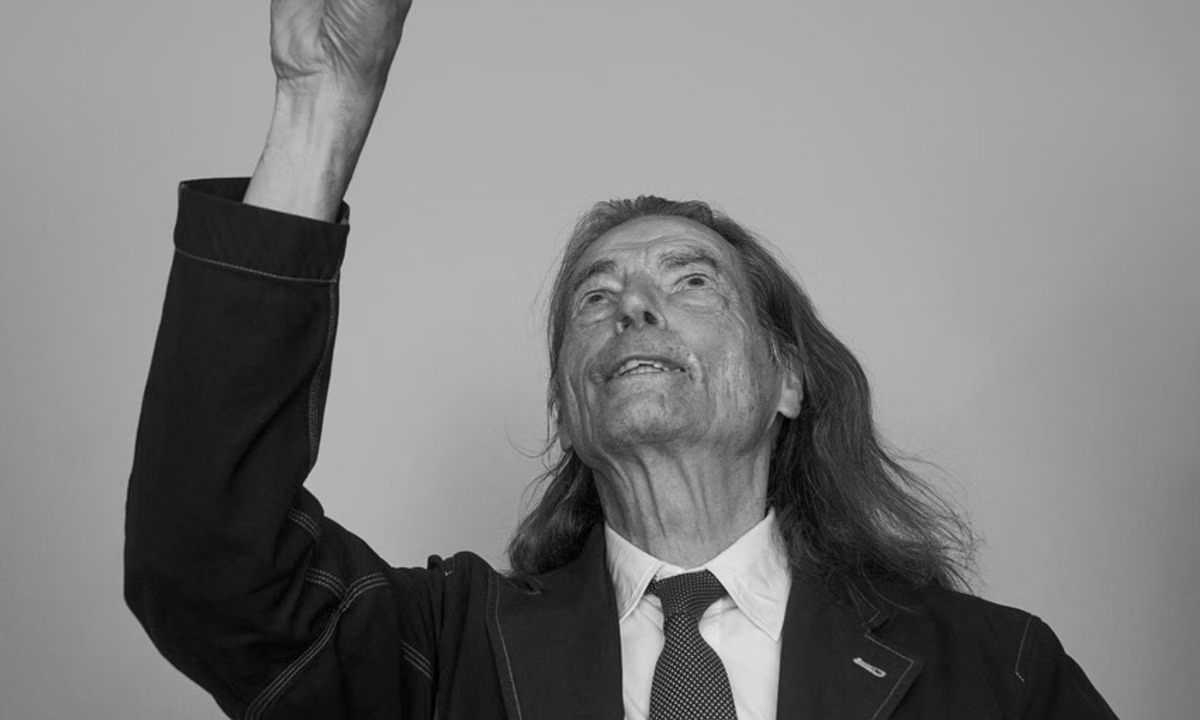
Richard Tuttle, who was born in 1941 in Rahway, New Jersey and grew up in nearby Roselle, lives today in New York, Abiquiú in New Mexico and Mount Desert in Maine. He combines elements of drawing, painting, sculpture, artist books, printmaking and textiles, often arranged in lyrical installations, yet does not settle in any one discipline or medium.
Richard Tuttle’s Compartmentalization (2008) Courtesy of Modern Art
Pushing and pulling between different forms and modes, and between two and three dimensions, Tuttle has developed a singular response to architecture, which is often activated in unexpected ways by the placement of the objects he makes and their arrangement in spatial compositions. And while the meaning of the works is often as elusive as their form, they offer poetic enticement for their audience through a delight in broad and often humble materiality and a fertile relationship with different forms of language.
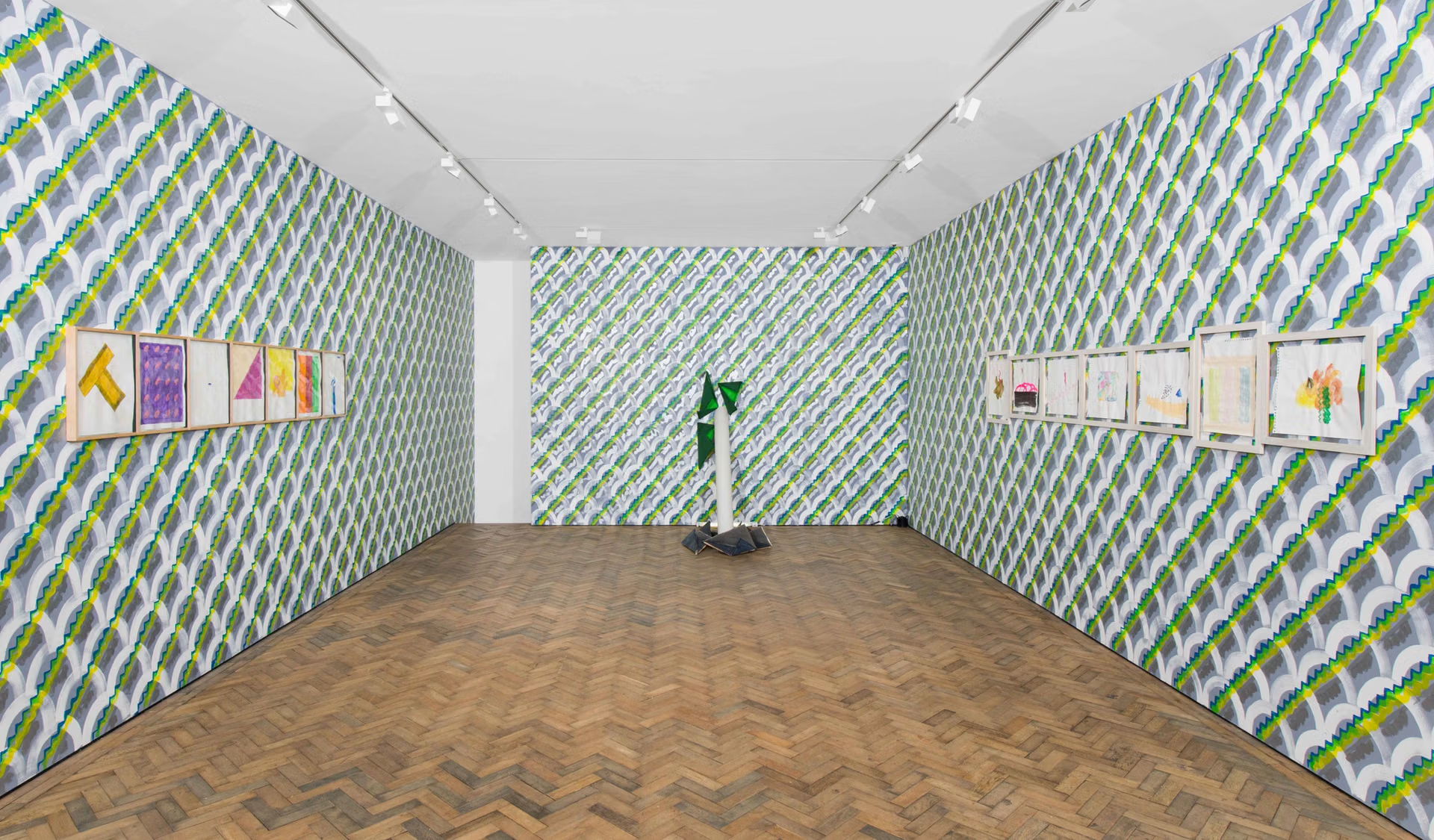
Installation view of Richard Tuttle’s Village V (2004) Courtesy of Modern Art
Tuttle is seen as a leading figure in Post-Minimalism and certainly contributed to the liberating approach to form, matter and content unleashed by that tendency from the 1960s. But any attempt to neatly categorise his output is profoundly inadequate and limiting. Experiencing his exhibitions, one feels part of a philosophical response to the world, a questioning of what it is to inhabit it and what it might mean to make art in it. As Tuttle himself said in 1975, “if the artist does a piece of real work and we see it, it’s as though we ourselves are doing it”.
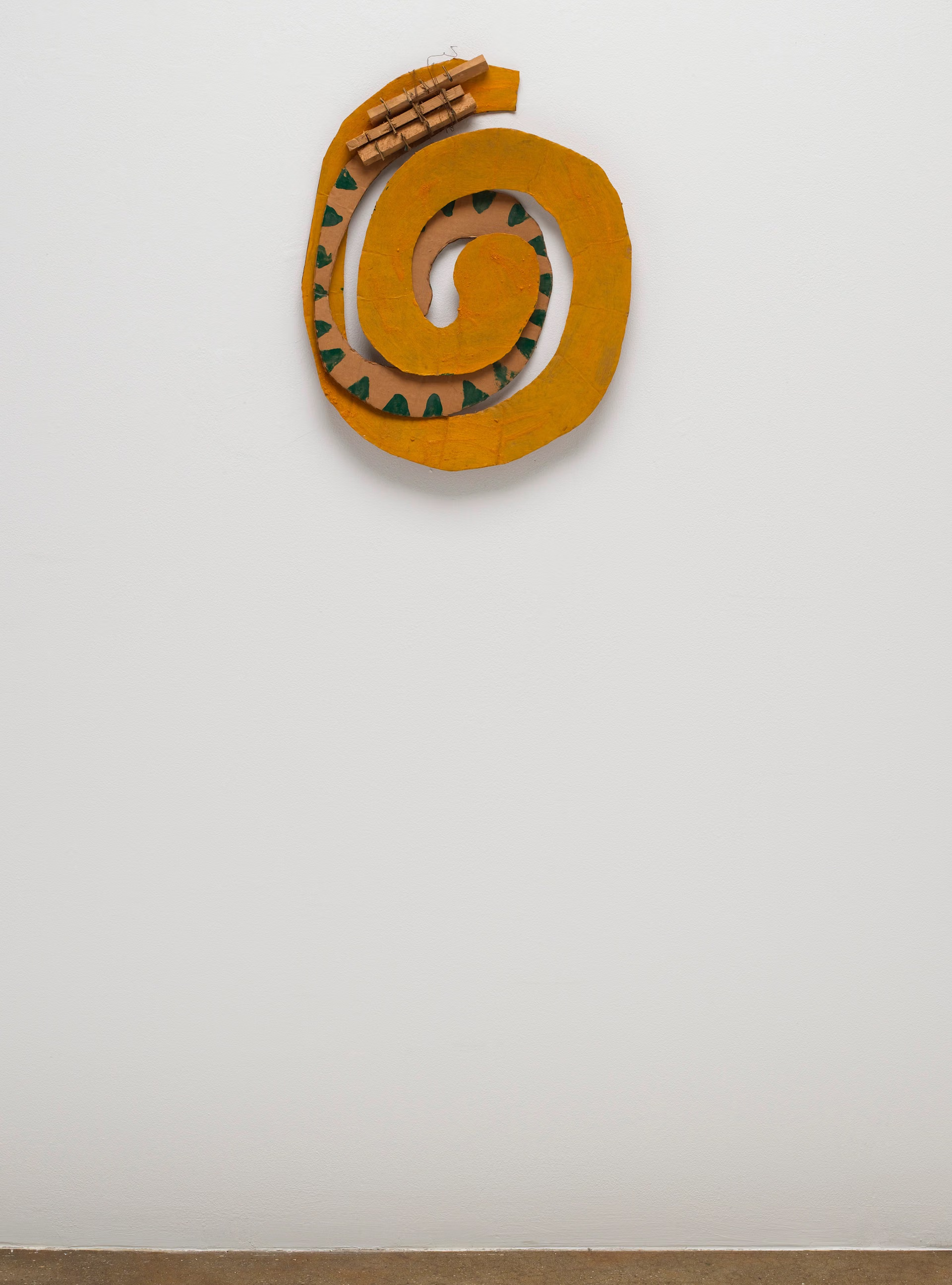
Richard Tuttle’s Tiger Tail (1983) Courtesy of Modern Art
On the podcast, Tuttle discusses the fundamental importance of drawing to all his work and how the line he uses “is not a pure line like most people would think. It’s actually the edge of something.” He reflects on art’s relationship with the viewer and community, and art’s role as a positive force in the world. He expresses his admiration for Van Eyck, for Nam June Paik, for his friend and mentor Agnes Martin, and for Philipp Otto Runge, the German colour-theorist and Romantic painter. He also discusses reading great works of literature in their original language and his love of architecture. He gives insight into life in the studio and answers our usual questions, including the ultimate: what is art for?
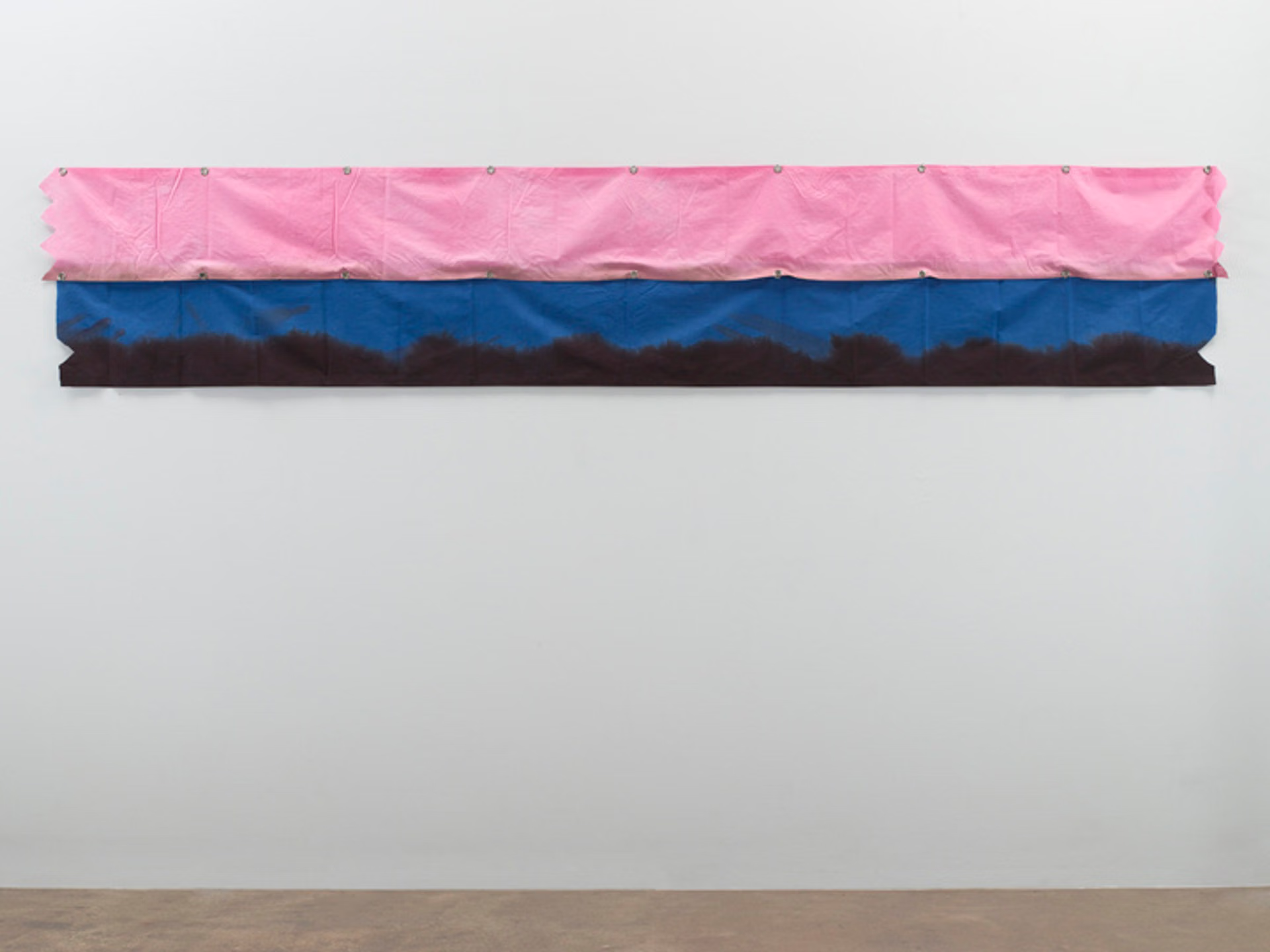
Richard Tuttle’s Walking on Air, C6 (2009) Courtesy of Modern Art
• Richard Tuttle: Half Light, now open and on long term view at Dia Beacon, Beacon, US; Richard Tuttle: Small Sculptures of the 1970s, Modern Art, Bennet Street, London, 3 September-3 October
This podcast is sponsored by Bloomberg Connects, the arts and culture platform. Bloomberg Connects offers access to a vast range of international cultural organisations through a single click, with new guides being added regularly. They include a host of museums and galleries that have held solo exhibitions of Richard Tuttle’s work, from the Whitechapel Gallery and Camden Art Centre in London, to the Whitney Museum of American Art and the Dia Art Foundation in New York. On the guide to the Dia Art Foundation, you can read about Richard’s exhibition at Dia Beacon that opened in July 2026, Half Light. Also on the guide are a wealth of presentations from Dia’s remarkable collection and exhibitions, including former guest on this podcast Renée Green’s show, The Equator Has Moved. You can also explore the other Dia sites, including Dia Chelsea, in whose section you can hear audio features on David Lamelas’s exhibition The Machine, which continues until 16 January 2027, and watch videos of Dia’s constellation of public sculptures and land art, including Walter De Maria’s The Lightning Field, Nancy Holt’s Sun Tunnels and Robert Smithson’s Spiral Jetty.
