







To receive Morning Links in your inbox every weekday, sign up for our Breakfast with ARTnews newsletter.
The Headlines
BLIND BLISS. A new sculpture has popped up in London’s Waterloo Place, bearing the signature of the elusive Banksy, reports the BBC. In Banksy’s style, the sculpture offers pointed political commentary on the state of the world. A man in a suit is seen marching confidently, right off a plinth, while holding a flag that completely covers his face, obstructing his vision. However, the artist, whose true identity is regularly unmasked in the media, had not confirmed he was behind the artwork by the time of writing. The sculpture was first spotted yesterday, near statues of Edward VII, Florence Nightingale, and the Crimean War Memorial.
BIENNALE HEAT. Italian Culture Minister Alessandro Giuli has ordered inspectors to the Venice Biennale headquarters, doubling down on a series of checks into the acceptance of Russia’s participation in the international art exhibition, La Stampa reports. Giuli also announced earlier that he will not attend the Biennale opening in protest of the Russian pavilion’s involvement in the event. Similar inspections have already been carried out, following news of Russia’s formal return to the Biennale for the first time since its invasion of Ukraine. But the latest administrative checks, amid intensifying scrutiny, come after Italian media revealed internal emails that were framed as evidence that the Biennale organizers had circumvented sanctions against Russia to facilitate Russia’s participation. Officials were reportedly tasked with acquiring additional, new documents related to the Russia Pavilion. Biennale leaders have strongly denied those accusations.
The Digest
Timm Ulrichs, the self-proclaimed “total artist” whose practice spanned body art, land art, collage, poetry, and light installations, has died at 86. [Monopol Magazine]
If New York Mayor Zohran Mamdani were to have met privately with King Charles, he “would probably encourage him to return the Koh-i-Noor Diamond,” he said, referring to the 105.6-carat diamond taken from the Punjab region when it was annexed by Britain. [Reuters]
Japanese sculptor Shigeo Toya, who emphasized what he called the “body of the gaze,” died in Tokyo at 78. [ArtAsiaPacific]
An intriguing example of how tastes in art evolve is highlighted in a new series of shows at the Prado in Madrid, spotlighting a former blockbuster José Aparicio painting, The Year of the Famine in Madrid (1818), which has returned to the museum after over 150 years of exile. [The Guardian]
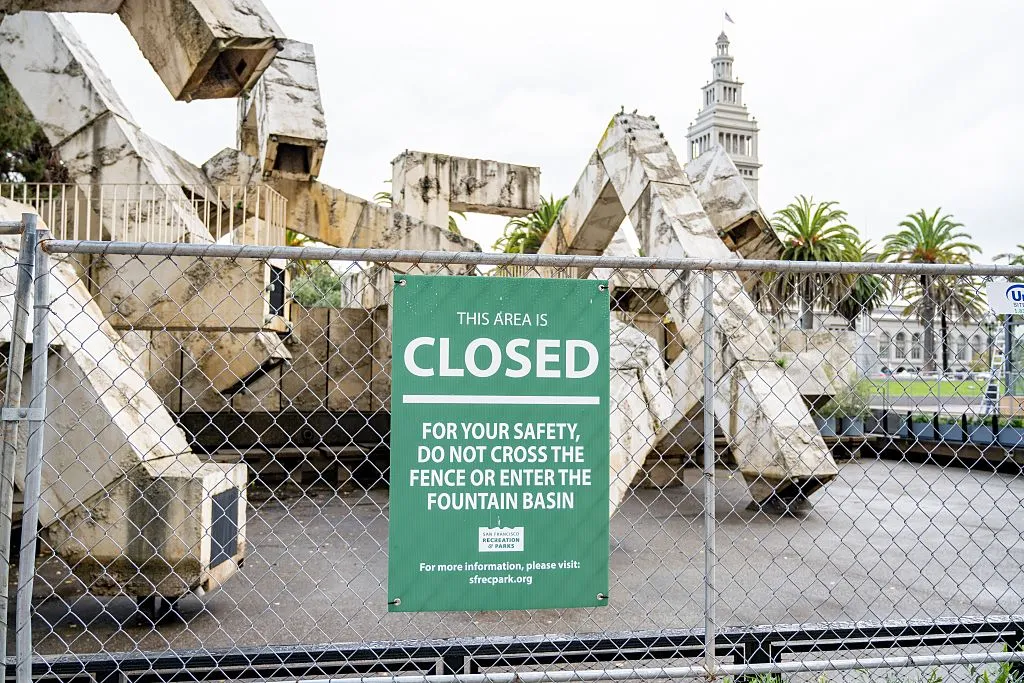
A new group called Friends of the Plaza has filed an appeal to block the dismantling of San Francisco’s Vaillancourt Fountain. [CBC]
“The United States is, in every respect, Italy’s closest ally in the fight against illicit trafficking of cultural property,” Italy’s culture minister said at an event celebrating their alliance against looted art. [The New York Times]
The Kicker
BUZZY BUCHAREST. “Can the ‘Little Paris of the East’ transform itself into a global arts player? Should it even aspire to?” That’s what Sammy Loren, the founding editor of LA’s On the Rag, asks in this latest piece for Cultured Magazine. Loren visited Bucharest in time for the fourth Romanian Art Dealers (RAD), a regional fair if there ever was one. He writes that the Balkan event “featuring galleries and artists I’ve hardly heard of, gives RAD its electric charge.” Added to this, with lower stakes than major international fairs, “galleries here can risk presenting a program that’s at least trying to say something,” he writes. Nevertheless, amid his whirlwind tour of the local scene, he senses a “tension” throughout his visit: “The less ‘provincial’ and more global Romania’s art scene becomes, the more it risks becoming like everything else.” For now, that possibility seems distant.


