


Loïc Gouzer has a new idea for how to sell art. It’s untested, but for him that’s part of the appeal.
On April 23, his auction app Fair Warning will roll out a new format called “No Warning.” The premise is simple and a little unnerving if you are used to buying via fine art auctions, but perhaps not if you’ve spent any time on eBay or Poshmark. To start, a work will appear for sale (with a price). You can either hit “purchase now” or submit a single offer. Then you wait. There is no bidding war, no incremental raises, and definitely no call from a specialist nudging you higher.
“I have no idea if it’s the stupidest idea in the world or a genius idea,” Gouzer told ARTnews in an interview. “It’s probably somewhere in the middle.”
That uncertainty is part of the pitch. Offers are binding for 72 hours. The highest one goes to the seller, who decides yes or no. Buyers are not told if they have been outbid, Gouzer said, as that kind of feedback would turn the whole thing back into an auction, exactly what he is trying to avoid. “To be successful you have to put your best foot forward,” Gouzer said.
If the work sells, it disappears. If it doesn’t, it will disappear anyway.
That vanishing act is central to the format. Gouzer said the idea grew out of conversations with sellers who want to avoid the paper trail that comes with traditional auctions, where prices and failures tend to circulate. For a “No Warning” sale, there is no public record unless someone chooses to make one. Buyers get the same discretion.
There is also a more personal motive. “Auctions are so stressful,” said Gouzer, who spent about eight years at Christie’s, rising to co-chairman of postwar and contemporary art. “I’m optimizing for my cortisol levels, which my doctor said were too high.”
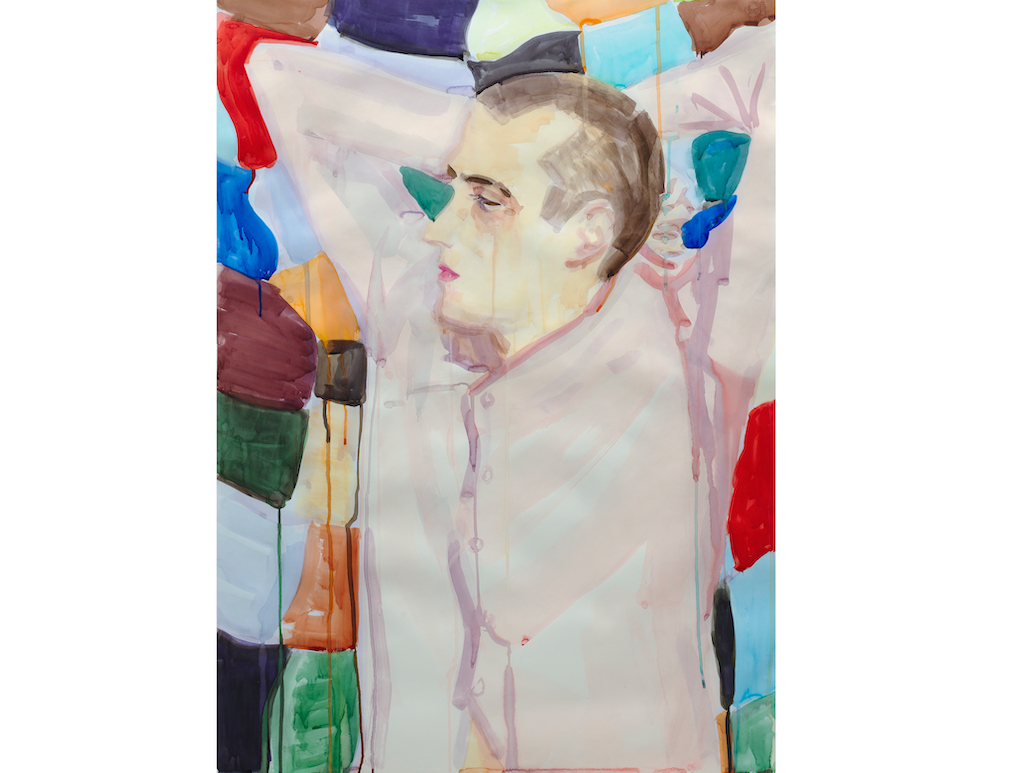
The first test case is a 1999 watercolor by Elizabeth Peyton, Daniel in Berlin, June 1999, priced at $400,000. Gouzer described it as one of the strongest works by the artist to come up for sale in some time. The only other Daniel from the series is in the collection of the Museum of Modern Art in New York. Starting off with a Peyton taps into Fair Warning’s own history, as the platform sold Peyton’s Blue Liam for $4.1 million in 2024, setting a record for the artist.
Gouzer said he does not have a fixed schedule for the initiative. For now, “No Warning” sales will sit alongside Fair Warning’s usual auctions, with a few works already in the pipeline.
In essence, “No Warning” takes away the most electric moment of an auction—that instant when a work is live and someone has to decide—and stretches it into a format where hesitation costs you the piece. No theater, no incremental drama, just a yes or no that you have to live with.
