






My Venice Biennale trip got off to a green start by taking the train from England to Italy. As well as being more environmentally friendly, it was also an infinitely more pleasant way to arrive: no snaking lines at passport control, no long trundle to the quayside for the crowded Alilaguna water bus, or haggling with an eye-wateringly pricey private water taxi. Instead, a magical, lagoon-skimming viaduct deposits you directly into the heart of the city where, once through the—frankly gorgeous—Fascist/Modernist 1930s Santa Lucia station building, you are bang on the Grand Canal where any boat of your choice awaits.
Yes, it takes longer—24 hours door to door from London, with changes in Paris and Stuttgart—but you can get work done, be treated to some great Franco-German views, see the Rhine, go through the Alps and (after a stopover bratwurst dinner and a surprisingly comfortable night in a cozy cabin) be deposited in Venice before 9am. The only snag is the expense: it costs about three times more than budget airlines. But that’s still not much more than a high-end air ticket and water taxi into town. Luckily I had a generous sponsor—thank you, Sam Talbot—but for the next Biennale if any green-inclined philanthropist(s) felt like chartering a Venice train for the sector’s foot soldiers, it would be much cheaper and way cleaner than hiring a private jet. (As well as setting a splendid example and helping to save the planet, just think of the kudos and goodwill such a gesture would accrue!)
Kouoh’s ‘earthly elements’
And so to the biennale itself. Much has been said—including by me, elsewhere (listen to The Week in Art Venice Biennale special)—about the politics and protests that dominated the opening of the 61st Venice Biennale. But it was also a Biennale that, more than any other I can recall, put environmental considerations front and centre.
In the statement accompanying her central exhibition In Minor Keys, the late Koyo Kouoh declared that she wanted to invite a “listening to the persistent signals of earth and life” and in doing so to foster a return to “the Earth, to our bodies and our senses.” She cited key themes of rest, growth and replenishment which encompassed such nurturing examples as back gardens and courtyards as well as “small islands, worlds amid oceans with distinct and endlessly rich ecosystems [and] social lives that are articulated within much larger political forms and ecological stakes.”
Theo Eshetu’s Garden of the Broken Hearted (2026), on show at the 61st International Art Exhibition – La Biennale di Venezia, In Minor Keys Photo: Marco Zorzanello, courtesy of La Biennale di Venezia
Kouoh’s foregrounding of “all earthly elements” was evident right from the very beginning of In Minor Keys with Otobong Nkanga’s rewilding of the façade of the Central Pavilion in the Giardini, cladding its slim white columns in local-made bricks bedecked with dangling planters and studded with insect boxes. Once inside, flora, fauna and the natural world proliferate throughout the both sites of Biennale’s main show, whether in the artist-shaman Célia Vasquez Yui’s menagerie of forest creatures made from the soil of the Peruvian Amazon; Theo Eshetu’s displaced and slowly rotating olive tree; or Uriel Orlow’s photographs of near extinct plants gathered and classified by colonial powers.
The artist-activist Linda Goode Bryant, who runs an urban farming initiative in New York, has planted a mini farm in the Giardini, growing Venetian vegetables as well as Kouoh’s favourite okra; while back in the Arsenale, Annalee Davis, who lives and works on the former plantation on Barbados where her family has resided for generations, delved into the legacies of Caribbean plantation economies with a multimedia installation that includes a herbarium sourced from plants gathered from her garden and a replica of a now extinct bird, the Eskimo Curlew.
But what for me was the most chilling environmental wake up call in Kouoh’s show—and the entire Biennale—was Alfredo Jaar’s The End of the World (2023–24). In this dramatic installation, ten of the world’s most critical and fought-over minerals—cobalt, rare earth, copper, tin, nickel, aluminium, lithium, manganese, coltan, geranium and platinum—have been crushed into a four metre cube and housed in a cathedral-like chamber dramatically drenched in red light. Accompanying wall texts baldly explain that these metals are essential for the technologies at the centre of both the green transition and of modern warfare and, as such, are responsible for much of the raging geopolitical tensions and rapacious extractions that are decimating our planet today. End of the world, indeed.

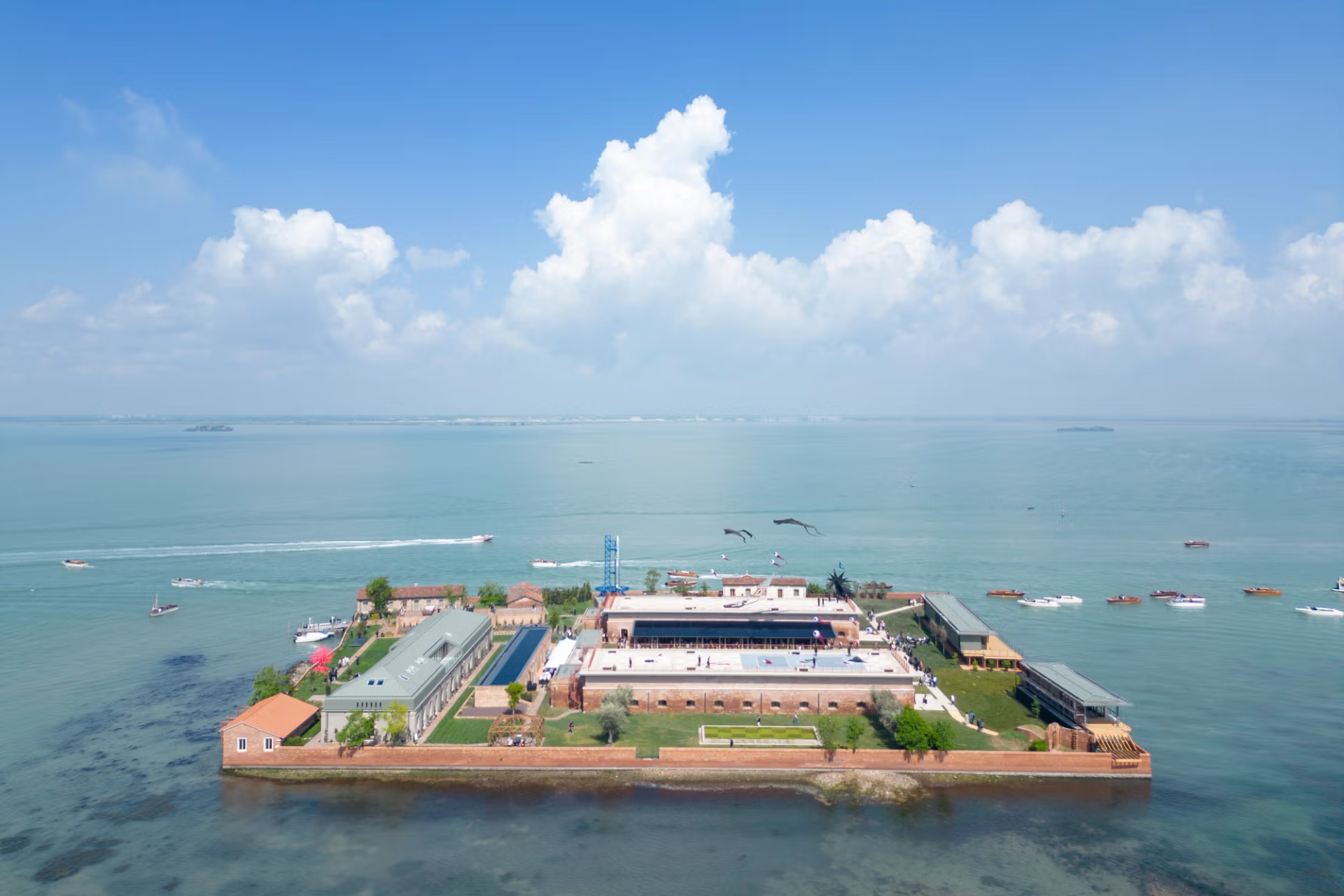
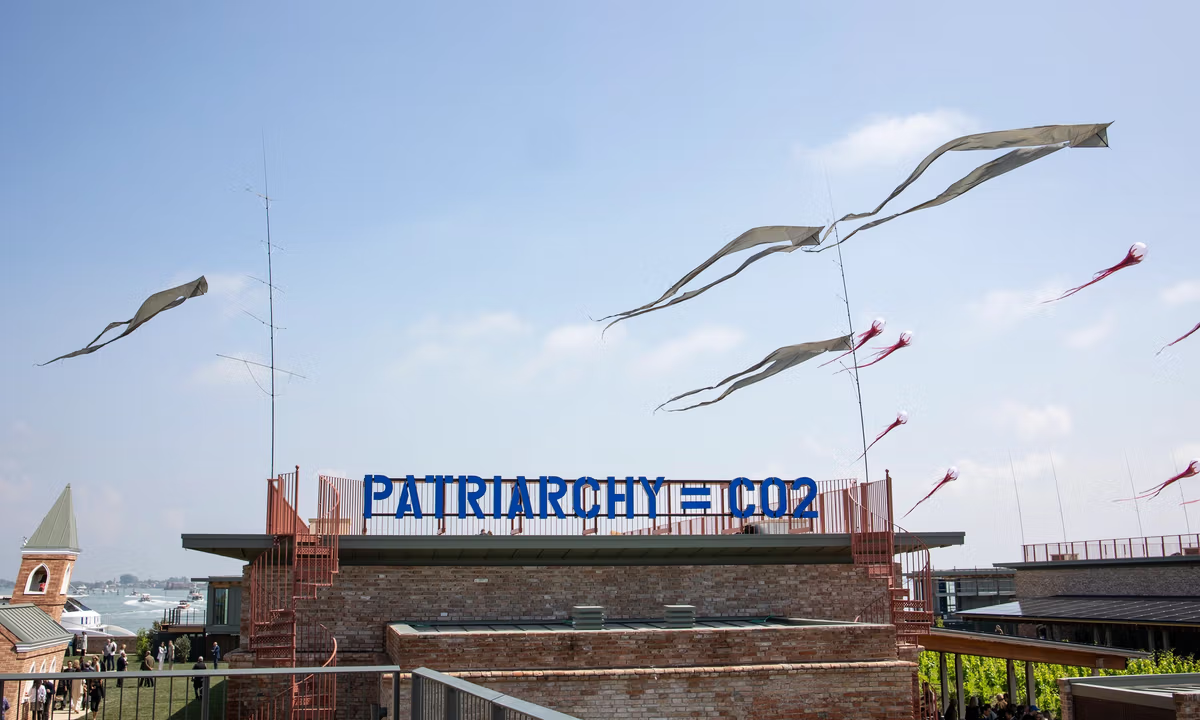
San Giacomo Courtesy Fondazione Sandretto Re Rebaudengo. Photo: Jacopo Trabuio
A new green isle
On a happier note, along with Kouoh’s metaphorical “archipelago of oases,” this Biennale also marked the unveiling of a real island devoted to combining art with ecology. The island of San Giacomo in the Northern Lagoon of Venice had lain derelict since 1961 having been an early home for religious communities, including a nunnery where—in the 13th and 14th centuries—Cistercian nuns cultivated the soil and experimented with forms of agricultural self sufficiency. Later the island functioned as a quarantine island for plague victims before Napoleon transformed the site into a military outpost and gunpowder store, which was later used by the Italian army.
Now San Giacomo is owned by Patrizia Sandretto Re Rebaudengo and Agostino Re Rebaudengo, who purchased the island in 2018. Since then they have been painstakingly transforming the site into what they describe as a “laboratory for art and sustainability”, intended for the hosting of exhibitions, residencies, performances and the commissioning of artworks. Augustino is also the president of Asja Energy, an Italian company devoted to renewable energy and energy efficiency, and this latest venue for the family’s non-profit Fondazione Sandretto Re Rebaudengo has also been developed to be a flagship for ecological awareness and practices.
“San Giacomo has been saved from abandonment through a unified restoration project that went beyond architectural renovation to structure the entire island as an ecosystem based on circular economy principles,” Agostino states. Thanks to the extensive works the island is now entirely self sufficient and not connected to external electricity, gas or water networks, with 100% of its energy produced on site using renewable recourses (mainly solar). All systems on the island are powered by its self generated electricity, with climate control provided through high energy heat pumps and domestic hot water produced electrically. An emergency back-up generator runs on second generation biofuel to reduce carbon dioxide emissions by up to 90%, while an ancient well on the island has been restored to supply the island with fresh water. All planting on the island has taken the lagoon context and low water requirements into consideration and alongside the gardens—and in tribute to its earlier population of Cistercian nuns—there is a vegetable garden and local vines have been planted for small scale wine production.
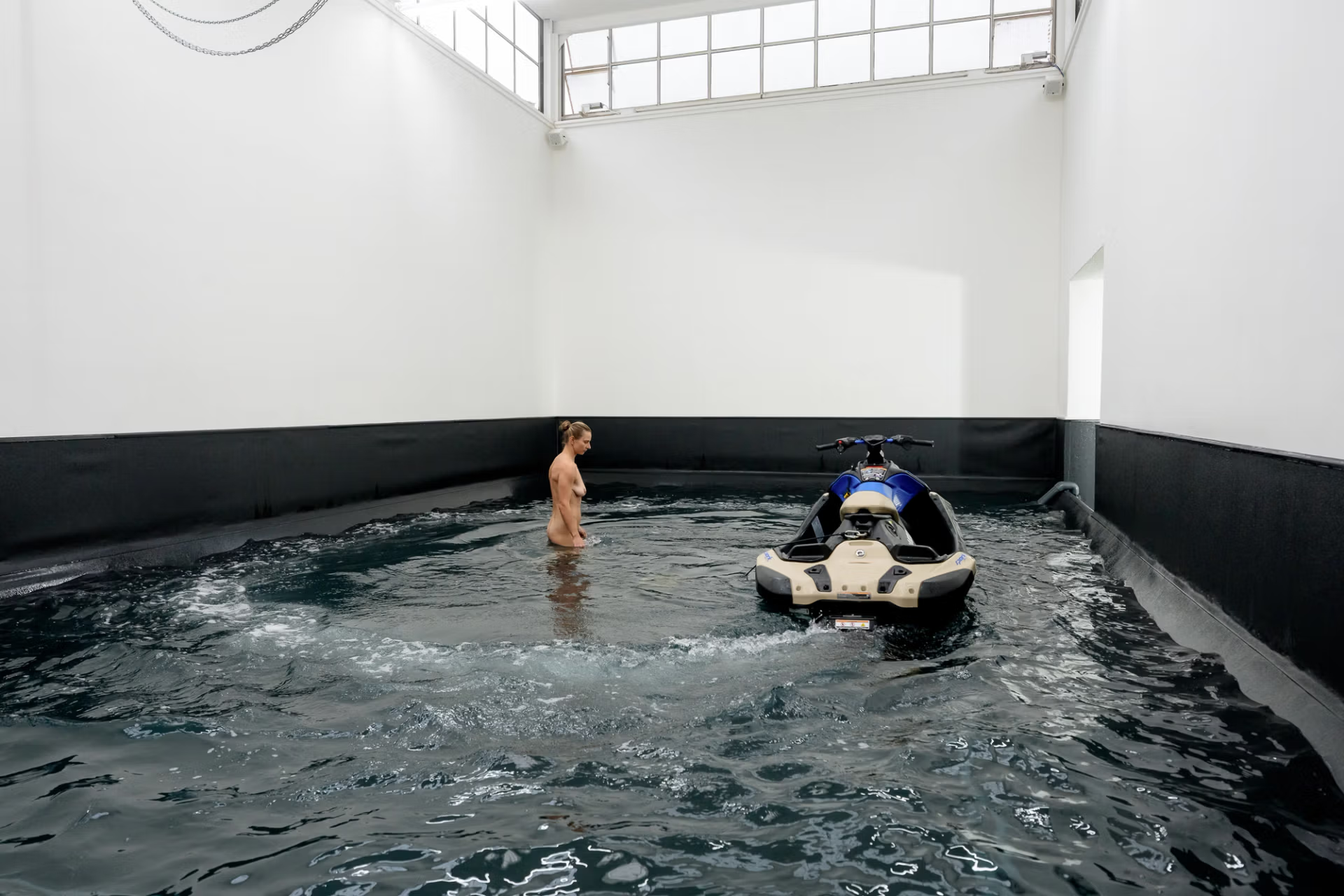
The Austria Pavilion’s Seaworld Venice Photo: Andrea Avezzù, courtesy of La Biennale di Venezia
National climate visions
Back in Venice, many of the national pavilions also reflected the escalating climate and ecological catastrophe. Most dramatic was the Austrian pavilion, which the performer-artist Florentina Holzinger had converted into “Seaworld Venice”. It is a tumultuous fusion of water amusement park and sewage treatment plant, populated by naked female protagonists riding jet skis, serving as human bell clappers and, in one case, wearing diving equipment to occupy a tank of water created from purified visitor-donated bodily fluids. It is a brilliant, bombastically female appropriation of the visceral, violent legacy of Viennese Actionism as well as a timely reminder of Venice’s—and all of our—liquid precarity.
Regrettably, some of these expressions of environmental awareness also came accompanied by often eye-wateringly blatant greenwashing. The Brazilian pavilion, featuring Adriana Varejao and Rosana Paulino and a plethora of green goddess and indigenous cultural imagery, was conspicuously named Comigo Ninguem Pode after the Brazilian leopard lily ostensibly to highlight Brazilian culture and “its close relationship with nature and more than human realms”. It was ironic, therefore, that the pavilion’s main sponsor was Petrobras, Brazil’s national petroleum company and one of the world’s top oil and gas producers.
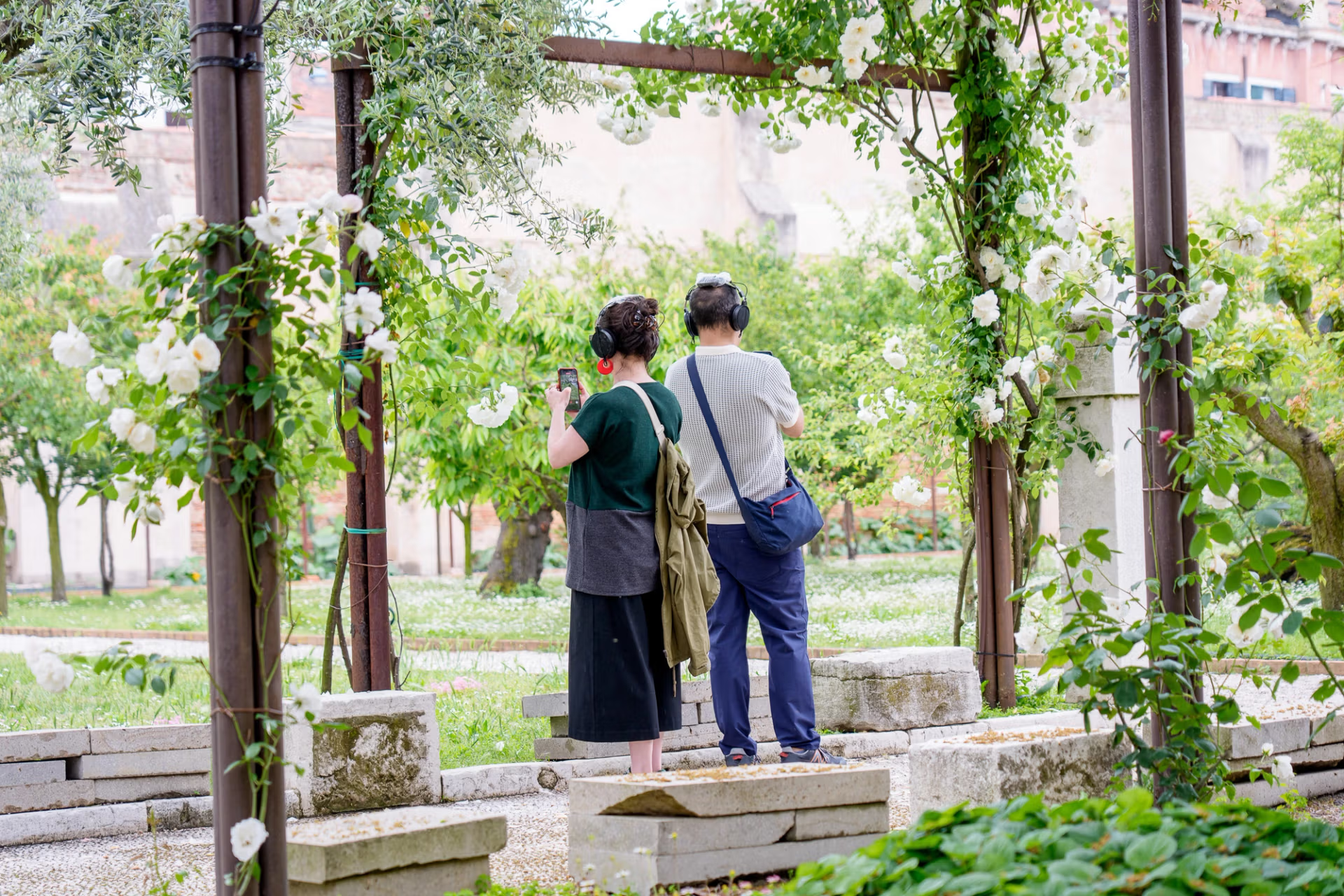
The Holy See’s Pavilion The Ear is the Eye of the Soul Photo: Andrea Avezzù, courtesy of La Biennale di Venezia
It was also somewhat surprising, given the Roman Catholic Church’s historic contribution to extractive colonialism and global devastation, that one of the Biennale’s most popular and environmentally friendly pavilions was the Vatican’s Pavilion of the Holy See. This was part-housed in the Giardino Mistico, a “mystic” garden tended by Carmelite nuns since the 17th century and took the form of a “sonic prayer” in which visitors donned headphones and wandered amongst the plants and trees. Visitors listen to an unfolding ensemble of new commissions by contemporary composers, musicians, poets and artists including Patti Smith, FKA Twigs, Meredith Monk and Brian Eno all made in response to the life and legacy of Saint Hildegarde of Bingen.
However, the experience of being in this glorious and lovingly nurtured natural setting, accompanied by the aural ebb and flow of such a rich and complex sonic composition was an experience capable of moving even this most committed atheist and hard boiled cynic. I comforted myself that it carried a light footprint and made the art world slow down and appreciate the planet that so many of its activities seem hellbent on trashing. And the Giardino Mistico has the advantage of being directly next door to Venice train station.


