

Close Menu
  • News
  • Stocks
  • Bonds
  • Commodities
  • Collectables
    • Art
    • Classic Cars
    • Whiskey
    • Wine
  • Trading
  • Alternative Investment
  • Markets
  • More
    • Economy
    • Money
    • Business
    • Personal Finance
    • Investing
    • Financial Planning
    • ETFs
    • Equities
    • Funds

Subscribe to Updates

Get the latest markets and assets news and updates directly to your inbox.

Trending Now

Friday Briefing: Latest FCA v Woodford is unchartered territory

June 15, 2026

Why the Tragicomic Feels Like the Most Honest Aesthetic Now

June 14, 2026

Almine Rech Now Represents Famed Surrealist Leonora Carrington

June 13, 2026
Facebook X (Twitter) Instagram
The Asset ObserverThe Asset Observer
Newsletter
LIVE MARKET DATA
  • News
  • Stocks
  • Bonds
  • Commodities
  • Collectables
    • Art
    • Classic Cars
    • Whiskey
    • Wine
  • Trading
  • Alternative Investment
  • Markets
  • More
    • Economy
    • Money
    • Business
    • Personal Finance
    • Investing
    • Financial Planning
    • ETFs
    • Equities
    • Funds
The Asset ObserverThe Asset Observer
Home»Art Market
Art Market

Boy Punctures Magritte’s ‘The Castle of the Pyrenees’ With a Pinecone at the Israel Museum

News RoomBy News RoomJune 9, 2026
Share
Facebook Twitter LinkedIn Pinterest Email

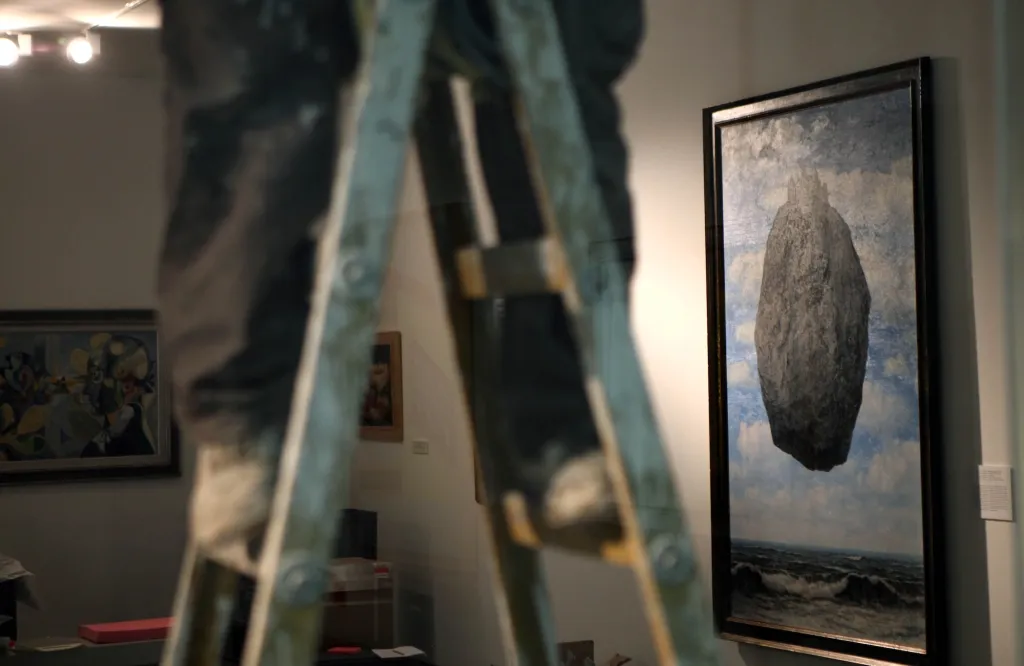
René Magritte’s The Castle of the Pyrenees (1959) has gone to the conservation lab at the Israel Museum in Jerusalem after being accidentally damaged by a young museum visitor. A boy visiting the museum with his family punctured the painting with a pinecone before a museum guard could stop him, museum staff told The Times of Israel.

Sharon Tager, head of conservation at the museum, told Ha’aretz that repairs would take several weeks. “We’re experienced in conserving paintings and objects that arrive in poor condition, including works that have been stored since the Holocaust period,” Tager told Ha’aretz. “The first stage is treating the base itself because the hole caused the canvas to sag. We first restore the canvas to its original level, then stitch it and treat the layers of oil paint.”

The museum didn’t place the work under glass or place an alarm on it, in order to give a better viewing experience for the public. 

“We do place some works behind glass, including certain Impressionist paintings, using extremely high-quality glass that is barely noticeable,” Tager told Ha’aretz. “We generally try to avoid alarms because visitors want to examine artworks up close. That’s part of the museum experience. We look for other ways to protect objects, but there are limits.”

The painting shows a castle atop a giant, floating rock, hanging before a partly cloudy sky over a seashore, and has resided at the museum since 1985. The artist’s friend Harry Torczyner, a lawyer and writer, commissioned the work to cover over an unpleasant view from his New York office window. The artist encouraged his friend to make suggestions as to the painting’s subject, and Torczyner chose this motif from a number of drawings Magritte showed him. He even suggested the sky and the sea, says the museum, writing, “because over the dark sea or ocean there rises the rock of hope, topped by a fortress, a castle.” Magritte, however, declined other suggestions in order to retain the “vigor” and “harshness” he was aiming for.

Torczyner was thrilled with the results. “LONG LIVE MAGRITTE!” he wrote at the time. “‘The Castle of the Pyrenees’ floats majestically and proudly. It is superb… and intact! The waves of the North Sea bring me fresh air and joy. For the moment, the painting is hanging on the wall, while a custom-made frame is being installed to cover the window.” There the painting remained for nearly twenty years. Torczyner gave the painting to the American Friends of the Israel Museum in 1985.

Share. Facebook Twitter Pinterest LinkedIn Tumblr Email

Keep Reading

Why the Tragicomic Feels Like the Most Honest Aesthetic Now

Almine Rech Now Represents Famed Surrealist Leonora Carrington

AI Just Helped Identify a Long-Lost F.C.B. Cadell Painting Bought for Under $100

Construction of Trump’s Washington, DC arch could put archaeological sites at risk – The Art Newspaper

The Most Expensive Works by David Hockney Sold at Auction

Prolific Armenian Painter Haroutiun Galentz is Making a Comeback Across Europe

Rising Painter Danielle Fretwell's Decadent Still Lifes Reinvent the Dutch Masters

World Cup Fever: Soccer Balls Designed by Futura 2000, Katherine Bernhardt, Hank Willis Thomas, and 20 Other Contemporary Artists Have Been Installed Around New York and New Jersey

Artist Scott Burton honoured in new sculpture at New York’s Aids memorial – The Art Newspaper

Recent Posts
  • Friday Briefing: Latest FCA v Woodford is unchartered territory
  • Why the Tragicomic Feels Like the Most Honest Aesthetic Now
  • Almine Rech Now Represents Famed Surrealist Leonora Carrington
  • Tech Weekly: Tech Selloff Snaps Nasdaq’s Three Week Winning Streak
  • AI Just Helped Identify a Long-Lost F.C.B. Cadell Painting Bought for Under $100

Subscribe to Newsletter

Get the latest markets and assets news and updates directly to your inbox.

Editors Picks

Why the Tragicomic Feels Like the Most Honest Aesthetic Now

June 14, 2026

Almine Rech Now Represents Famed Surrealist Leonora Carrington

June 13, 2026

Tech Weekly: Tech Selloff Snaps Nasdaq’s Three Week Winning Streak

June 12, 2026

AI Just Helped Identify a Long-Lost F.C.B. Cadell Painting Bought for Under $100

June 12, 2026

Construction of Trump’s Washington, DC arch could put archaeological sites at risk – The Art Newspaper

June 12, 2026
Facebook X (Twitter) Instagram
© 2026 The Asset Observer. All Rights Reserved.
  • Privacy Policy
  • Terms
  • Press Release
  • Advertise
  • Contact

Type above and press Enter to search. Press Esc to cancel.