


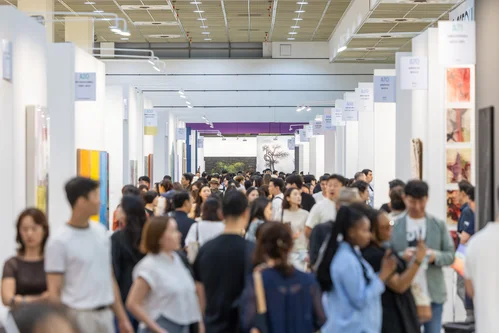
Kiaf SEOUL returned to the COEX in Gangnam with a typically stylish and enthusiastic crowd on Wednesday, September 2nd.
Marking a milestone 25th anniversary, the fair brings together 175 exhibitors from 18 countries under its first externally appointed creative director, designer Kuho Jung, who oversaw a rebrand built around the theme of Coexistence. This iteration promises an exploration of humanity’s shifting relationship with technology. Special exhibitions “HUMAL” and “Invisible,” the latter woven with AR works accessible by QR codes across the fair floor, extend the theme.
Coexistence, it turns out, is built into the fair’s very architecture. This is also the fifth year that Kiaf shares its venue with Frieze Seoul, which takes place on the floor above. The result is a sense of fluidity and buzz; Wednesday’s throng of VIPs flitted between the two. The youthful, engaged, and excited crowd here makes the fairs feel like a festival. At one point, it was difficult to peruse Kiaf’s aisles without ending up in someone’s selfie or video.
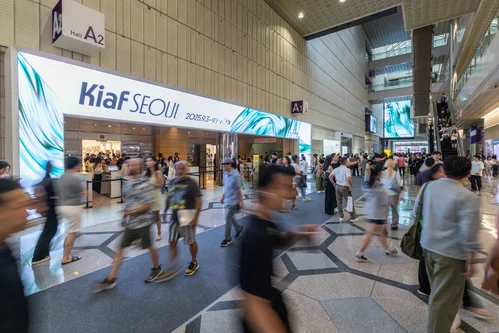
Works by international heavyweights are plentiful at Kiaf, but visitors can also leave the fair with myriad discoveries, thanks to the strong regional depth in dealers and artists. The organizers have successfully curated a neat snapshot of the Korean and regional art scene, with a smattering of global flair.
“It’s the biggest platform for art in Korea,” Sunghoon Lee, the president of the Galleries Association of Korea, which runs the fair, told Artsy. “The fair’s role is to put new artists and older artists together, and Kiaf is the biggest in size, top quality, and it also has the most number of participants in Korea. We also have international galleries participating, so it is a platform for networking.”
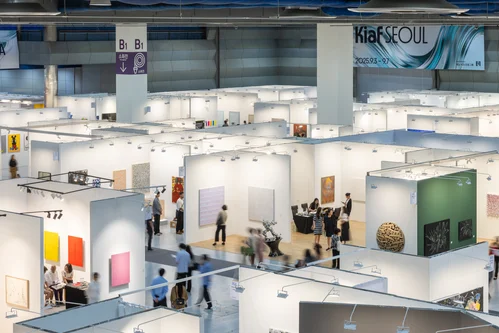
And art lovers in Seoul will have plenty to feast on beyond the COEX, as if more than 250 gallery booths wasn’t enough. The fairs anchor Seoul Art Week, which brings an enormous serving of shows and pop-ups to town. Each night this week, different neighborhoods take turns hosting a local cluster of events and openings, turning art viewing into a round-the-clock task of trying to avoid FOMO.
And if that still wasn’t enough, then consider that this year’s Seoul Art Week is part of the Korea Art Festival. Some four biennales—Jeju, Busan, Gwangju, and Gyeonggi—are all taking place across the country this month, adding firepower to a week in the Korean capital that is already among the busiest in the art world. Indeed, judging by the mood at the COEX, the audience here is more than ready to take on the challenge.
Here, we select our five best booths from Kiaf SEOUL 2026.
Gallery Planet
Booth A43
With works by Hur BoRee, Sejin Hong, Hanna Kim, Baek Kyungho, and Lee Kyoungmi
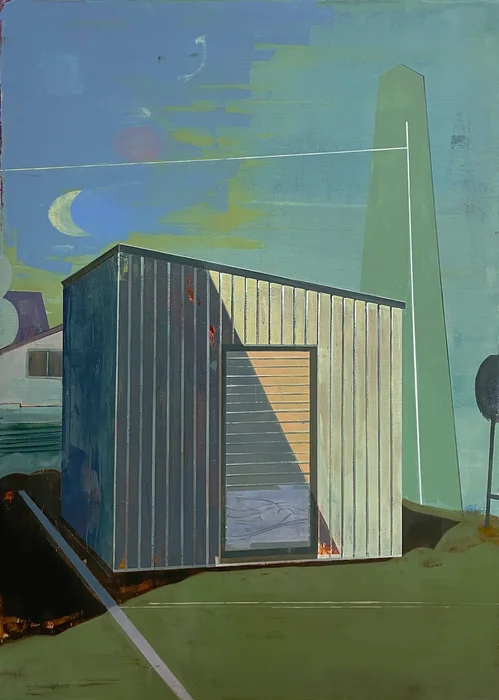
Moon, Fly Away, 2026
Sejin Hong
Gallery Planet
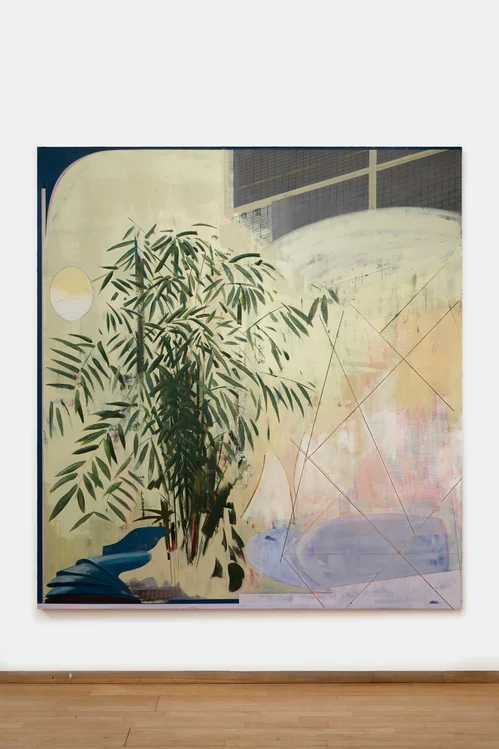
Griant, 2025
Sejin Hong
Gallery Planet
Gallery Planet devotes much of its wall space to a focused survey of works by Sejin Hong, a South Korean painter born in 1992. Her work appears alongside that of established Korean artists Lee Kyoungmi, Hanna Kim, Hur BoRee, and Baek Kyungho. Yet it’s Hong’s oil paintings that dominate the space. They span small, jewel-like canvases to the nearly 6-foot-tall Griant (2025).
Hong paints greenhouses, sunrooms, and garden sheds in murky, pastel-washed light, as though she’s dreamed up the architecture or viewed it through steam. Griant frames a leafy potted plant against a spa-like interior with domed skylights, diamond-tiled walls, and a bathtub at the very edge. Grass and Drrrk (2026) opens onto a corridor with a glass-block wall and a stray frond that pushes into the doorway; architecture and vegetation interrupt each other. Moon, Fly Away (2025) veers further into the surreal, setting a corrugated-metal shed beneath a cartoonish crescent moon and next to an obelisk. The dusky scene indicates more of a mirage than a real place.
Elsewhere, titles like Overlaid (2026) and Softly Forming (2025) hint at Hong’s process: The artist builds her surfaces from thin, translucent layers of oil paint, so that even her smallest works—some just a foot wide—carry atmospheric depth. Larger canvases embrace immersive fields of color.
LEE & BAE
Booth A98
With works by Kwangik Song, Bongsang Yoo, Minjeong Guem, and WHYIXD
Busan gallery LEE & BAE’s booth is among the fair’s most technologically restless. It brings together works by artists including Kwangik Song, Bongsang Yoo, Minjeong Guem, and WHYIXD, who work in hanji paper, video, and kinetic light.
Song’s “Paper Things” series (2018–present) grounds the booth in tradition. The artist builds layers of hanji, traditional Korean mulberry paper, leaving it bare or working it over with acrylic. Yoo pushes further into textural experimentation with a body of “headless pin” paintings. The artist studs acrylic-on-wood compositions with pins that catch the light, their surfaces shifting from a flat grid to a shimmering field depending on where viewers stand.
Guem also challenges perception with sculptural video works. In her series “Bright Room, Water Inside” (2026) and other individual pieces, she encases looping LED-screen footage in concrete- and wood-framed sculptures. In one work, rhythm of durée (2026), a poured concrete frame houses a five-minute loop of dripping leaves and treats the screen as a window—a signature of the artist’s practice. “She makes video sculptures using images and data collected from nature, and looks at very small movements like wind and light,” said Jooeon Park, a curator at the gallery. “She uses them as a kind of rhythm to change the form of the work.”
Works by Taiwanese artist WHYIXD further implicate viewers. Resona: aura and Resona: cloud (both 2026) are wall-mounted aluminum-and-LED assemblages wired with sensors and microcontrollers that respond to the room around them as they fizz and light up. Beneath them, the quieter, toy-like structure Spectrum Light: City Butterfly (2018) uses a simple motor to set an illuminated acrylic form fluttering.
Opera Gallery
Booth B23
With works by Jean Dubuffet, Chu Teh-Chun, Alex Katz, Fernando Botero, Manolo Valdés, George Condo, Keith Haring, Andy Denzler, Xevi Solà, KAWS, and Gustavo Nazareno
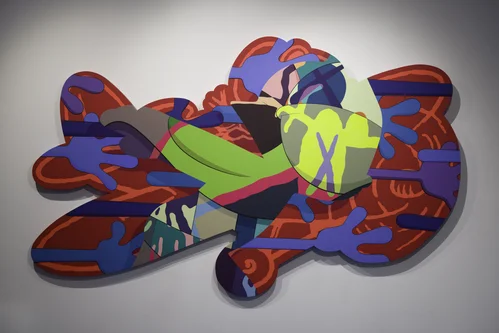
Opera Gallery brings a bevy of 20th- and 21st-century blue-chip painting to its booth. Works by the likes of George Condo, Keith Haring, Alex Katz, Fernando Botero, and Chu Teh-Chun are among the standouts. The gallery, which operates 15 locations from Seoul to Monaco to Aspen, Colorado, has built its reputation on exactly this kind of trophy-case programming, and the booth doesn’t disappoint.
Condo’s Figures on a Blue Couch (1996) anchors the presentation, its warped, cartoonish faces distilling the artist’s signature psychological Cubism. Nearby, Haring’s untitled 1982 sumi-ink drawing offers a rawer, more graphic counterpoint; its loose, energetic linework reminds viewers of the artist’s roots in subway drawing and street art. Katz, meanwhile, is represented by Study for Pas de Deux (1983), a smaller, more intimate oil-on-board study that hints at the flattened, billboard-scale figuration that eventually became the artist’s calling card.
Botero rounds things out with both a charcoal-and-pastel riff on Goya and a small bronze cat sculpture, Gatto (ca. 1998)—a lighter, more playful note amid the heavyweight names. Chu Teh-Chun’s untitled 1974 abstraction, meanwhile, is a swirling, atmospheric oil that bridges Chinese calligraphic gesture and European lyrical abstraction. It’s a quieter work that rewards close looking.
PIBI Gallery
Booth A26
With works by Hyelim Cha
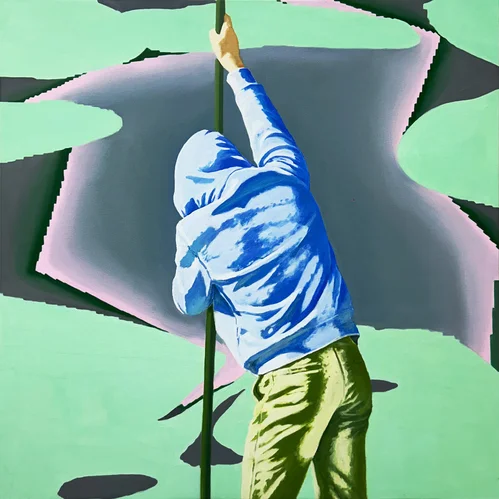
Be Right Back : On the Death of an Author, 2026
Hyelim Cha
PIBI Gallery
Be Right Back : On the Death of an Author, 2026
Hyelim Cha
PIBI Gallery
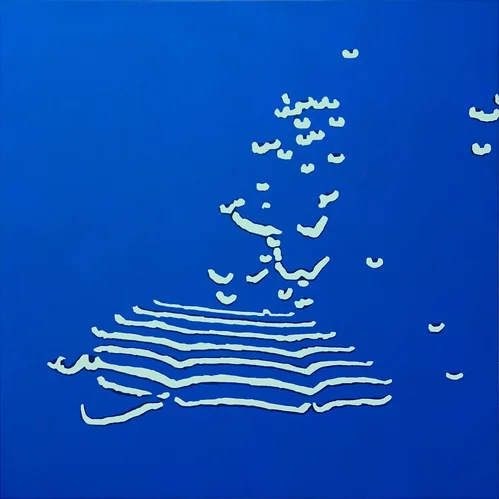
PIBI Gallery’s booth features 12 paintings by Seoul-based painter Hyelim Cha from her 2026 series “Be Right Back: On the Death of an Author.” Identically sized at around 80 by 80-centimeters, the works generate a dialogue between text and image. Rather than hang the panels on the wall, the gallery has propped them at an angle on low metal stands arranged in two rows that face each other. The booth’s back wall becomes a bare backdrop to this conversation as the arrangement of works suggests an open library that viewers may browse.
Half the canvases are abstractions that reduce language to its gestures: They feature flat, comic-bright fields of teal, cobalt, chartreuse, and mustard, interrupted by clusters of dashes, commas, and amorphous blobs that could be read as magnified punctuation or redacted paragraphs. The rest of the booth diverts into figuration: A man in a yellow t-shirt shouts into a megaphone, another grips a blank yellow boomerang mid-throw, a third scales a bare flagpole against a candy pink-and-green backdrop. Each figure is a depiction of communication without content, a message that never quite arrives, or a gesture aimed at an unknown target.
The works alternate between text and image with a rhythm that echoes Roland Barthes’s famous essay, from which the series takes its title: Once an author’s intentions have disappeared, the viewer can more adequately assemble meaning.
Arario Gallery
Booth A05
With works by An Gyungsu, Hyeonwook CHA, CheolGyu Kang, Koo Jiyoon, Eunsil Lee, Lee Jihyun, Nosik Lim, LIM Subeom, Noh Sangho, Sim Raejung, and Won Seoung Won
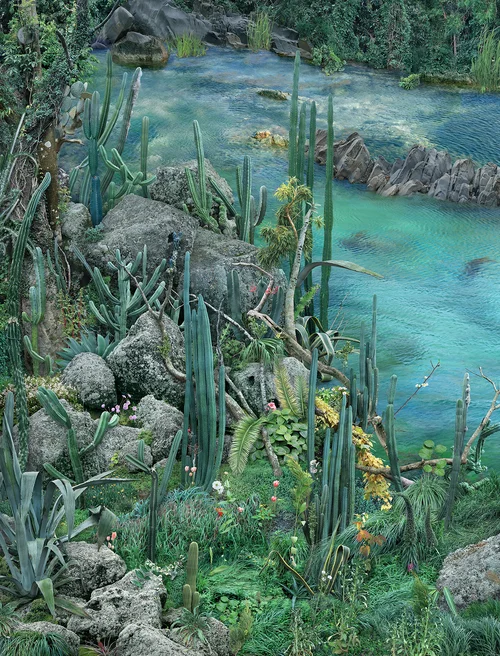
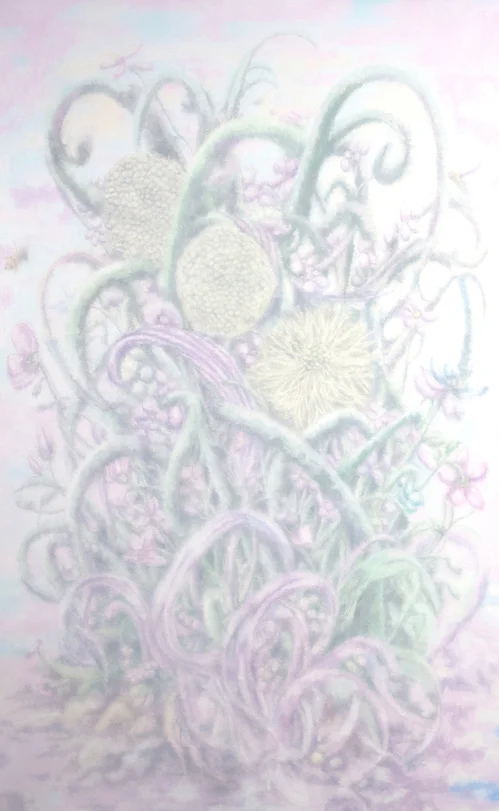
Arario Gallery offers a broad survey of contemporary Korean art. Its booth brings together painting, East Asian ink and pigment work, photography, and installation by 11 artists born between 1972 and 1997. According to the gallery’s curatorial statement, the presentation is organized around the tactile pull of analog surfaces in a screen-saturated era.
One group of works blurs the line between the digital and the handmade. Noh Sangho’s THE GREAT CHAPBOOK 3 (2026) reinterprets AI-generated imagery through oil paint. The artist funnels machine-made pictures back through a laborious, analog process to create a dense, Boschian landscape of mythical figures and motifs. Won Seoung Won’s archival pigment prints, including Waiting Branch (2025) and Growing Stone (2025), are scenes of nature built from meticulously composited digital-collage landscapes that could, paradoxically, be mistaken for deeply hand-worked images. Nearby, Nosik Lim’s “Landscape” series features softly rendered foliage. Fossil (2026), a painting by Koo Jiyoon, abstracts aging architecture into a tangle of colors and lines.
Other pieces embrace traditional Korean materials. Hyeonwook CHA’s powdered-pigment paintings on hanji, including Threshold of Painting (2026) and The Test that Never Lands (2026), are vivid celestial scenes, while Eunsil Lee’s ink work on paper Auspicious Stirring (2026) channels the language of Korean ink painting into a clouded, ominous environment out of which a snake torso emerges.
