


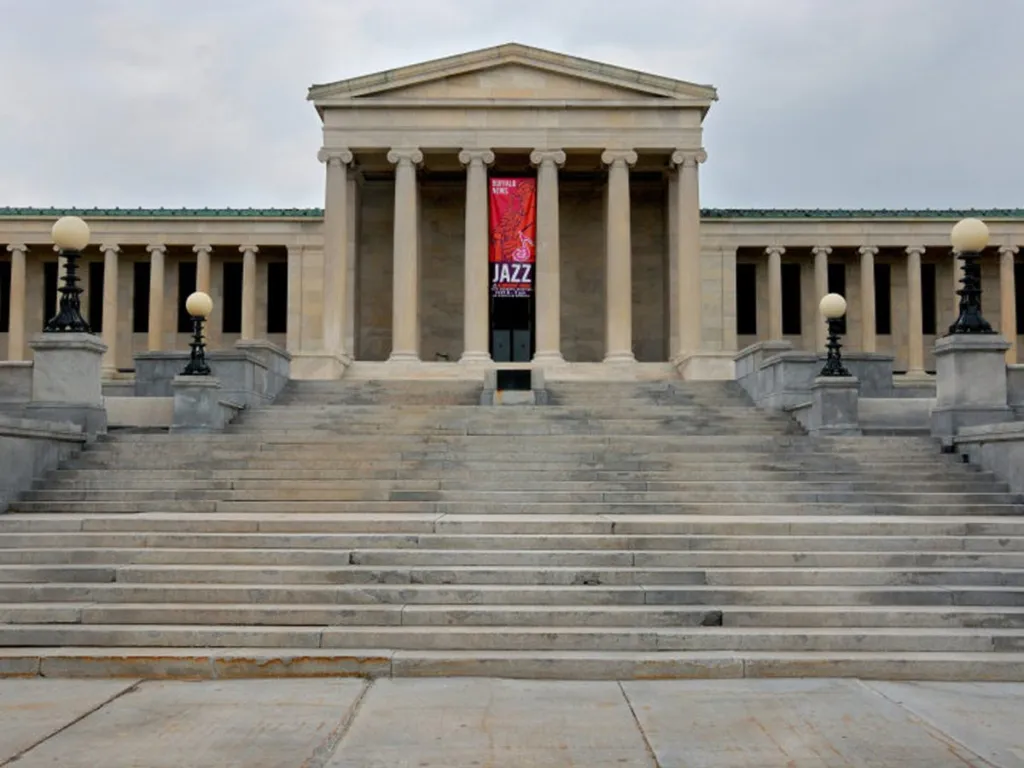
Janne Sirén, director of Buffalo’s Albright-Knox Art Gallery since 2013, used a museum loan to help finance a $710,000 home—more than half of which remains unpaid, including accrued interest, according to a state review.
Buffalo News, citing data from the Erie County Comptroller’s Office, reported that prevailing interest rates at the time of the loan ranged between 4 and 4.5 percent. The Albright-Knox Art Gallery—now known as the Buffalo AKG Art Museum–approved the loan for Sirén at a markedly lower rate of .18 percent. It was only later, during a routine review of financial records and tax filings from county-funded cultural organizations, that the comptroller’s office found Sirén had not repaid any of the principal or interest.
“We’re not sure why it wasn’t paid off,” Mary Hosler, deputy comptroller of the Audit Division, told Buffalo News. “Nobody had, really, any answers.” While such loans are not uncommon as a recruitment tool for museum directors, the loan appears to violate New York’s Not-For-Profit Corporation Law Section 716, which prohibits nonprofit organizations from making loans to their “directors, officers, or key persons.”
Though initially framed as a “short-term bridge loan” to be repaid after the sale of Sirén’s prior residence, the $335,000 loan “was converted in 2014 into a 30-year mortgage at the same interest rate.” The 4,400 square-foot home, built in 1920, is currently assessed at $1.1 million, according to the report. “This mortgage was not filed or recorded with the Erie County Clerk’s Office,” the report stated, adding that investigators found “no evidence” that that interest had been paid or accrued on the loan “since its inception.”
Because no lien was recorded on the deed to Sirén’s house, the museum would have no collateral in the event of a default. The report added that Sirén also appears not to have paid the county mortgage taxes and federal income taxes typically owed as a result of the loan issued at a discounted interest rate.
The comptroller’s report has not been addressed by Sirén or any member of the AKG board. ARTnews has contacted the museum for comment.
A spokesperson for the museum, Woodrow Brown, shared the following statement from the executive committee of the AKG’s Board of Directors with Buffalo News:
“In 2013, the Buffalo AKG provided a relocation package to Dr. Sirén as part of the terms of his employment as the museum’s 11th director,” the statement said. “This was and remains a relatively common practice in executive recruitment. The museum offered a similar package to Dr. Sirén’s predecessor. The Buffalo AKG prioritizes best governance practices, including full compliance with all applicable laws and audit standards.”
The statement continued: “We cooperated fully and transparently with the auditors over a period of several months, and we are grateful that the auditors confirmed that the Buffalo AKG is ‘in compliance with applicable CGF (cultural grant funding) requirements and filing obligations.’”
The state law barring loans to key officers was enacted in 2014, a year after Sirén received the short-term bridge loan as part of his recruitment. However, the law was in effect when Sirén later converted that bridge loan into a 30-year mortgage with the museum. While Section 716 bars corporations from making loans to their leadership, Section 715 requires full board disclosure and approval for any transaction involving a “related party.”
The comptroller’s report stated that, “Because AKG receives funding from Erie County, the use of organizational resources to provide a substantial, below-market loan to a key officer highlights the potential risk that grant funds could be indirectly applied to transactions that do not directly support the organization’s contractual obligations or mission.”
Beyond the loan, the report highlighted that the executive director received annual raises of roughly 13 percent, a $500,000 bonus spread over five years, and additional performance-related bonuses in 2019 and 2022— exceeding the typical nonprofit range of 3 to 5 percent per year. During the same period, the museum’s director of advancement received a 29 percent increase in compensation.
In response, the AKG stated that the board of directors base the director’s salary “off of several factors, including the annual salary survey published by the Association of Art Museum Directors. During the years under review by the Audit Committee, the Board adjusted the director’s salary in accordance with the salary survey consistent with the director’s employment contract, necessary cost of living adjustments, and the New York Not-for-Profit Corporation Law. The Board also awards bonuses based on specific criteria, including performance.”
The statement also pointed out that during this period, the AKG executive director and director of advancement jointly completed an “unprecedented” $230 million capital campaign “to fund the largest expansion in the museum’s 163-year history.”
Essentially a streamlined audit, the Comptroller’s Office report reviews county grant spending by cultural organizations that received $5,000 or more in public funds, offering recommendations to strengthen oversight and accountability when necessary. The AKG financial analysis is just one of several reports issued by the office this year that may require additional review. The African American Cultural Center, for example, is reportedly working with Erie County to make financial records available that shed light on how its funds were spent.
The county grant money provided to AKG was properly accounted for during the review period, he said, so beyond sharing report findings, he doesn’t anticipate his office digging deeper, because that’s beyond the role of his office.
“I’m satisfied that this money that we gave them was used appropriately,” Hardwick said. “These other issues are now out there, and we’re reporting them, and I’m sure that others may want to follow up on them.”
