






Museums and other arts institutions in Cleveland, Ohio, have a financial support structure that might surprise you. Some of the biggest visual arts presenters, as well as much smaller organizations, get money each time someone in Cuyahoga County, of which Cleveland is the county seat, buys a pack of cigarettes.
According to the New York Times, Cleveland “is thought to be the only place in the country” where such a tax supports arts organizations, and the paper reports that via the nonprofit Cuyahoga Arts and Culture, the levy has supported the arts to the tune of $270 million since it was put into effect in 2007. The organization has given out some 4,000 grants to 485 nonprofit organizations, while, in the same time period, the entire state of Ohio has gotten just $48 million from the National Endowment for the Arts, notes the paper.
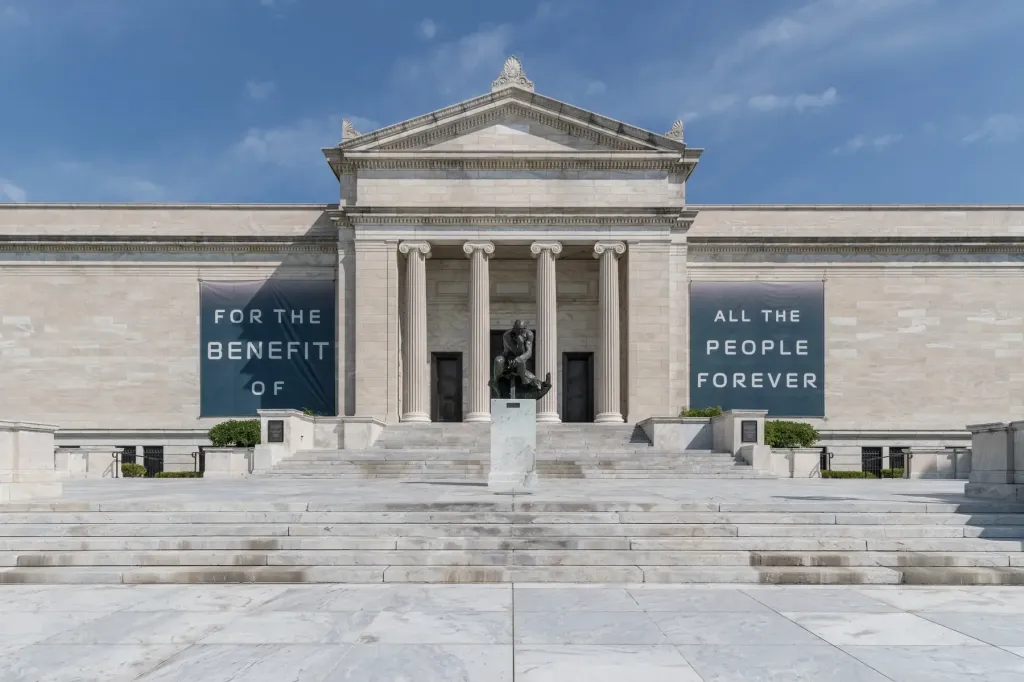
The Cleveland Museum of Art, the city’s encyclopedic institution founded in 1913, is one such beneficiary. Also getting support is the Museum of Contemporary Art Cleveland, established in 1968 (and in sleek new digs since 2012). Art schools are an essential part of the art ecosystem, and the tax supports the 135-year-old Cleveland Institute of Art.
Two organizations that support artists and arts workers have received payouts, including the nation’s first nonprofit regional art conservation center, ICA-Art Conservation, as well as Sculpture Center, which supports artists at all phases of creation. Also supported are arts funders including the Cleveland Arts Prize, which, in turn, doles out annual $10,000 prizes to visual artists as well as writers, musicians, dancers, and other creatives.
Museums are enormously expensive to run, art is pricey, and admissions revenue can’t cover it all, so institutions are bound to hit up moneyed supporters. Sometimes the sources of money get museums in hot water, as has been the case recently with fossil fuel and pharmaceutical companies. BP’s support of the British Museum has incurred protests from climate change activists, while pharma companies with ties to opioid epidemic has also come under scrutiny.
In fact, ironically, seasoned art world observers may recall that cigarette money used to support a prominent New York museum outpost: the Whitney Museum of American Art at Philip Morris, which operated from 1983–2008; it was renamed “at Altria” after the company changed its name in 2003, and closed when the company moved its headquarters to Richmond, Virginia.
Also ironic is that what is good for the physical health of the people of Cuyahoga County—declining smoking rates—is bad for the fiscal health of its museums. “Adult smoking rates in Cleveland, which used to be far above the national average, plummeted to 19 percent from 35 percent over the past decade,” reports the Times. “Tax revenue fell by half.”
All the same, voters “overwhelmingly” voted last year to more than double the tax rate, reports the Times.


