





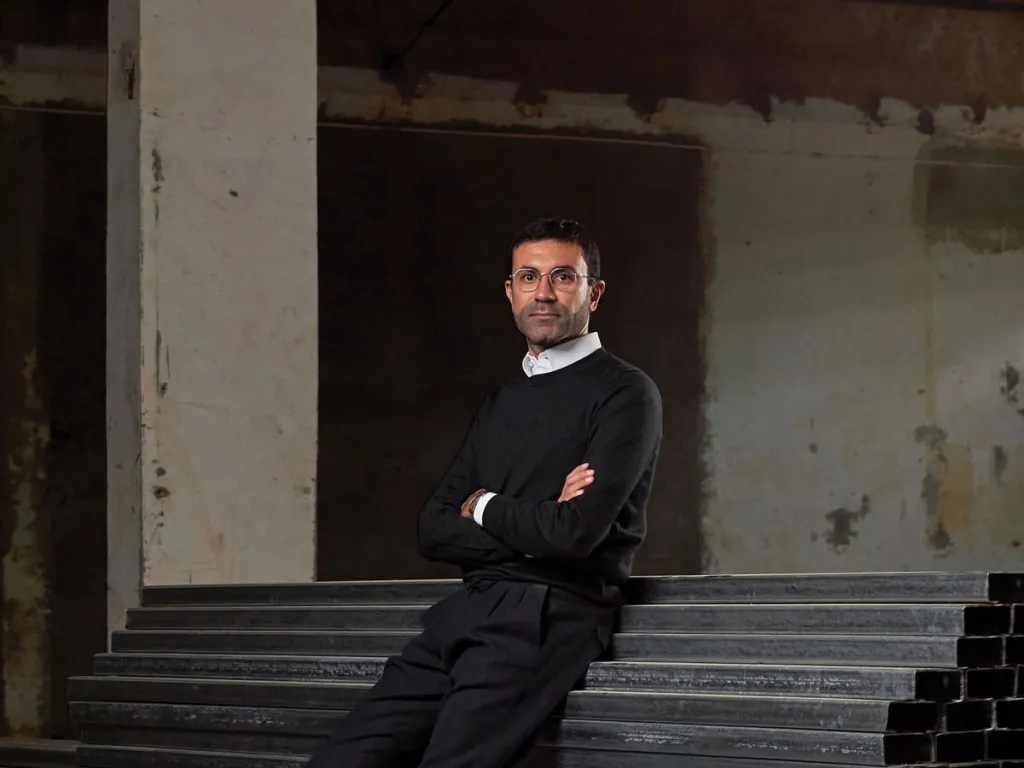
In 2019, just four nations mounted their debut pavilions at the Venice Biennale. Madagascar was one of them, and Hasnaine Yavarhoussen’s sponsorship was largely what made it possible.
The year before, the Malagasy art collector and entrepreneur met with artist Joël Andrianomearisoa to discuss the country’s participation and his support. At the time of their meeting, Yavarhoussen had limited knowledge about Malagasy artists; his almost decade-old collection didn’t even include any artworks by them. But the chat with Andrianomearisoa, who splits his time between Paris and Antananarivo, Madagascar’s capital, was so convincing that it led Yavarhoussen to help fund the inaugural Malagasy Pavilion. It also inspired Yavarhoussen to collect work by Malagasy artists and to make plans to provide long-term support for other artists from Madagascar.
“I was thinking: Okay, what would be the impact on Madagascar?” Yavarhoussen recalled in an interview about that pivotal meeting.
A member of Tate’s Africa Acquisitions Committee, Yavarhoussen went on to found Fonds Yavarhoussen in 2019 with the goal of supporting and promoting Malagasy art and culture, both locally and globally; sponsoring the Malagasy Pavilion became its first initiative.
Following Madagascar’s showing at Venice Biennale, Yavarhoussen and Andrianomearisoa cofounded Hakanto Contemporary in February 2020, with the artist serving as artistic director. Hakanto Contemporary, which began as a modestly sized multipurpose art space and now occupies a nearly 2,000-square-foot renovated warehouse in Antananarivo, has helped make Yavarhoussen one of Madagascar’s most important art patrons. Its exhibitions, residencies, educational initiatives, and workshops have helped create an emerging local art scene and placed Madagascar on the global art scene’s map.
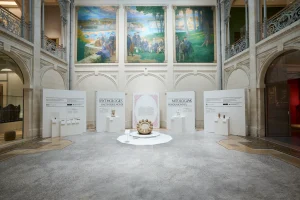
Installation view of “Pierrot Men. FOFON_AINA. WINDS OF LIFE. VENTS DE VIE,” 2026–27, at Hakanto Contemporary.
Courtesy Hakanto Contemporary
Among Hakanto Contemporary’s most recent efforts is a 400-work survey of Pierrot Men, whom Yavarhoussen called “the most known Malagasy photographer today.” The collector, who owns photographs dating back to 1860, said the pioneering Malagasy photographer’s retrospective curated by Andrianomearisoa and Rina Ralay Ranaivo is a “very important step” in Hakanto Contemporary’s programming.
Yavarhoussen is the chief executive officer of Groupe Filatex, a Malagasy company with holdings in the real estate, hospitality, healthcare, and sustainable energy sectors. The company is said to provide about a third of Madagascar’s power needs; Yavarhoussen joined the family-owned company in 2011, having previously studied economics and management in France and Spain.
During the late 2000s, a visit to a friend’s Paris-based contemporary art gallery inadvertently kicked off Yavarhoussen’s art collecting journey. With the encouragement of his father, he later bought a work he liked by American artist David Ratcliff.
“There are two main themes in my collection,” he explained. “The first speaks to my sensibility and my taste: I buy what I like and what I want to live with and be surrounded by every day. The second is Madagascar. We buy modern Madagascar art, often works that left the country at the time of Independence [in 1960]. We acquire them and bring them back to the country. I sometimes refer to this as a ‘relocalization’ mission.”


View of Hakanto Contemporary.
Photo Avotra Rajaonarisoa/Courtesy Hakanto Contemporary
His over 500-work collection now largely includes work by artists from Madagascar and across Africa, including Andrianomearisoa, Malala Andrialavidrazana, Christian Sanna, Ramily (Emile Rakotondrazaka), and Esther Mahlangu.
In addition to funding Hakanto Contemporary, Fonds Yavarhoussen sponsors projects by Malagasy artists and creatives outside the country. These include supporting Andrialavidrazana’s exhibition at Palais de Tokyo in Paris and Andrianomearisoa’s commission at Zeitz MOCAA in Cape Town, South Africa; partnering with the LAM Museum in Lille, France, on a Jessy Razafimandimby solo; and coproducing a recent project by dancer and choreographer Soa Ratsifandrihana that appeared this summer at the Venice Dance Biennale. The fund also powers the Yavarhoussen Scholarship, which collaborates with the Institut National d’Histoire de l’Art in Paris to research and publish books on Malagasy art history.

Joël Andrianomearisoa’s La dérive-des-sentiments (2015) is among the artworks in Yavarhoussen’s 500-work collection.
Courtesy Hakanto Contemporary
There are already signs that Yavarhoussen’s collecting and patronage has had an impact beyond Madagascar. Andrianomearisoa joined the roster of Almine Rech gallery in 2023 and is a nominee for the 2026 Prix Marcel Duchamp, France’s top art award. In 2024, Yavarhoussen donated Andrianomearisoa’s Les Herbes Folles du Vieux Logis (2022) to New York’s Metropolitan Museum of Art. The next year, the work went on view in the museum’s revamped Michael C. Rockefeller Wing for work from Africa, Oceania, and the Americas. Yavarhoussen also regularly loans work from his collection to international art spaces, the Ludwig Museum in Germany, Wiels in Belgium, and La Filature in France.
Formerly a Zeitz MOCAA trustee, Yavarhoussen said he doesn’t want to keep the artworks he owns solely in storage, at home, or his corporate offices. Instead, he wants “these pieces to be shared and seen.” The donations and loans, he said, “are primarily intended to ensure greater visibility [for] Malagasy art” and also “breathe new life into the collection.” Thinking about what he’s accomplished since 2019 for Malagasy art, Yavarhoussen said, “I think we’ve fulfilled our mission.”


