


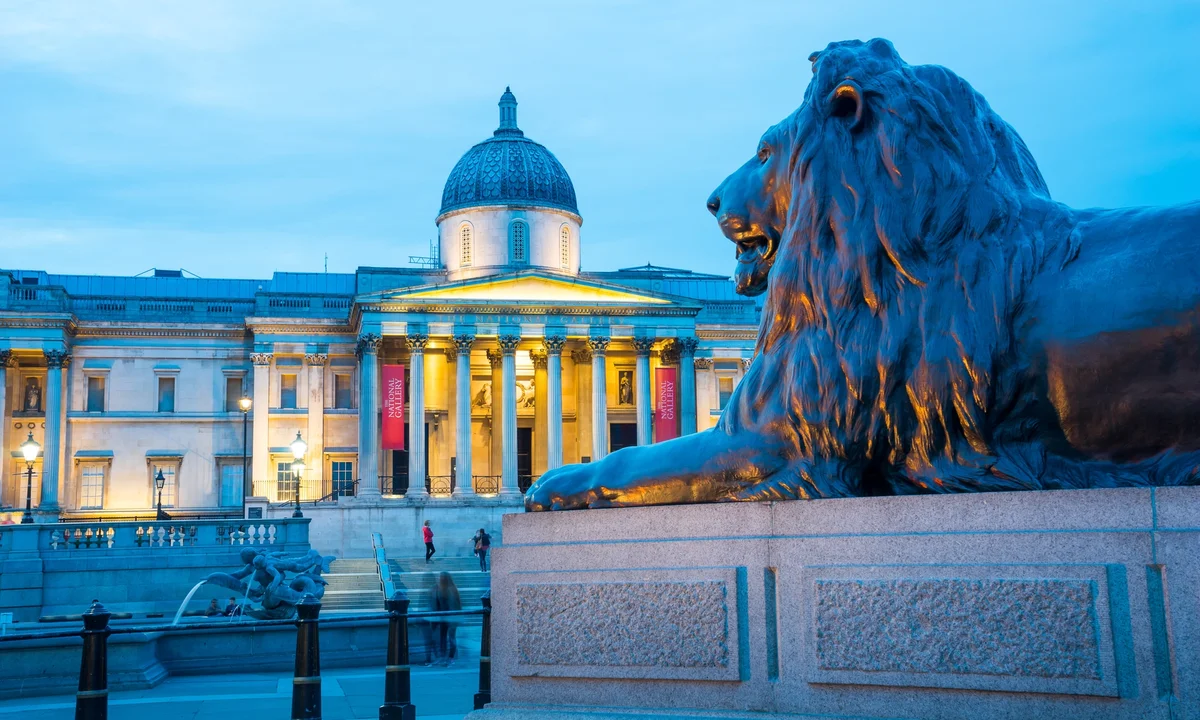
Someone in the UK treasury doesn’t like museums. It must be someone important, because the government is moving to end one of the most successful cultural policies of modern times: universal free museum entry, a policy introduced by Labour in 2001. They want to charge overseas visitors to enter Britain’s 15 national museums—among them the British Museum, the National Gallery and Tate.
I’m told this is being driven by the treasury, not the department for culture. In a cash-strapped era, charging overseas visitors has some superficial merit. We Brits pay to visit the Louvre, why shouldn’t foreigners pay to visit Tate?
But any consideration of the practicalities reveals the policy to be a non-starter. Let’s imagine we’re visiting Tate once charging comes into effect. First, we notice the queues, as we navigate the new ticketing infrastructure (installed at considerable cost). If we’re British, or a British resident, we will have to prove it to get free entry. Yet we have no mandatory ID cards, and the government’s own plans to introduce digital ones were quietly dropped months ago. Charging one group of people cannot work without undermining the purpose of free entry for the other group.
Threshold resistance
In retail there is a phrase to describe those small but powerful barriers that stop customers going into a shop; “threshold resistance”. For the casual or first-time museum visitor, the new policy would be like digging a moat around our museums. Two decades of broadening access—visitor numbers went up around 40% in the two decades after free entry was introduced—will be lost.
Then there are the wider implications. Some museums, like the National Gallery, have never charged anyone and are wealthy enough to remain free. The result would be a two-tier system: rich museums free, poorer ones not. And the damage wouldn’t stop at the nationals. In the regions, free civic museums would find themselves vulnerable to cash-strapped local authorities only too happy to follow central government’s lead.
Why not increase budgets?
Many in the museum sector say the answer is obvious: more money. And why not—the overall budget for all our national museums’ grant-in-aid is just under £500m, or 0.037% of total government spending. But there is another side to the story, and here we must have a flicker of sympathy with our treasury museum sceptic. When free universal entry was introduced in 2001 it was mainly paid for by an increase in grant-in-aid of around £60m. Despite austerity, Brexit and Covid-19, overall grant-in-aid to the nationals has kept pace with inflation, with a real-terms increase of around 5% over 20 years. The figures vary across individual institutions, but overall the treasury has kept its side of the bargain, just about.
What has not helped is the dramatic increase in the costs of running our national museums. Again, it varies by institution, but let’s take the National Gallery as an example. Its annual expenditure has risen from £25m in 2005/06 to £65m in 2024/25—a real-terms increase of over 60%.
Cost/income imbalance
Museum costs, therefore, have risen far beyond what either visitor numbers or government funding can justify. The reasons for this are many, from simple inefficiency (if you’ve ever attended a museum committee meeting, you’ll know what I mean) to a trustee class unable or unwilling to hold management properly to account. The awkward truth is that our national museums are the last great unreformed public service, still operating as their 19th-century founders would recognise.
So before charging people to get into our museums, the treasury might do better to ask why it costs so much to open the doors. Answer that, and free entry will look after itself.
