


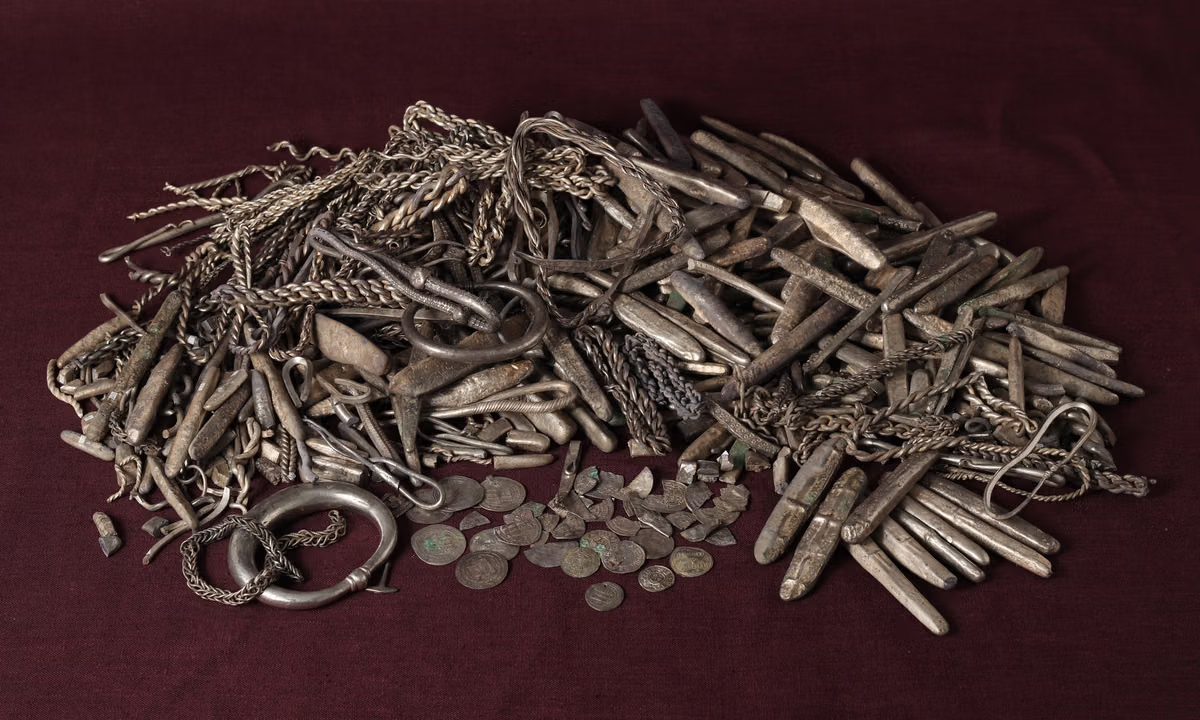
Denmark’s largest known silver hoard from the Viking Age, has been discovered in a man’s garden in Rebild, in the north of the country, according to a statement on the website of North Jutland Museums, the local museum authority. The man, who has requested anonymity, said he was building a new terrace in his garden when he discovered the treasure trove comprising 700 10th-century objects and fragments.
The hoard includes silver bars, bracelets, 47 whole coins and fragments, a small Thor’s hammer and various cut silver objects that had originally been deposited inside a clay vessel, the museum statement says. According to the museum statement, the hoard of almost 18.5kg of silver is three times larger than the largest Viking Age silver hoard to date, the so-called Terslev Hoard of approximately 6.5kg.
“After half an hour of digging, my grip hit something that made a strange sound,” the man who found the hoard says in the statement. “At first, I thought it was old iron or fence wire and some potsherds, but when I started digging with my hands, I could suddenly fish one metal object after another out of the ground. After a short period of careful work, I realised that it was jewellery, coins and silver bars.”
“This is an exceptionally important Viking Age silver hoard,” Torben Sarauw, an archaeologist and the head of cultural heritage at the North Jutland Museum tells The Art Newspaper. “It provides a rare insight into the Viking Age silver economy, where silver functioned not only as coinage but also as weighed bullion used for trade, payments and storing wealth.”
One of the silver bars has runes engraved on it, the museum reports. The inscription can possibly be read as “hutu”, which may be a name or an owner’s mark. Sarauw says the hoard also includes coins with Arabic on them. “This treasure belongs to a pivotal moment in Danish history. It was buried during the period when the Danish kingdom was taking shape and Christianity was spreading across Scandinavia,” he adds. “As well as illuminating Viking Age trade and wealth, the hoard provides evidence of a society undergoing profound political and religious change.”
Once the objects have been properly documented, the museum hopes to exhibit the hoard at Fyrkat, the Viking Age museum and Unesco World Heritage ring fortress associated with King Harald Bluetooth.
