


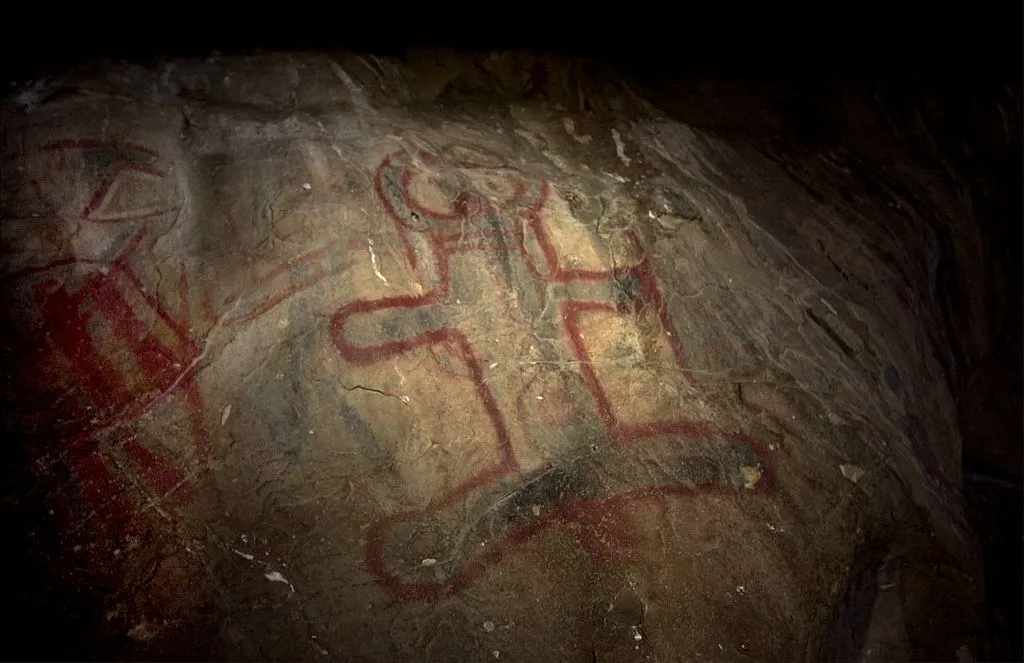
Provenance is everything in the art world. Auction houses spend years tracing the ownership history of a painting from one collector to the next. But for some of humanity’s oldest works of art, the provenance goes cold tens of thousands of years ago.
Who painted the bison on the walls of Altamira? Who pressed a hand against damp limestone before blowing red pigment around their fingers? Archaeologists have spent generations trying to answer questions like those. A new study suggests genetics could finally provide part of the answer.
Researchers working in caves across Spain and Portugal have recovered ancient human DNA directly from cave walls, opening a new way of studying the people who created—or at least occupied—the sites where some of humanity’s oldest surviving works of art remain. Before anyone imagines archaeologists identifying the prehistoric equivalent of Michelangelo, there are limits.
The researchers are not claiming they can identify the individual artist behind a painted bison or hand stencil. Instead, they believe the technique could reveal who used these caves, when they were there, and perhaps even help resolve one of archaeology’s most contentious debates: whether some of Europe’s oldest cave paintings were created by Neanderthals rather than modern humans.
Scientists have already become remarkably good at answering two other questions about cave art. What did prehistoric artists paint with? And when did they paint?
Chemical analysis can identify pigments such as red ochre and charcoal, while advances in dating techniques have steadily pushed the origins of cave art further back in time. Earlier this year, researchers dated a hand stencil in Indonesia to at least 67,800 years ago, making it the oldest securely dated cave art yet discovered. The identity of the artists, however, has remained stubbornly out of reach.
The latest study approached the problem from a different angle. Scientists sampled painted and unpainted cave walls at 11 sites across Spain and Portugal. Ancient human DNA turned up in the rock itself, demonstrating for the first time that cave walls can preserve genetic material for thousands of years.
Some of the strongest evidence came from Covarón Cave in northern Spain, where researchers identified DNA belonging to ancient western hunter-gatherers. At Portugal’s Escoural Cave, one painted surface also yielded ancient DNA, establishing what the researchers describe as a proof of concept, even if the genetic material was only partially preserved.
DNA is surprisingly mobile. A person can leave genetic material behind simply by breathing. Rainwater can move it. So can later visitors. Finding someone’s DNA on a cave wall shows they were present, but it cannot prove they were the one holding the pigment thousands of years earlier. Even with those limitations, archaeologists think the technique could prove transformative.
One possible application involves the famous hand stencils inside Spain’s Maltravieso Cave. Some researchers believe the paintings predate the arrival of modern humans in Europe, raising the possibility that Neanderthals made them. Recovering ancient DNA from the cave dating to roughly the same period could provide another line of evidence, although the researchers warn that drawing such a connection would remain extraordinarily difficult.
The study stops well short of identifying the first artists by name. It does, however, suggest that cave walls preserve more than paintings. They may also preserve traces of the people who stood before them.
For archaeologists, that’s a new source of evidence. For art historians, it may be something even more intriguing: the first step toward reconstructing the provenance of humanity’s earliest masterpieces.
