

Close Menu
  • News
  • Stocks
  • Bonds
  • Commodities
  • Collectables
    • Art
    • Classic Cars
    • Whiskey
    • Wine
  • Trading
  • Alternative Investment
  • Markets
  • More
    • Economy
    • Money
    • Business
    • Personal Finance
    • Investing
    • Financial Planning
    • ETFs
    • Equities
    • Funds

Subscribe to Updates

Get the latest markets and assets news and updates directly to your inbox.

Trending Now

Triumphal Arch Construction to Start Without Approval, Heatwaves Come at Hefty Cost to French Museums, and More: Morning Links for September 4, 2026

September 4, 2026

Ten surprising facts about the Bayeux Tapestry – The Art Newspaper

September 4, 2026

‘Putin didn’t win; art won’: Venice Biennale president defends decision to allow Russia’s participation – The Art Newspaper

September 4, 2026
Facebook X (Twitter) Instagram
The Asset ObserverThe Asset Observer
Newsletter
LIVE MARKET DATA
  • News
  • Stocks
  • Bonds
  • Commodities
  • Collectables
    • Art
    • Classic Cars
    • Whiskey
    • Wine
  • Trading
  • Alternative Investment
  • Markets
  • More
    • Economy
    • Money
    • Business
    • Personal Finance
    • Investing
    • Financial Planning
    • ETFs
    • Equities
    • Funds
The Asset ObserverThe Asset Observer
Home»Art Market
Art Market

Drained, Drowning, and Decay: The Best National Pavilions at the Venice Biennale

News RoomBy News RoomMay 8, 2026
Share
Facebook Twitter LinkedIn Pinterest Email

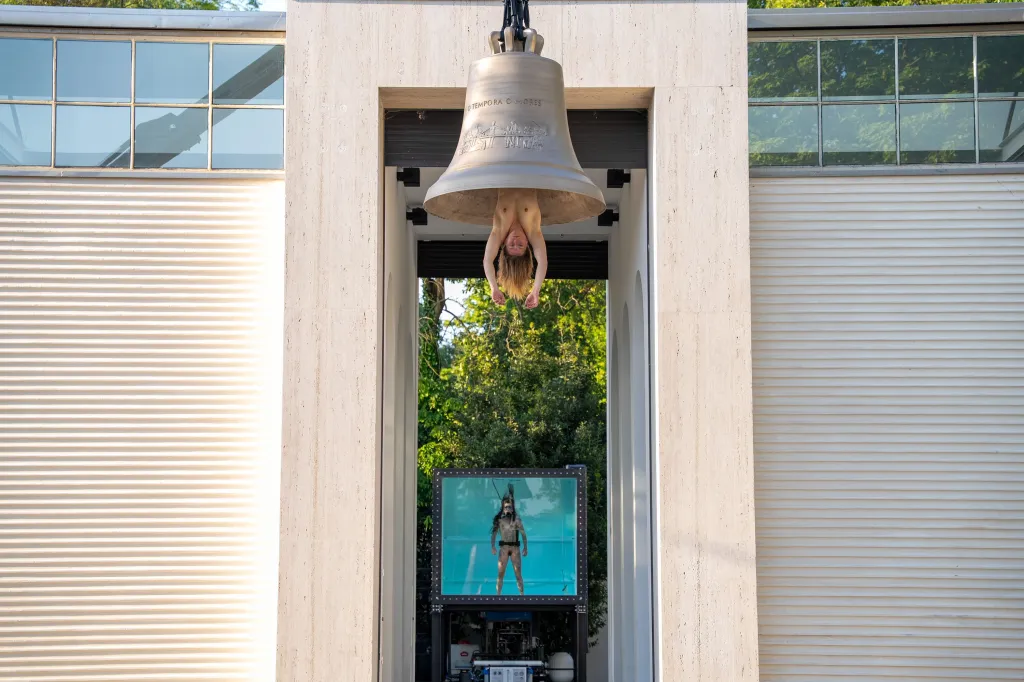
A sense of ruin permeates this Venice Biennale, though we already knew that it would going in. And pointedly, several standout national pavilions in the show are steeped in decay—bodily, infrastructural, archaeological. They’re about the broken, bloody political machines pumping the present full of its own reek.

Rubble and stone line the Slovenian Pavilion, where the Nonument Group repurposes materials from previous Biennales into a ruin of a mosque built for Bosnian Muslim soldiers during World War I. Meanwhile, Sara Shamma, representing Syria in its first national pavilion since the Civil War, invokes Palmyra, the ancient site whose tower tombs were obliterated by ISIS during its campaign of cultural erasure.

Germany’s presentation, titled “Ruin,” treats the pavilion’s architecture as a lens through which to question the exhibition’s siloed structure. Is nationalist residue ever erased, or does it continue to metastasize? The work of its artists—Henrike Naumann, who died in February, and Sung Tieu ask that question. Their response would surely merit award consideration—if the Venice Biennale still had a jury. (Its five members resigned abruptly last week, having previously said they wouldn’t consider nations charged with crimes against humanity in the International Criminal Court. The awards will now be chosen by a public vote.)

“In Minor Keys,” Koyo Kouoh’s main exhibition, was also roiled, in that case by the death of its curator. How this Biennale will be remembered, following a succession of shocks that began with Kouoh’s passing, remains uncertain. Will it be recalled as a spectacle stoked by controversy or a much-needed breath of fresh air?

Artist Florentina Holzinger, who literally rang in the Austrian Pavilion, suggested these conditions as one in the same, saying in an opening speech: “What the fuck! There is no jury, there is no prize. We are seeing a system crumble. Let’s not despair. All we need is a shift of wind, a new direction, a reshaping of the symbols of the past.”

Below, more standout pavilions within a critical take on the past, and lesson for the present.

Share. Facebook Twitter Pinterest LinkedIn Tumblr Email

Keep Reading

Triumphal Arch Construction to Start Without Approval, Heatwaves Come at Hefty Cost to French Museums, and More: Morning Links for September 4, 2026

Ten surprising facts about the Bayeux Tapestry – The Art Newspaper

‘Putin didn’t win; art won’: Venice Biennale president defends decision to allow Russia’s participation – The Art Newspaper

Long-hidden Van Gogh self-portrait to star in major Paris exhibition – The Art Newspaper

What Was Pop Art, the 1960s Art Movement that Changed Art History?

This New Eva Hesse–Inspired Novel Is an Experiment in Form (and Foam)

From DIY endeavour to London art world mainstay: Bold Tendencies celebrates 20 years – The Art Newspaper

Christie’s and Bonhams Quietly Hike Buyers’ Fees

The Lucas Museum Doesn’t Have a Narrative

Recent Posts
  • Triumphal Arch Construction to Start Without Approval, Heatwaves Come at Hefty Cost to French Museums, and More: Morning Links for September 4, 2026
  • Ten surprising facts about the Bayeux Tapestry – The Art Newspaper
  • ‘Putin didn’t win; art won’: Venice Biennale president defends decision to allow Russia’s participation – The Art Newspaper
  • Long-hidden Van Gogh self-portrait to star in major Paris exhibition – The Art Newspaper
  • Hargreaves Lansdown expands crypto offering with CoinShares ETPs

Subscribe to Newsletter

Get the latest markets and assets news and updates directly to your inbox.

Editors Picks

Ten surprising facts about the Bayeux Tapestry – The Art Newspaper

September 4, 2026

‘Putin didn’t win; art won’: Venice Biennale president defends decision to allow Russia’s participation – The Art Newspaper

September 4, 2026

Long-hidden Van Gogh self-portrait to star in major Paris exhibition – The Art Newspaper

September 4, 2026

Hargreaves Lansdown expands crypto offering with CoinShares ETPs

September 4, 2026

What Was Pop Art, the 1960s Art Movement that Changed Art History?

September 4, 2026
Facebook X (Twitter) Instagram
© 2026 The Asset Observer. All Rights Reserved.
  • Privacy Policy
  • Terms
  • Press Release
  • Advertise
  • Contact

Type above and press Enter to search. Press Esc to cancel.